Dành cho mọi bản phân phối có Flatpak — cách thiết lập được ghi kèm theo từng ứng dụng.
.deb (Debian, Ubuntu)
Dành cho Debian, Ubuntu và các bản phân phối phái sinh — ngay tại từng ứng dụng bên dưới.
jsNetMonitor
v1.0.4 · SDL2
Hiển thị trực tiếp mạng của bạn đang làm gì — từng thiết bị, từng kết nối, từng chương trình, và tổng lượng dùng qua nhiều ngày, nhiều tháng và cả năm.
Tải xuống và tải lên của từng thiết bị dưới dạng đường cong mượt và đồng hồ đo mứcChương trình nào dùng mạng – và dùng bao nhiêuMọi kết nối cùng máy chủ từ xa, quốc gia, dịch vụ, tốc độ và độ trễLưu lượng của bạn đi đâu: điểm đến và quốc gia trong nháy mắtTổng lưu lượng của bạn qua vài phút, vài giờ, một tuần, một tháng hoặc cả nămLưu lượng theo ngày và theo tháng, được giữ lại sau mỗi lần khởi động lạiChip mạng, trình điều khiển, firmware và chi tiết liên kếtCáp, Wi-Fi, di động, VPN và nhiều hơn nữaSắp xếp các thiết bị tùy ý – thứ tự sẽ được ghi nhớCửa sổ nhỏ luôn nằm trên cùngSáng & tốiSDL2 · Cairo83 ngôn ngữ
sudo sh -c 'for i in network-observe system-observe hardware-observe; do snap connect jsnetmonitor:$i; done'
Ban đầu một snap không thấy được có những kết nối nào và chương trình nào đứng sau chúng. Hãy dán lệnh vào terminal một lần, nhấn Enter và khởi động lại jsNetMonitor – khi đó các kết nối, chương trình và chi tiết của chip mạng sẽ xuất hiện. Lệnh này chỉ cấp quyền đọc.
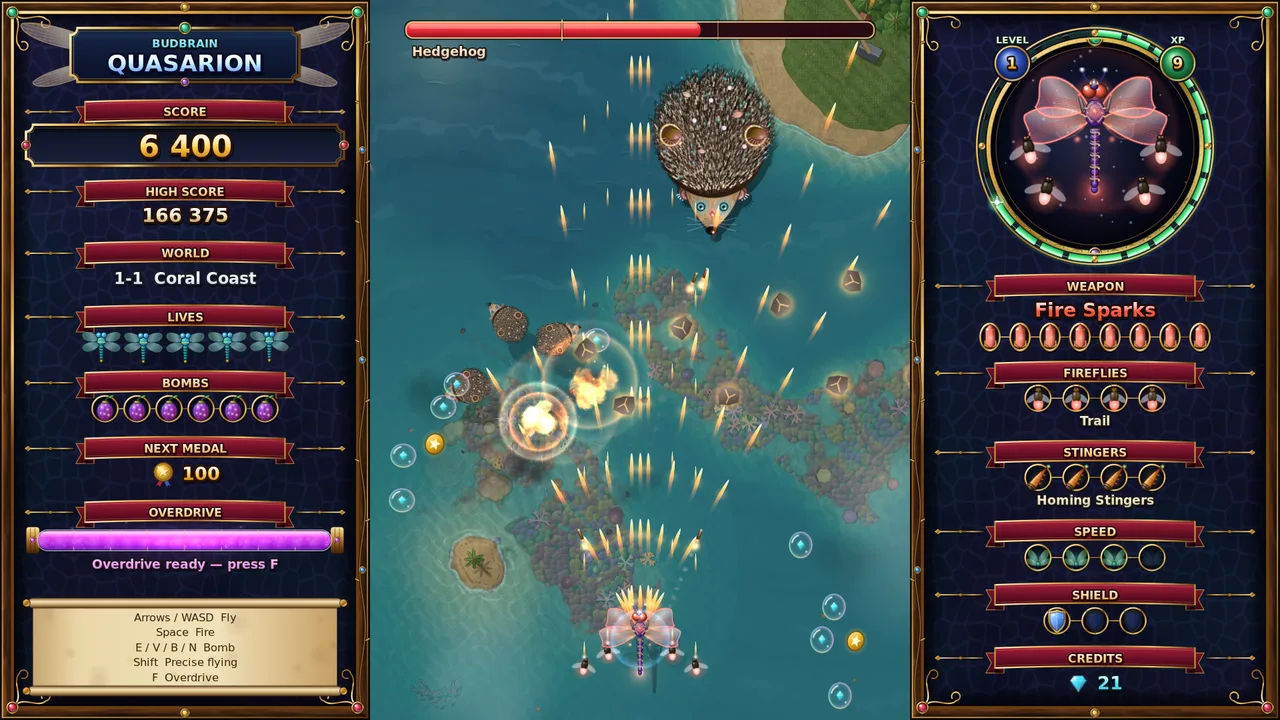
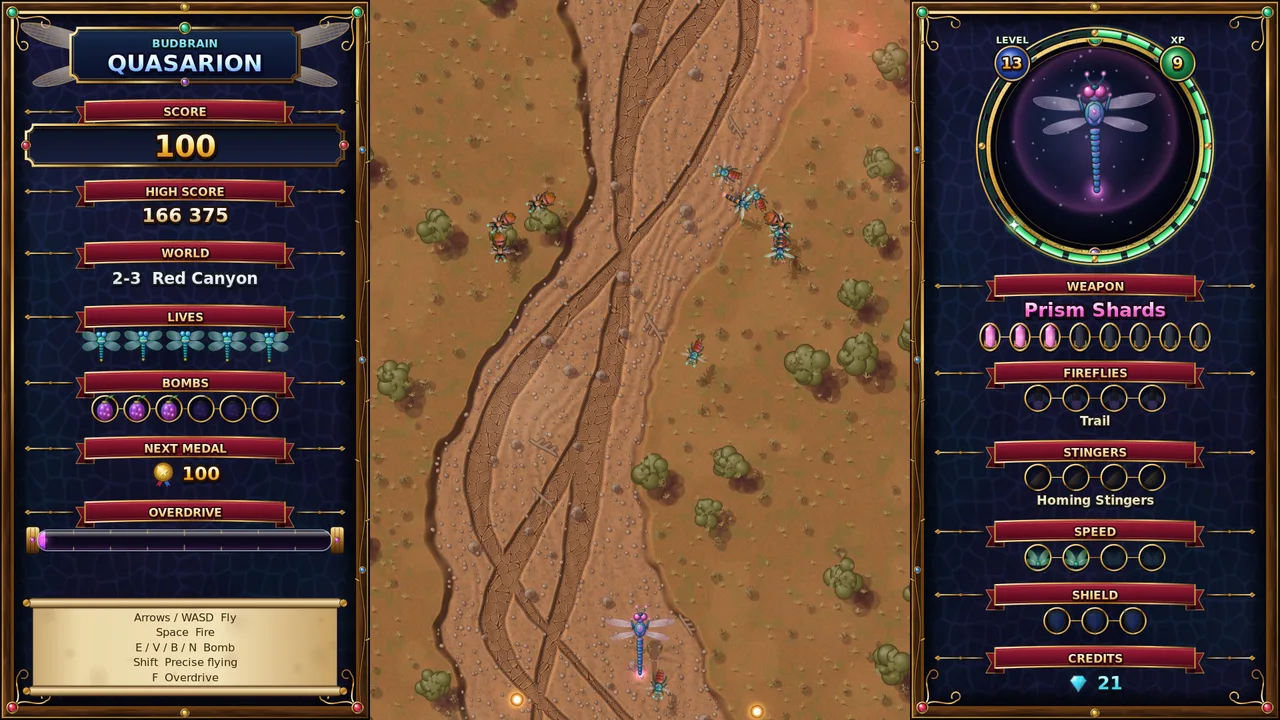
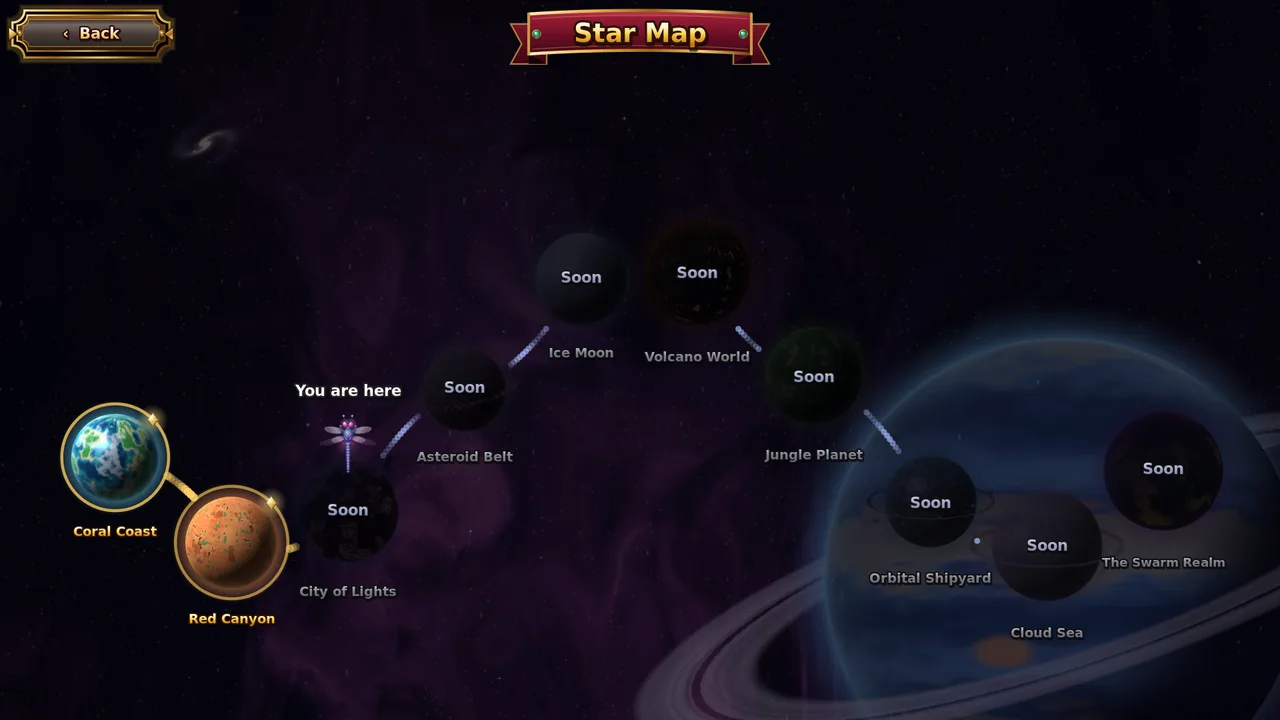
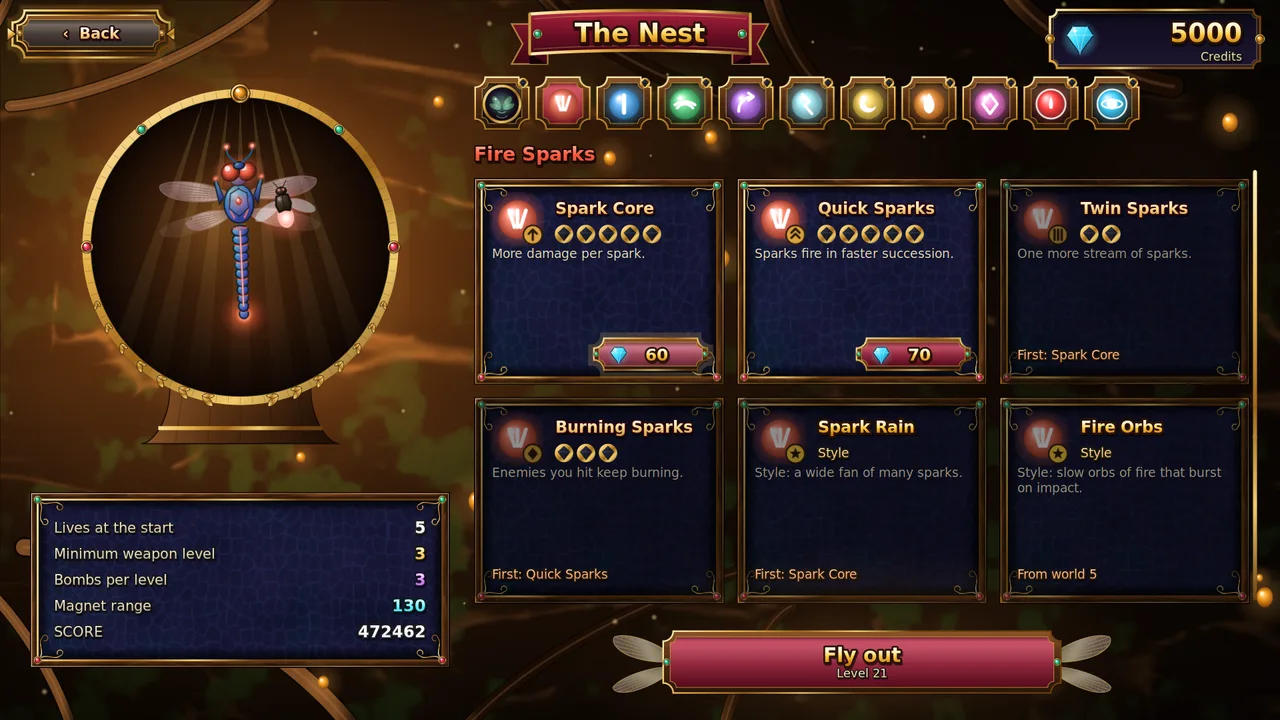
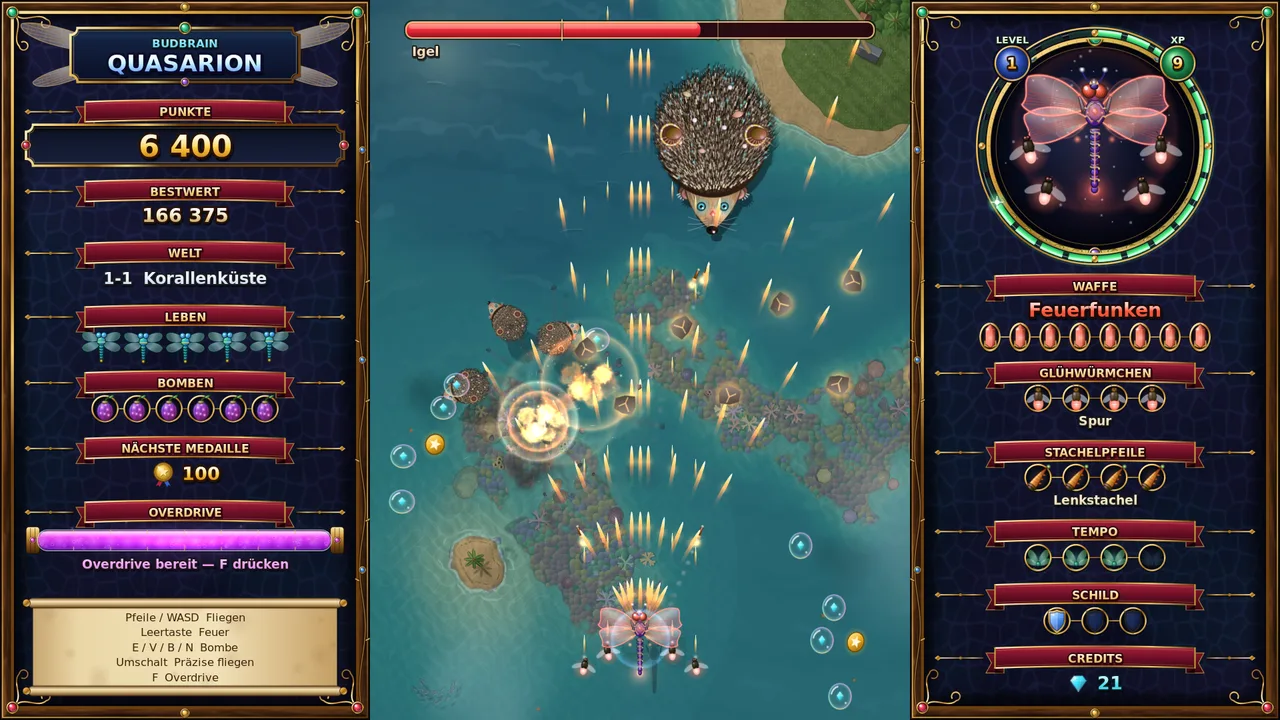
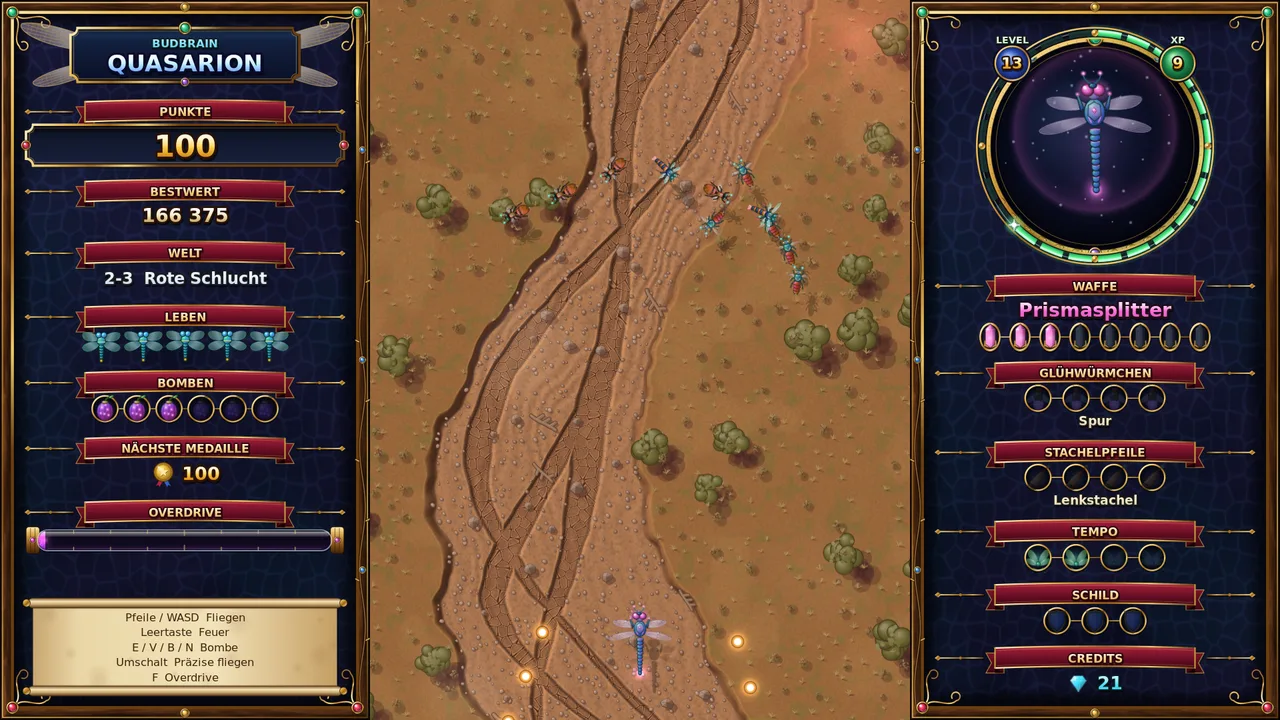
Bay lượn như một chú chuồn chuồn qua những thế giới thần tiên rực sáng và đối đầu với những con thú khổng lồ.
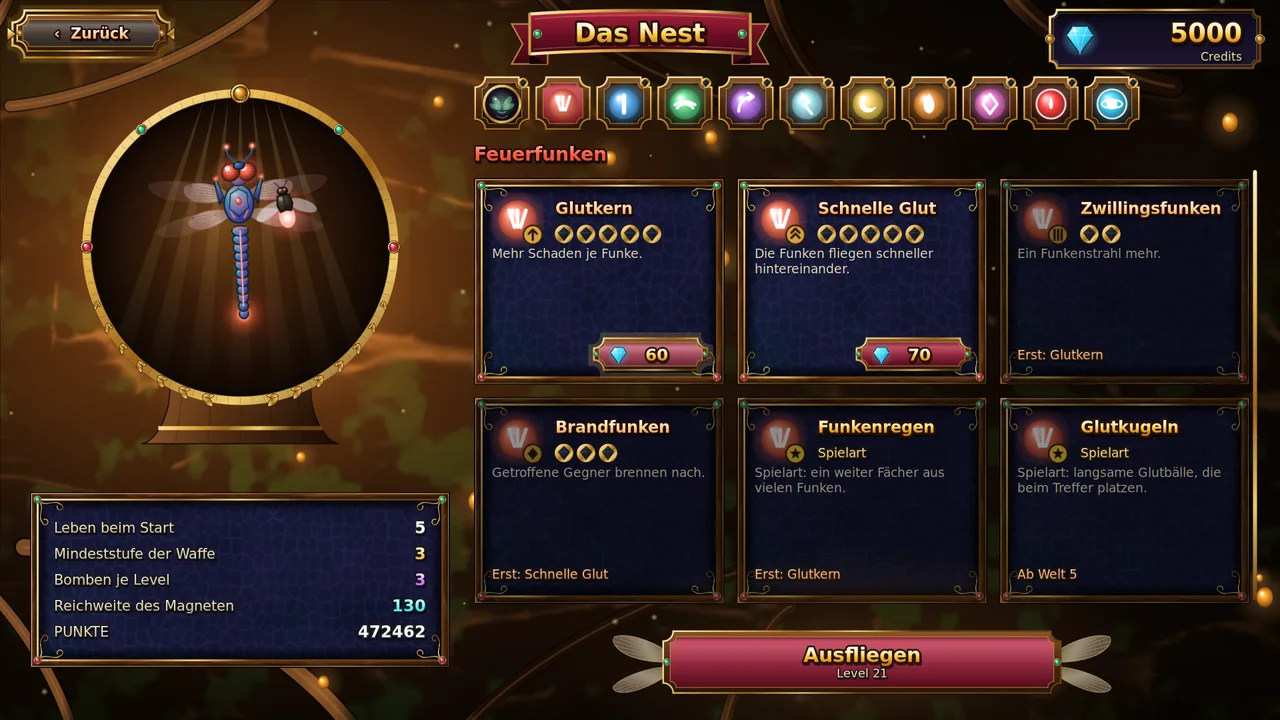
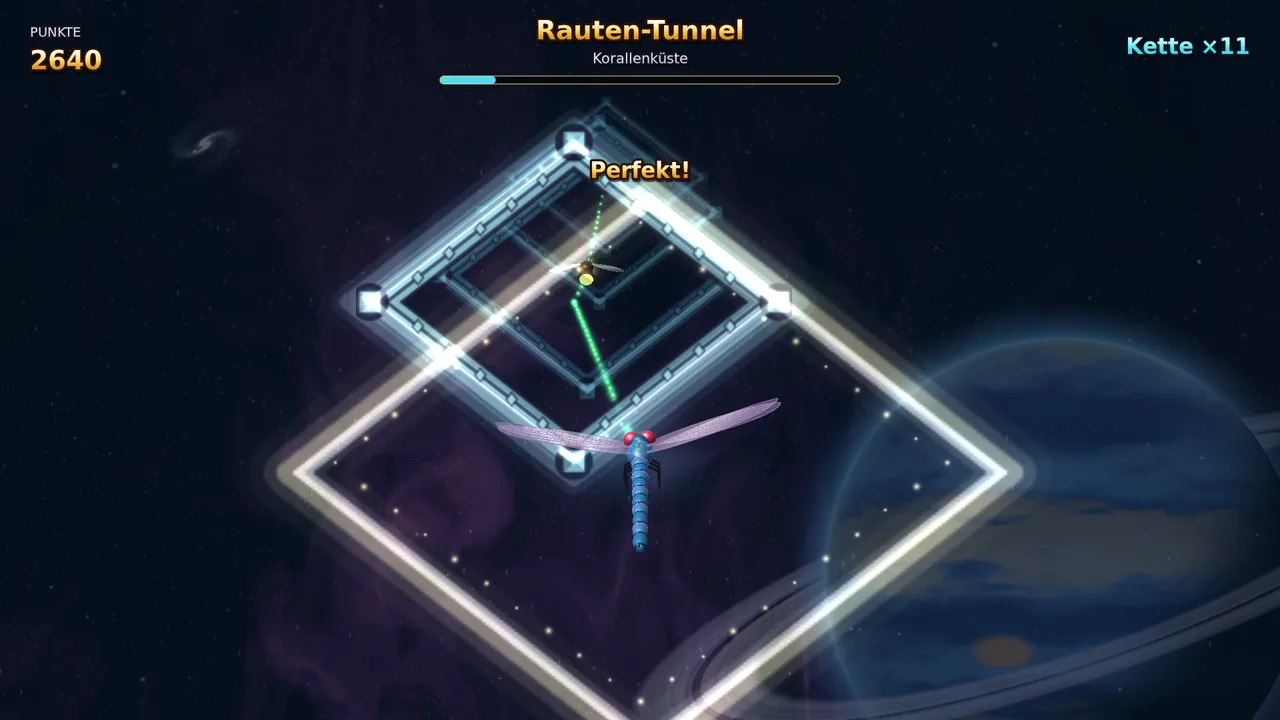
Một con thú khổng lồ khác nhau ở cuối mỗi màn chơiTám loại ánh sáng cho chú chuồn chuồn của bạn, mỗi loại có tám cấpĐom đóm bay theo đường bay của bạnNâng cấp trong tổ và một cây kỹ năng lớn phát triển cùng bạnMột đường hầm kim cương theo nhịp nhạc sau mỗi thế giớiSáu mức độ khó, từ Dễ đến Điên rồBàn phím, tay cầm hoặc màn hình cảm ứngSDL2 · Cairo83 ngôn ngữ
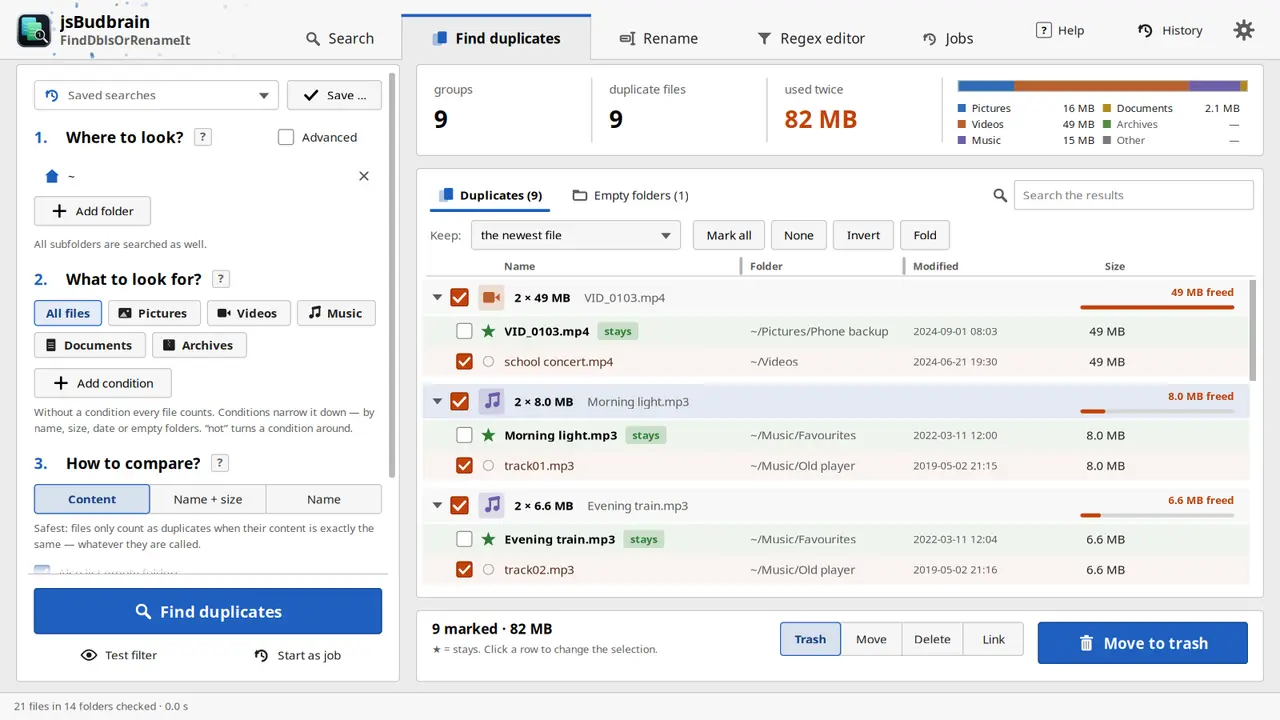
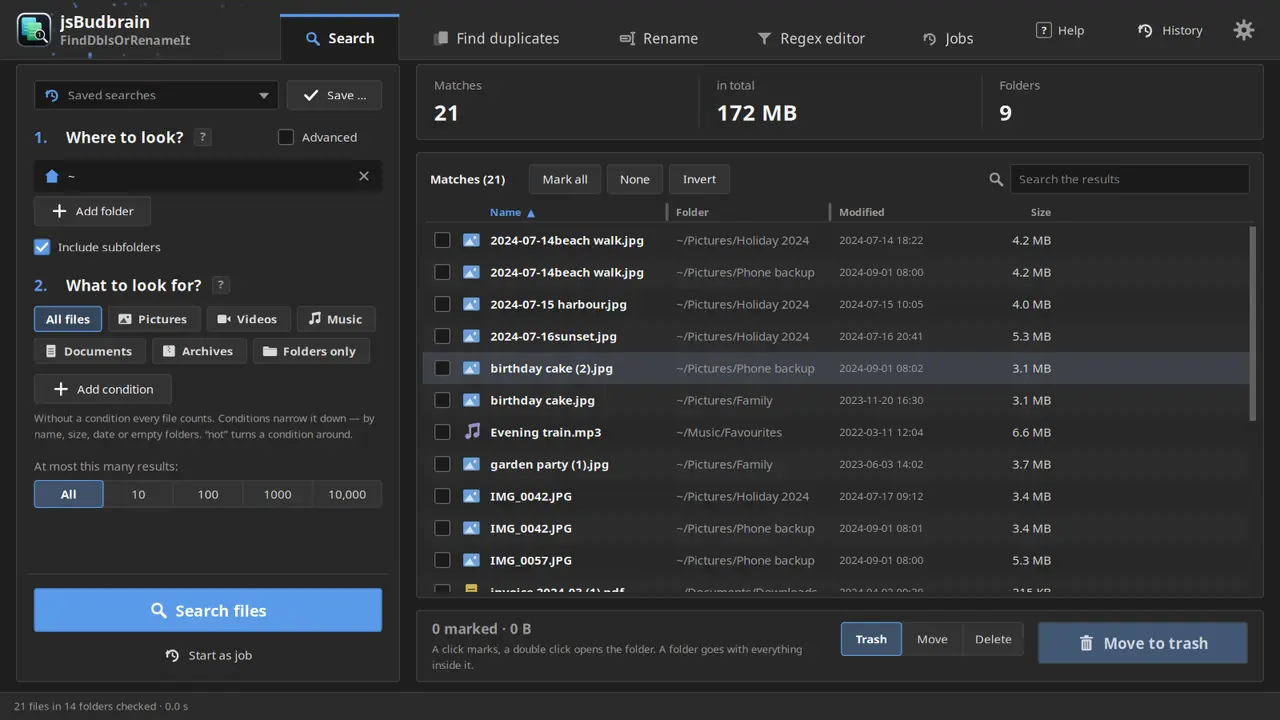
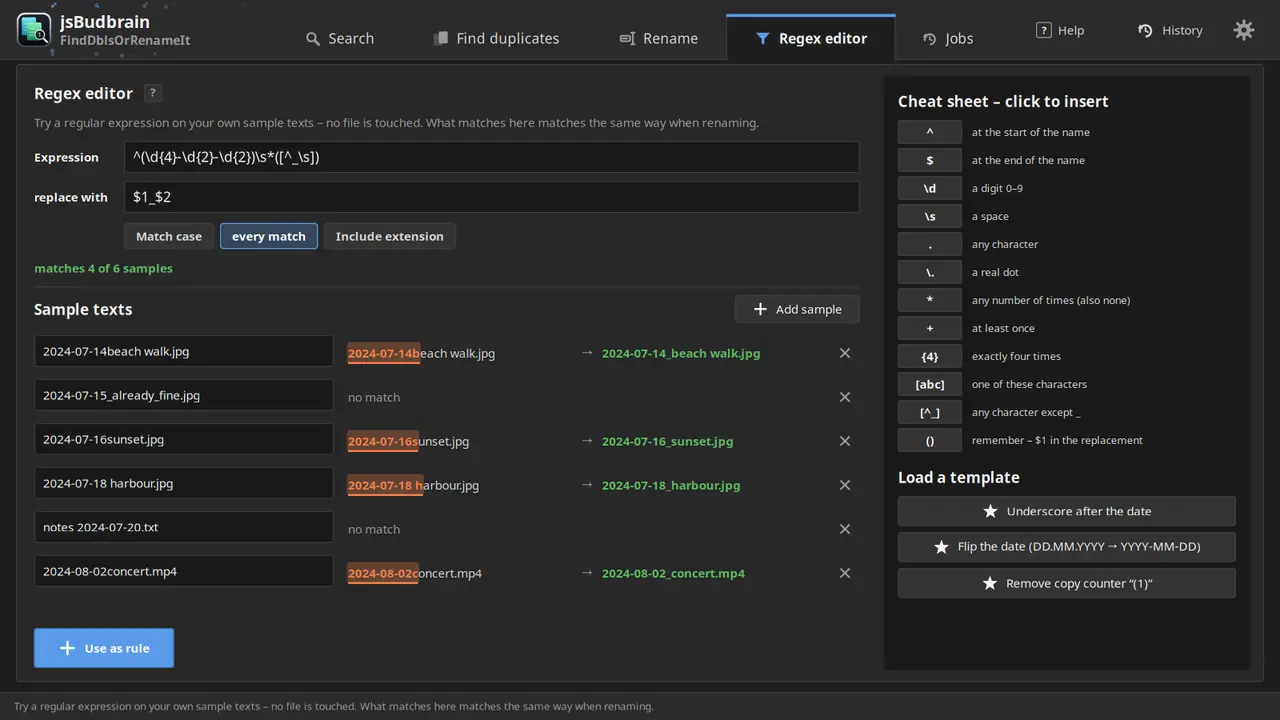
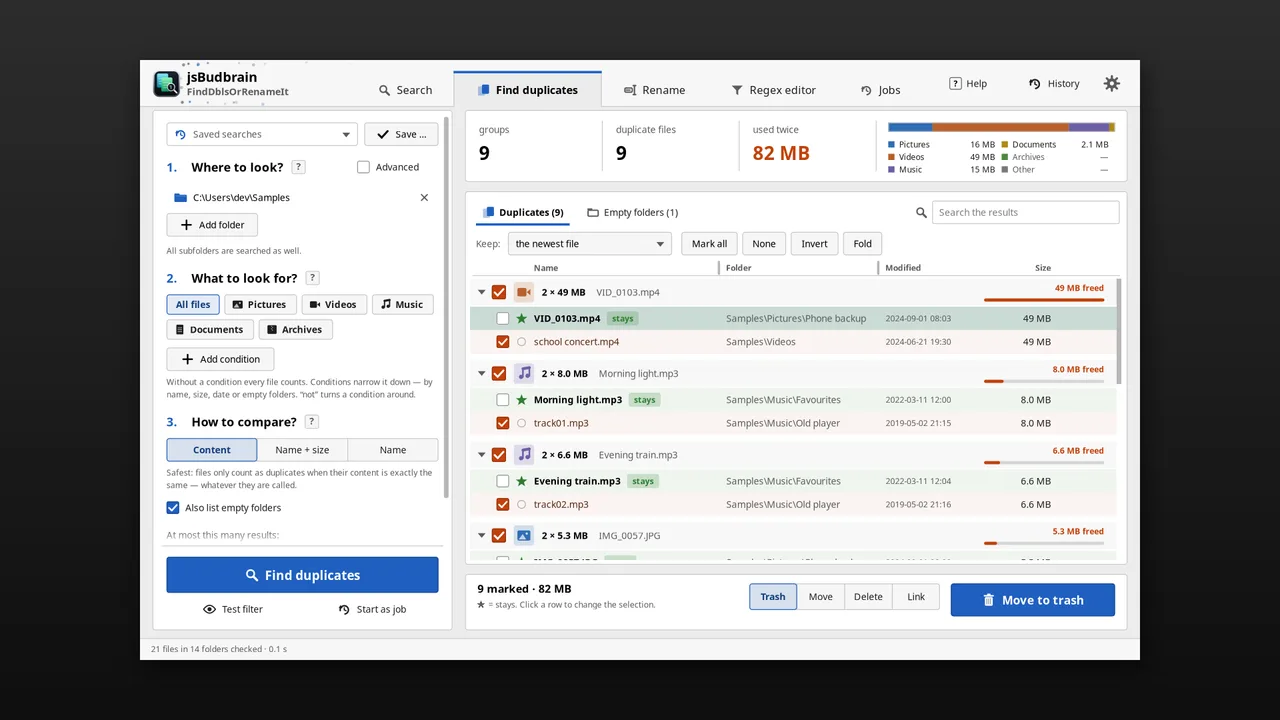
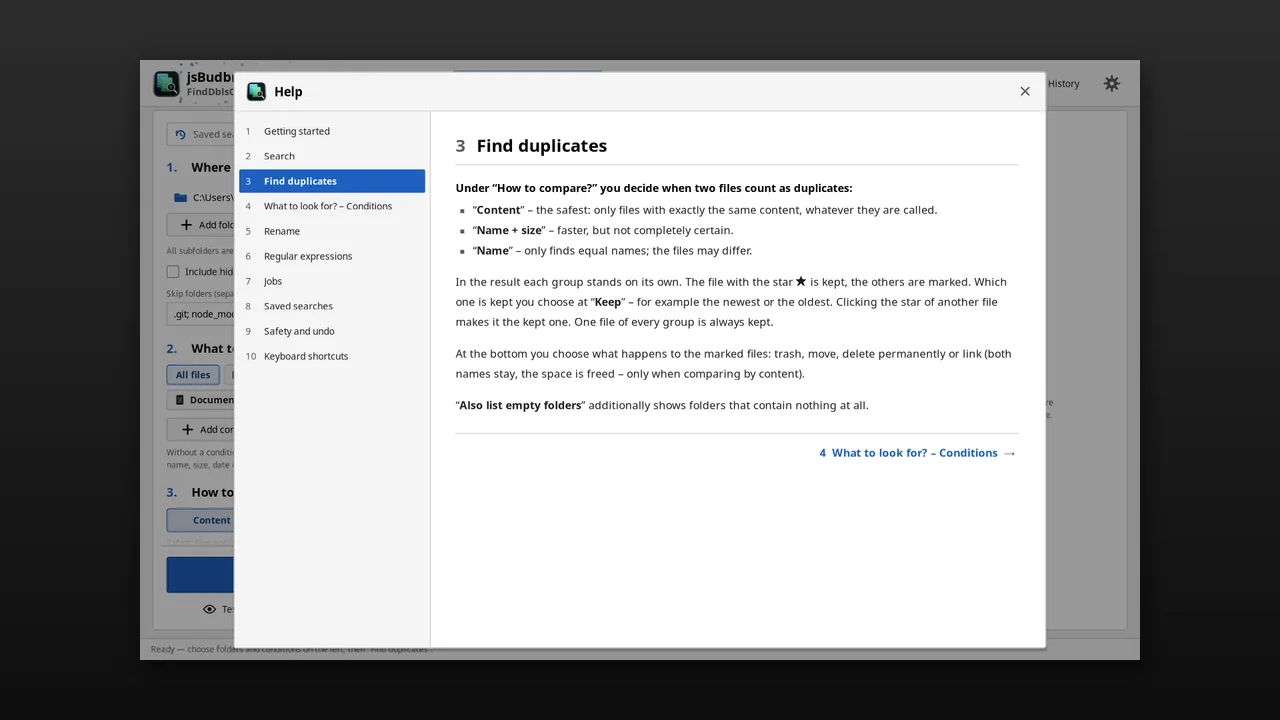
Tìm các tệp trùng lặp và dọn dẹp chúng — đồng thời đổi tên hàng loạt tệp cùng lúc theo quy tắc của riêng bạn, có xem trước và hoàn tác.
Tìm tệp trùng lặp thật sự theo nội dung, bất kể tên là gìTệp mới nhất được giữ lại – bạn quyết địnhChuyển vào thùng rác, di chuyển, xóa hoặc tạo liên kếtĐổi tên theo quy tắc kèm xem trước trực tiếpTìm tệp theo tên, loại, kích thước hoặc ngàyLưu các tìm kiếm, chạy nhiều tác vụ cùng lúcHoàn tác việc di chuyển và đổi tênSáng & tốiSDL2 · Cairo47 ngôn ngữ
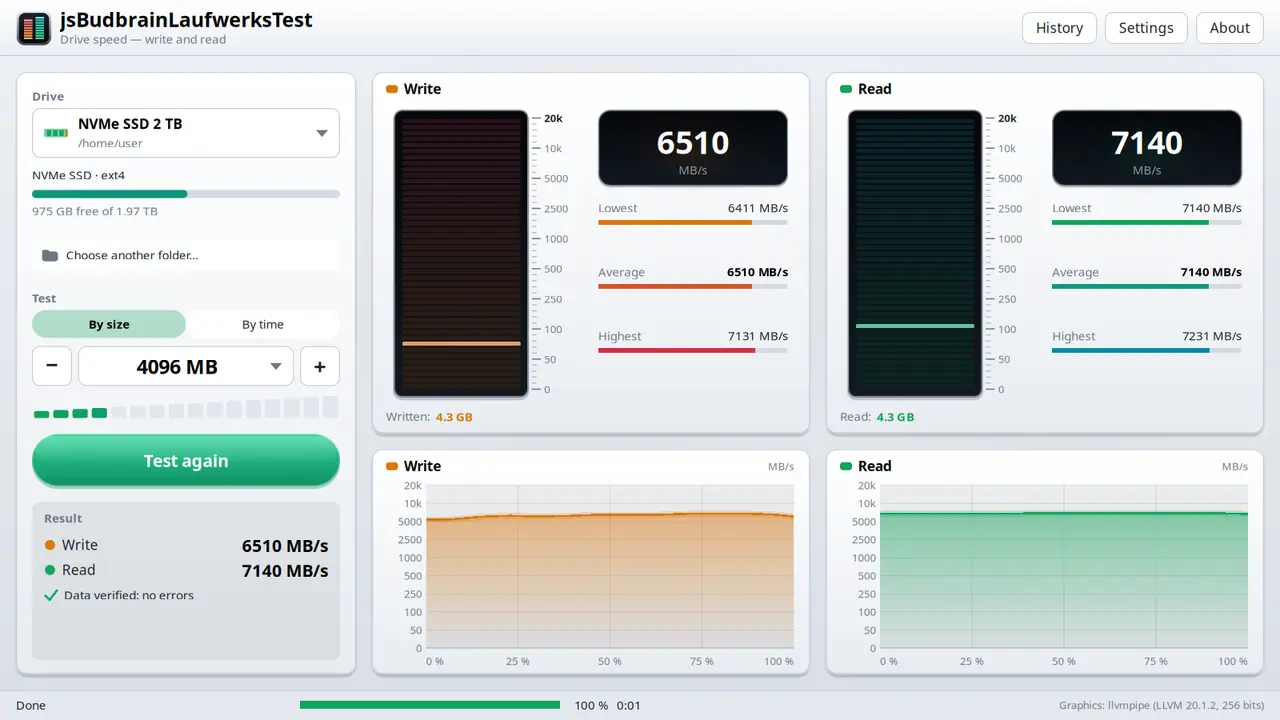
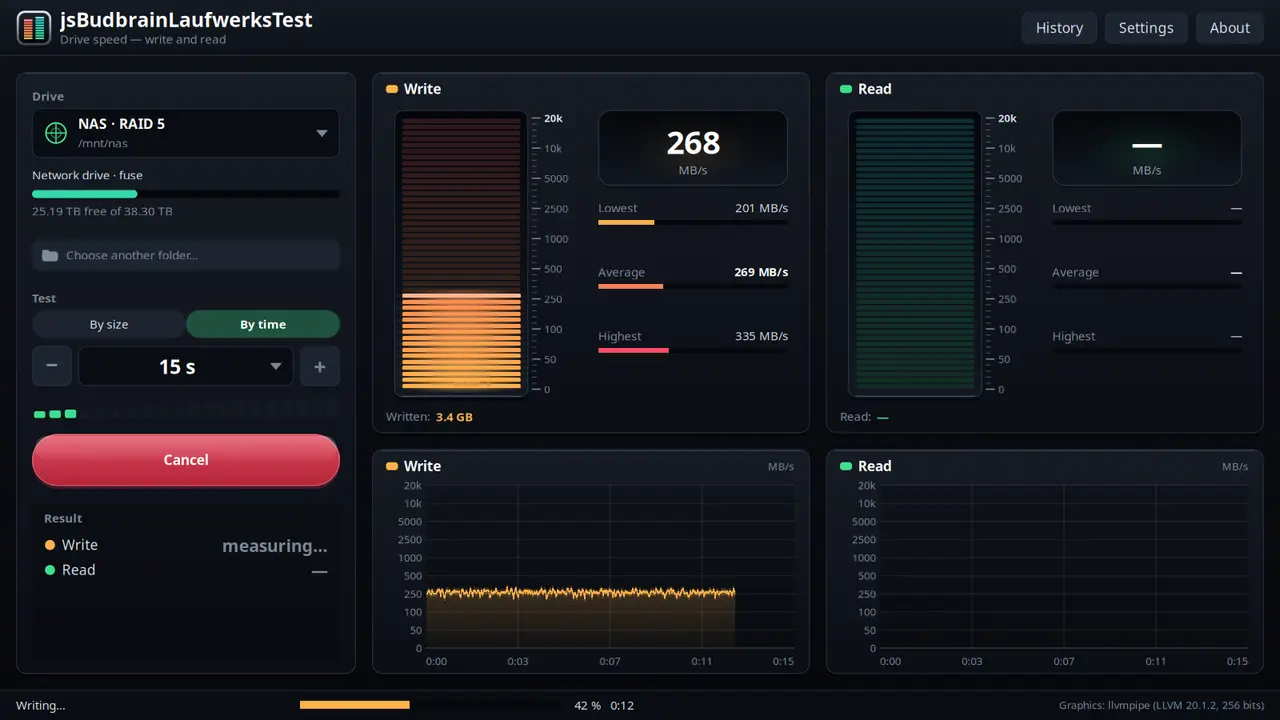
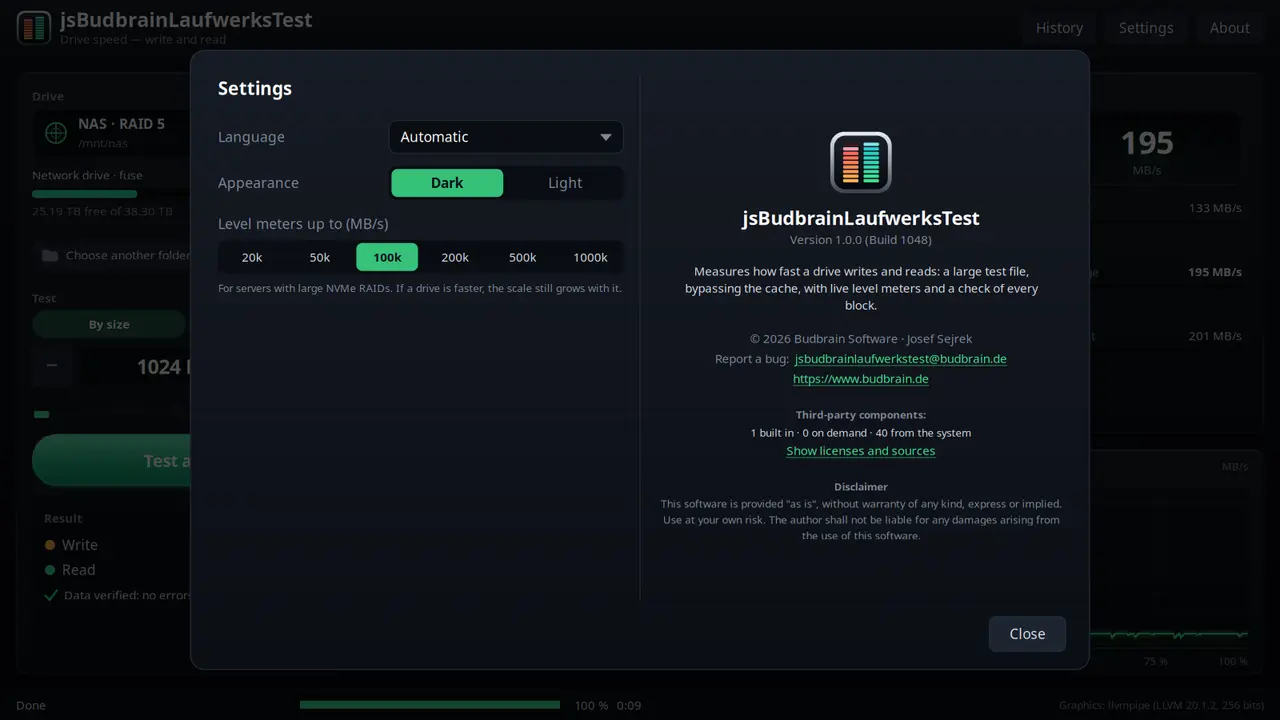
Đo tốc độ ghi và đọc của một ổ đĩa — với hai đồng hồ đo mức trực tiếp, biểu đồ và việc kiểm tra từng khối.
Tốc độ ghi và đọc trực tiếpTheo dung lượng (1–16 GB) hoặc theo thời gian (5 giây – 16 phút)Mọi khối đều được kiểm traCho thấy lúc một ổ đĩa nhanh bắt đầu hụt hơiUSB, thẻ nhớ, ổ đĩa mạngLịch sử mọi bài kiểm tra, lưu thành văn bảnThang đo mở rộng đến 1.000.000 MB/s cho RAID máy chủSáng & tốiSDL2 · Cairo47 ngôn ngữ
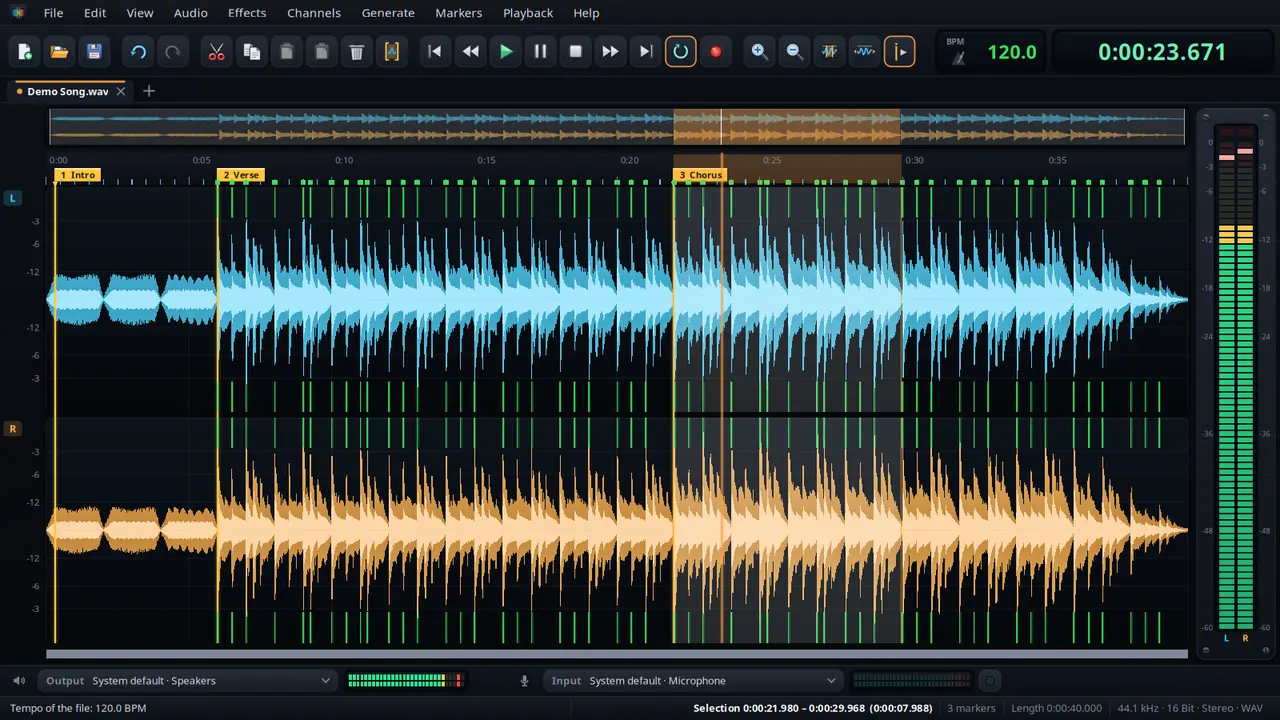
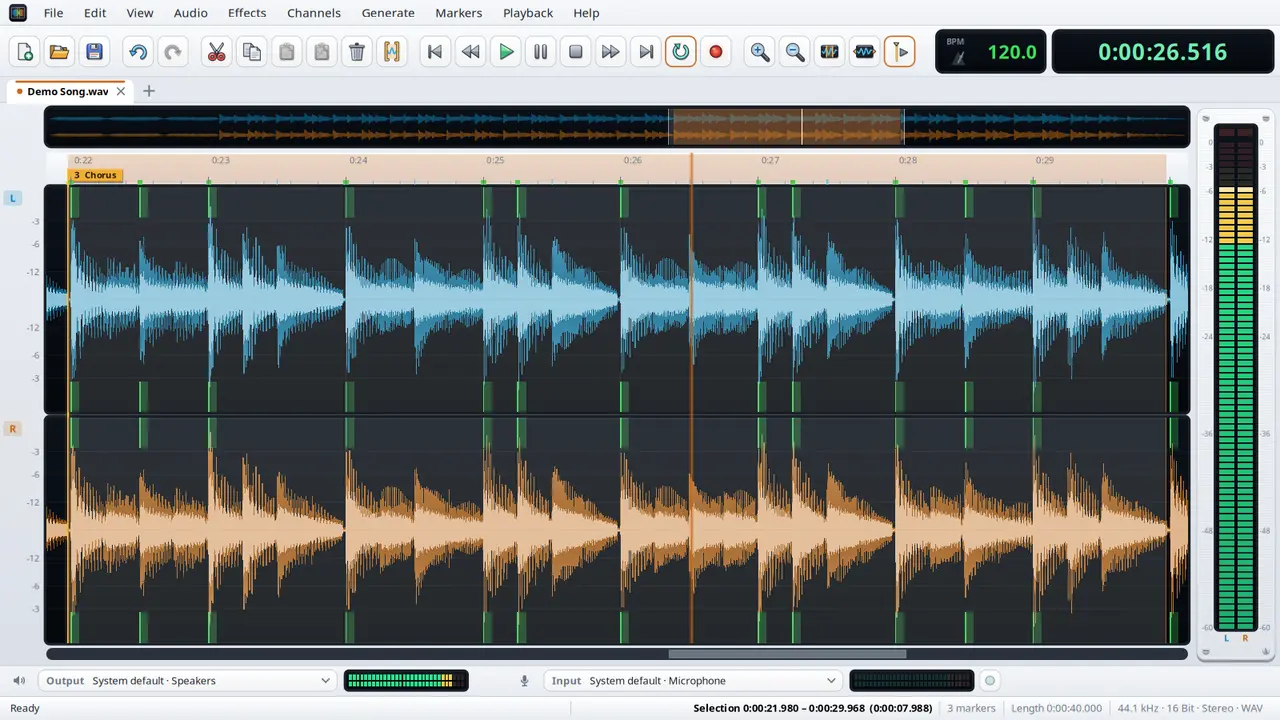
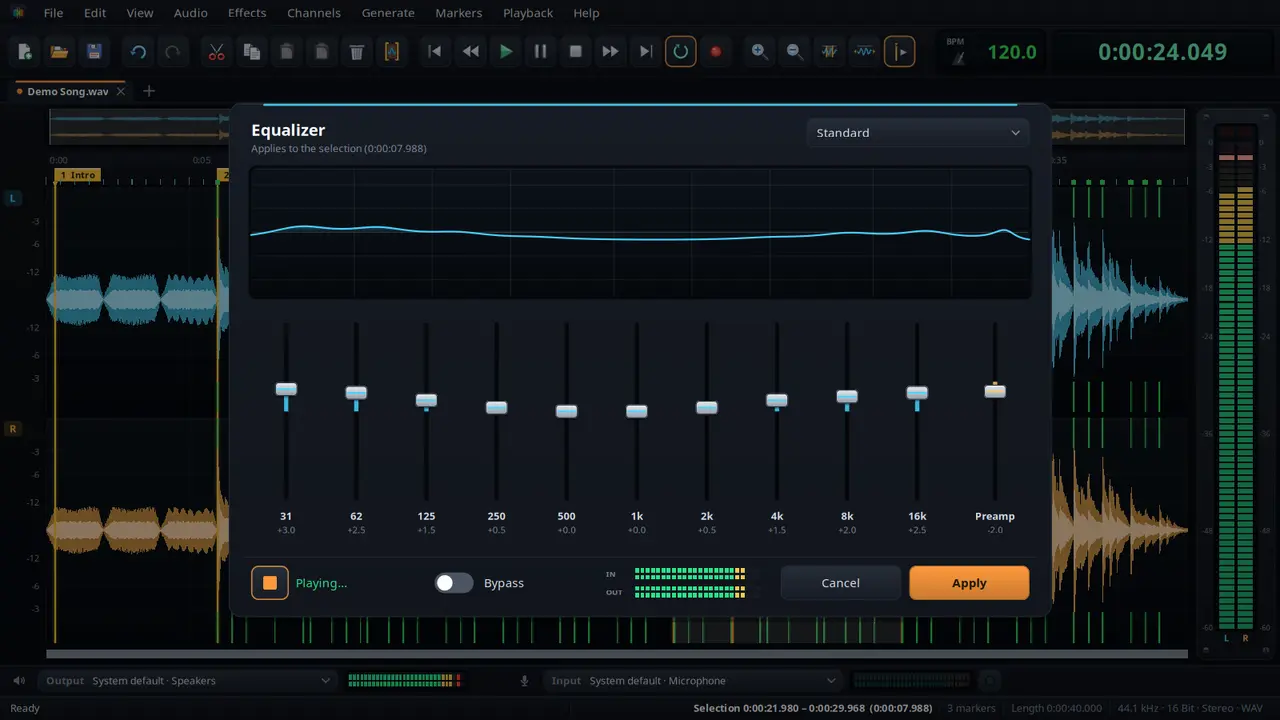
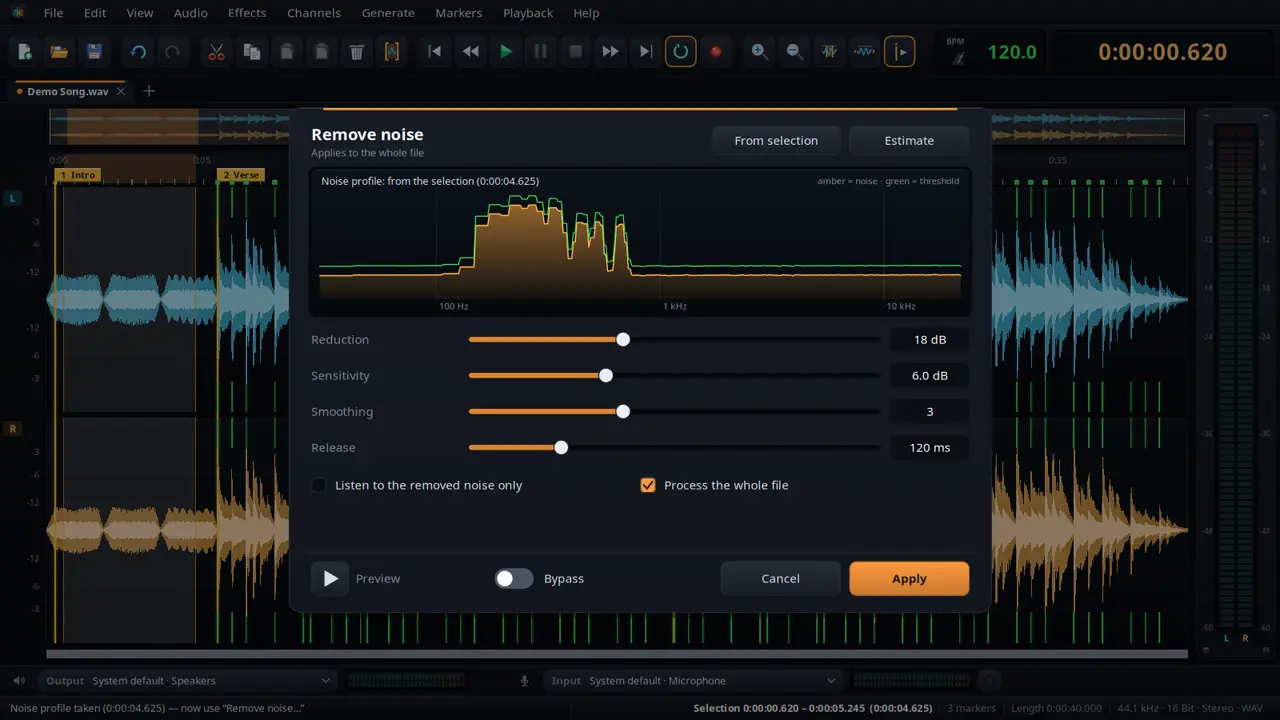
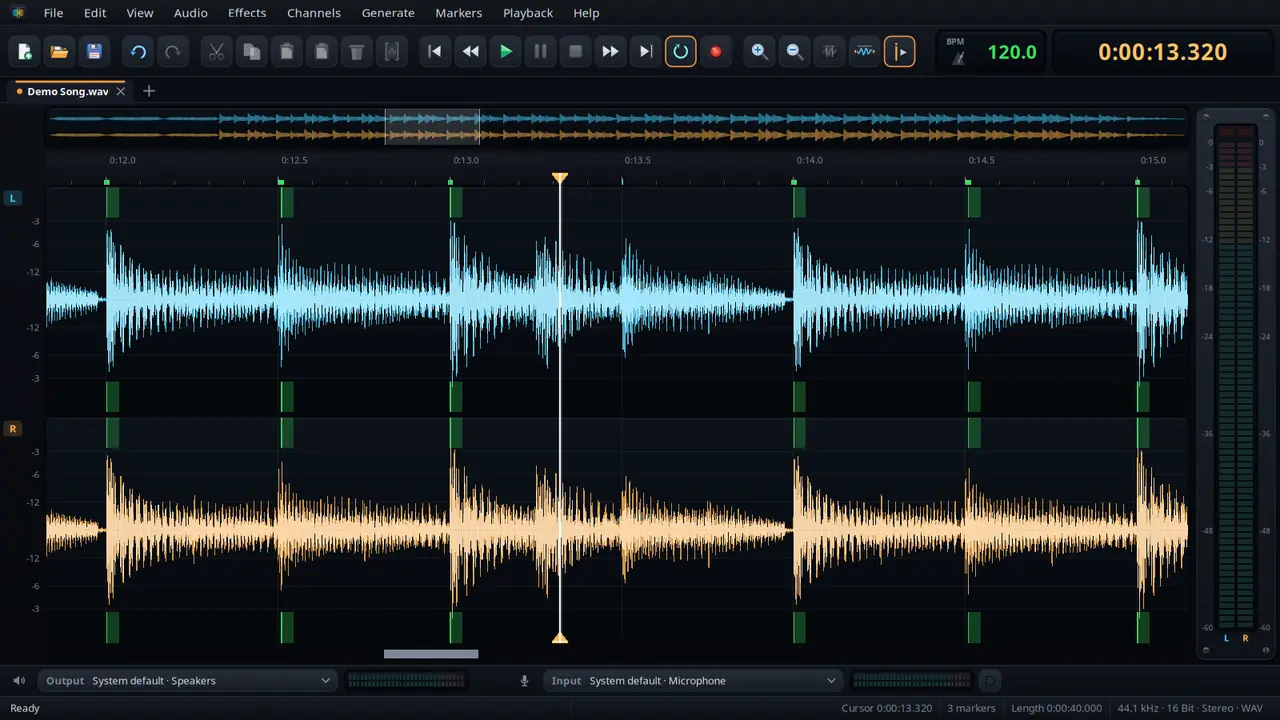
Trình chỉnh sửa âm thanh để cắt, làm sạch và trau chuốt — với dấu mốc, khử tạp âm, nhịp độ và các hiệu ứng của các ứng dụng âm thanh Budbrain.
Cắt, sao chép, dán và trộn vàoThu phóng bằng con lăn chuột xuống đến từng mẫu đơn lẻĐặt và đặt tên dấu mốc, phát giữa các dấu mốcHoàn tác không giới hạn cố địnhKhử tạp âm bằng hồ sơ tạp âmTìm và thay đổi nhịp độ, với trống bass và lưới nhịpBộ cân bằng, đèn điện tử & bộ nén, bộ giới hạn và FX studio với bản nghe thử trực tiếpGhi âm bao lâu tùy thíchSáng & tốiWAV · FLAC · Ogg · Opus · MP3SDL2 · CairoPipeWire · PulseAudio47 ngôn ngữ
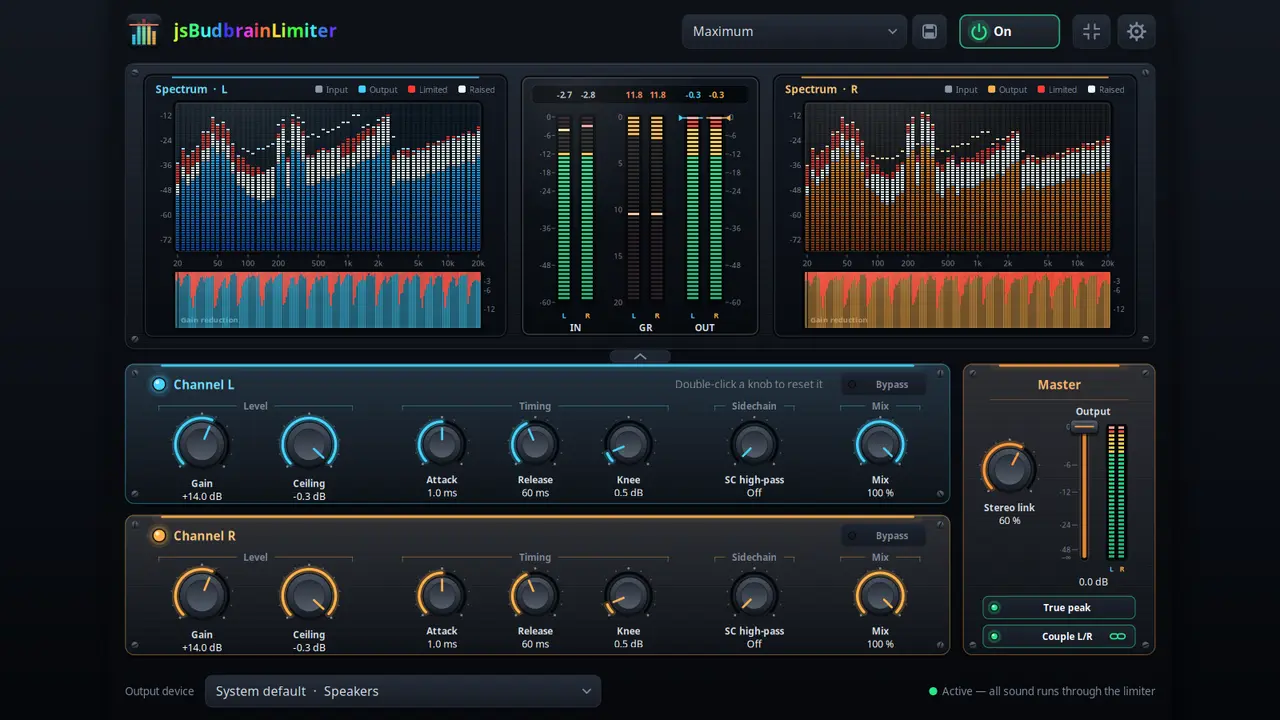
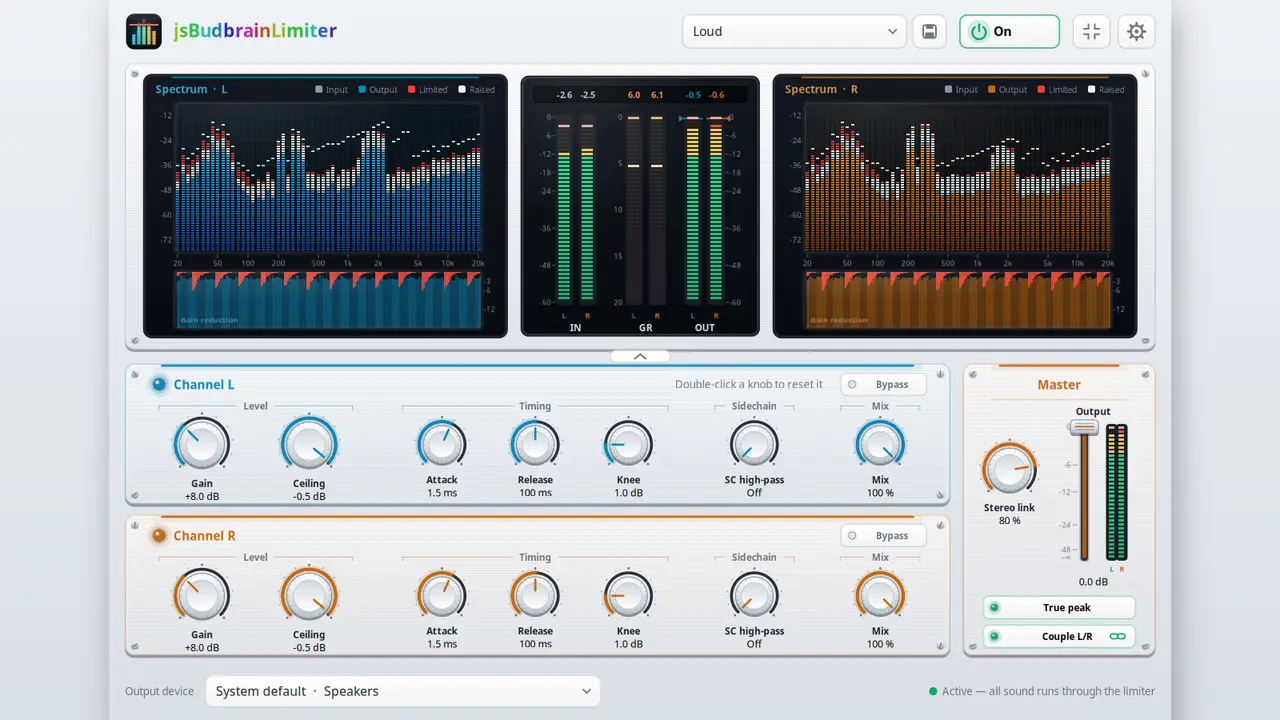
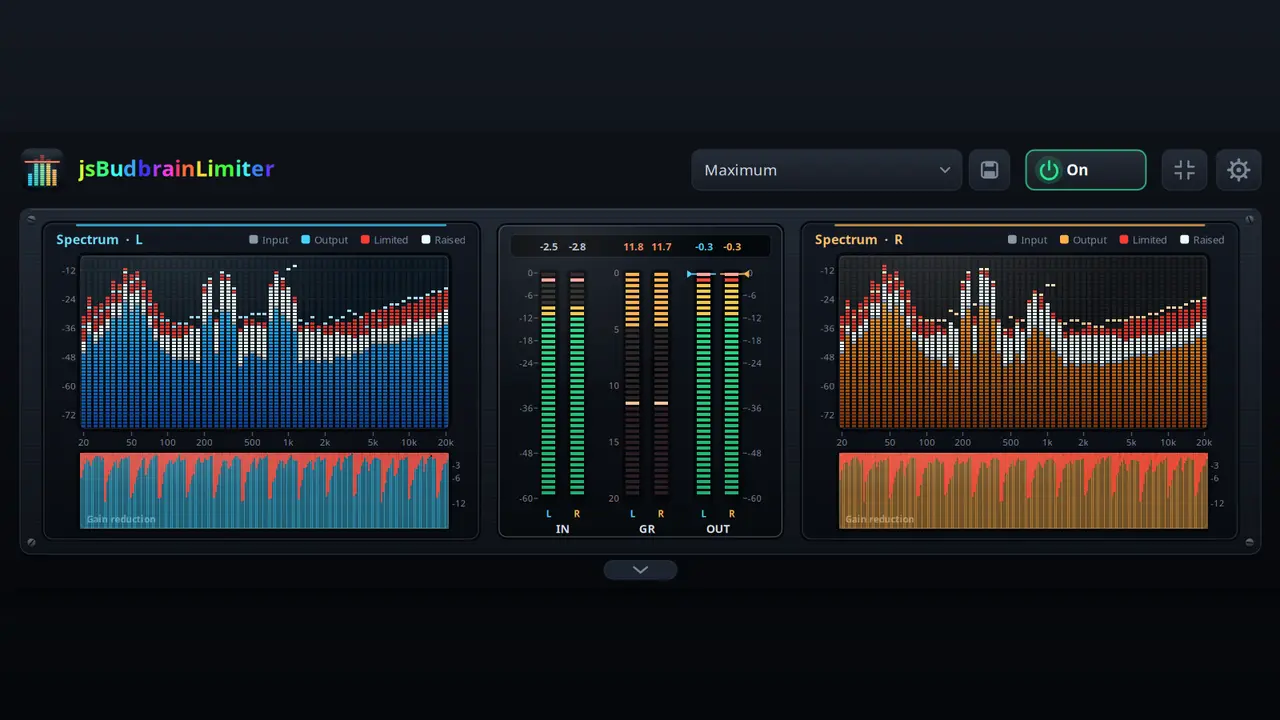
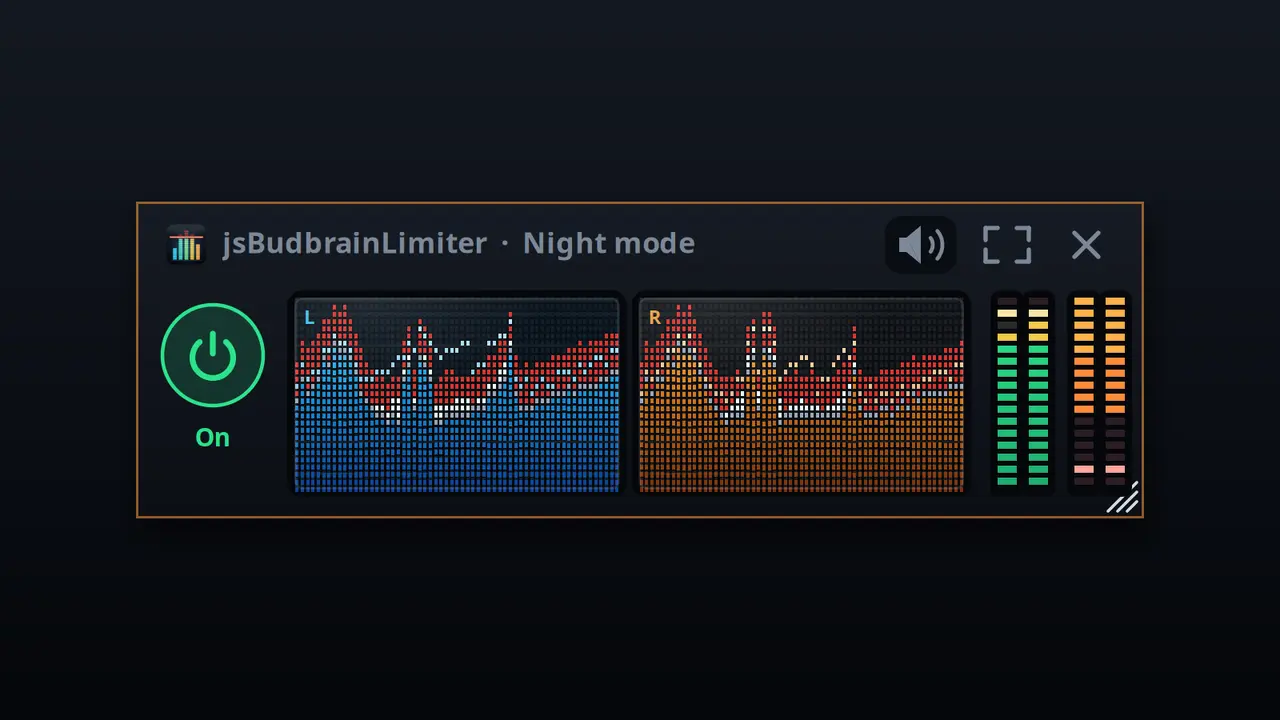
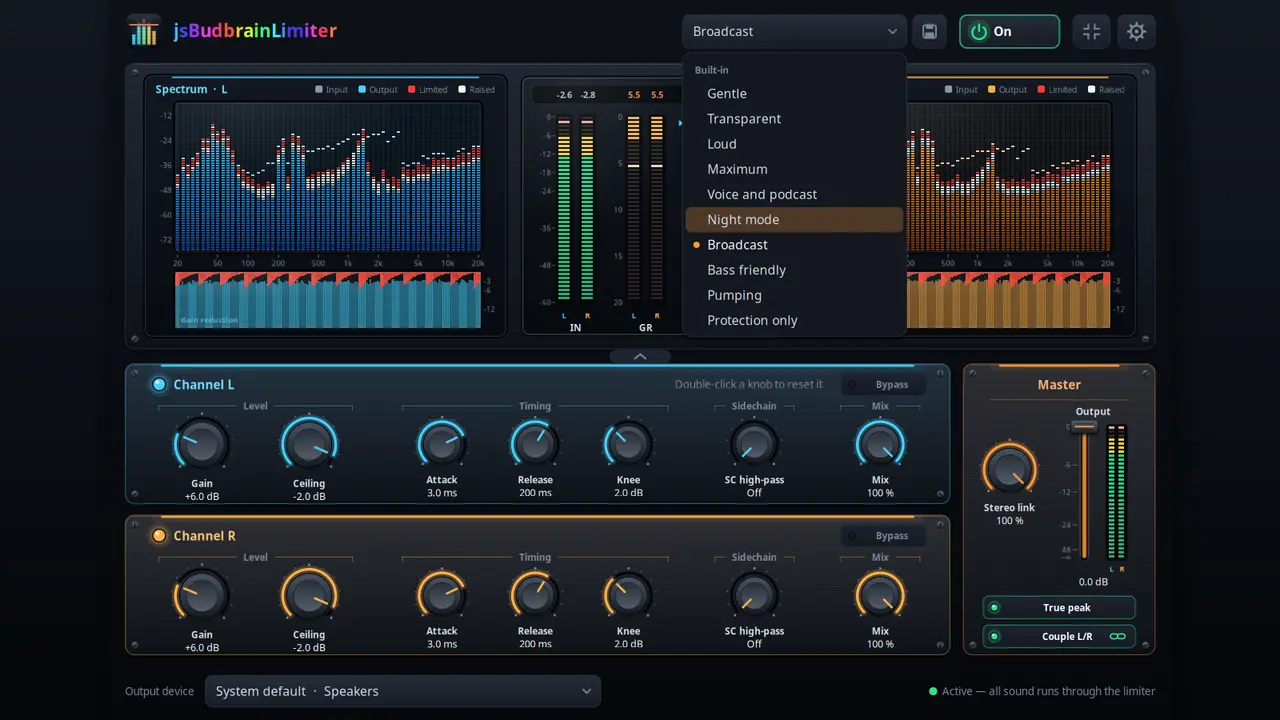
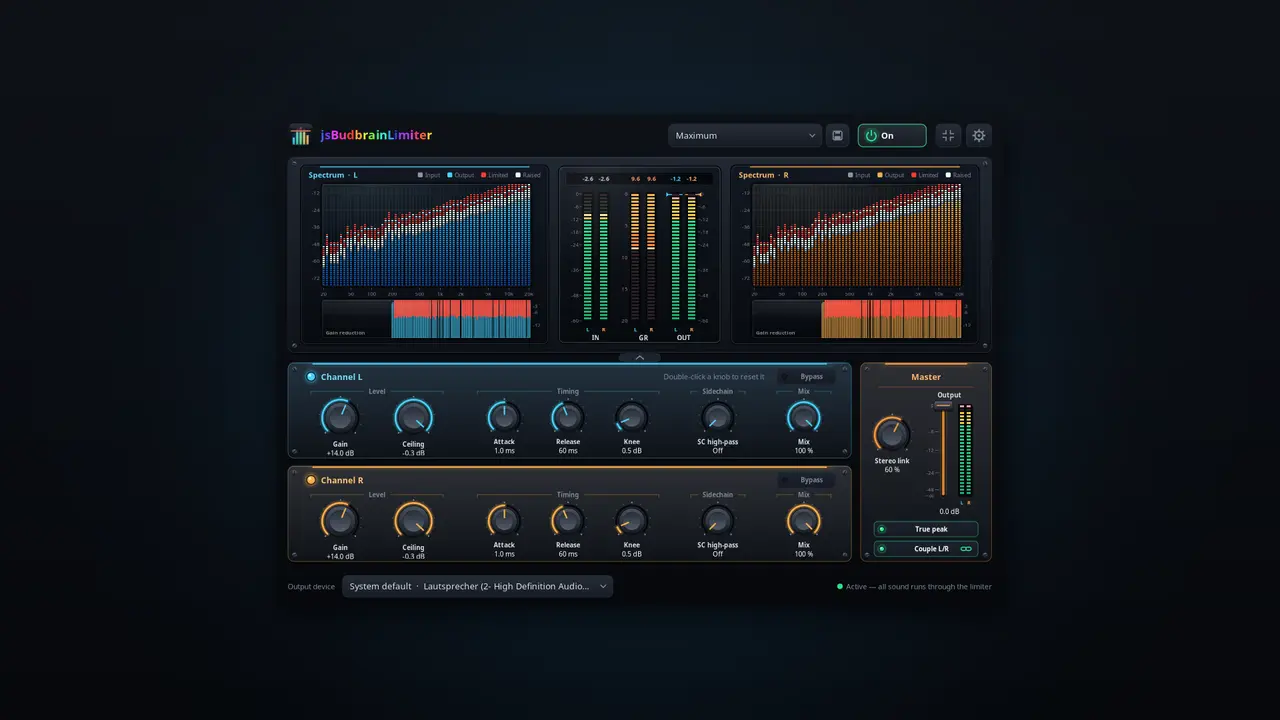
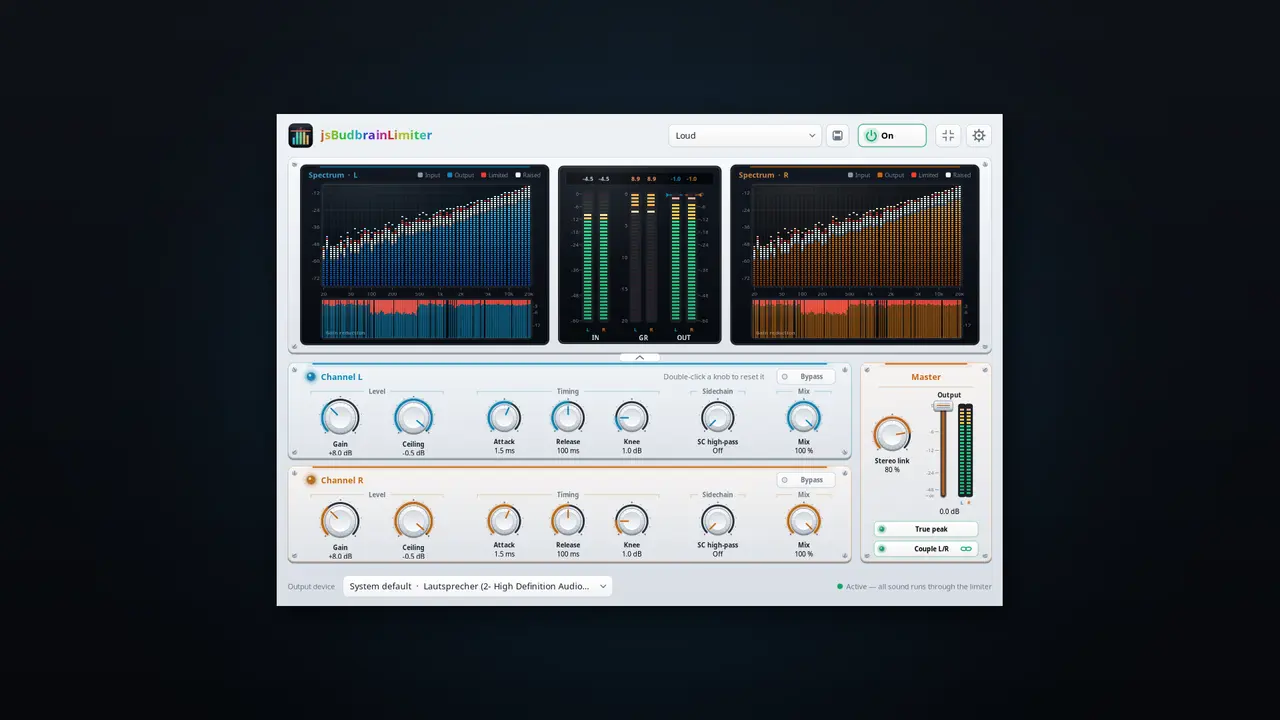
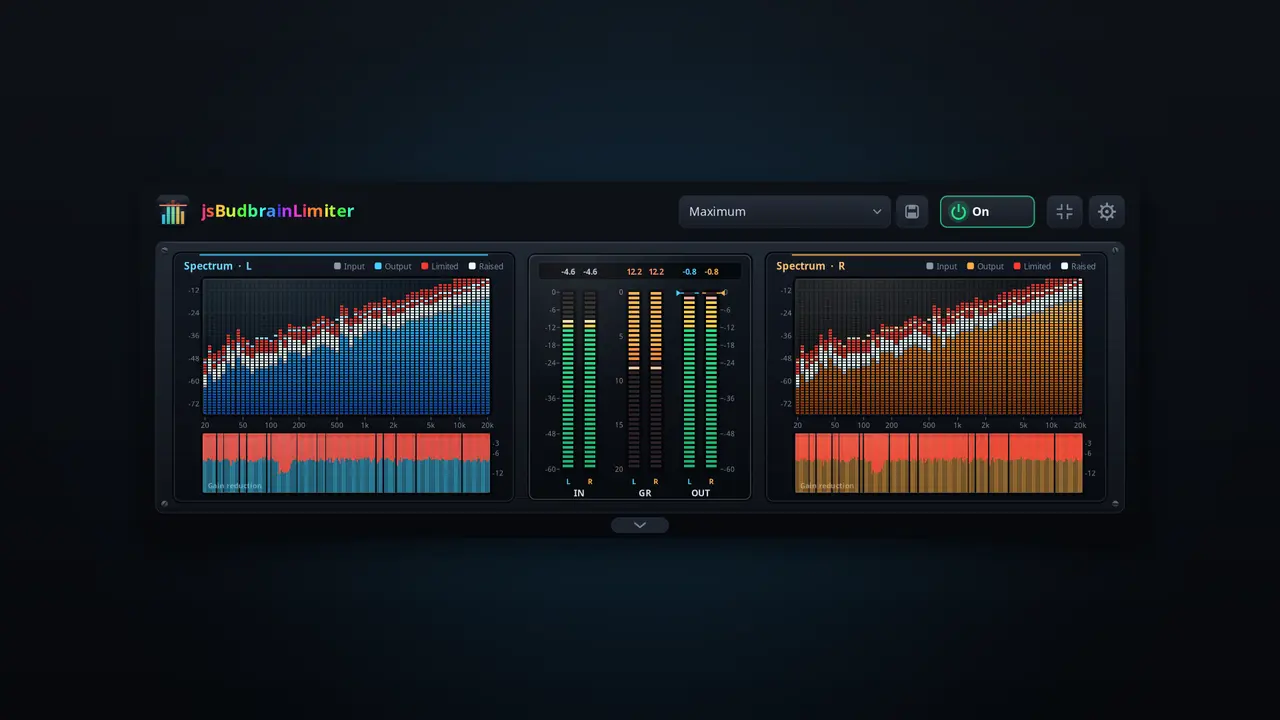
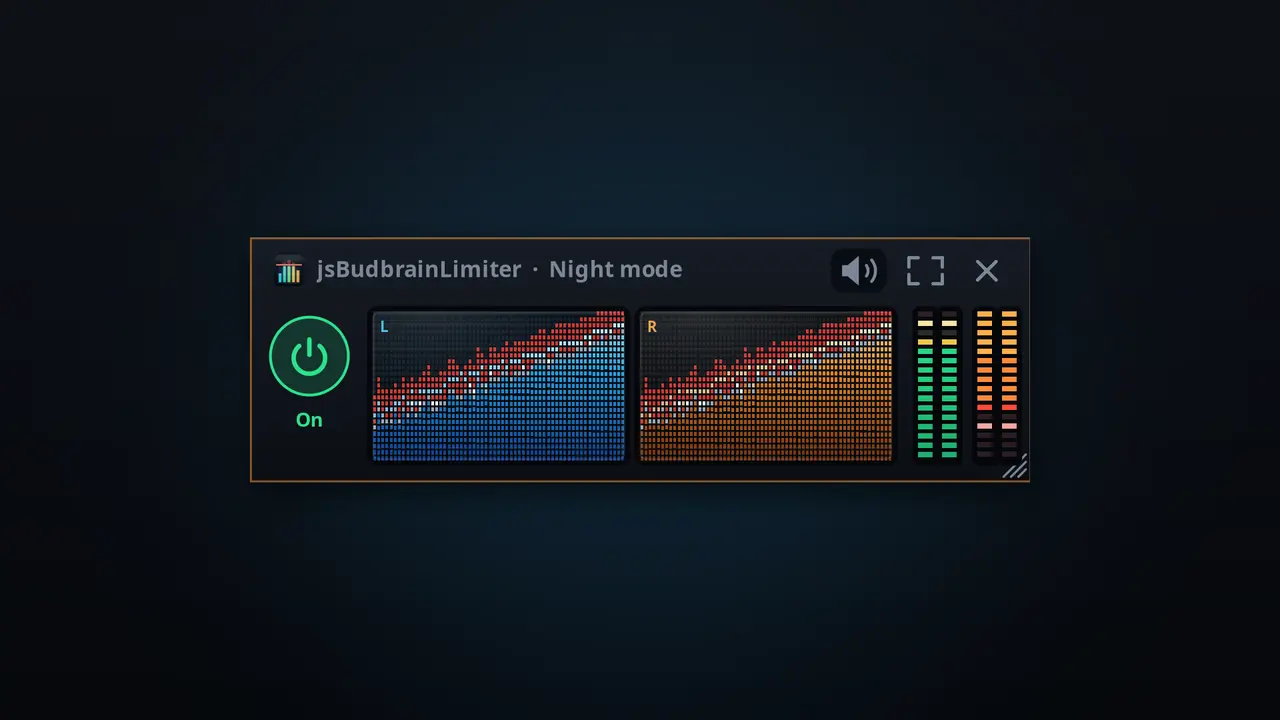
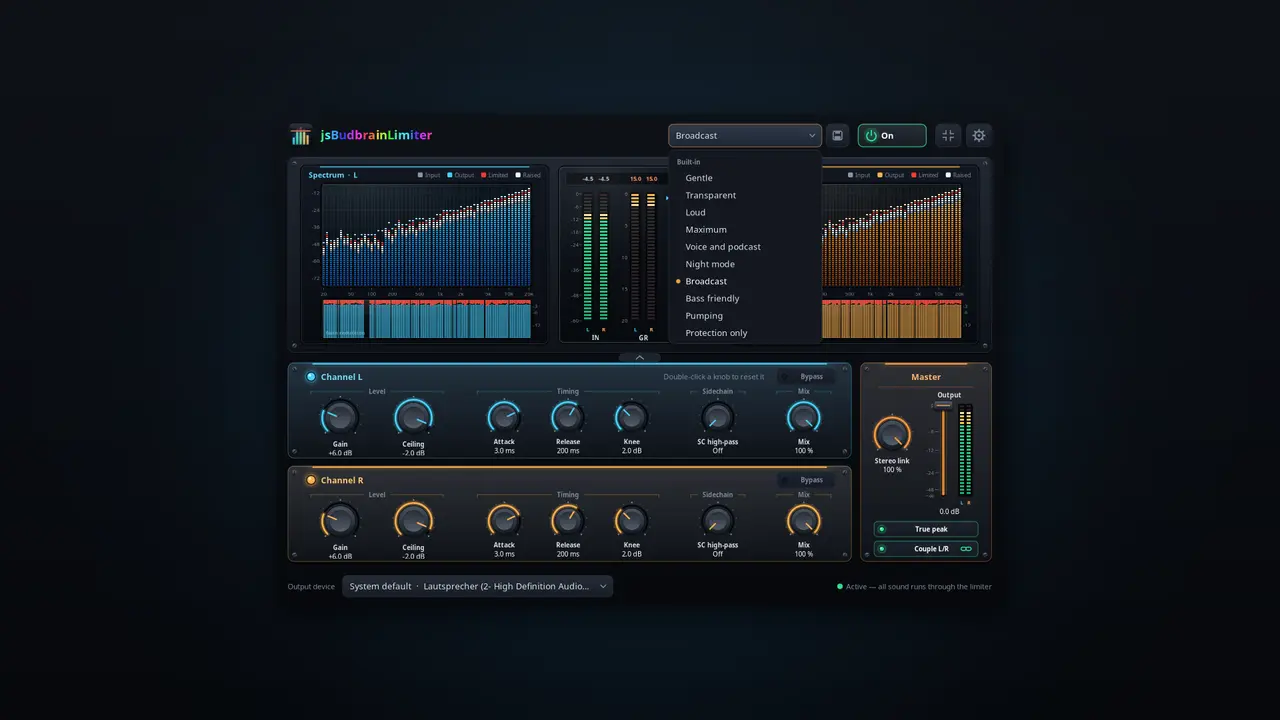
Bộ giới hạn cho mọi thứ máy tính của bạn phát — to hơn mà không bao giờ vượt ngưỡng, với hai màn hình phổ tần cho thấy nó đang làm gì.
Điều khiển riêng cho kênh trái và kênh phảiGain, ceiling, attack, release, knee, sidechain high-pass và mixTrue peak bắt được cả những đỉnh ngắn nhấtFader đầu ra kèm đồng hồ đo mức cho cả hai kênhHai màn hình phổ tần cho thấy phần được nâng lên và phần bị giới hạnLịch sử gain reduction và số đo đỉnhCác thiết lập dựng sẵn, cùng thiết lập của riêng bạnHoạt động cùng với jsBudbrainCompressor, jsBudbrainEqualizer và jsBudbrainsFxStudioNút tắt tiếng khi điện thoại reoChọn loa hoặc tai nghe của bạnCửa sổ nhỏ luôn nằm trên cùngSáng & tốiSDL2 · CairoPipeWire · PulseAudio83 ngôn ngữ
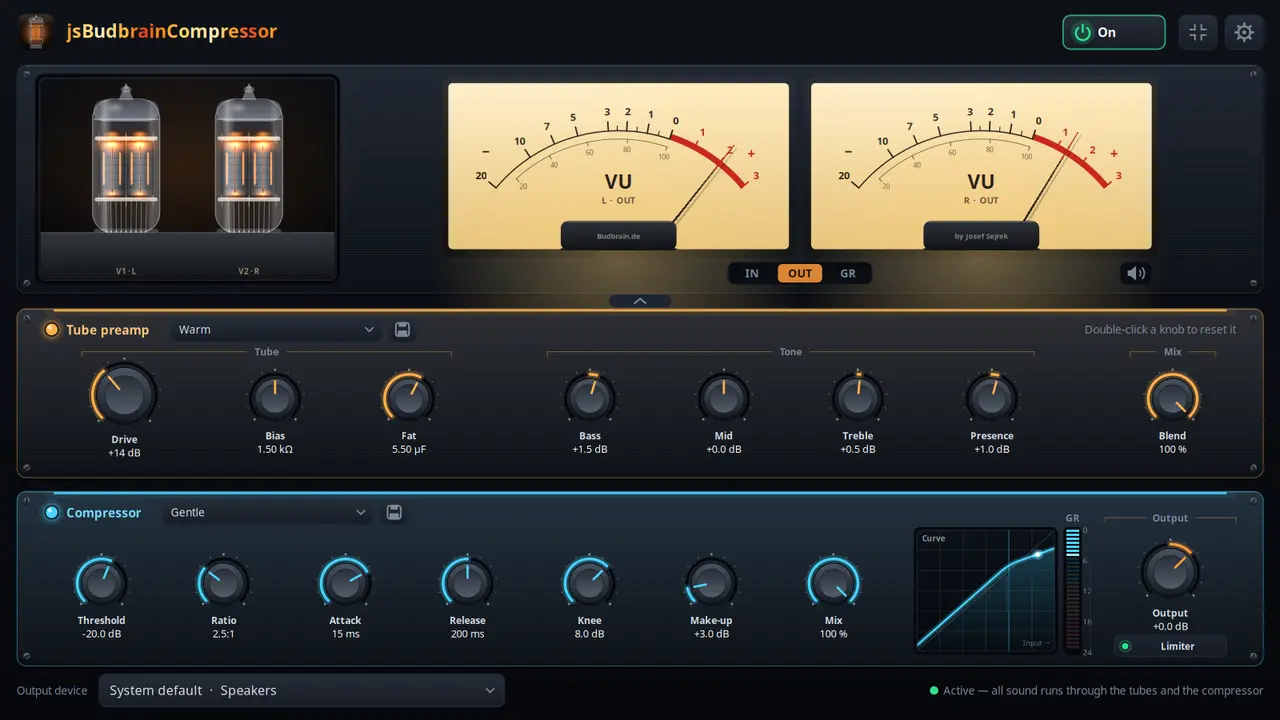
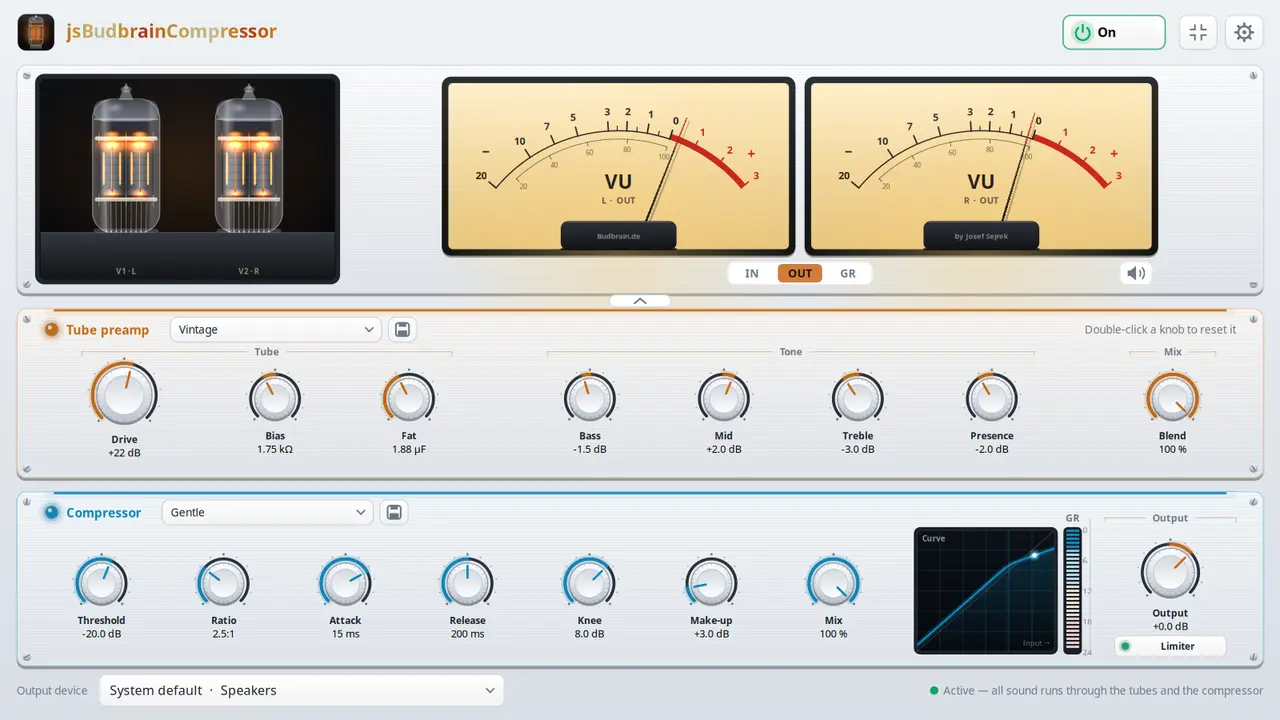
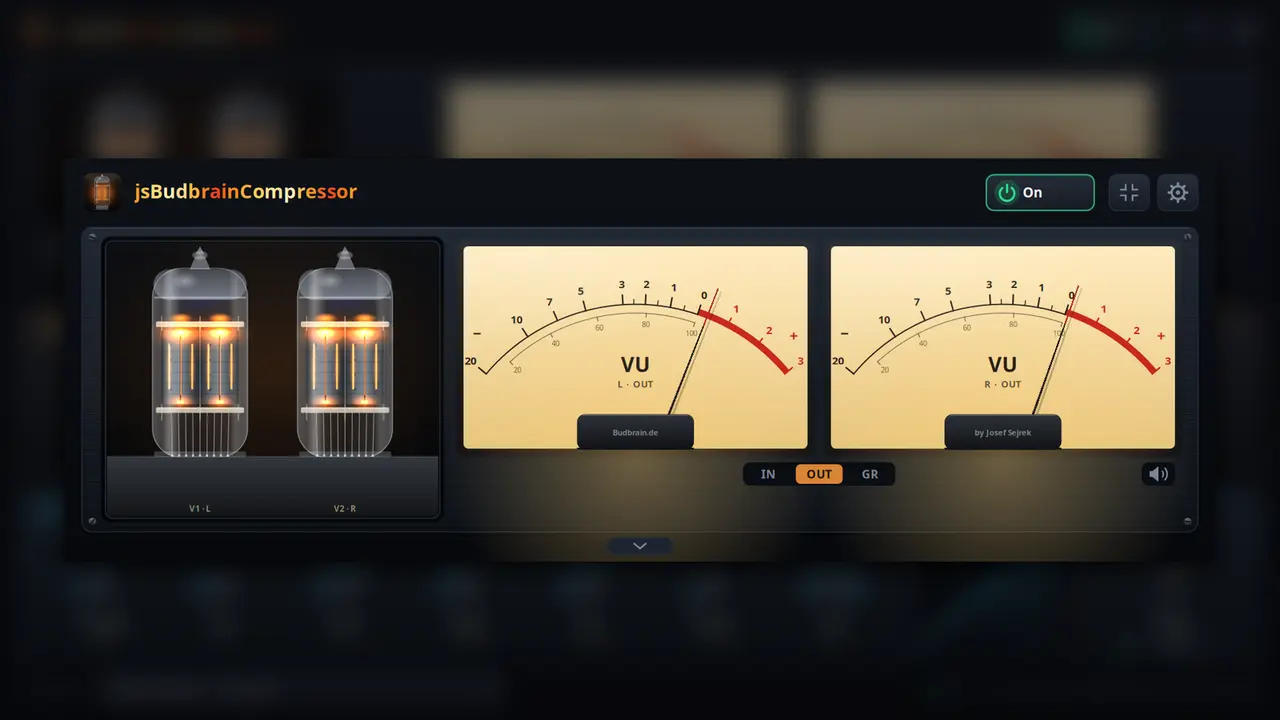
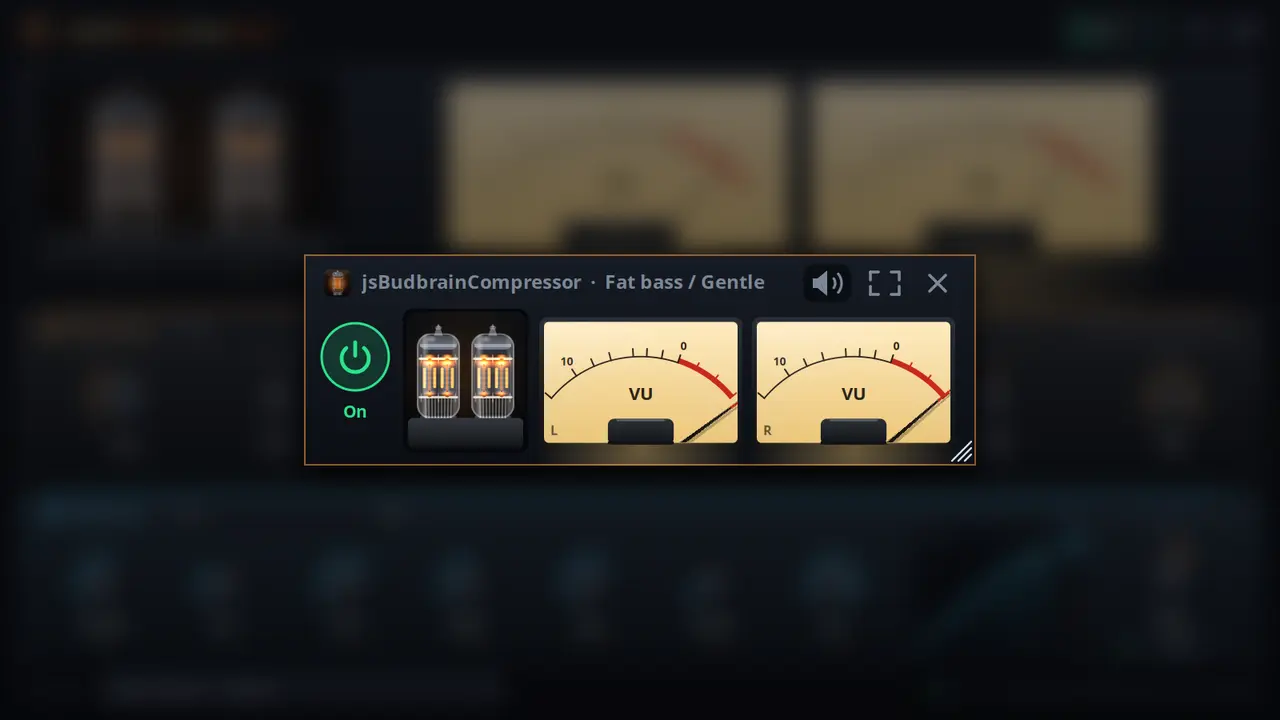
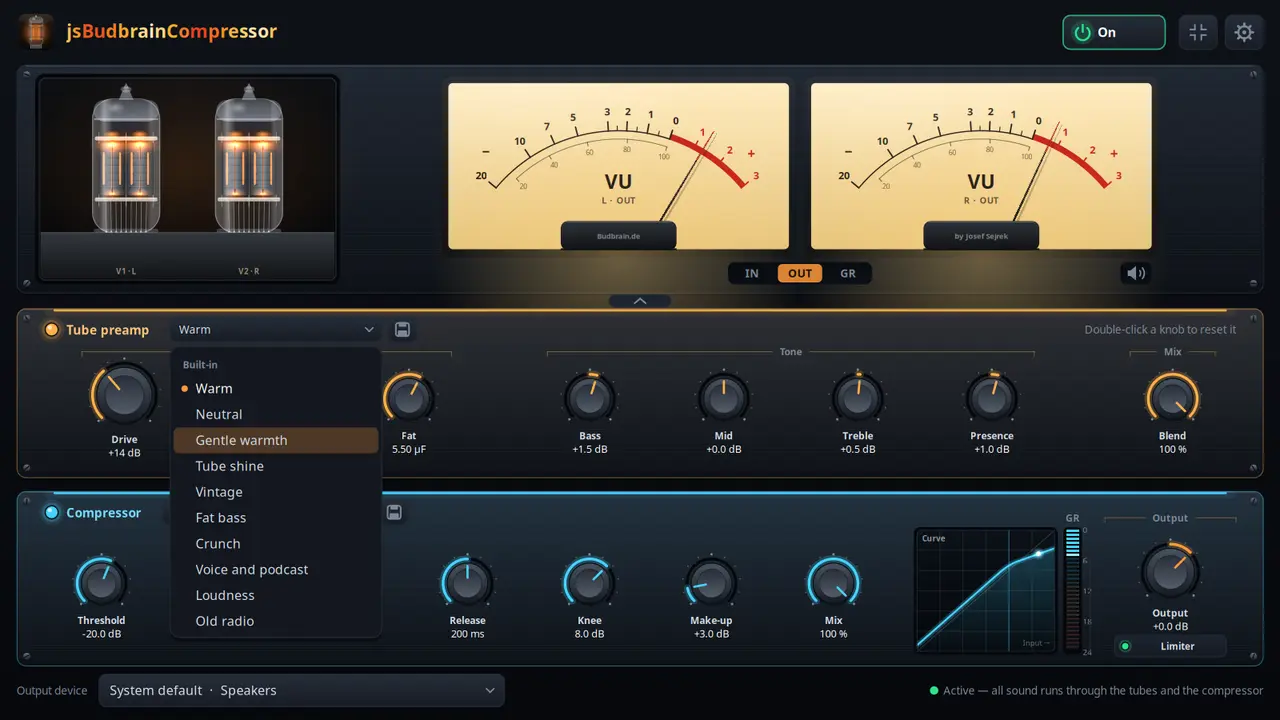
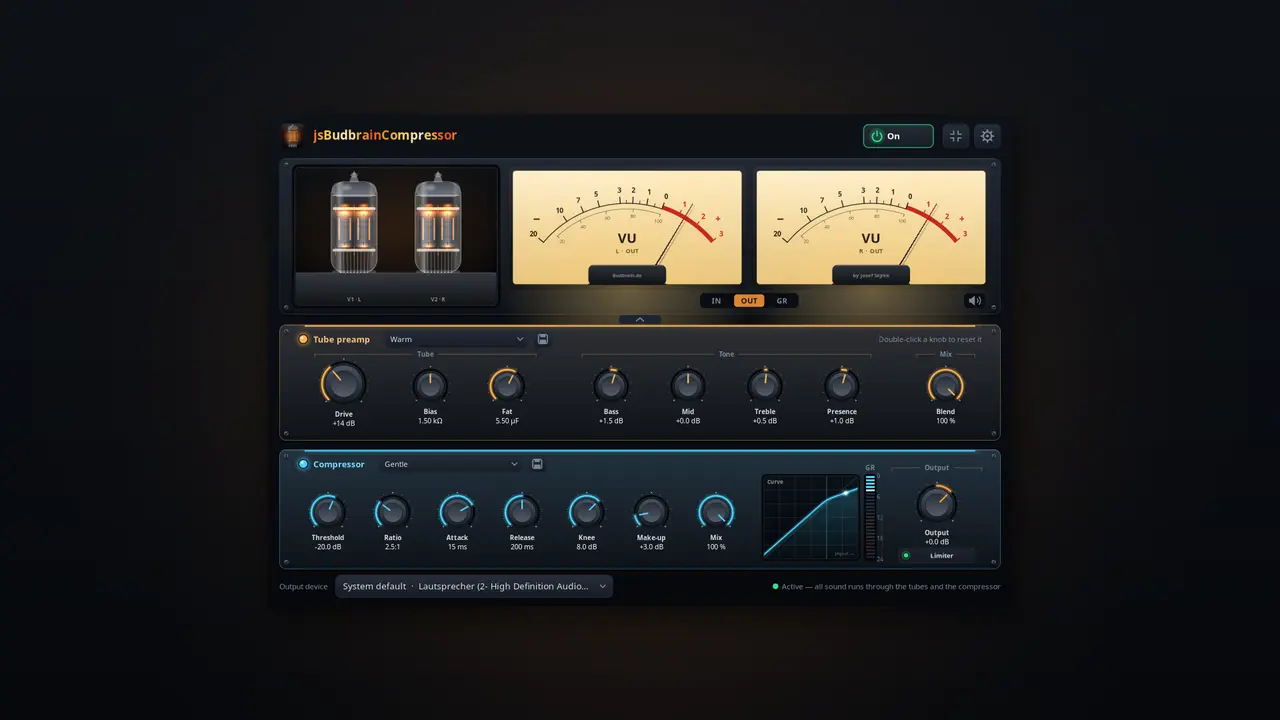
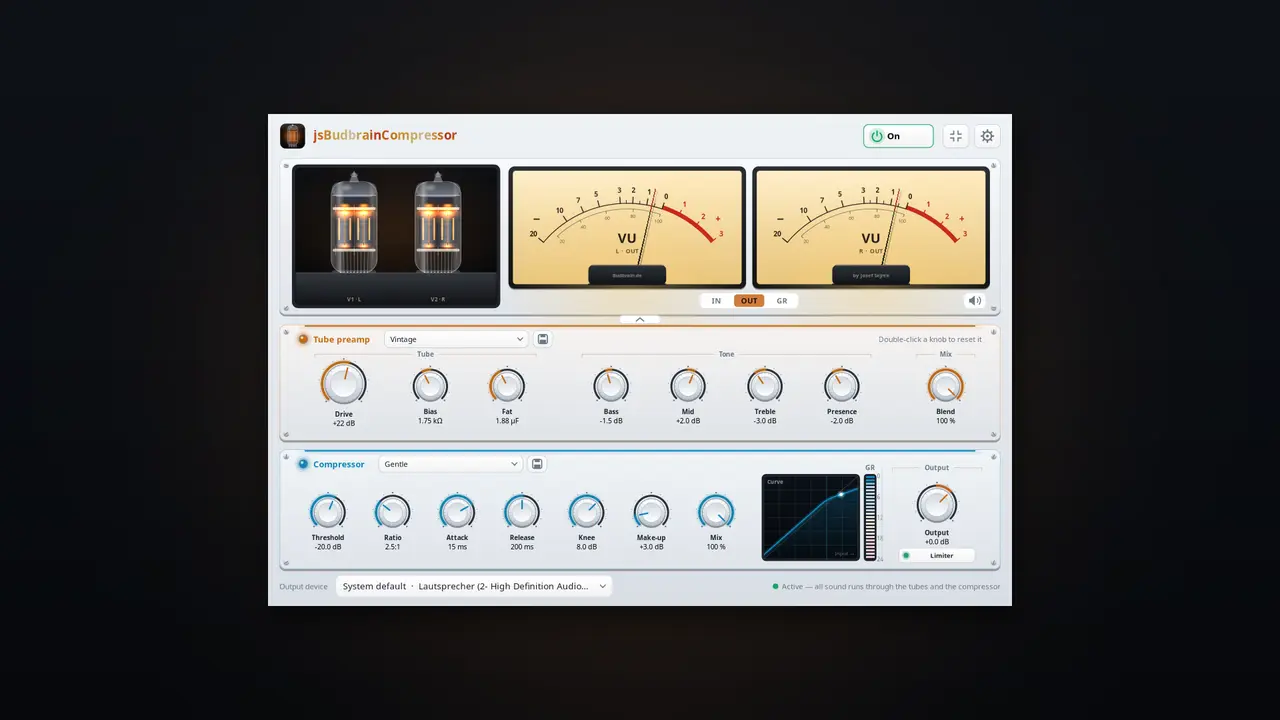
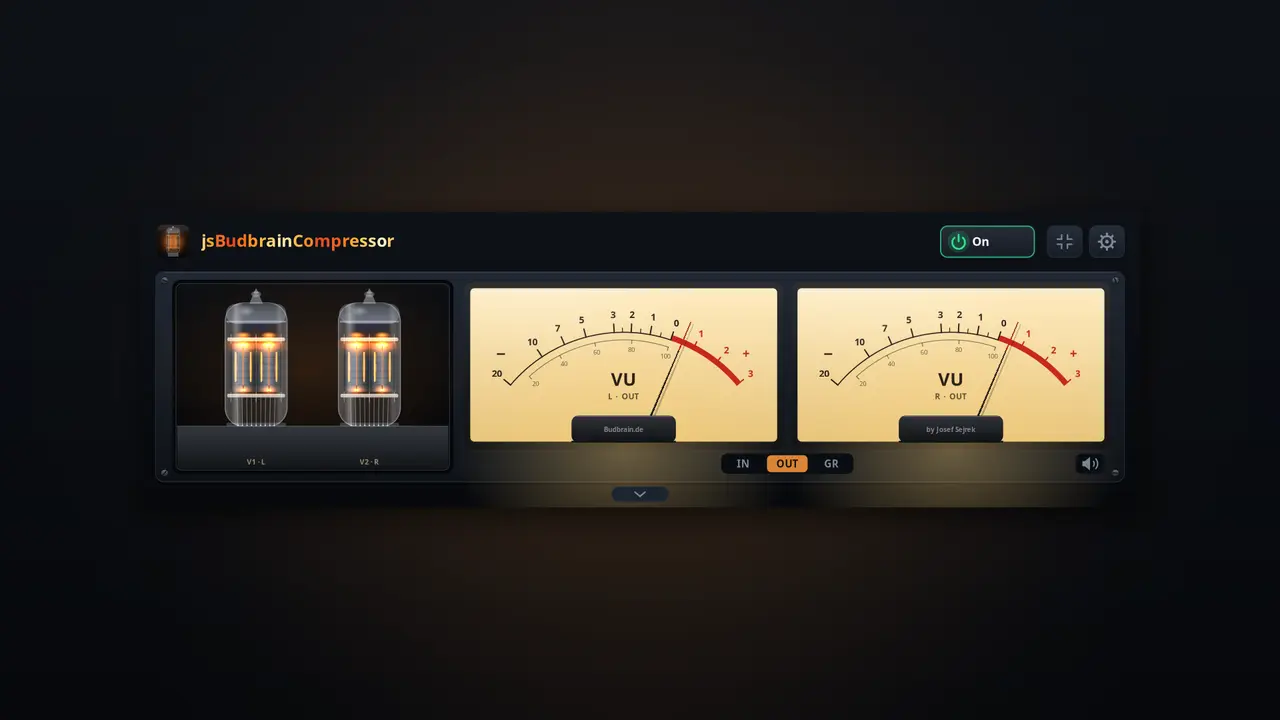
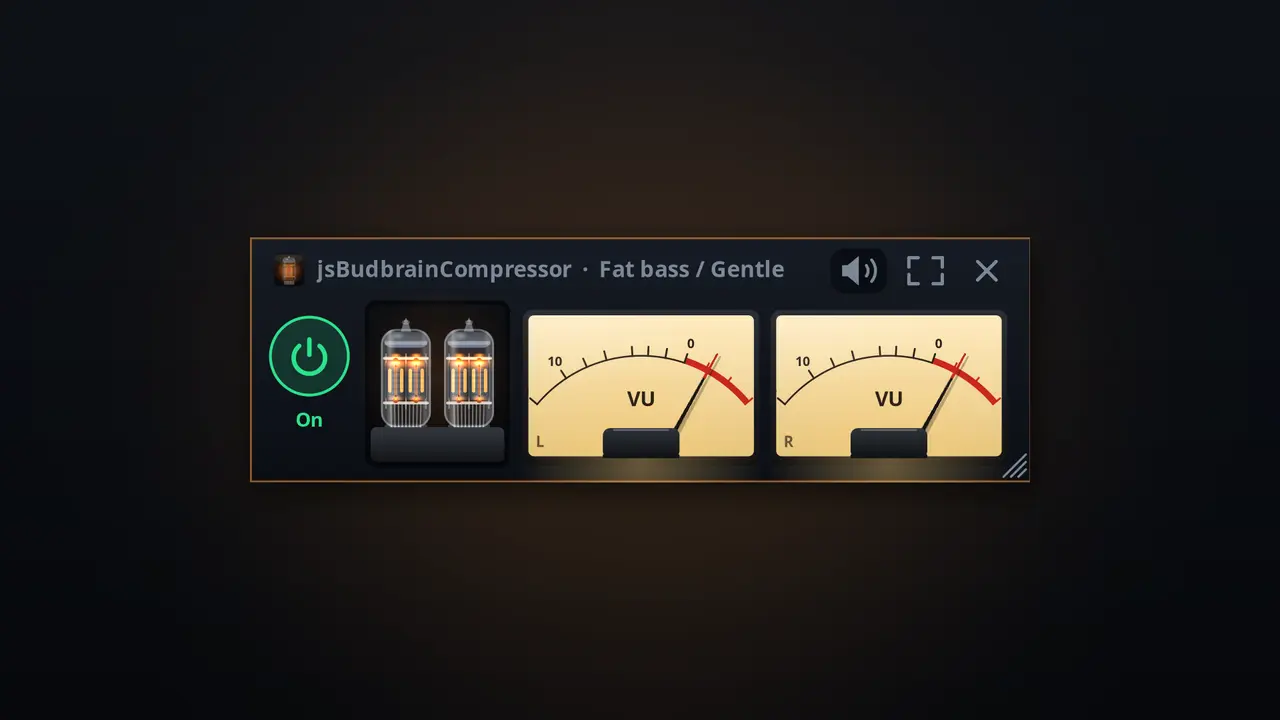
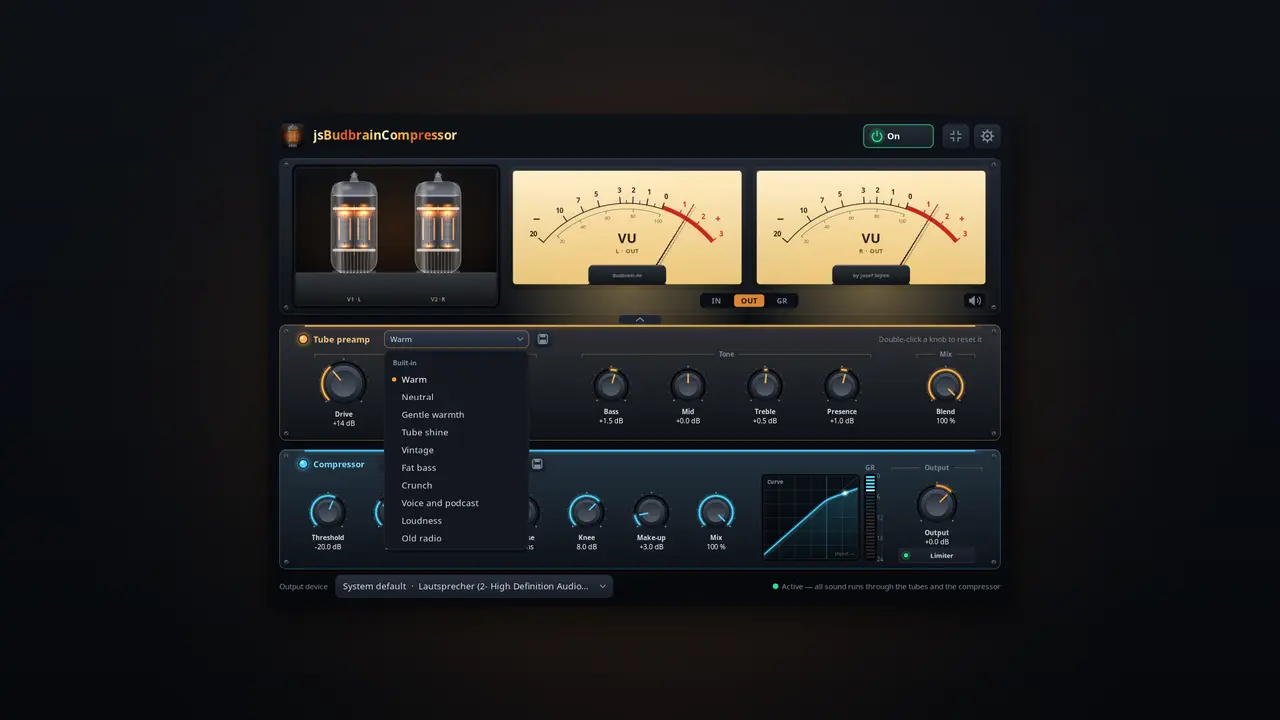
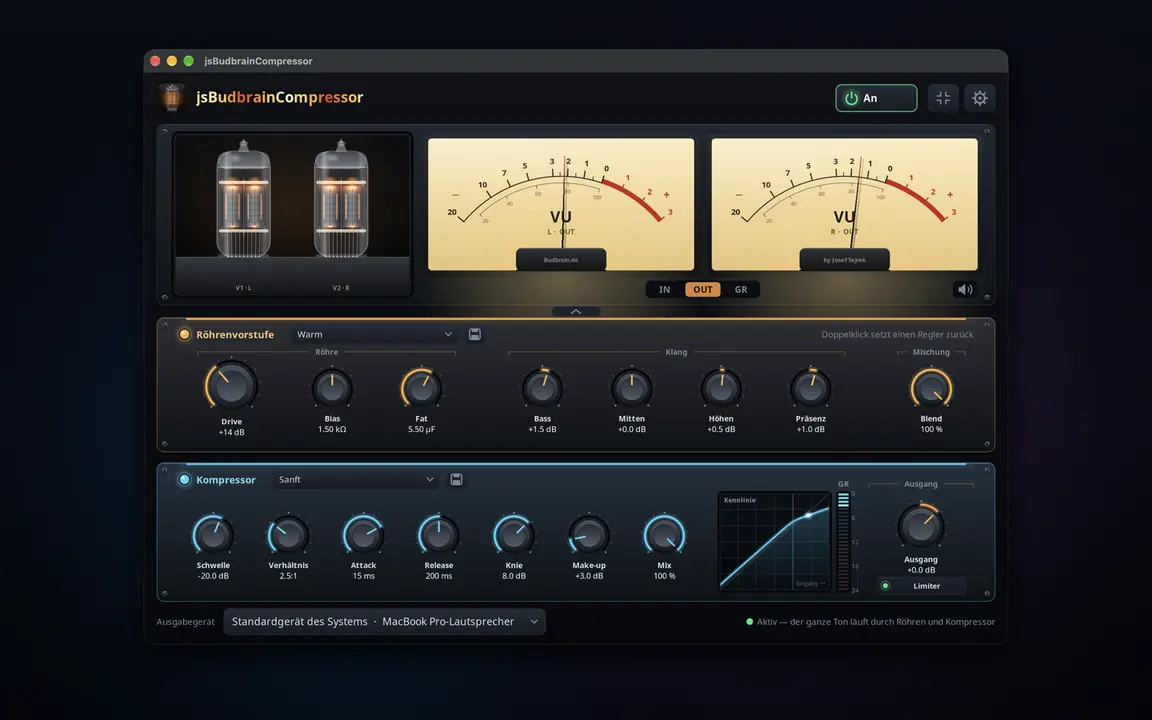
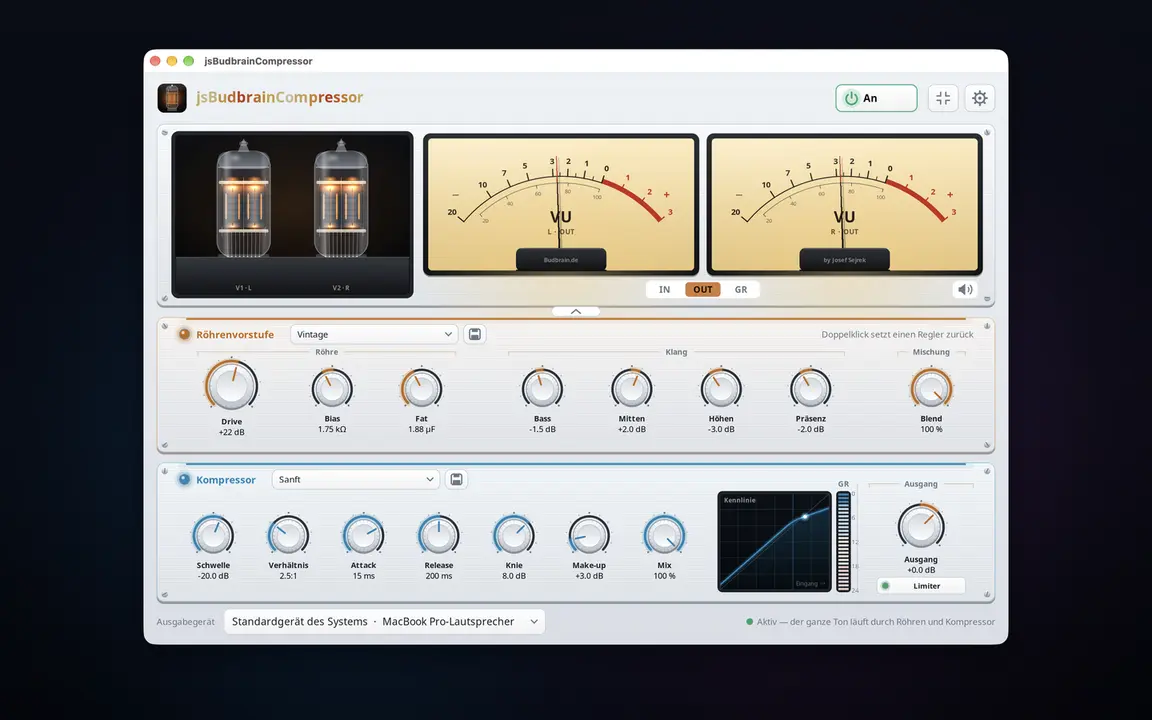
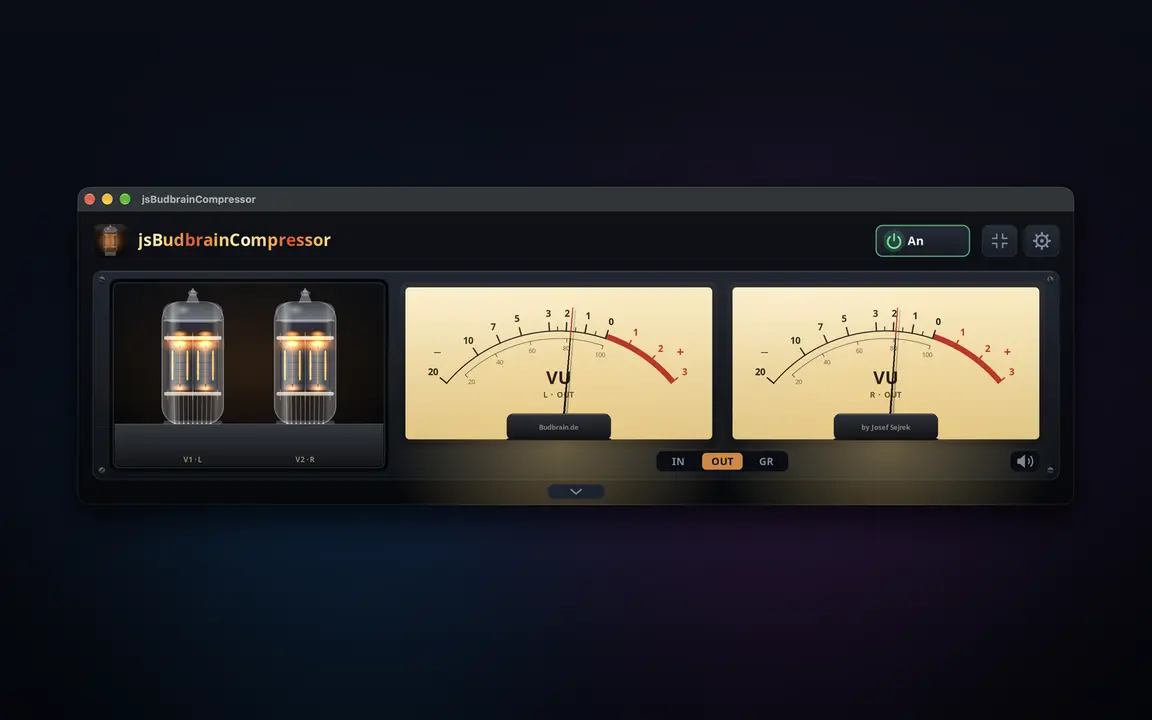
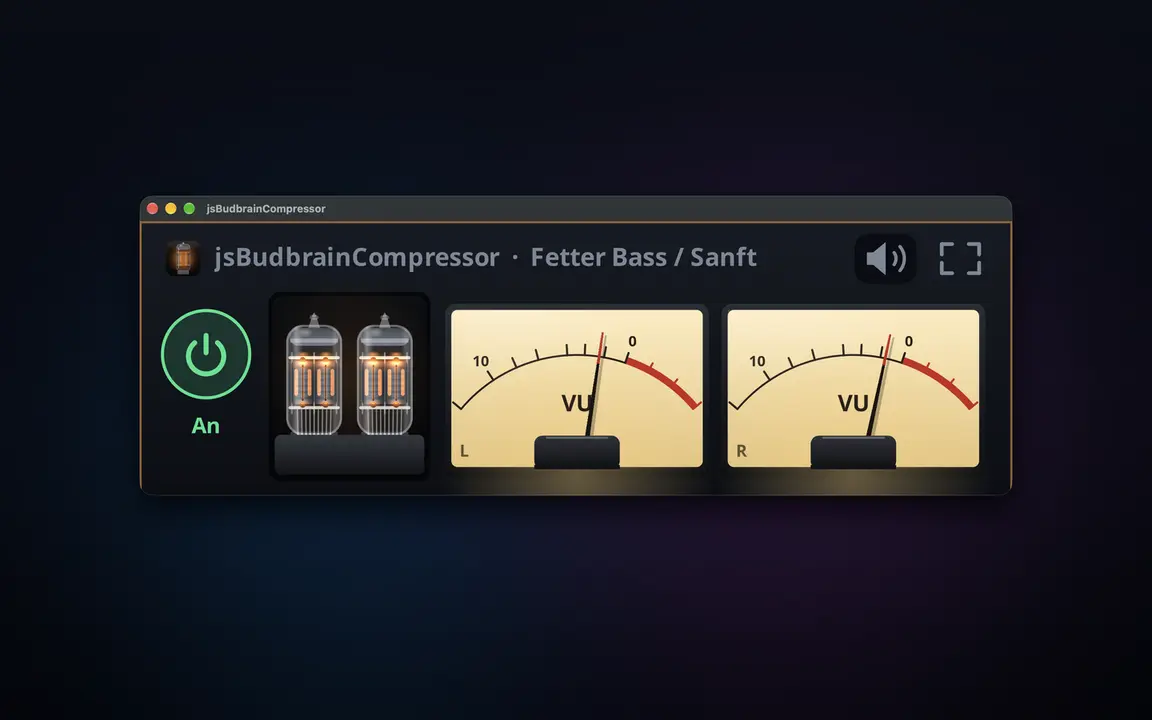
Độ ấm của đèn điện tử và bộ nén kiểu phòng thu cho mọi thứ máy tính của bạn phát — với những bóng đèn phát sáng và đồng hồ VU.
Tiền khuếch đại đèn mô phỏng với drive, bias và fatBass, mid, treble và presenceBộ nén với threshold, ratio, attack, release, knee, make-up và mixHai đồng hồ VU với chuyển động kim như thậtĐèn càng làm việc nhiều thì càng sáng hơnCác thiết lập dựng sẵn cho đèn và bộ nén, cùng thiết lập của riêng bạnBộ giới hạn bảo vệ tai và loaHoạt động cùng với jsBudbrainEqualizer và jsBudbrainsFxStudioNút tắt tiếng khi điện thoại reoChọn loa hoặc tai nghe của bạnCửa sổ nhỏ luôn nằm trên cùngSáng & tốiSDL2 · CairoPipeWire · PulseAudio83 ngôn ngữ
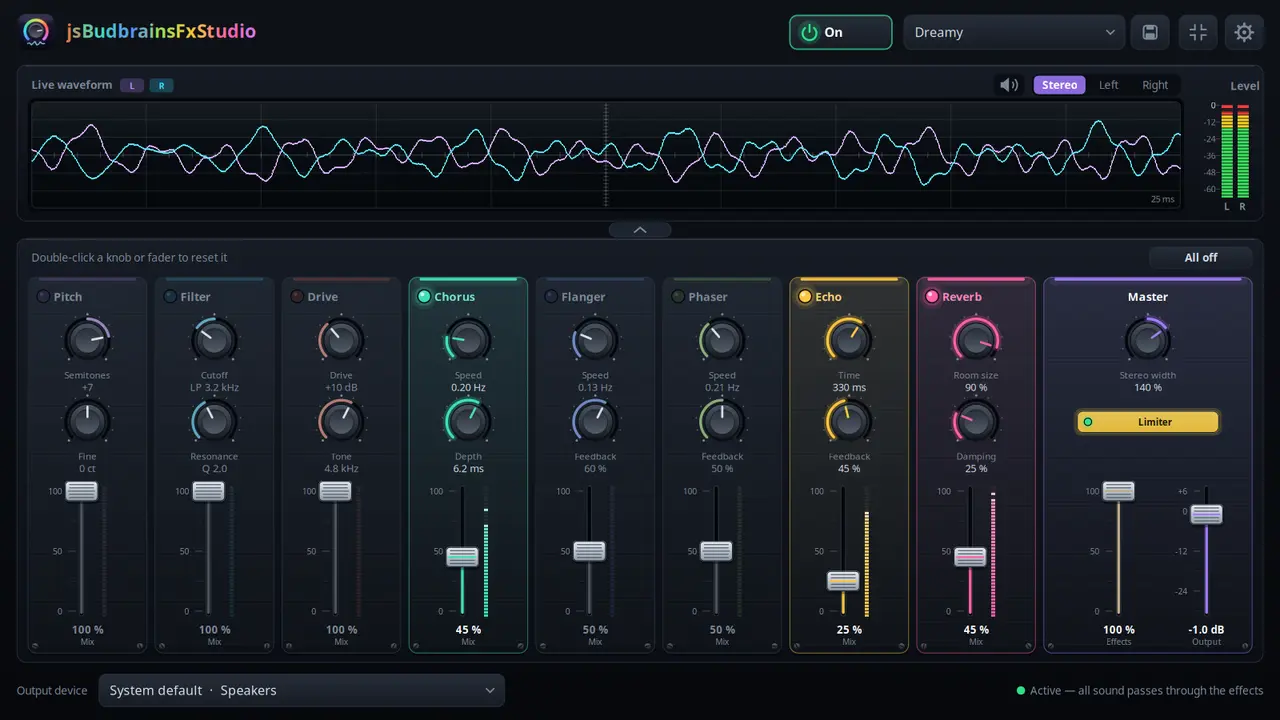
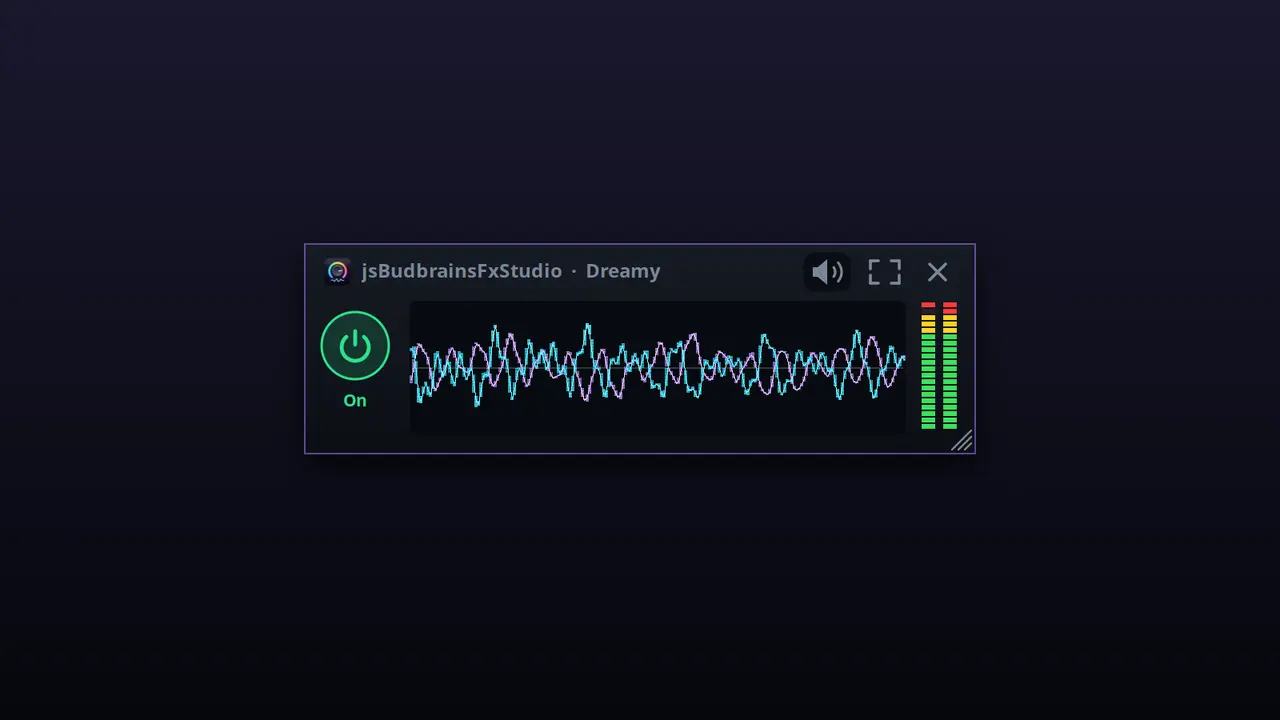
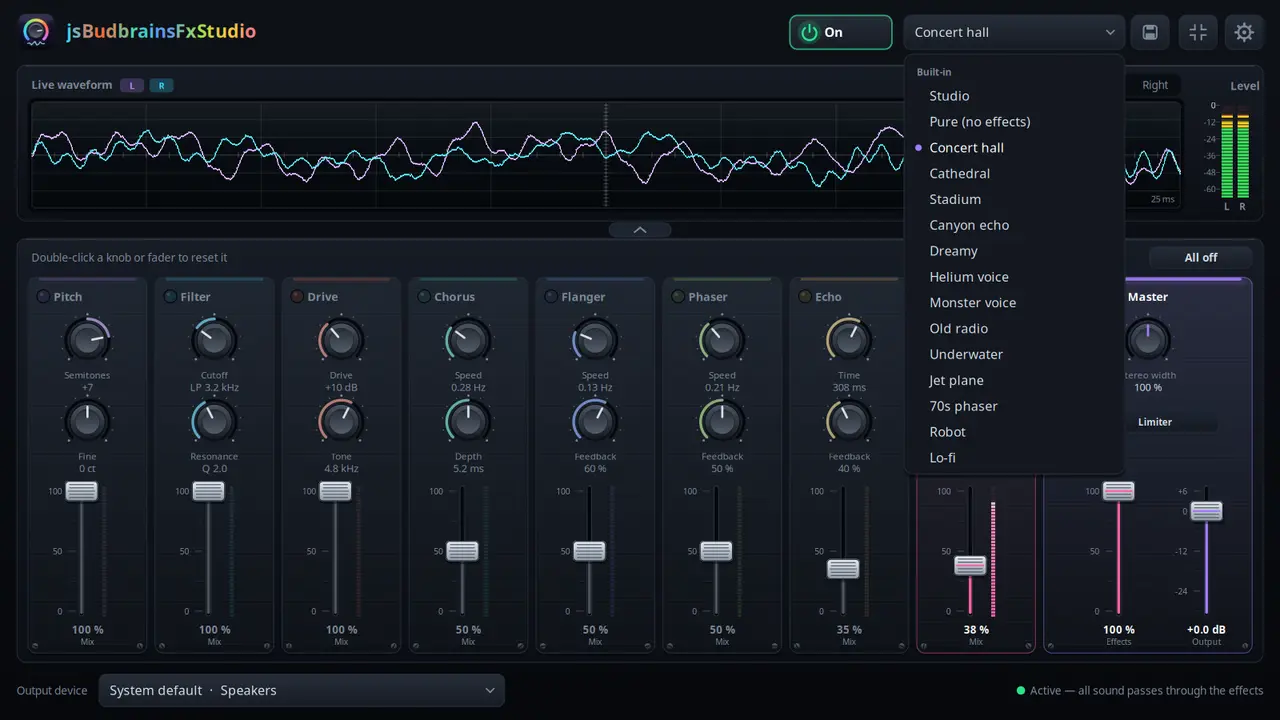
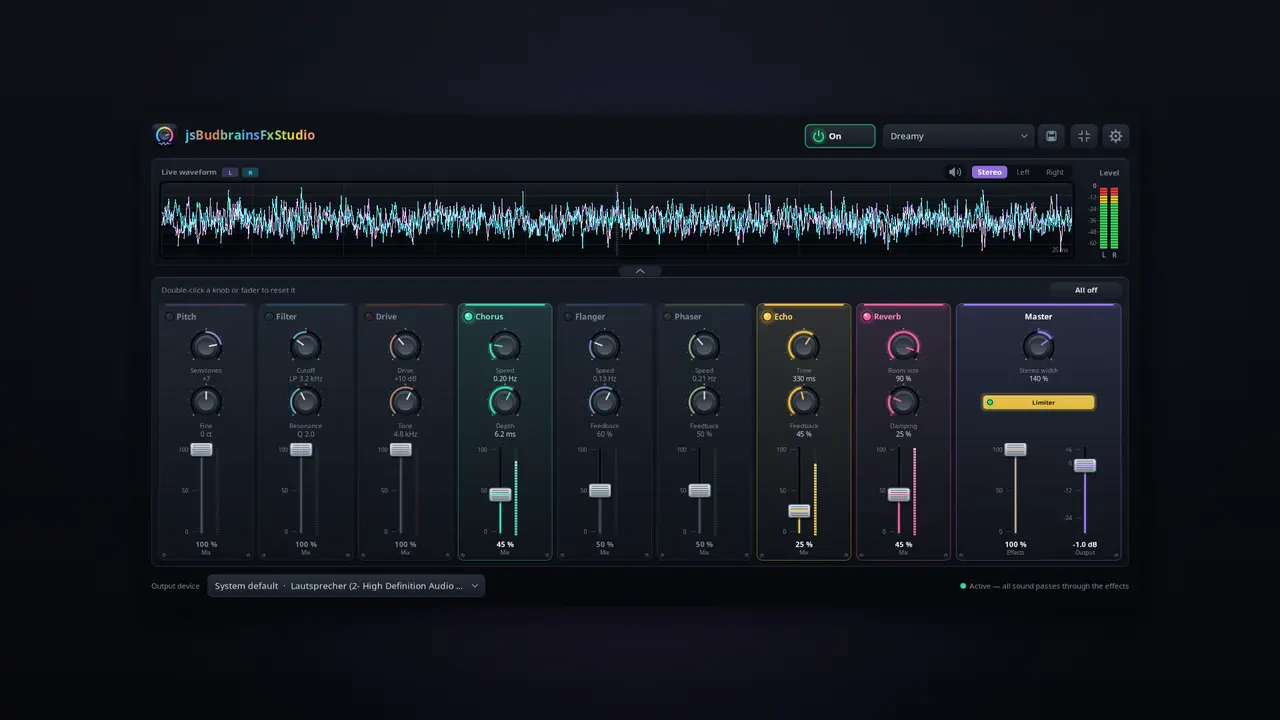
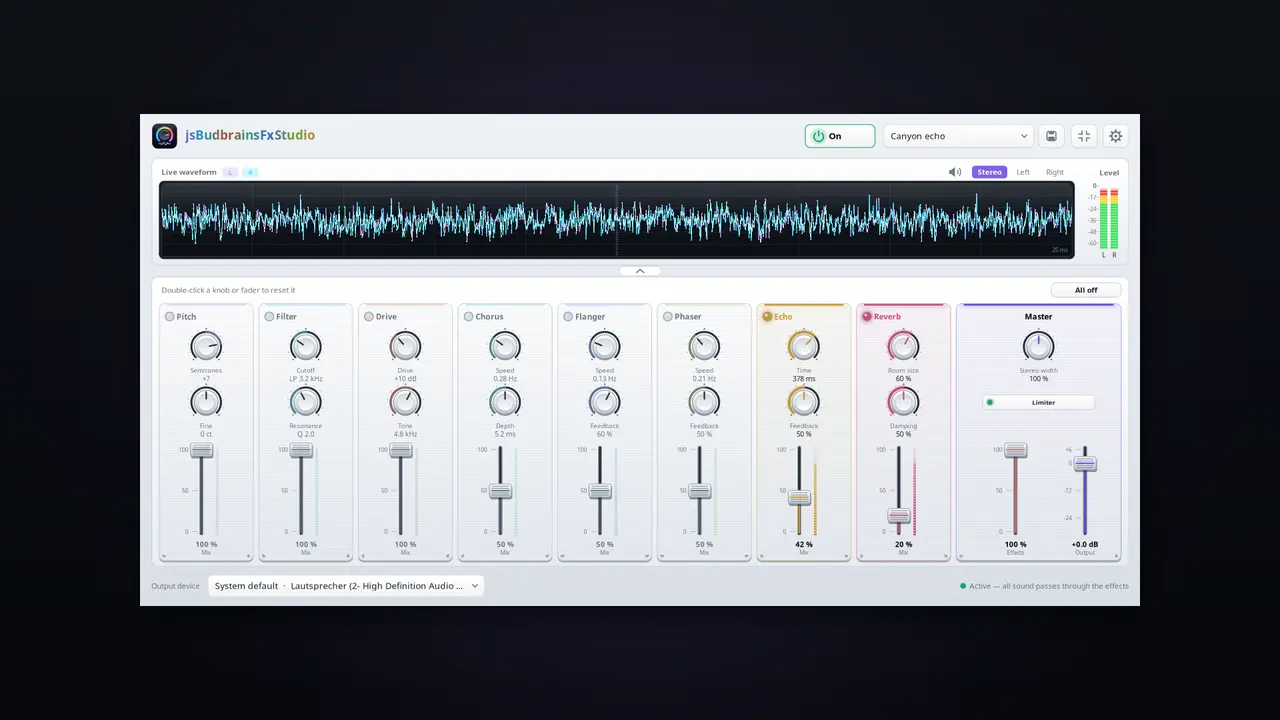
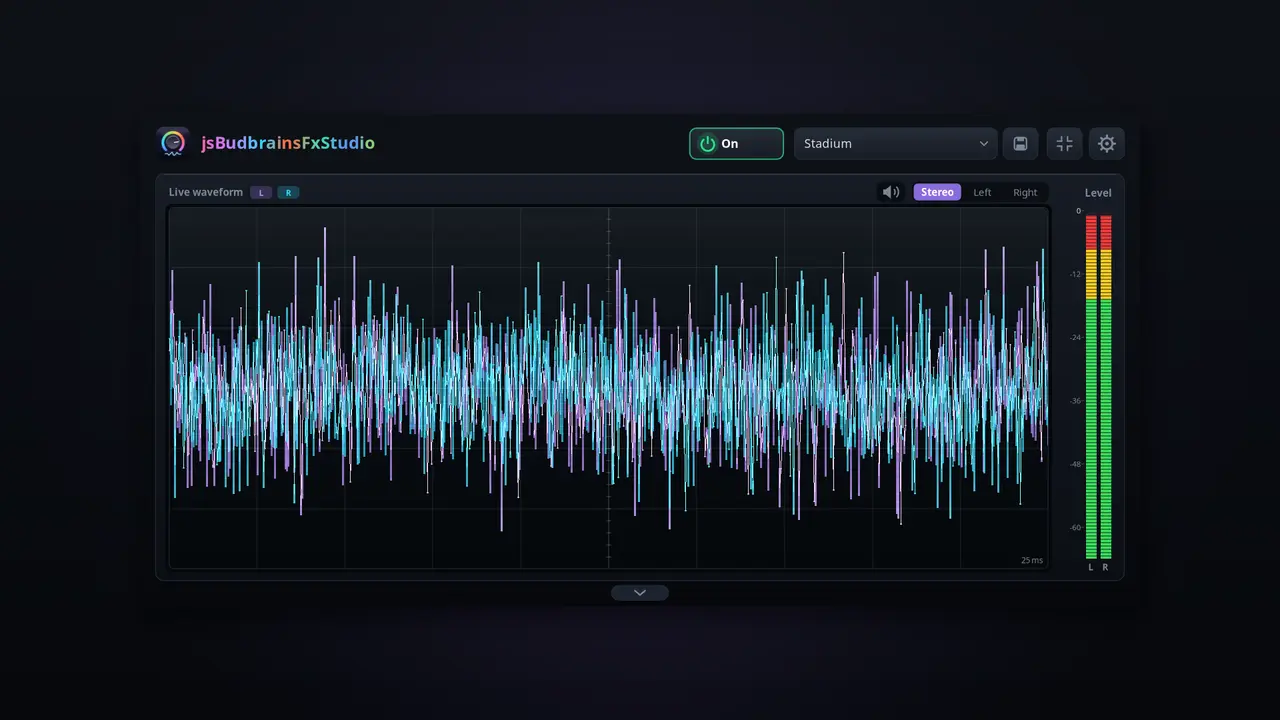
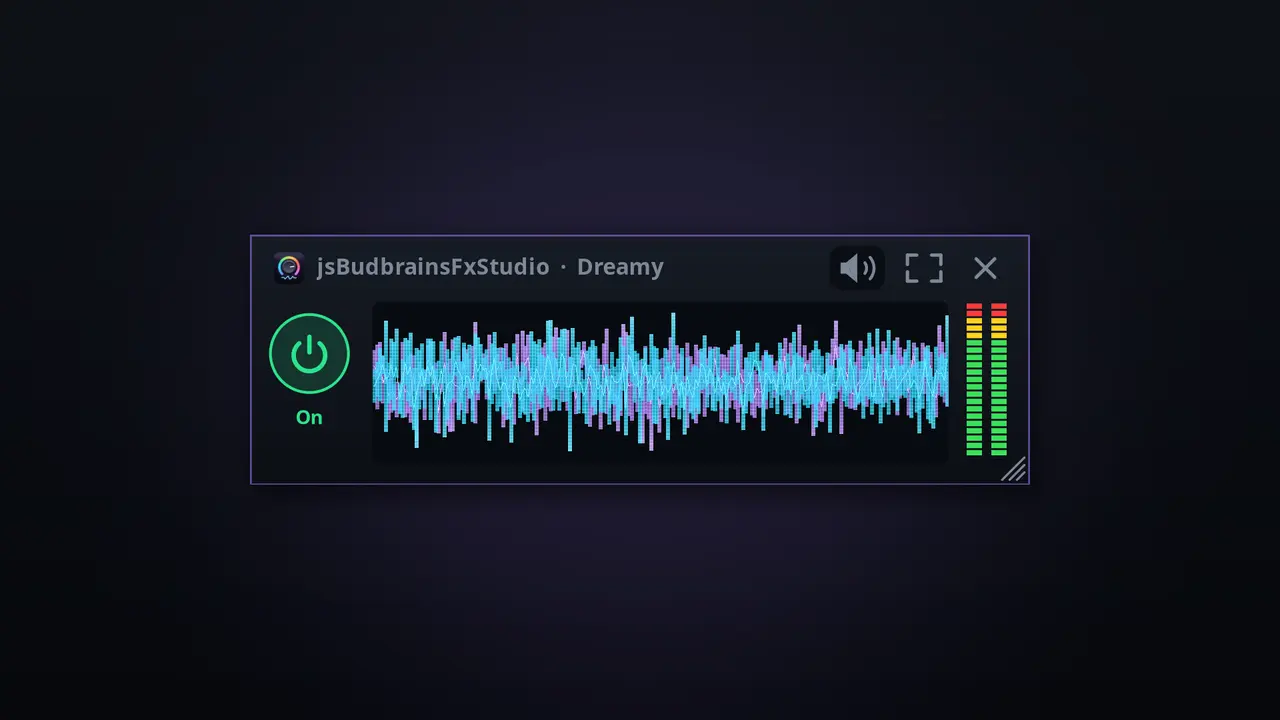
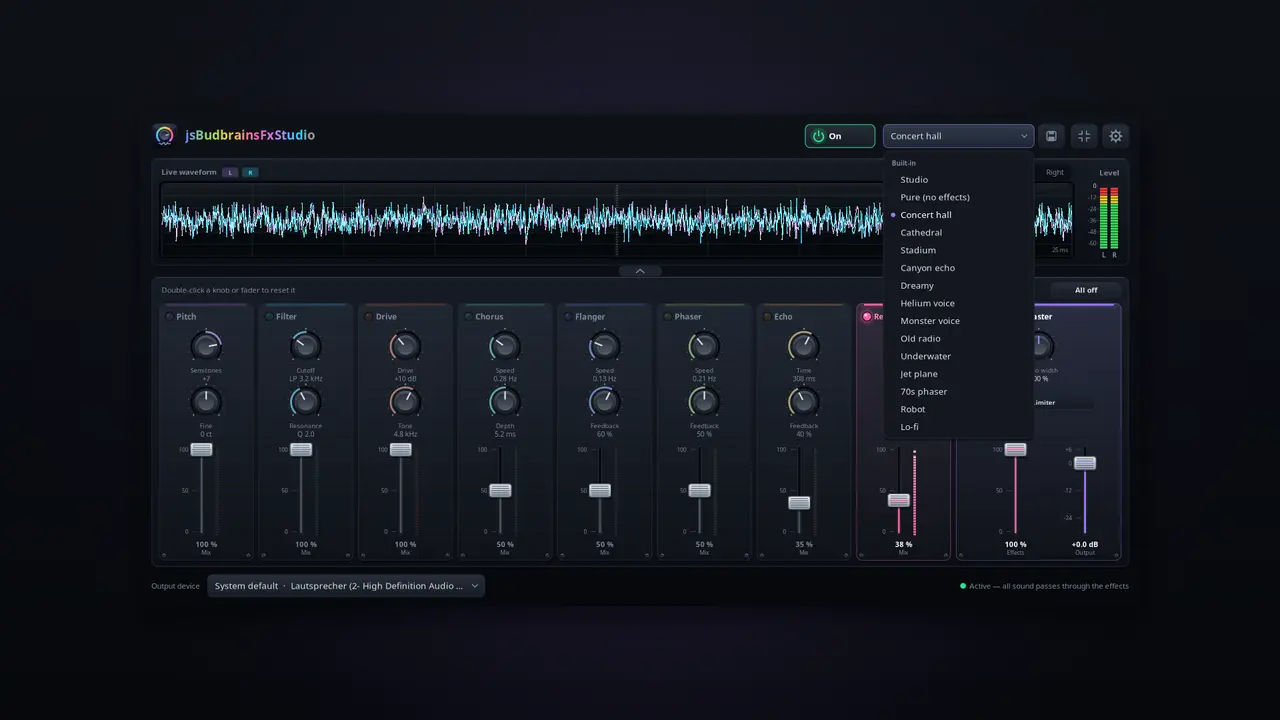
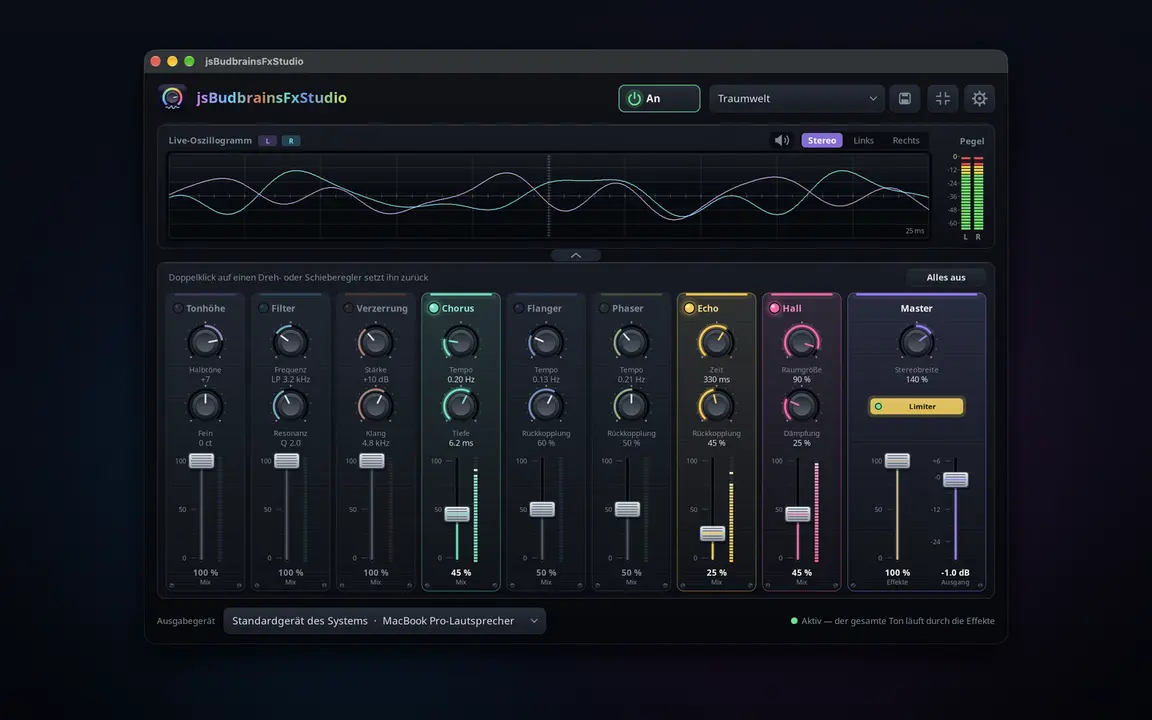
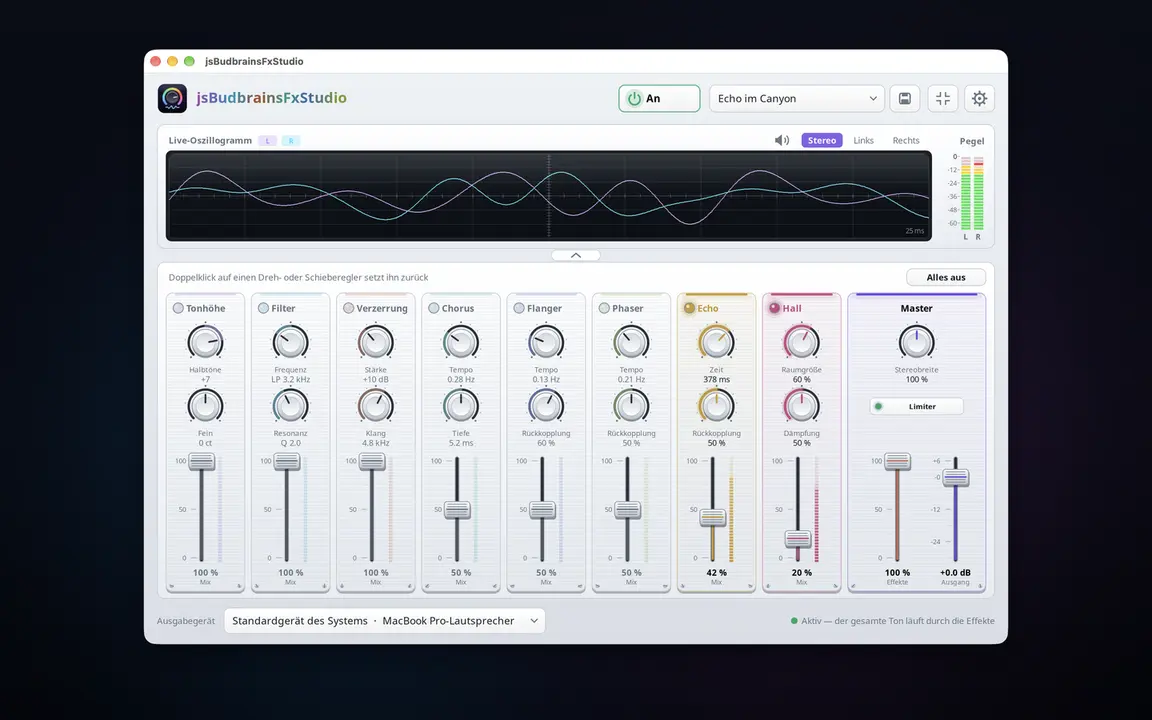
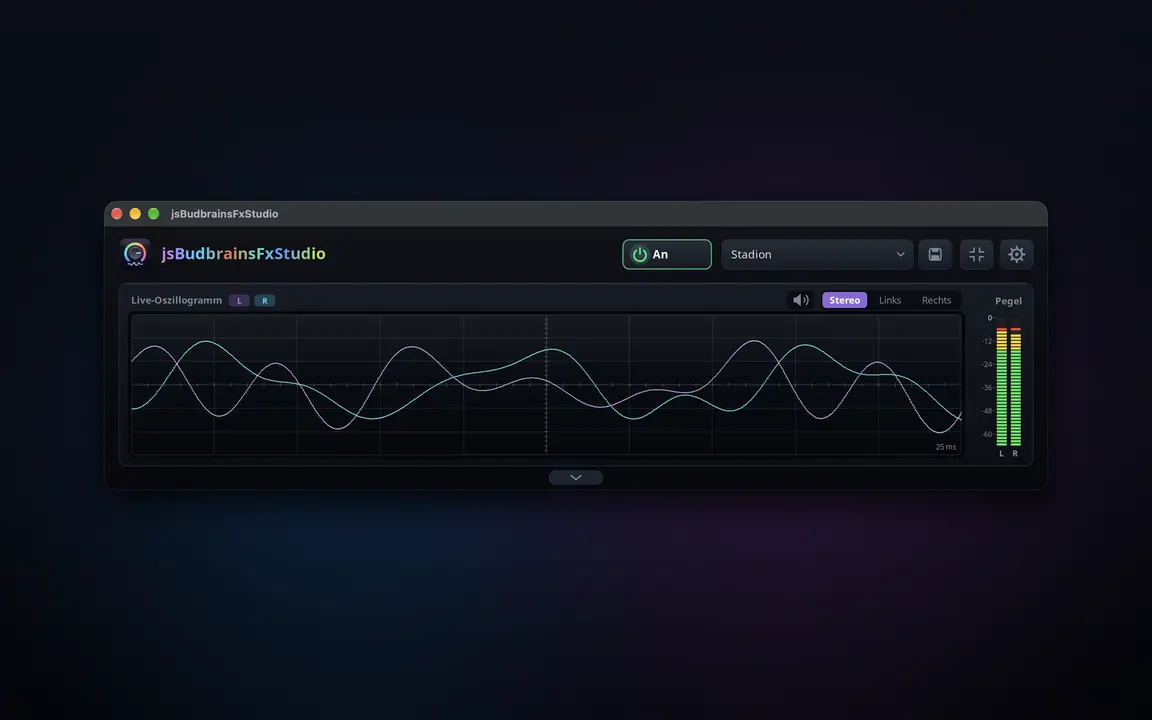
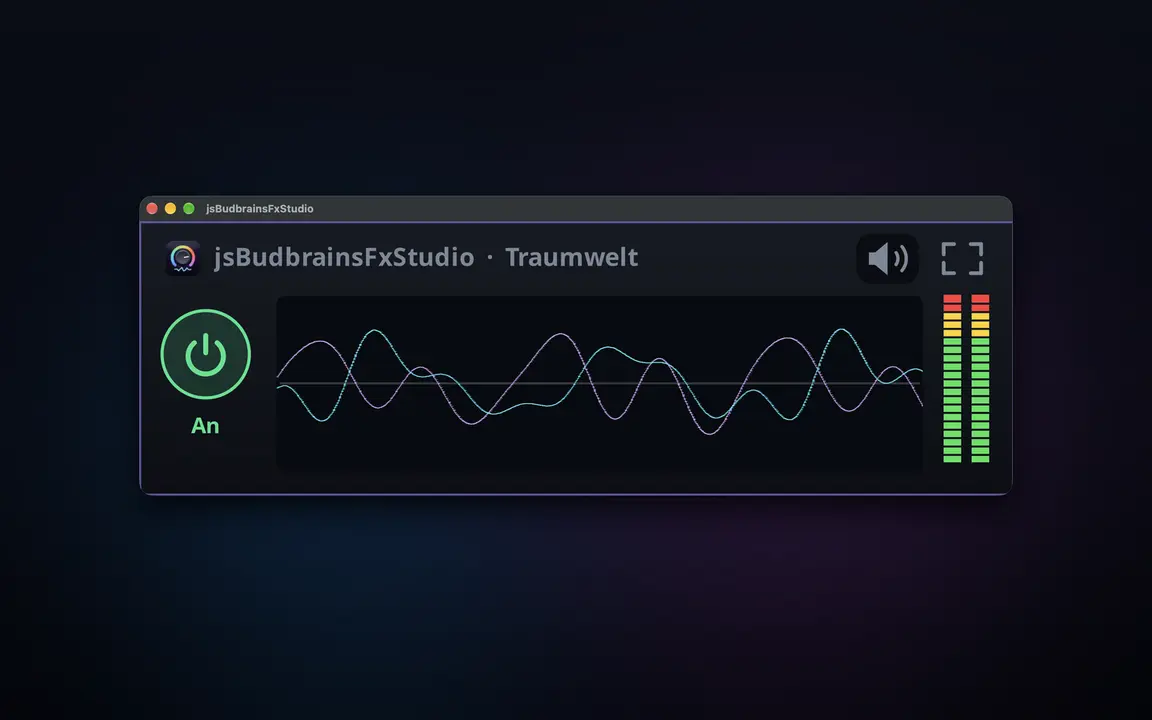
Hiệu ứng trực tiếp cho mọi thứ máy tính của bạn phát — hồi âm, vang vọng, cao độ và nhiều hơn nữa, được trộn vào âm thanh bằng một thanh fader.
Tám hiệu ứng: cao độ, bộ lọc, drive, chorus, flanger, phaser, vang vọng, hồi âmMỗi hiệu ứng có núm xoay và fader trộn riêngMột fader duy nhất trộn mọi hiệu ứng vào bản trộn chínhDạng sóng trực tiếp và đồng hồ đo mức âmCác thiết lập dựng sẵn như phòng hòa nhạc hoặc vang vọng hẻm núi, cùng thiết lập của riêng bạn"Tắt tất cả" chỉ bằng một cú nhấp — và bật lại bằng cú nhấp tiếp theoBộ giới hạn bảo vệ tai và loaHoạt động cùng với jsBudbrainEqualizerNút tắt tiếng khi điện thoại reoChọn loa hoặc tai nghe của bạnCửa sổ nhỏ luôn nằm trên cùngSáng & tốiSDL2 · CairoPipeWire · PulseAudio83 ngôn ngữ
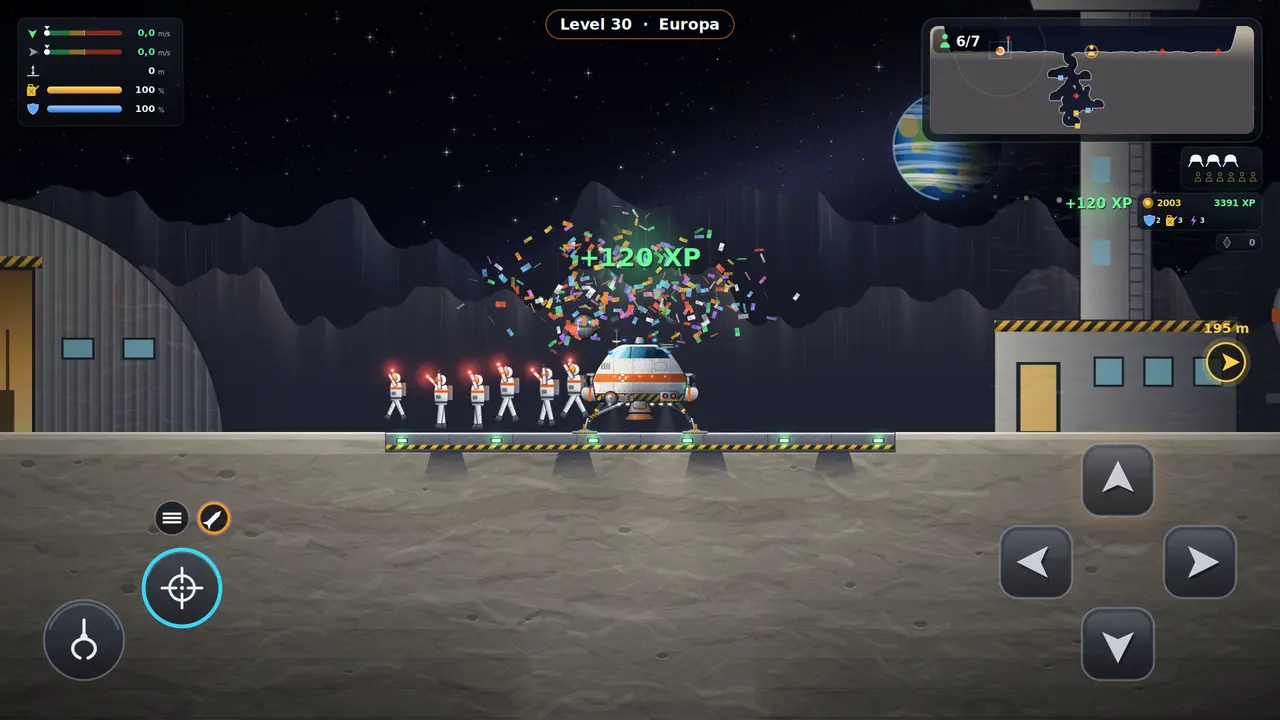
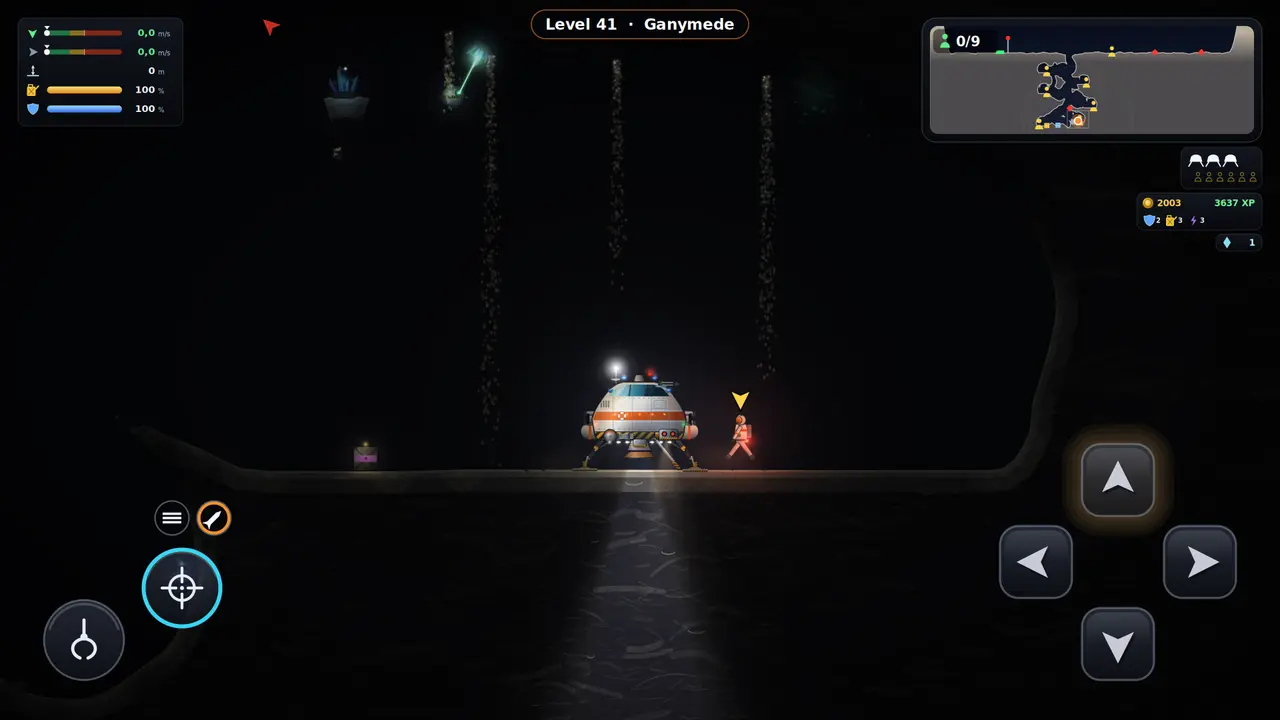
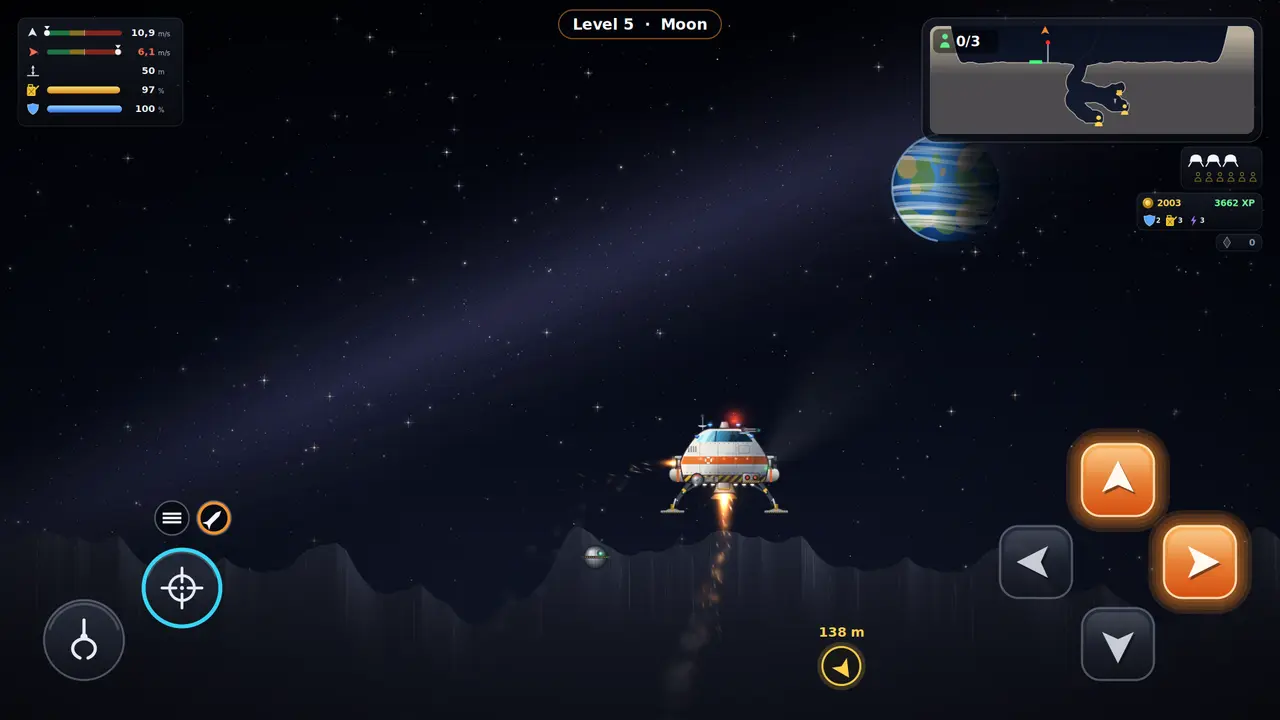
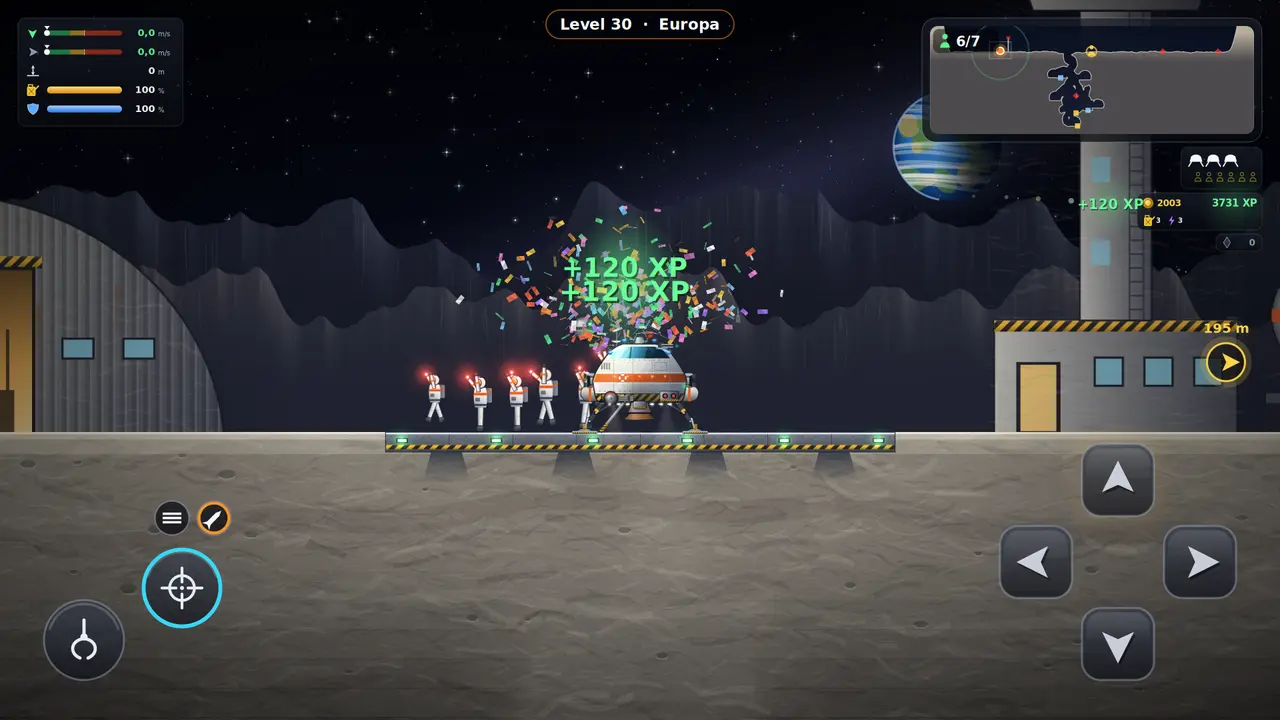
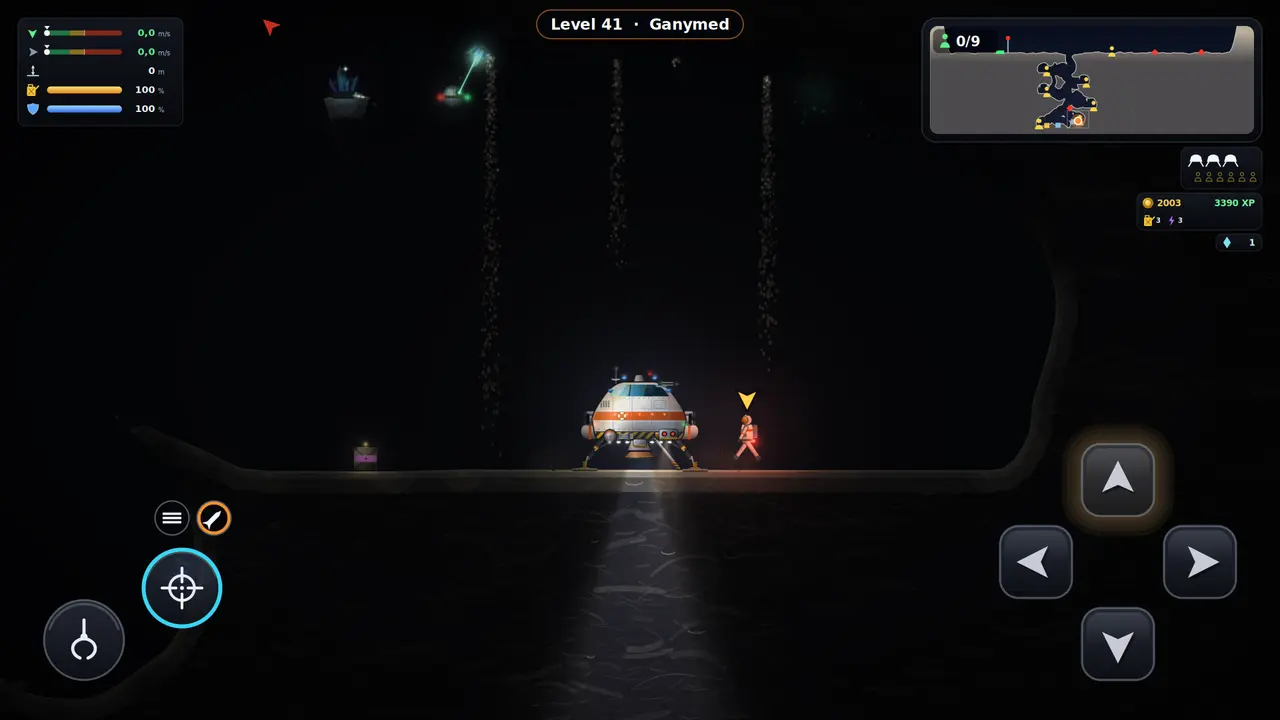
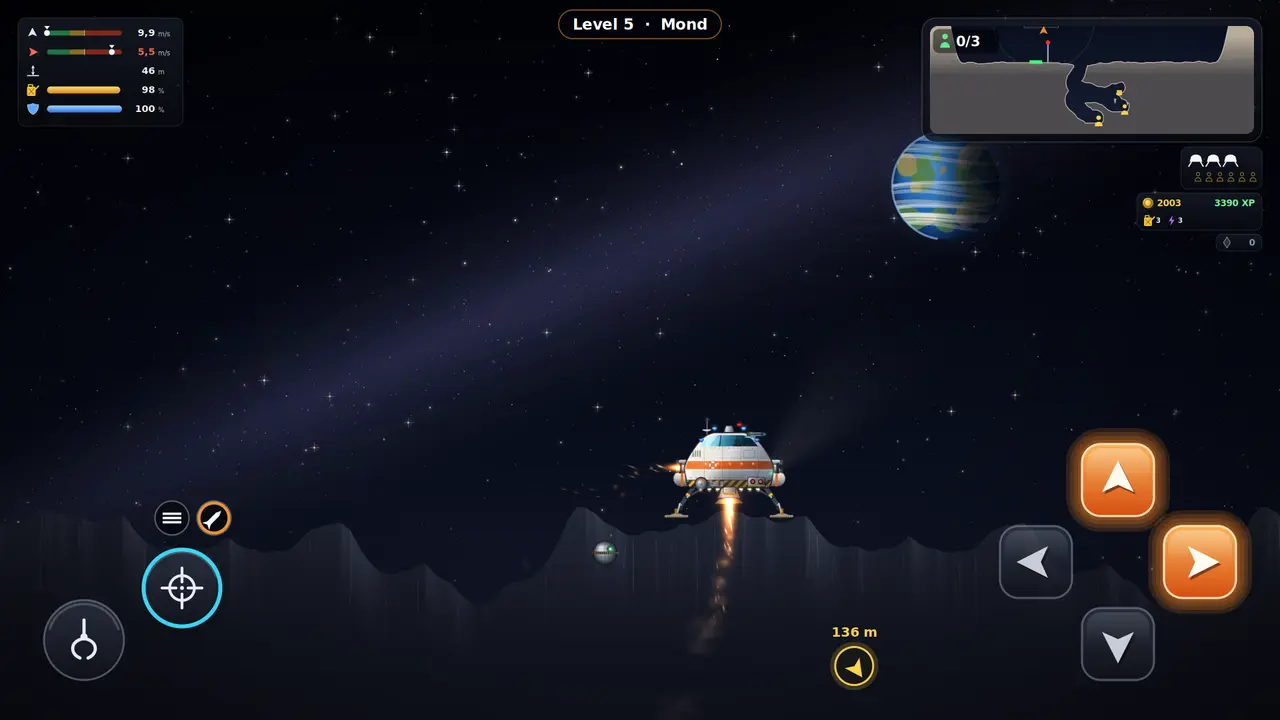
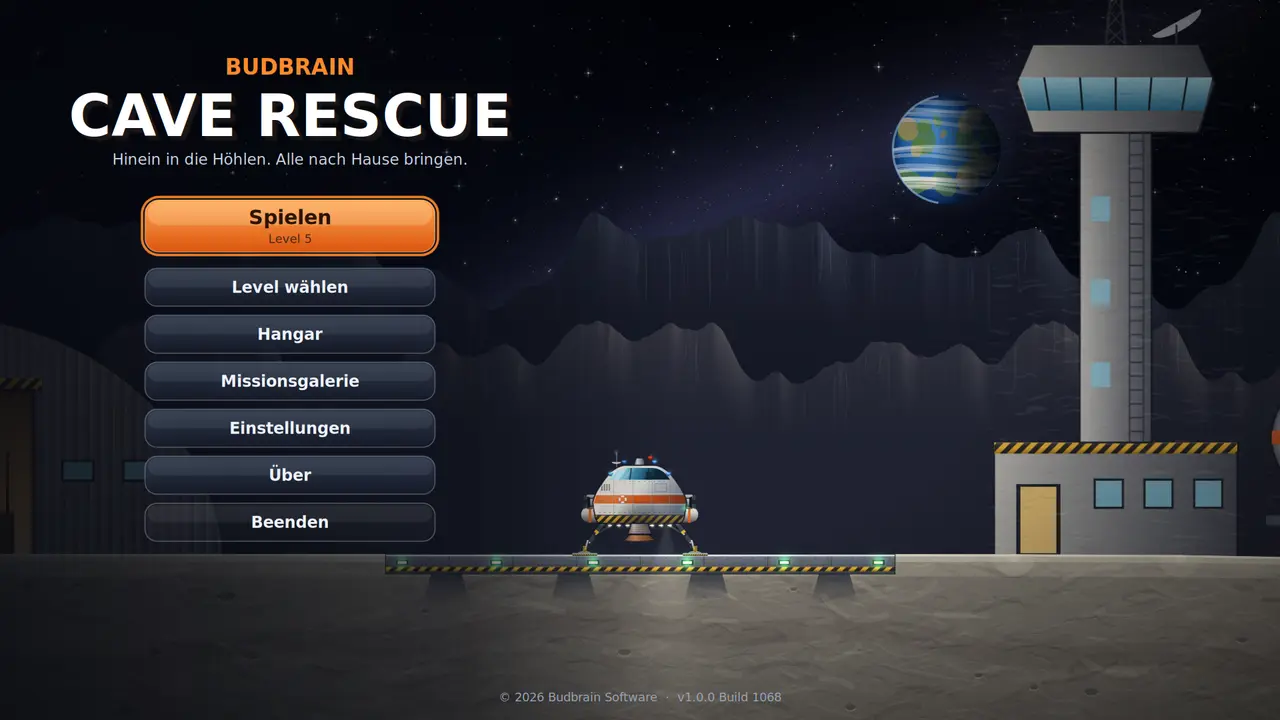
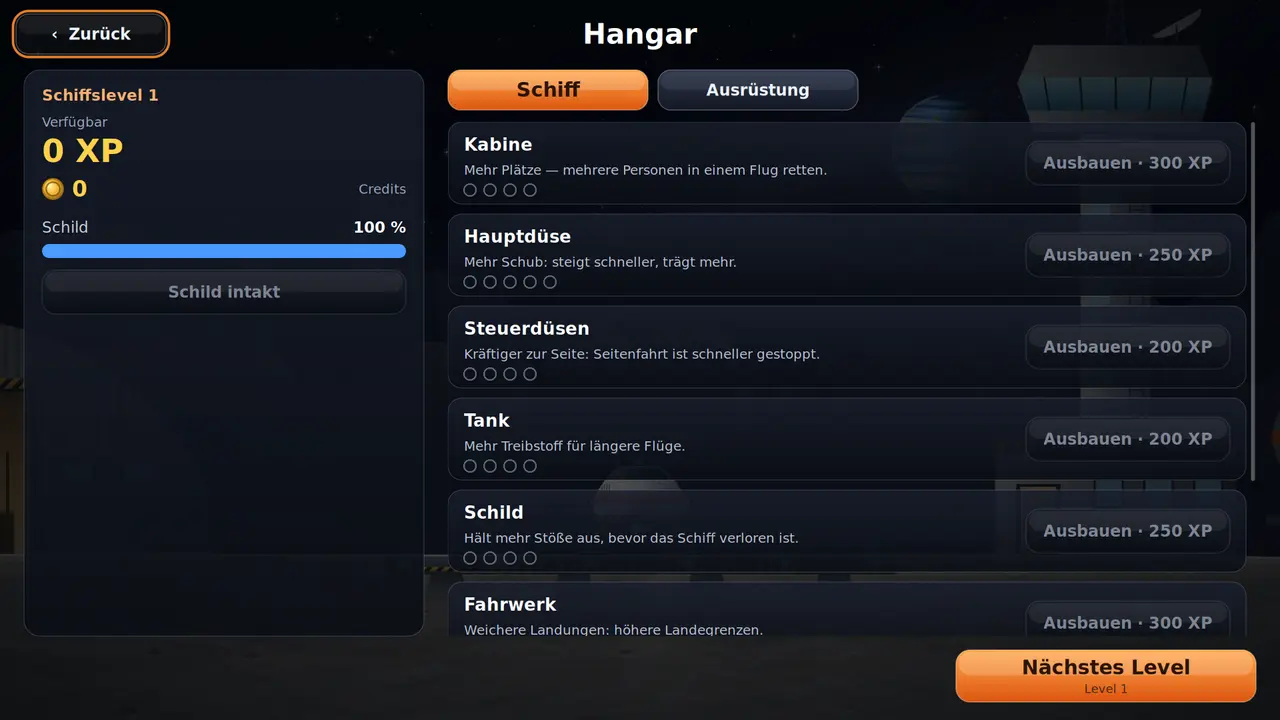
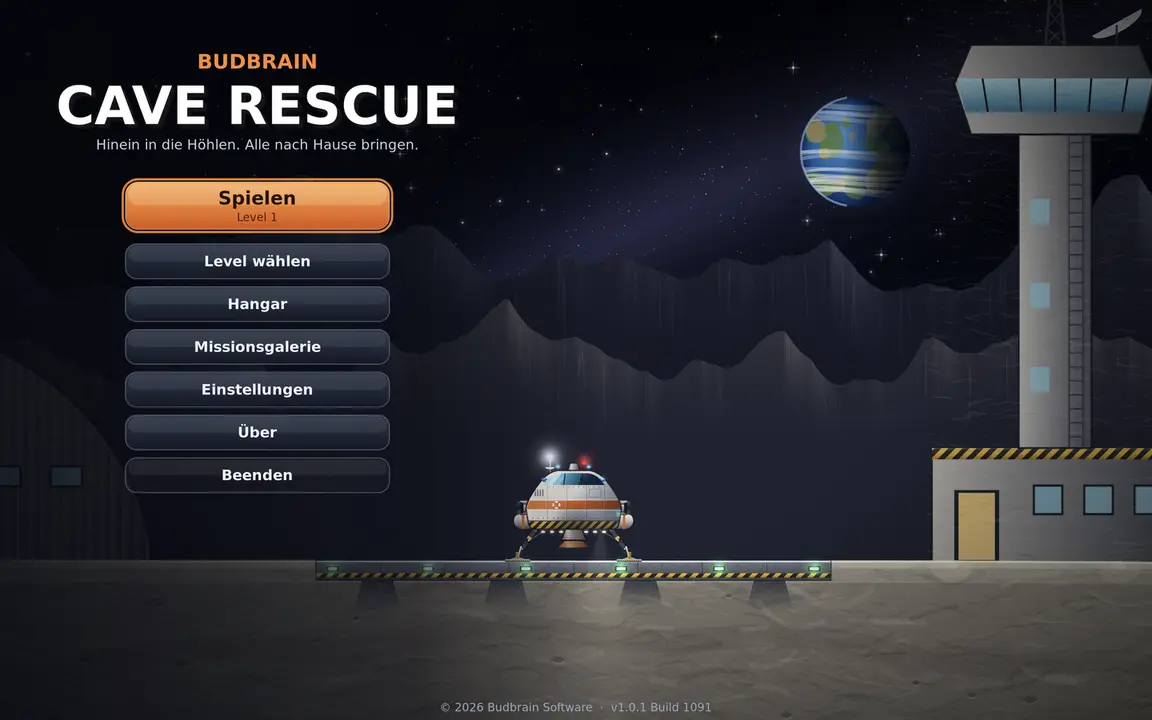
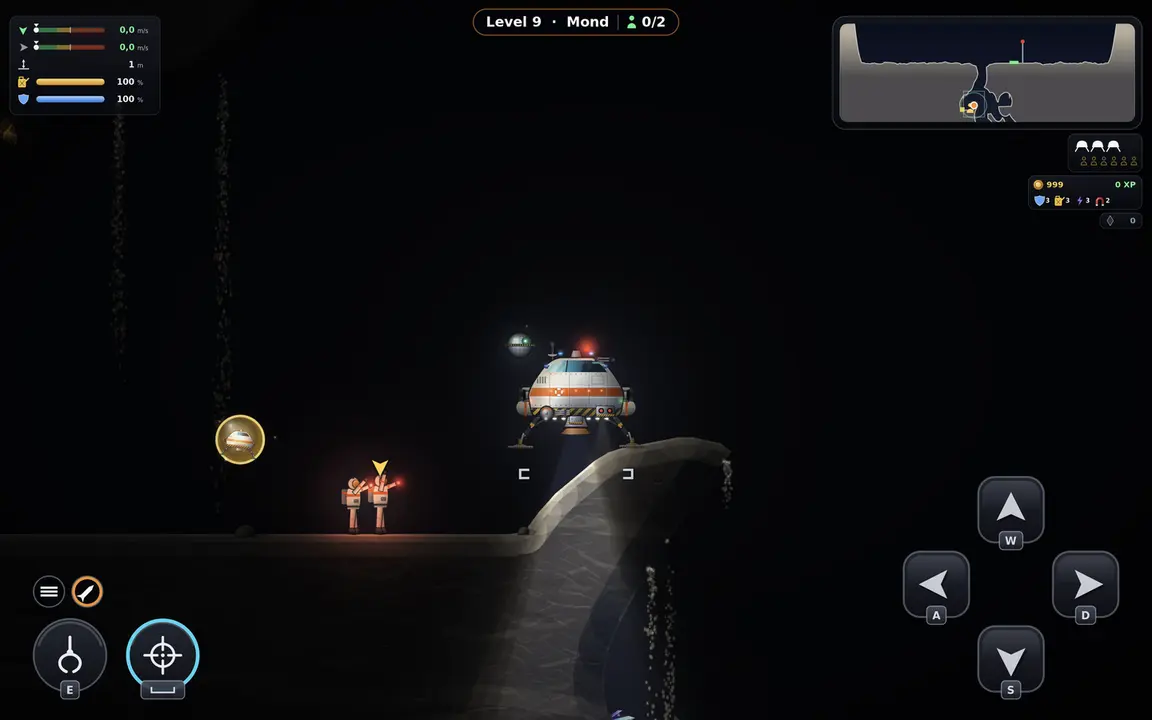
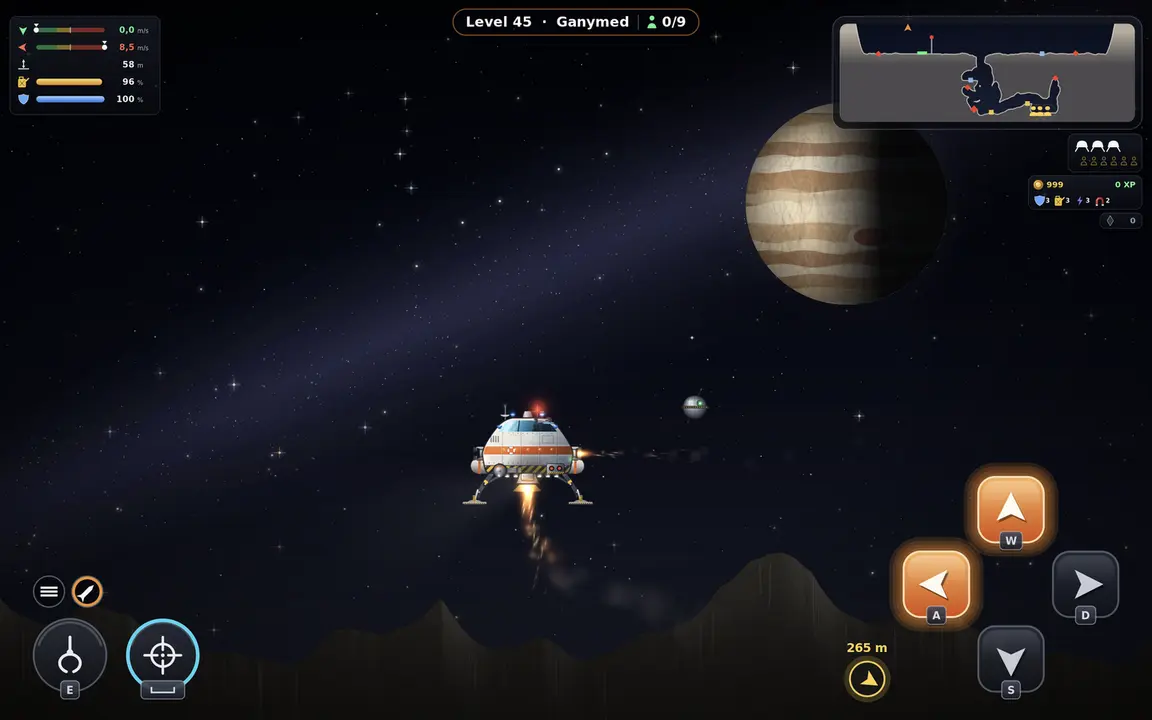
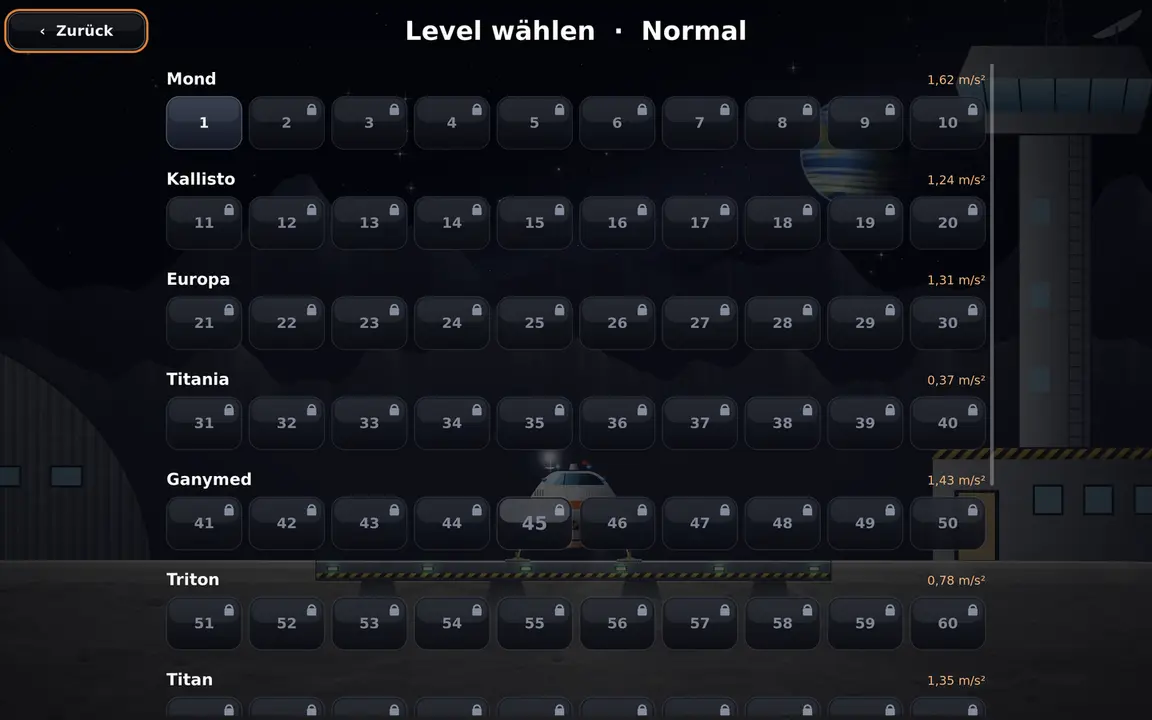
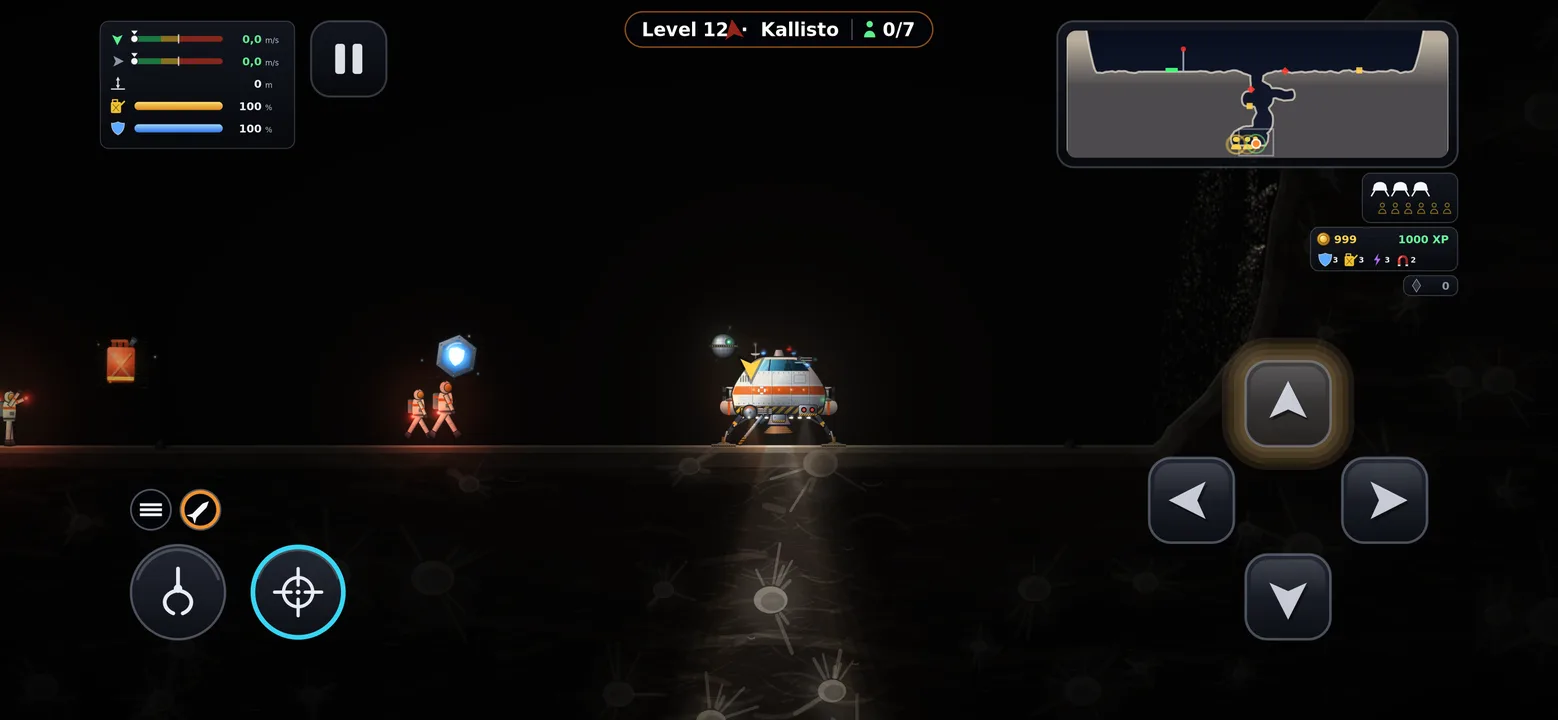
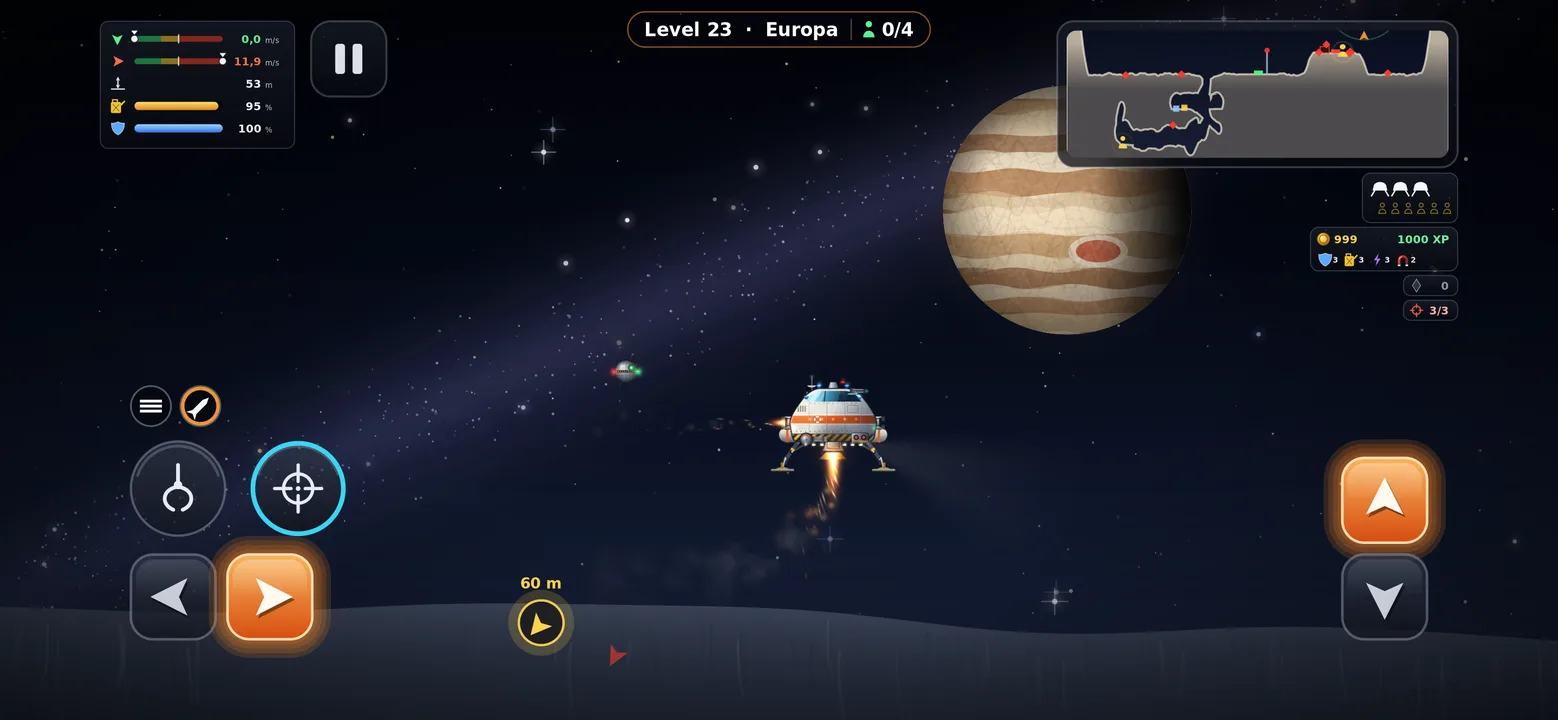
Bay vào những hang động sâu trên Mặt Trăng và đưa các phi hành gia mắc kẹt trở về nhà an toàn.
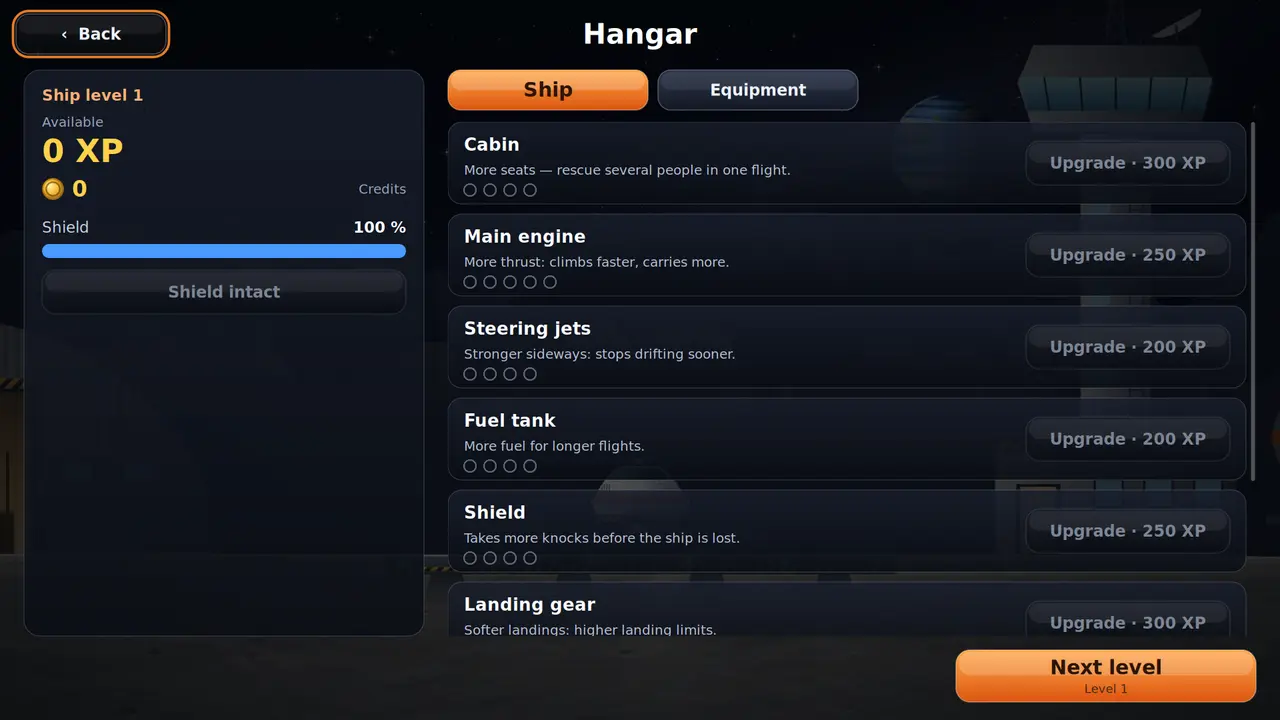
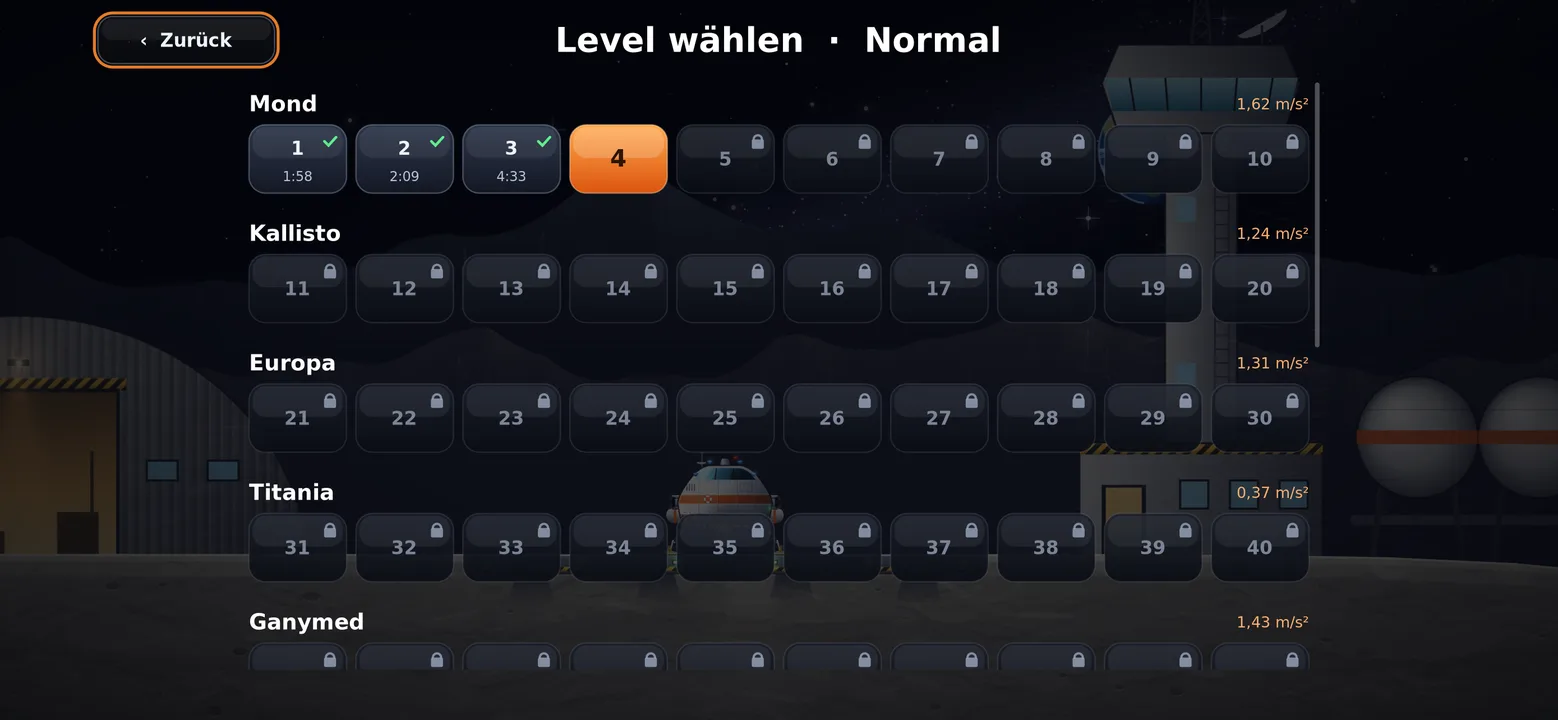
100 màn chơi trên mười thế giớiTrọng lực thựcBốn nút, không gì hơnNâng cấp tàu của bạn bằng kinh nghiệmBốn mức độ khóThư viện nhiệm vụ kèm bản đồ chuyến bayBàn phím, chuột hoặc tay cầmSDL2 · Cairo44 ngôn ngữ
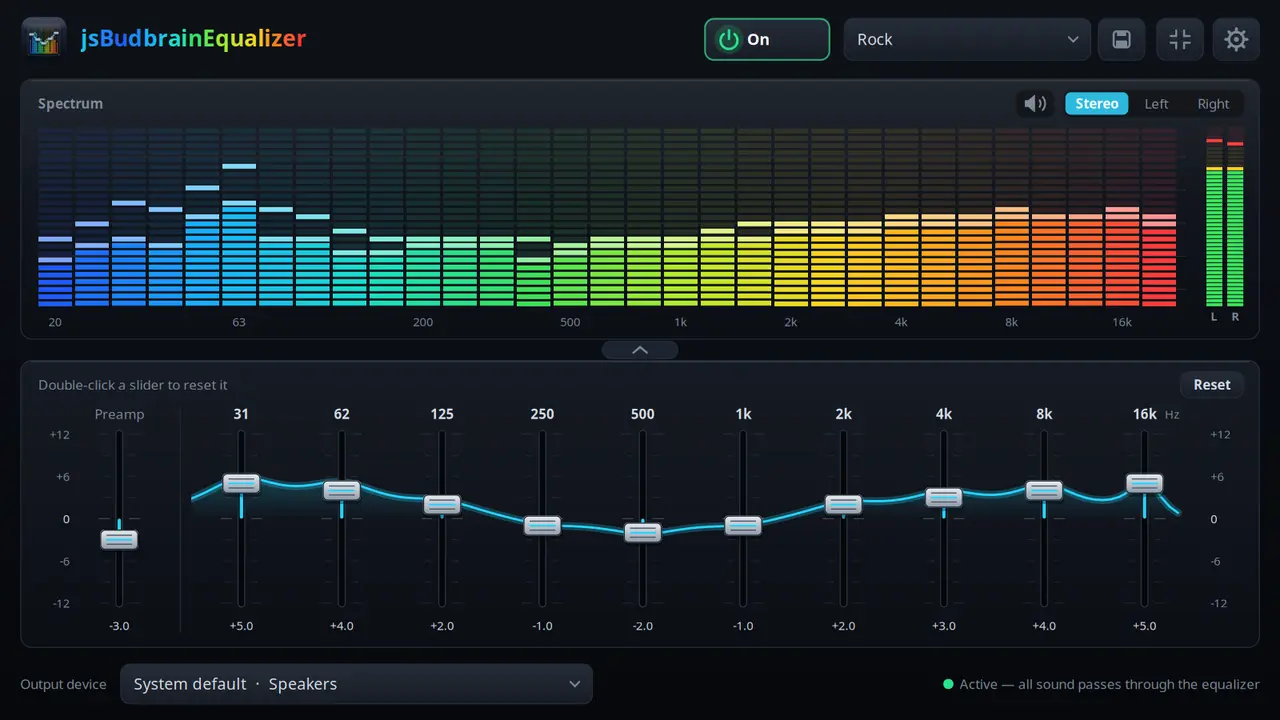
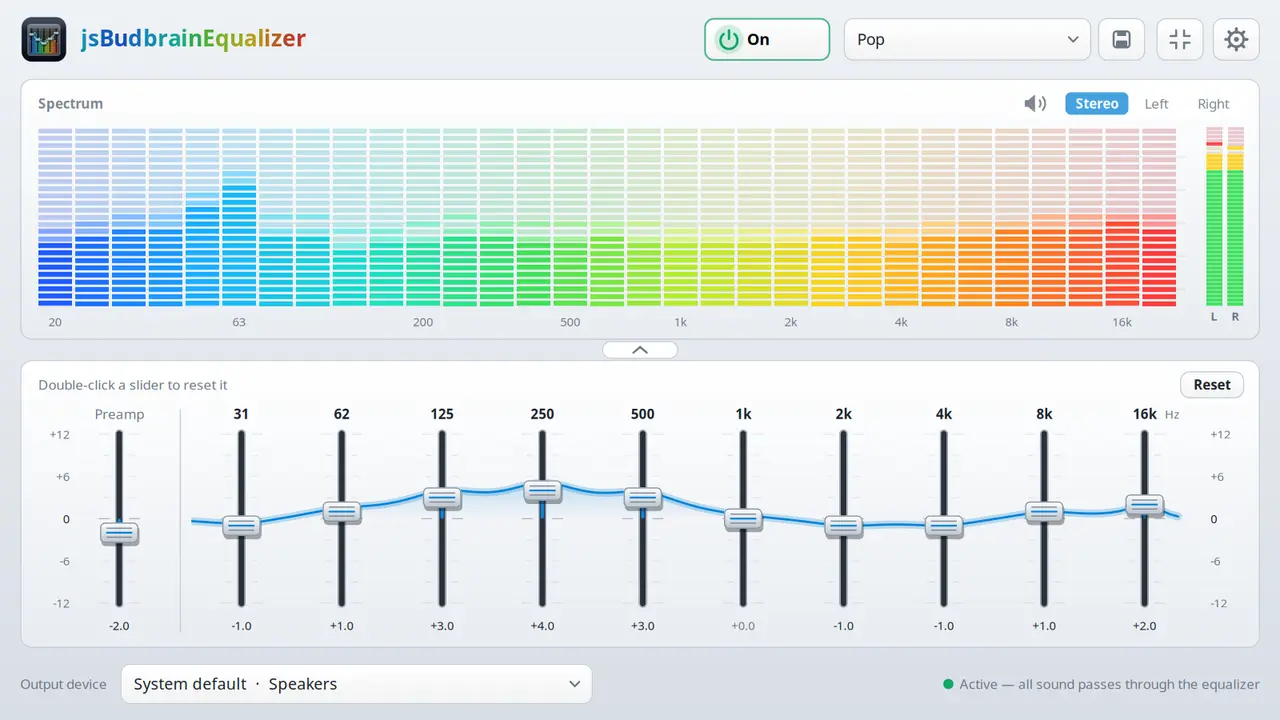
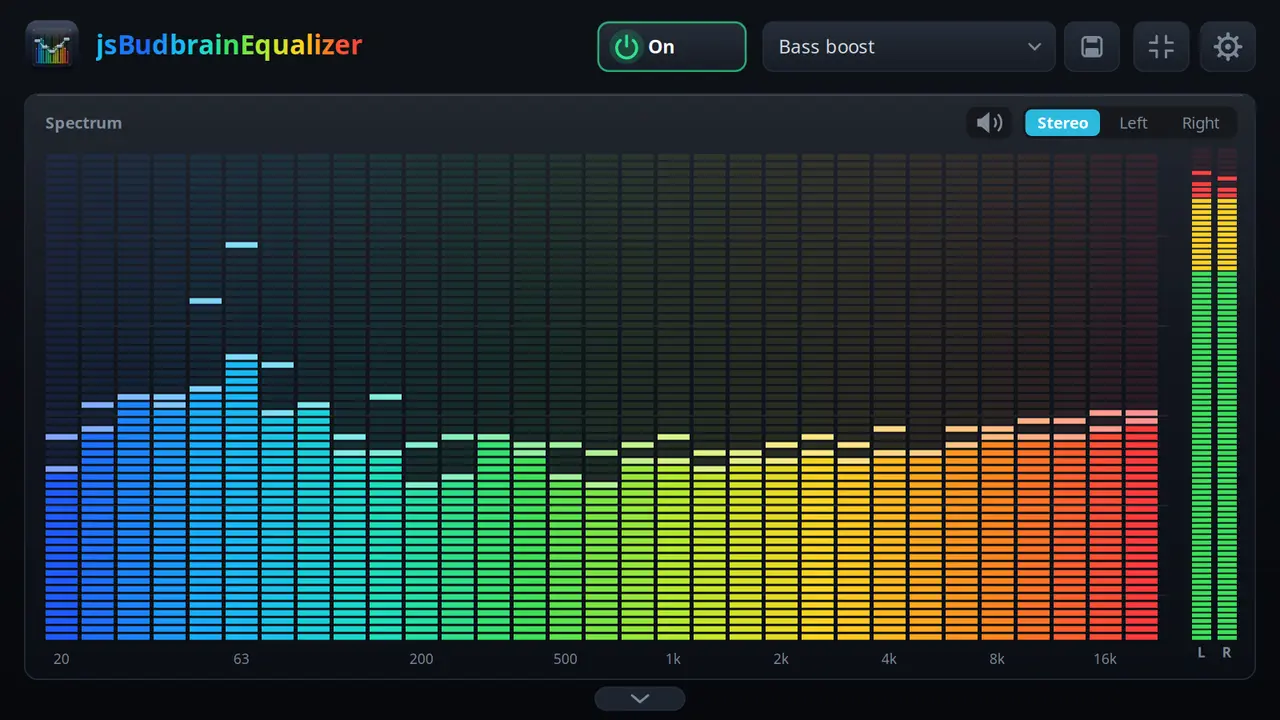
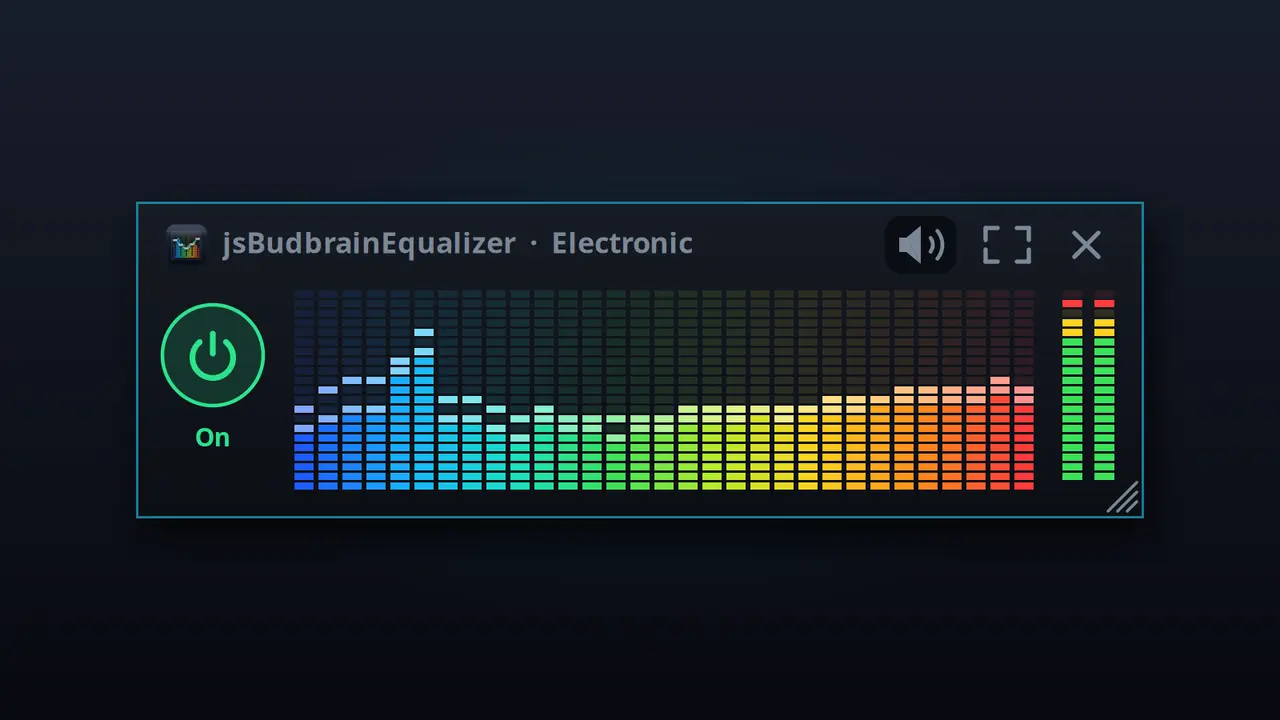
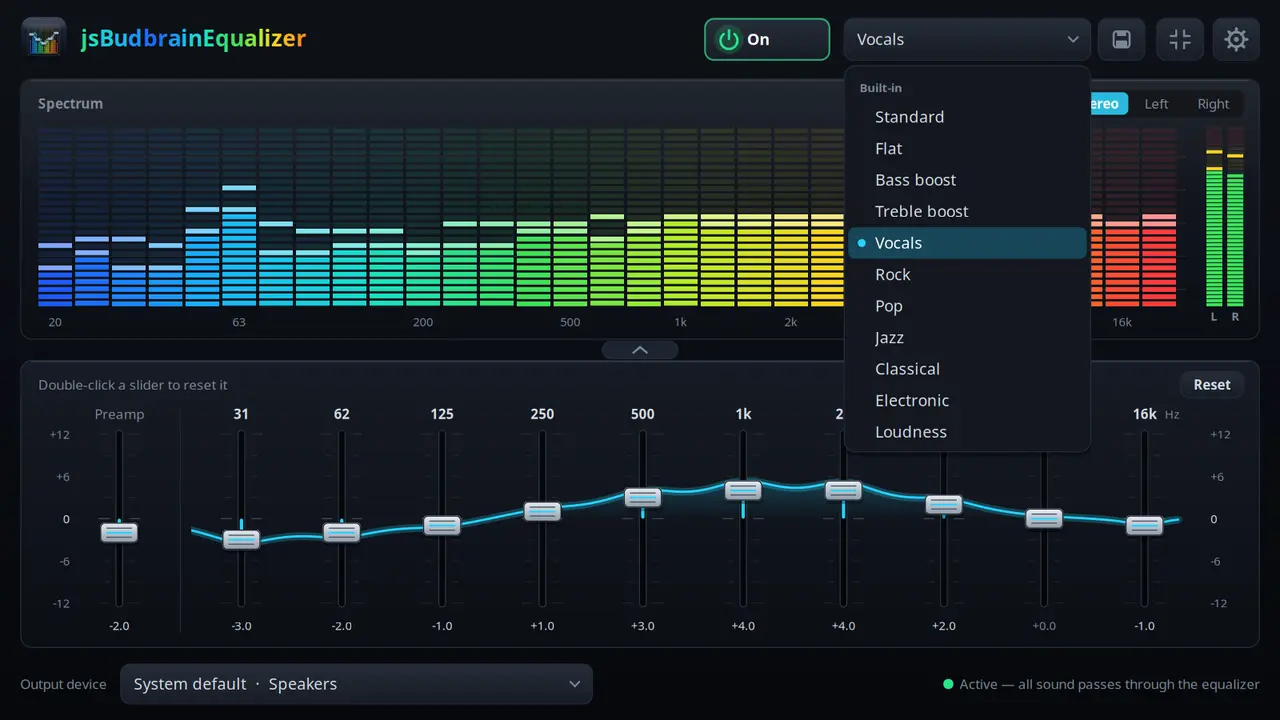
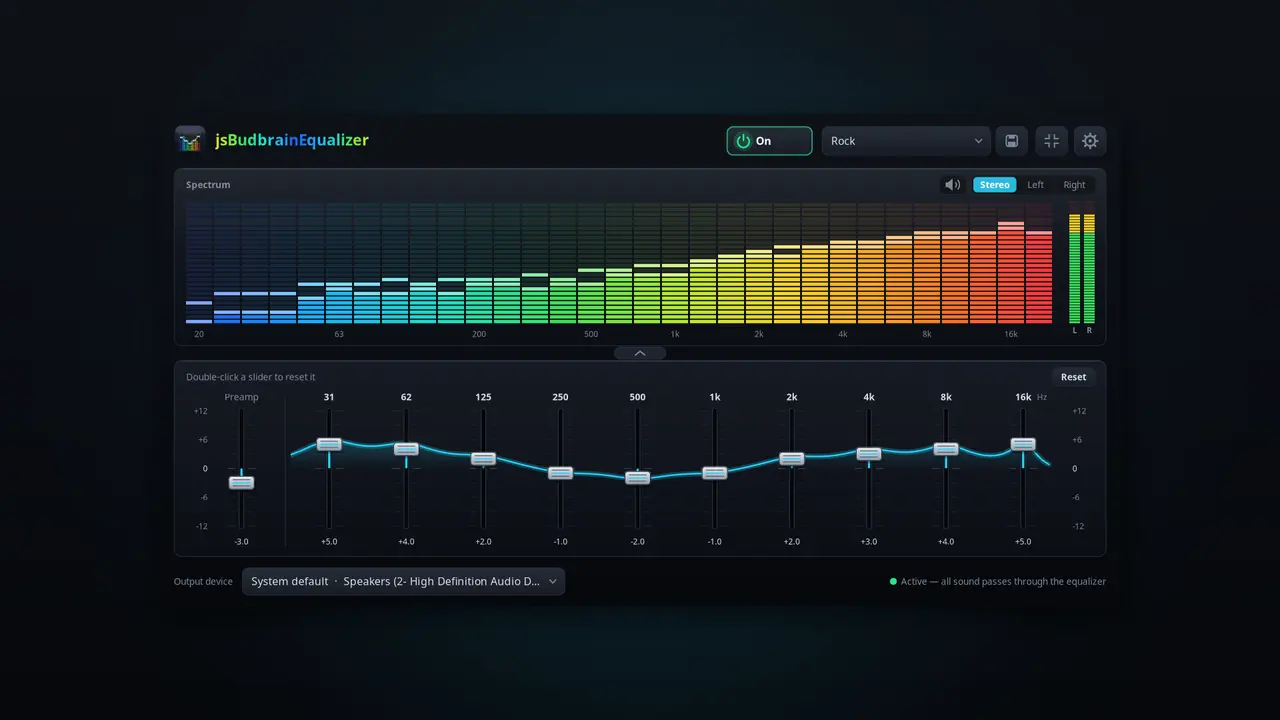
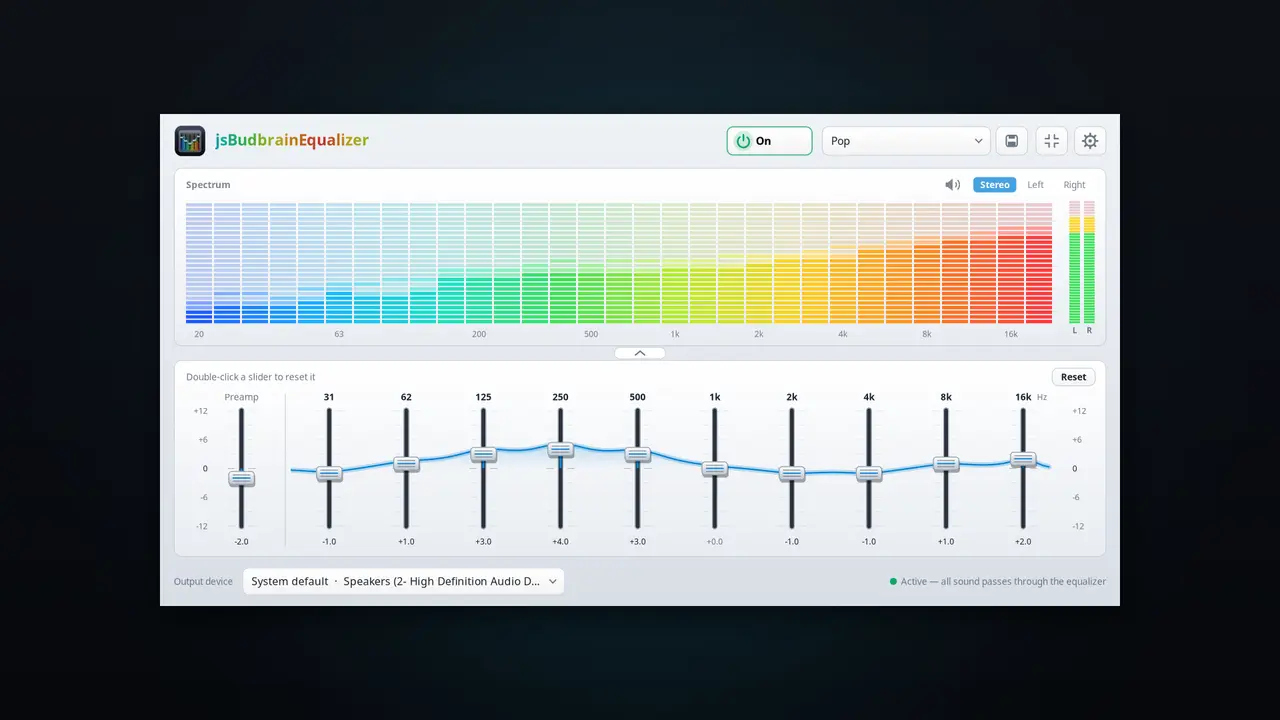
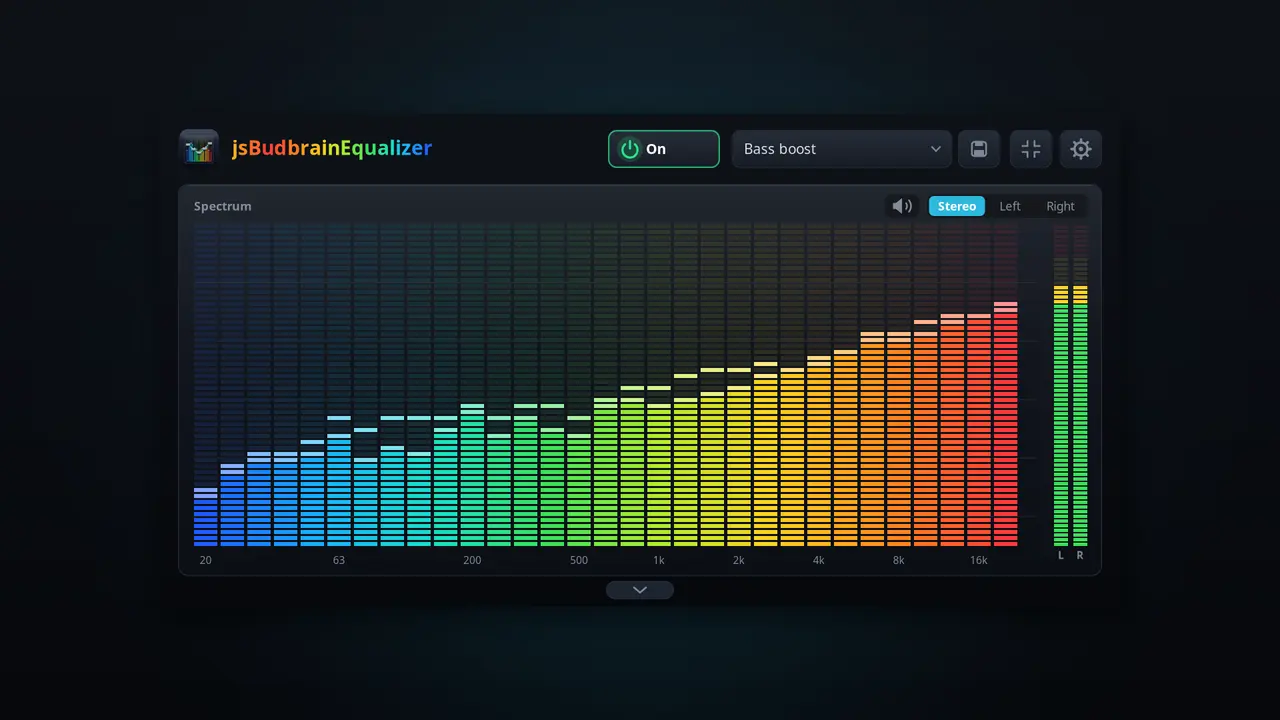
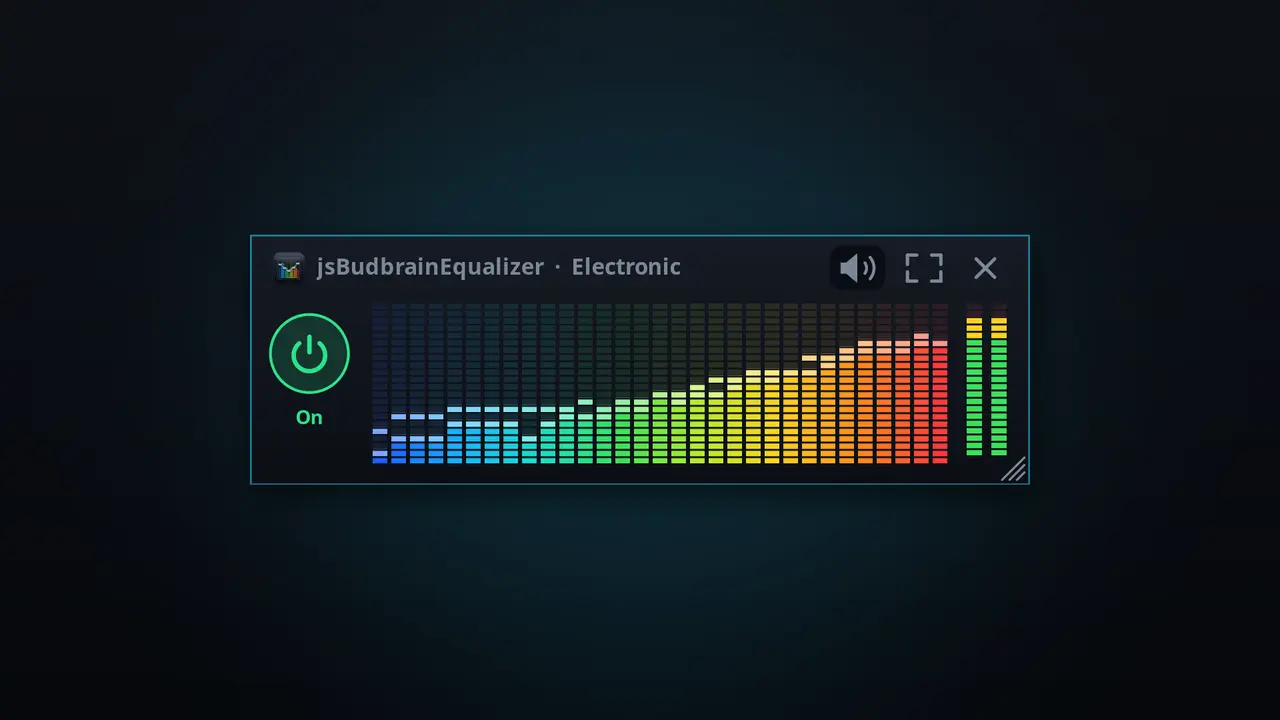
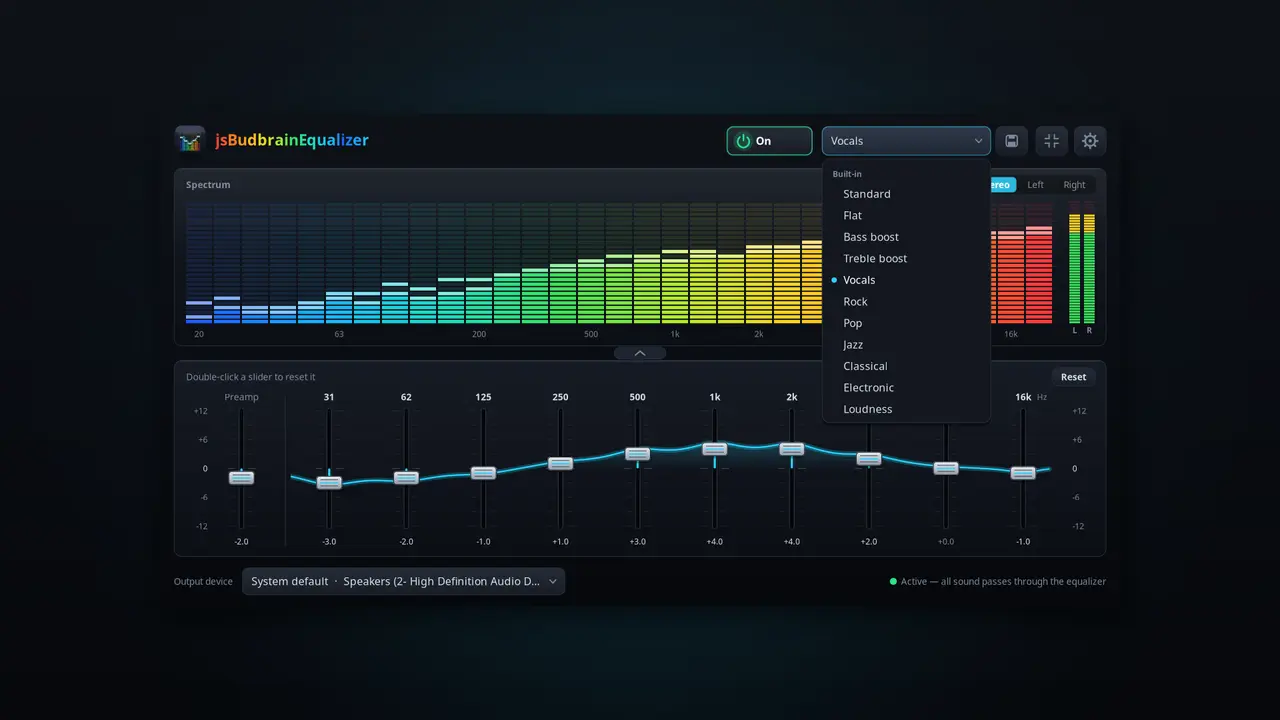
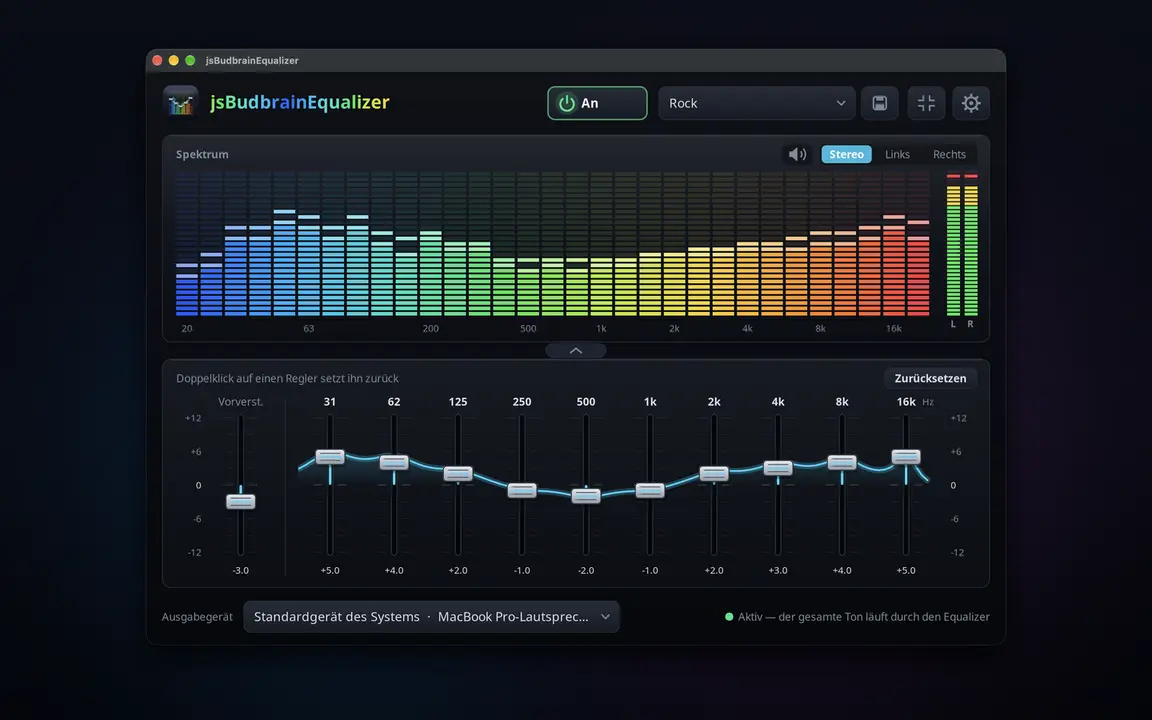
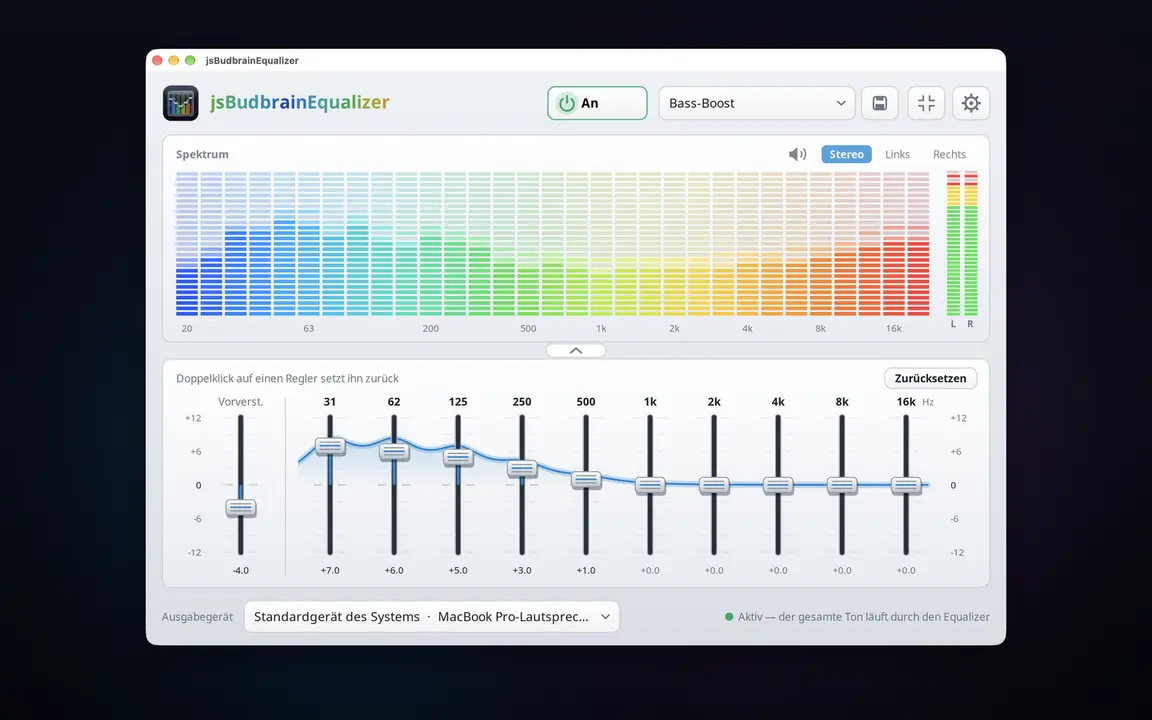
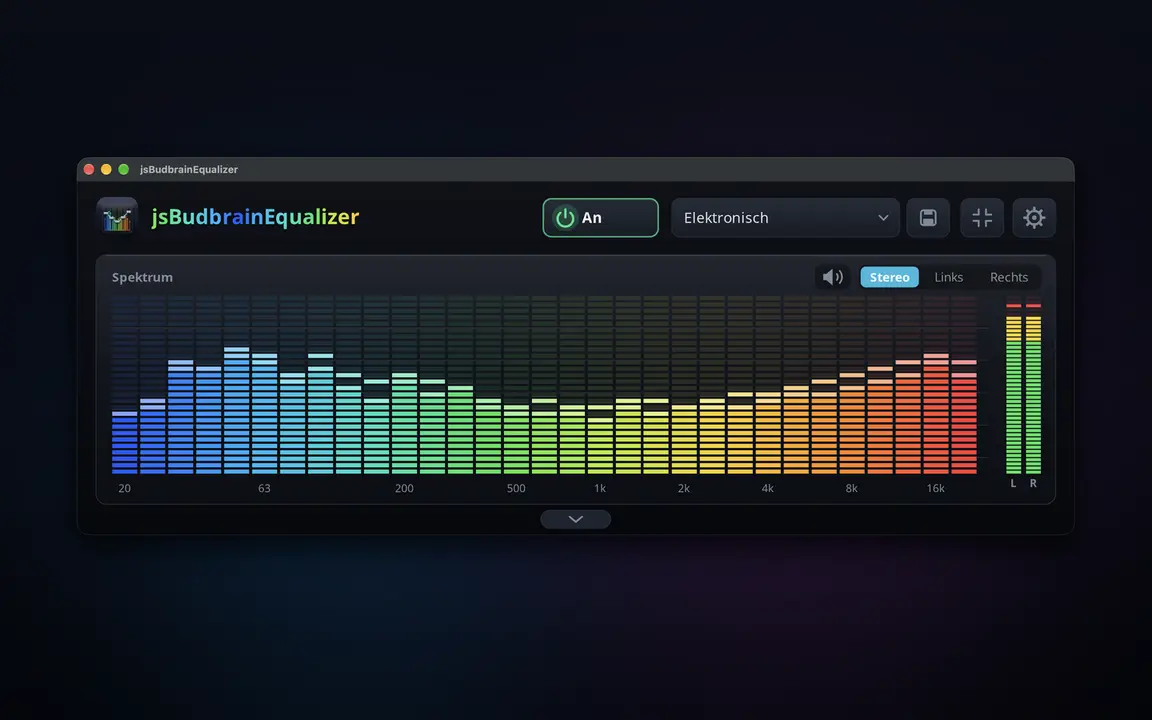
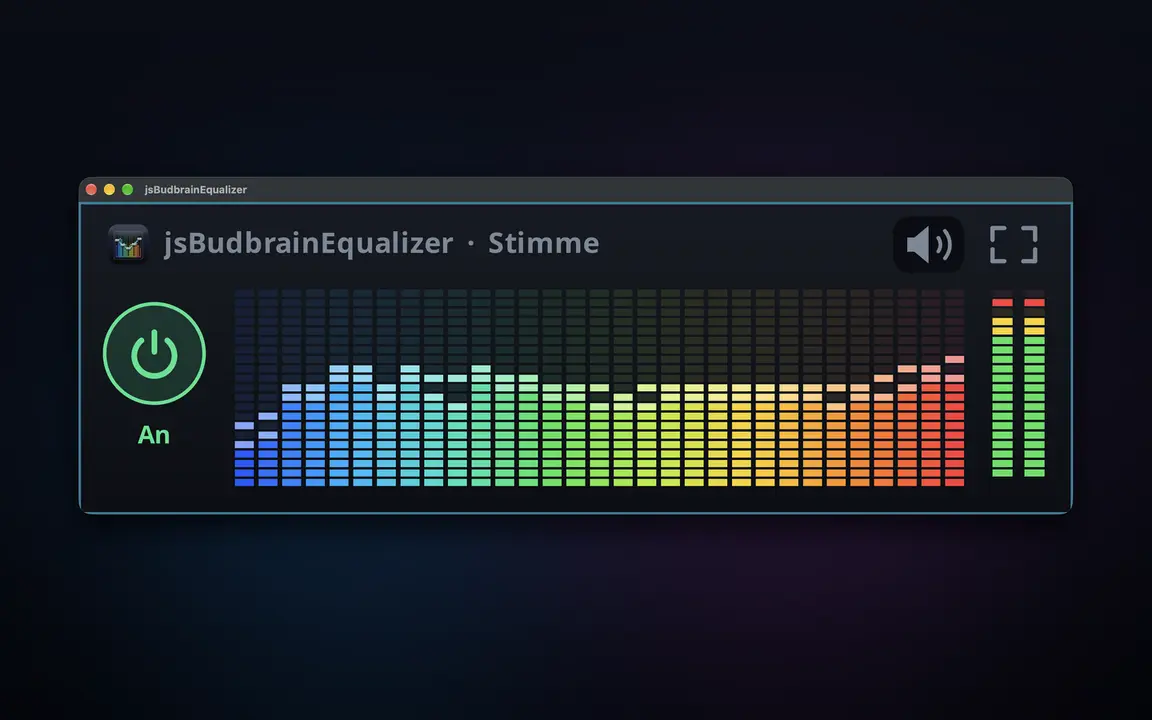
Bộ cân bằng âm thanh cho mọi thứ máy tính của bạn phát — kèm phổ tần trực tiếp.
Mười thanh trượt, từ bass trầm sâu đến treble sáng rõHiển thị trực tiếp những gì đang phát — trái, phải hoặc cả haiCác thiết lập âm thanh dựng sẵn và của riêng bạn, lưu dưới một cái tênNút tắt tiếng khi điện thoại reoChọn loa hoặc tai nghe của bạnThu gọn các thanh trượt, chỉ giữ lại phần hiển thịCửa sổ nhỏ luôn nằm trên cùngKhởi động khi bạn đăng nhập, nếu bạn muốnSáng & tốiSDL2 · CairoPipeWire · PulseAudio83 ngôn ngữ
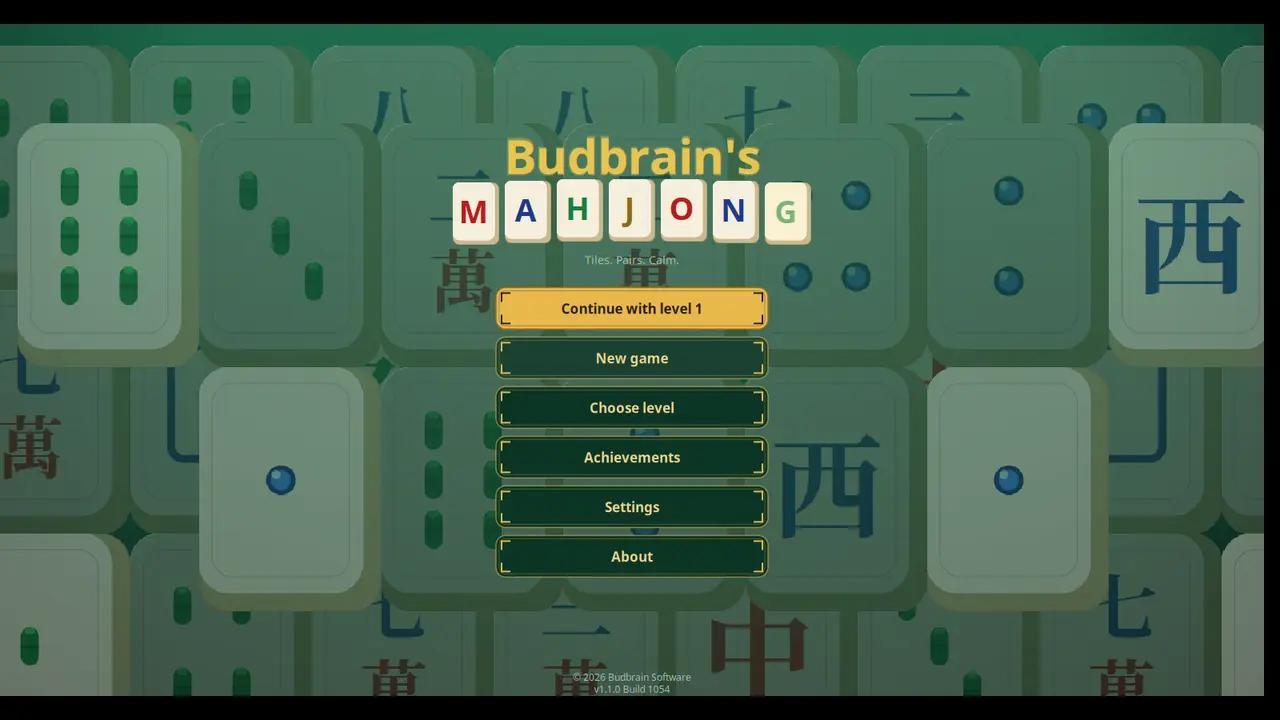
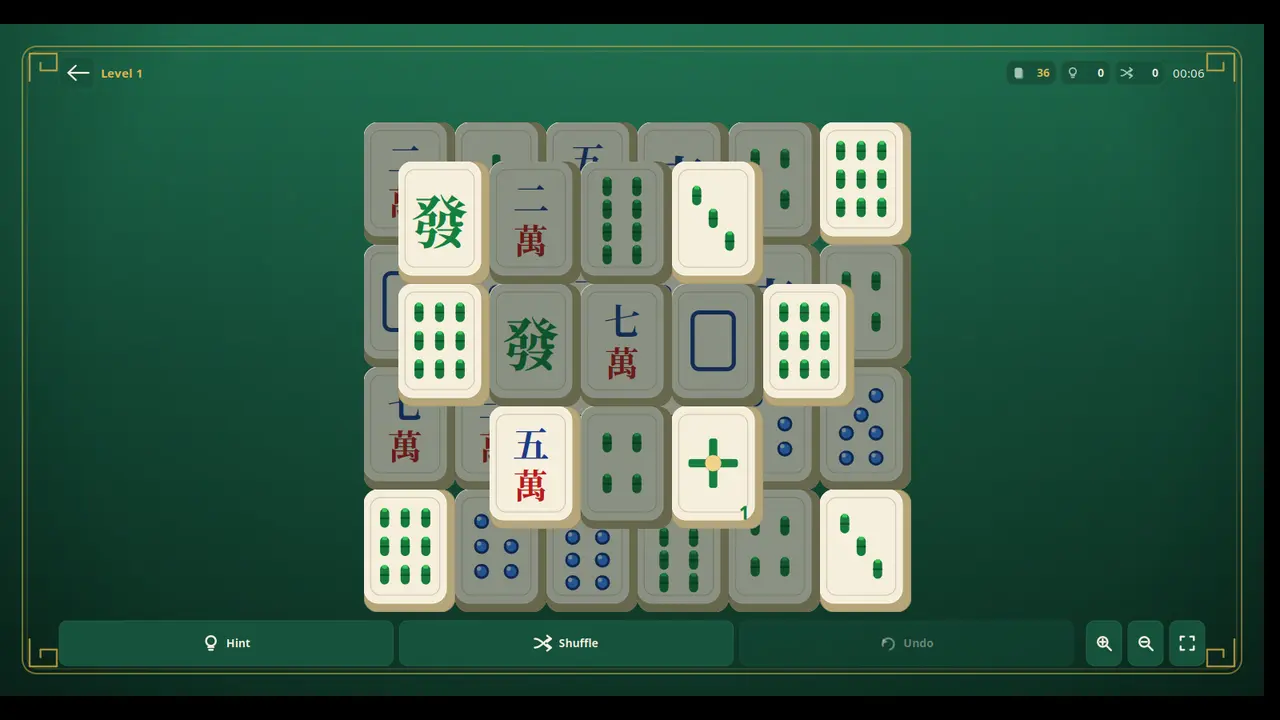
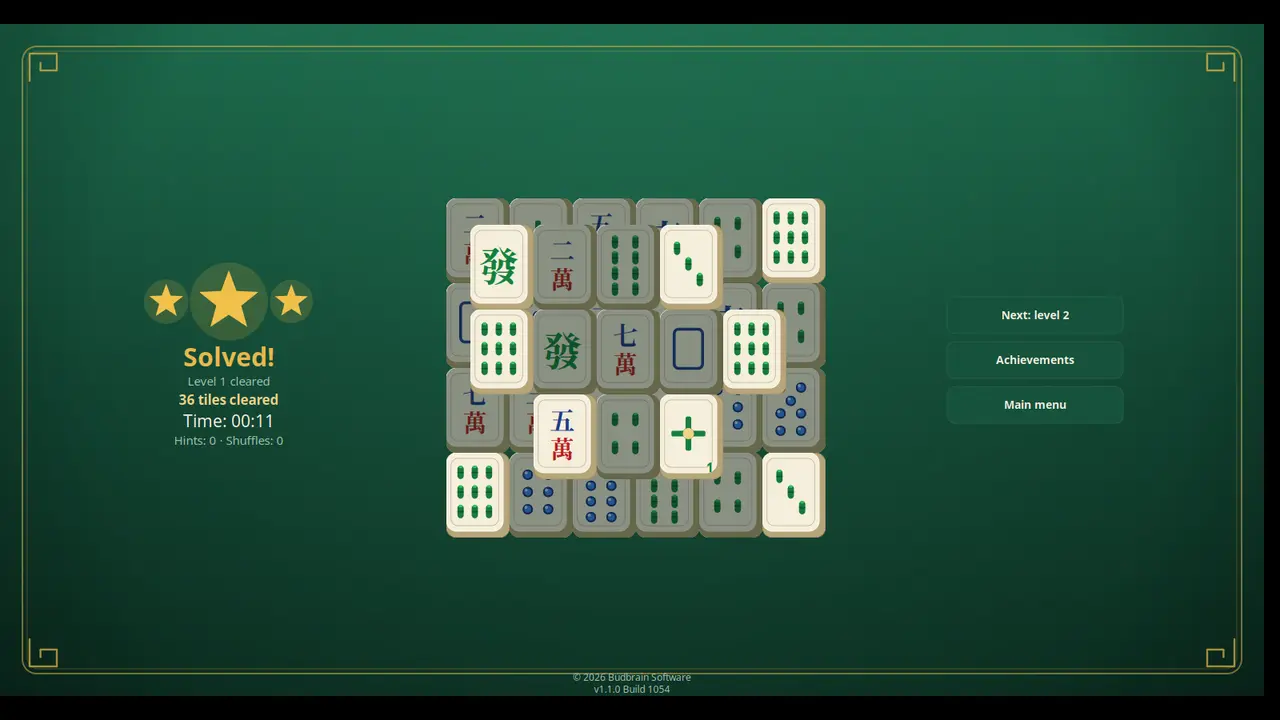
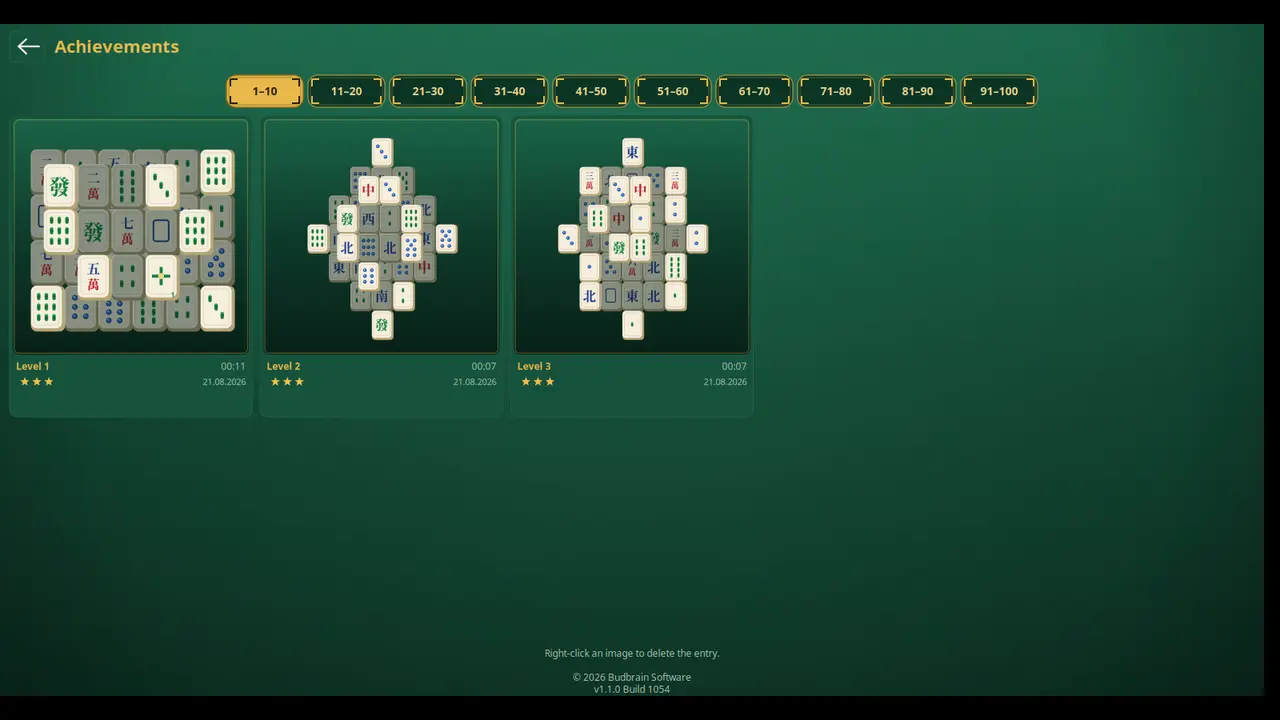
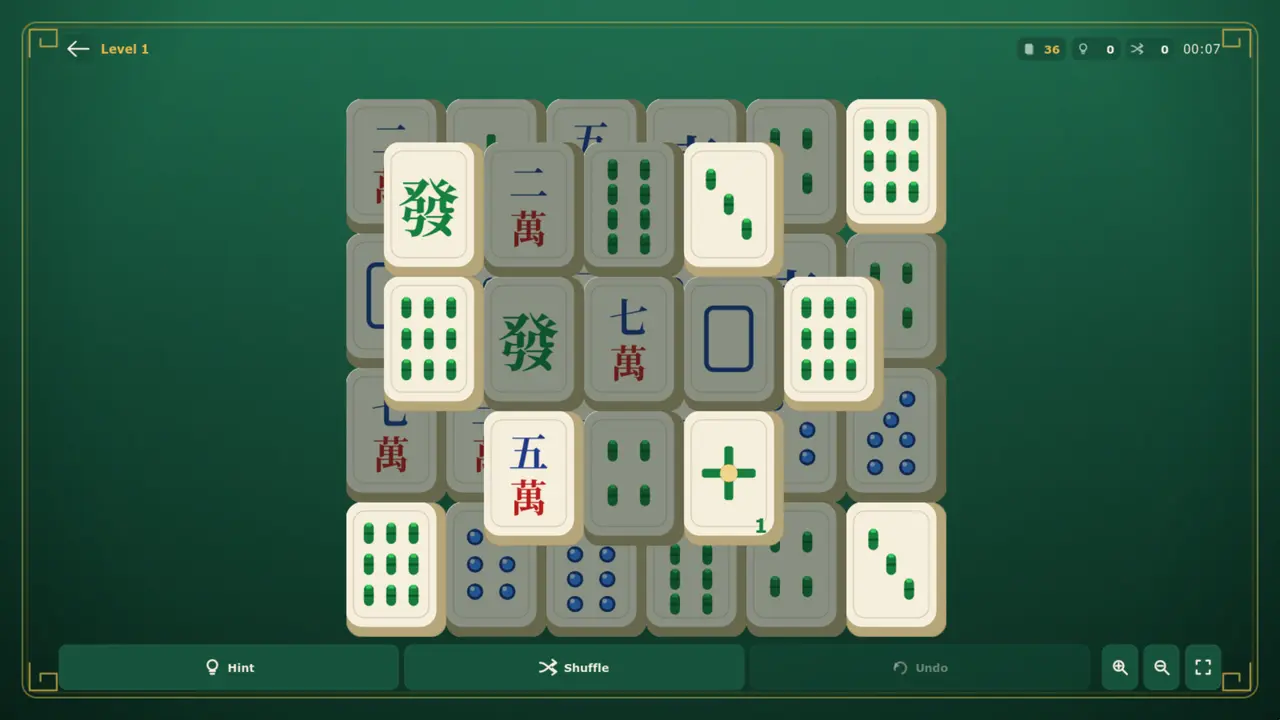
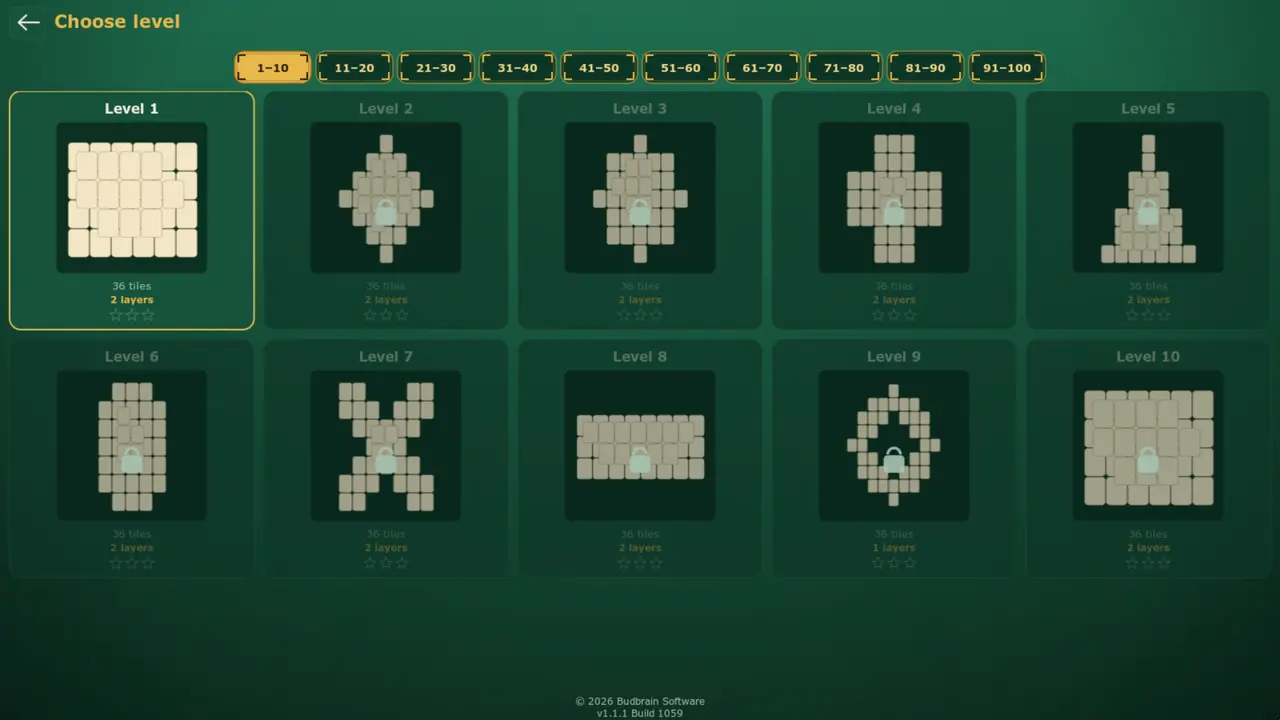
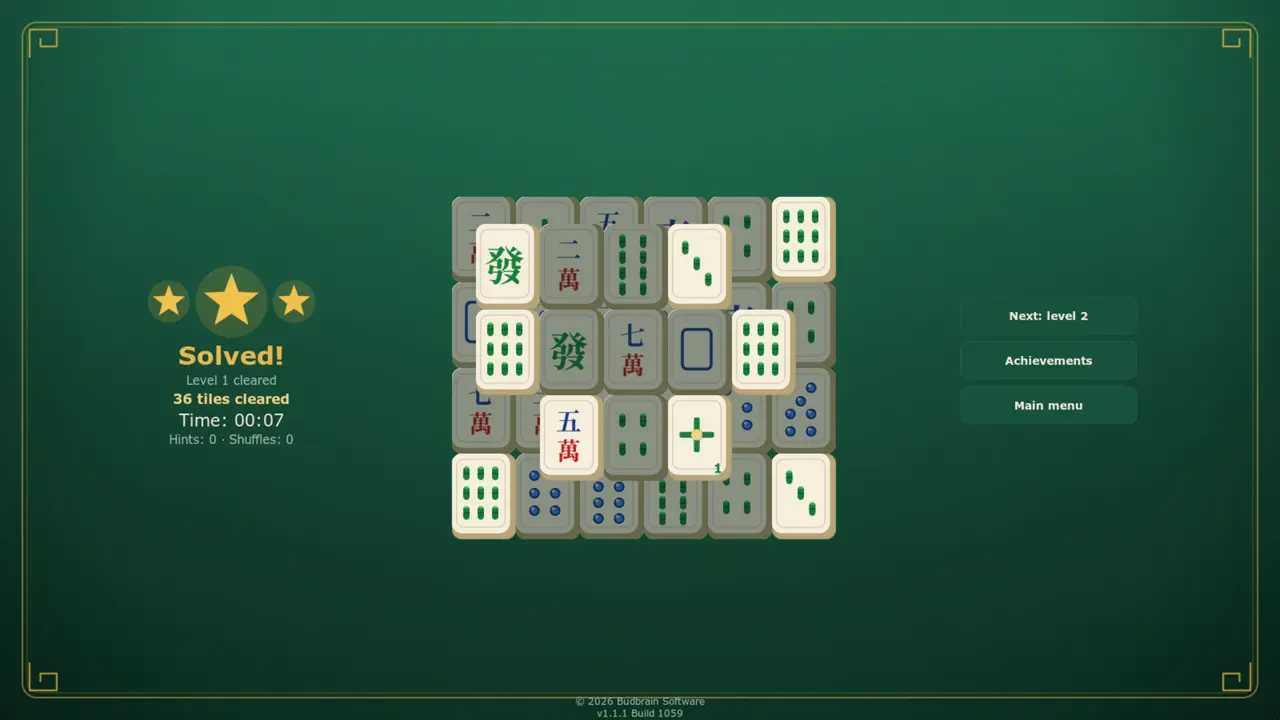
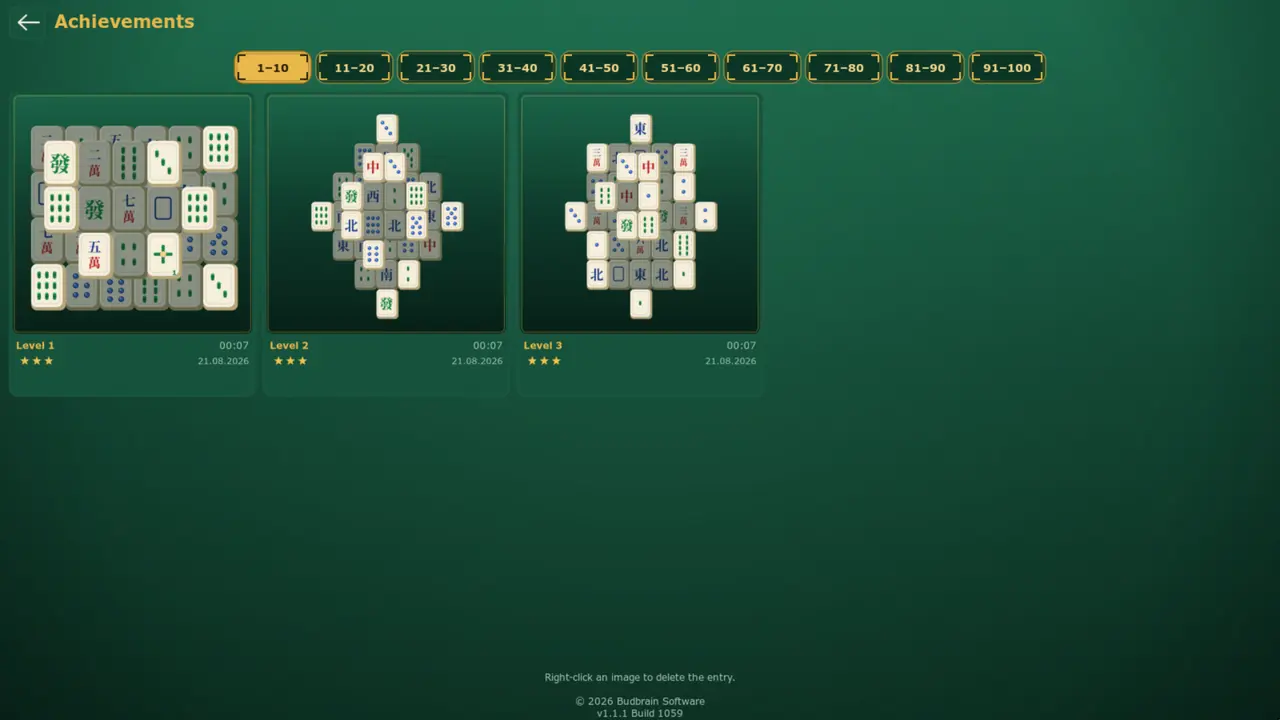
Mahjong solitaire với một trăm màn chơi: hai quân giống nhau còn tự do sẽ biến mất, mười chiếc bàn vẽ tay, và mỗi bàn bạn hoàn thành đều được lưu lại thành một bức ảnh.
100 màn chơiMười chiếc bànGợi ý · Xáo trộn · Hoàn tácBức tường thành tíchOpenGLSDL2 · CairoGNOME / KDE / XFCE22 ngôn ngữ
Phát các bản ghi âm từ một thư mục — ngẫu nhiên hoặc theo thứ tự, vào những giờ bạn chọn.
Phát các bản ghi âm từ một thư mục, kể cả ổ đĩa mạngNgẫu nhiên hoặc theo thứ tựChỉ trong khoảng giữa hai thời điểm trong ngàyChỉ vào những ngày trong tuần bạn đánh dấuCân bằng các bản ghi có độ lớn khác nhauKhởi động khi bạn đăng nhập và tự chạy tiếpMP3GTK3 · CairoPipeWire · PulseAudio44 ngôn ngữ
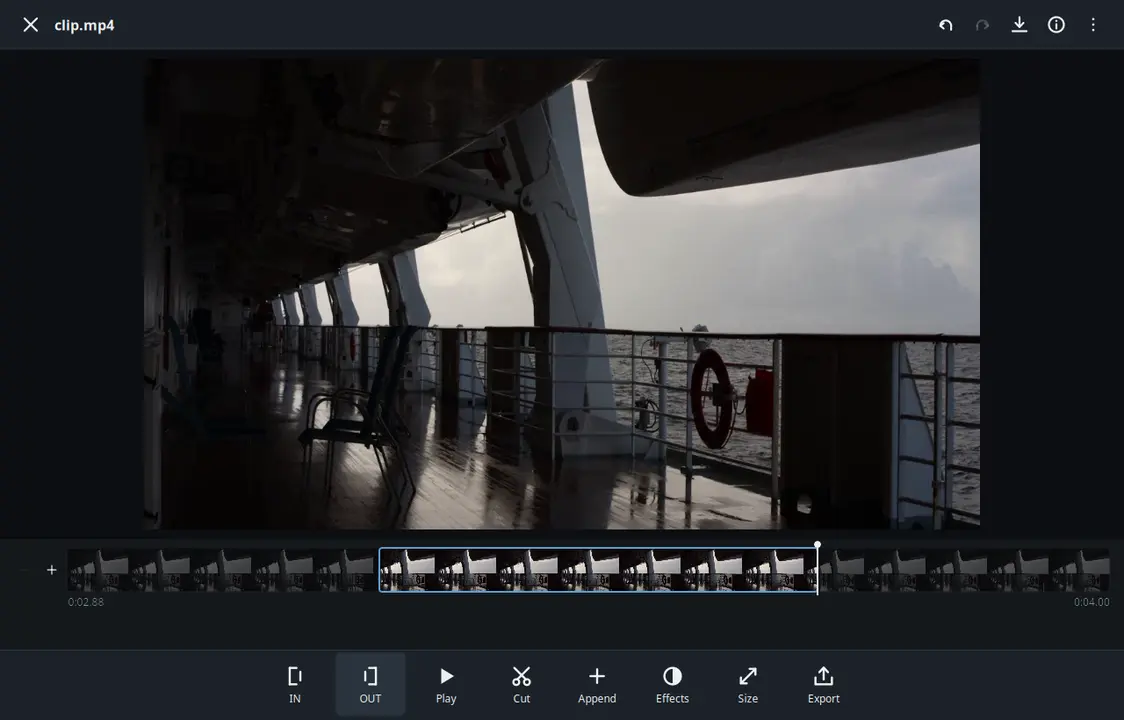
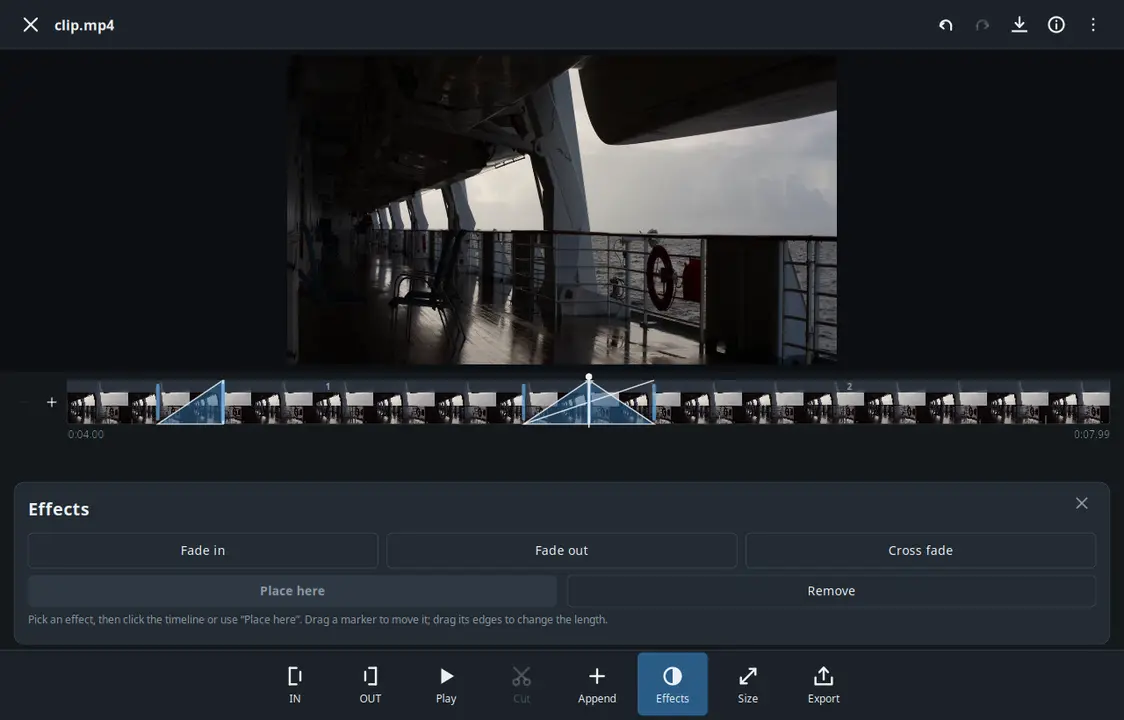
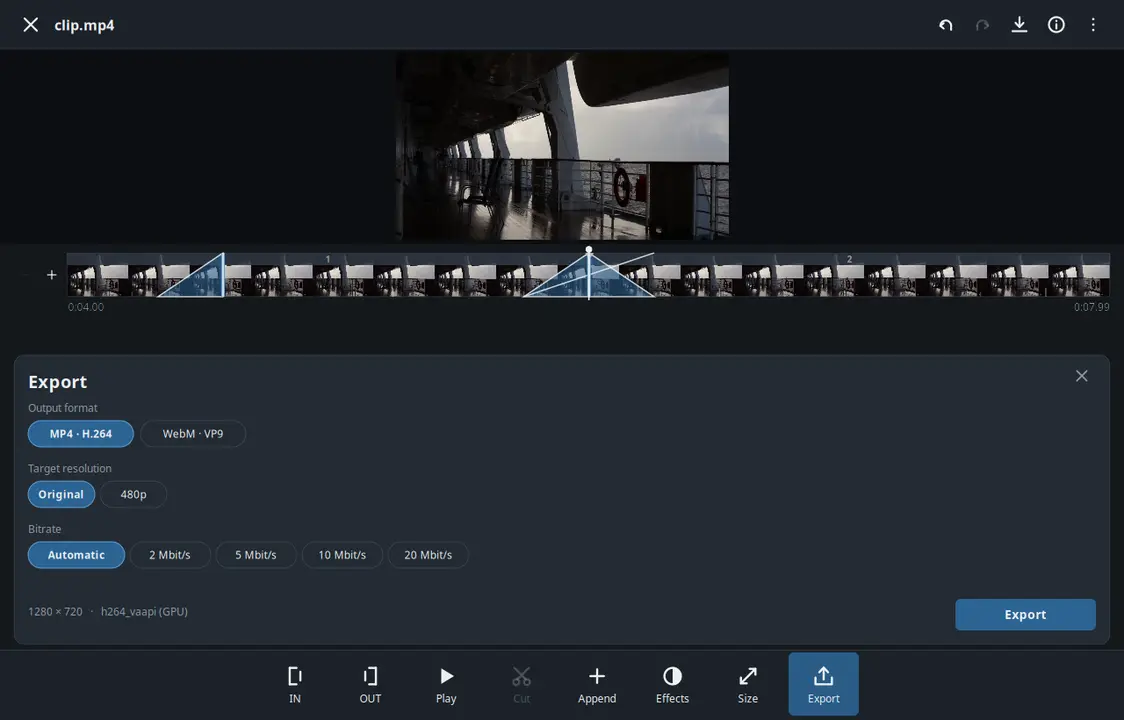
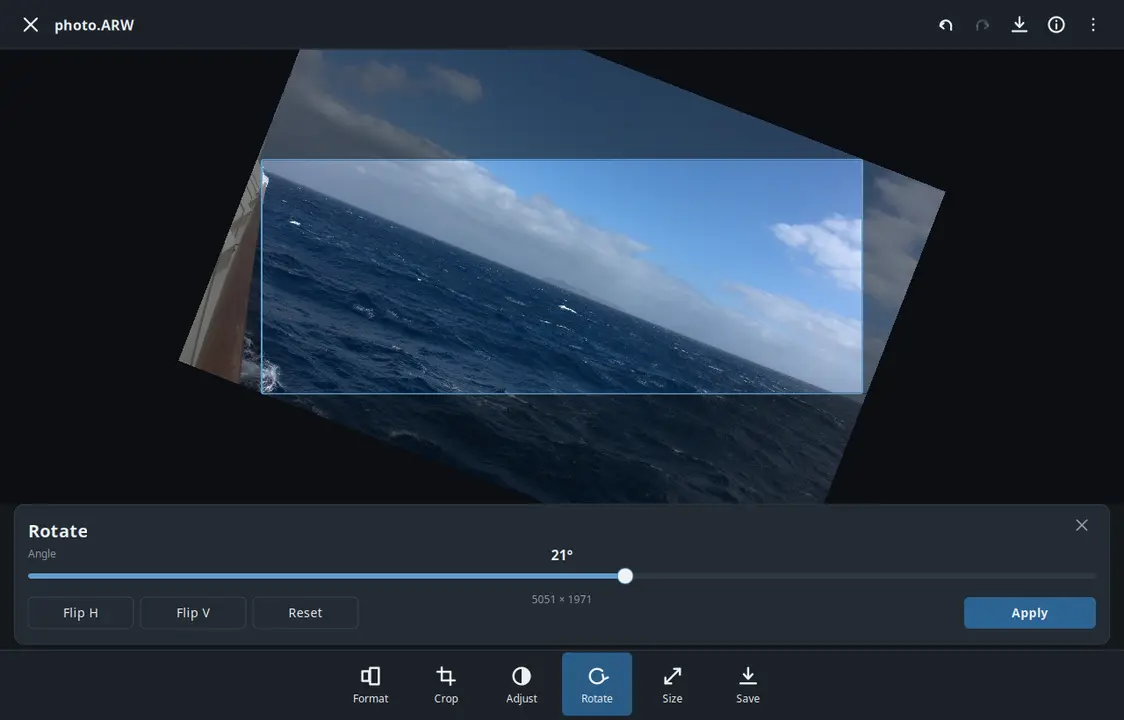
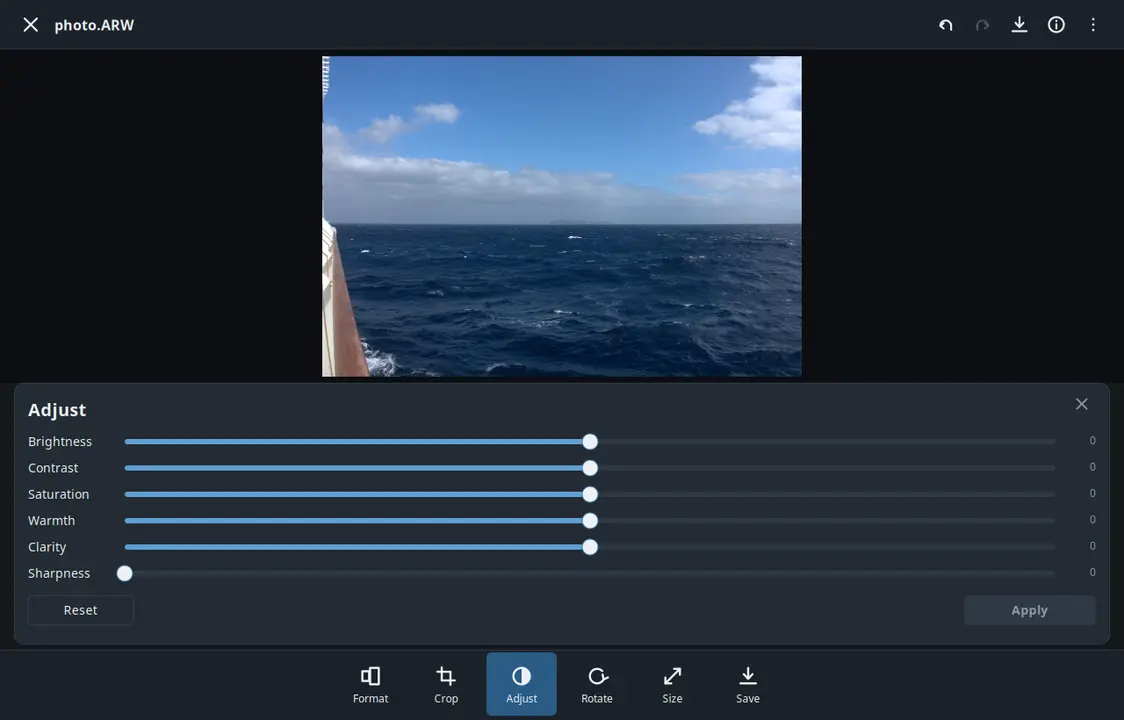
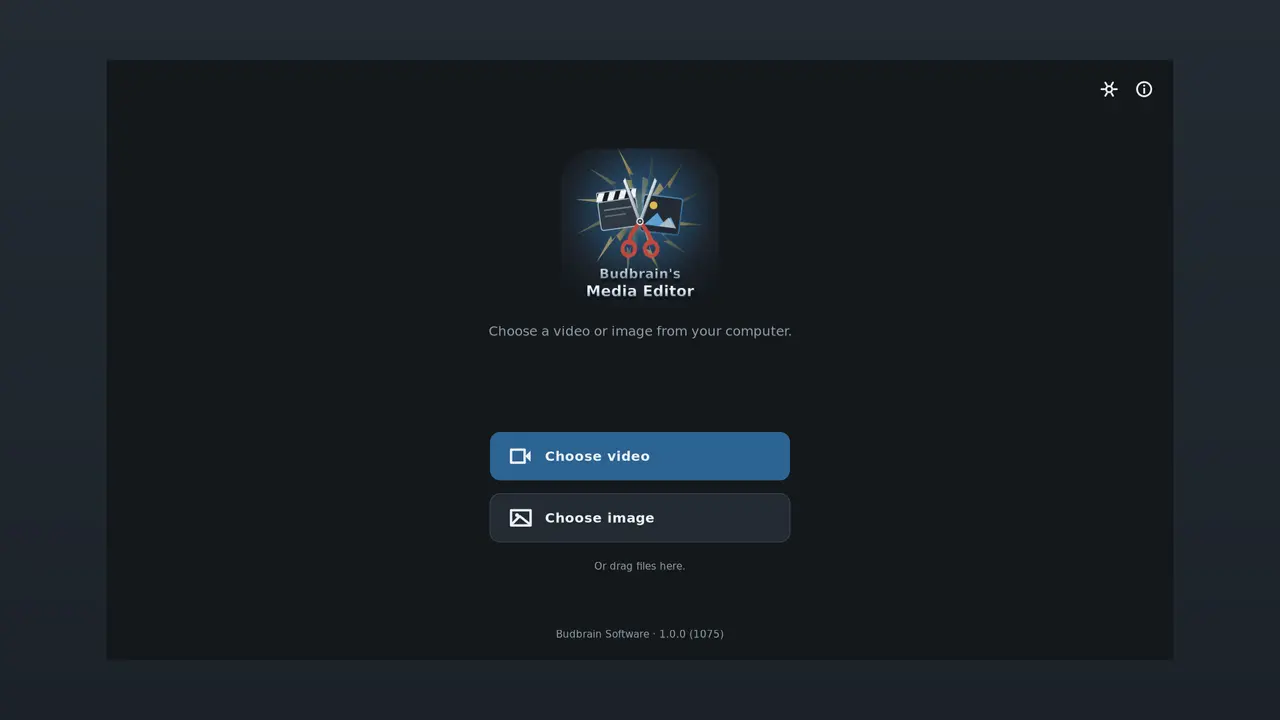
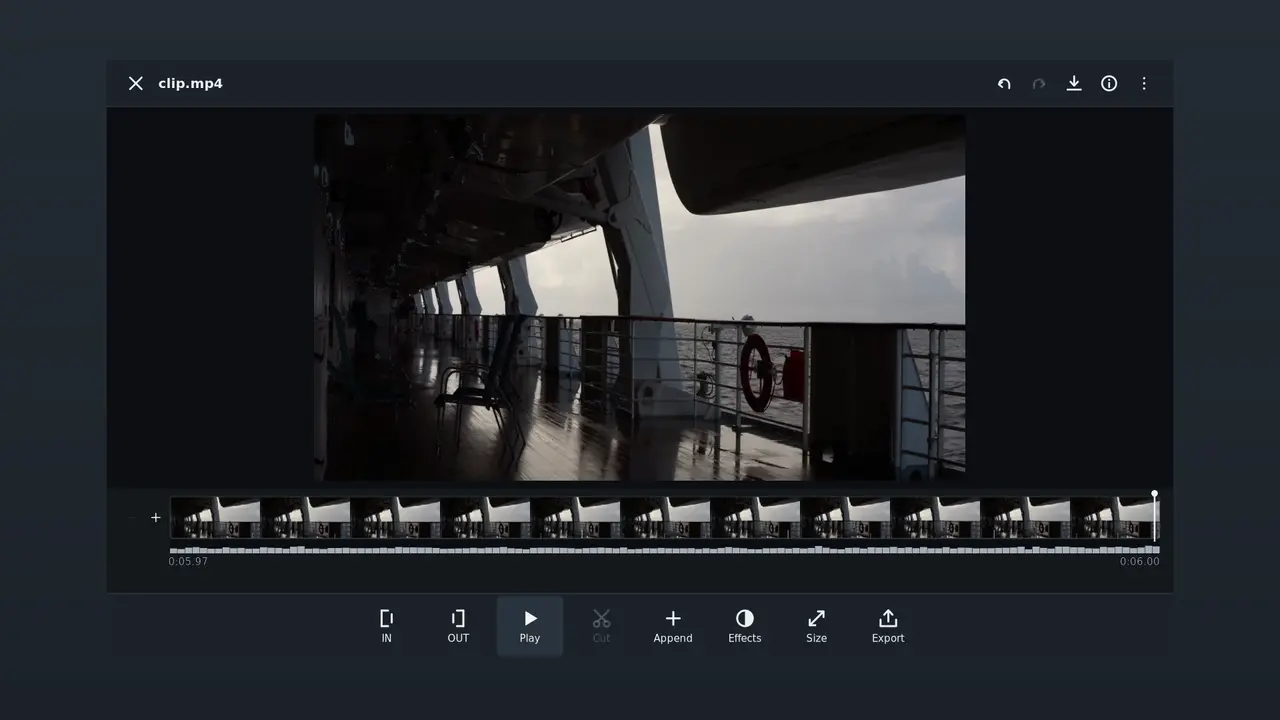
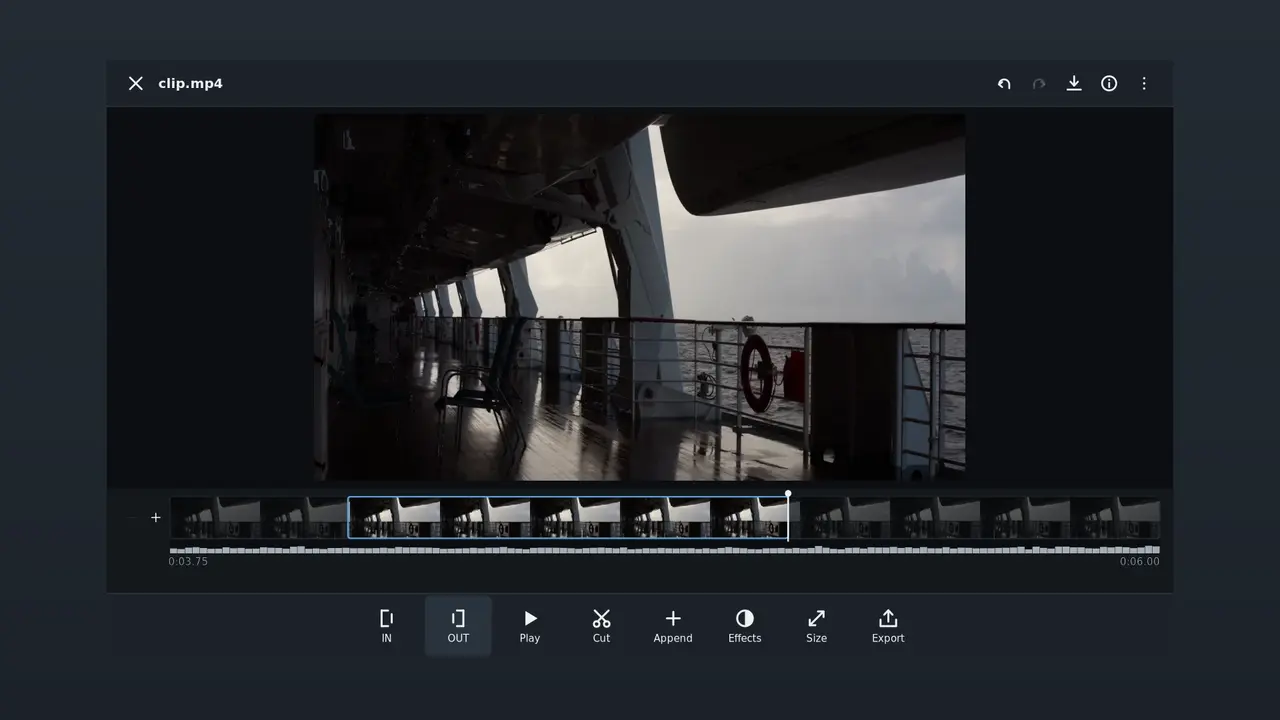
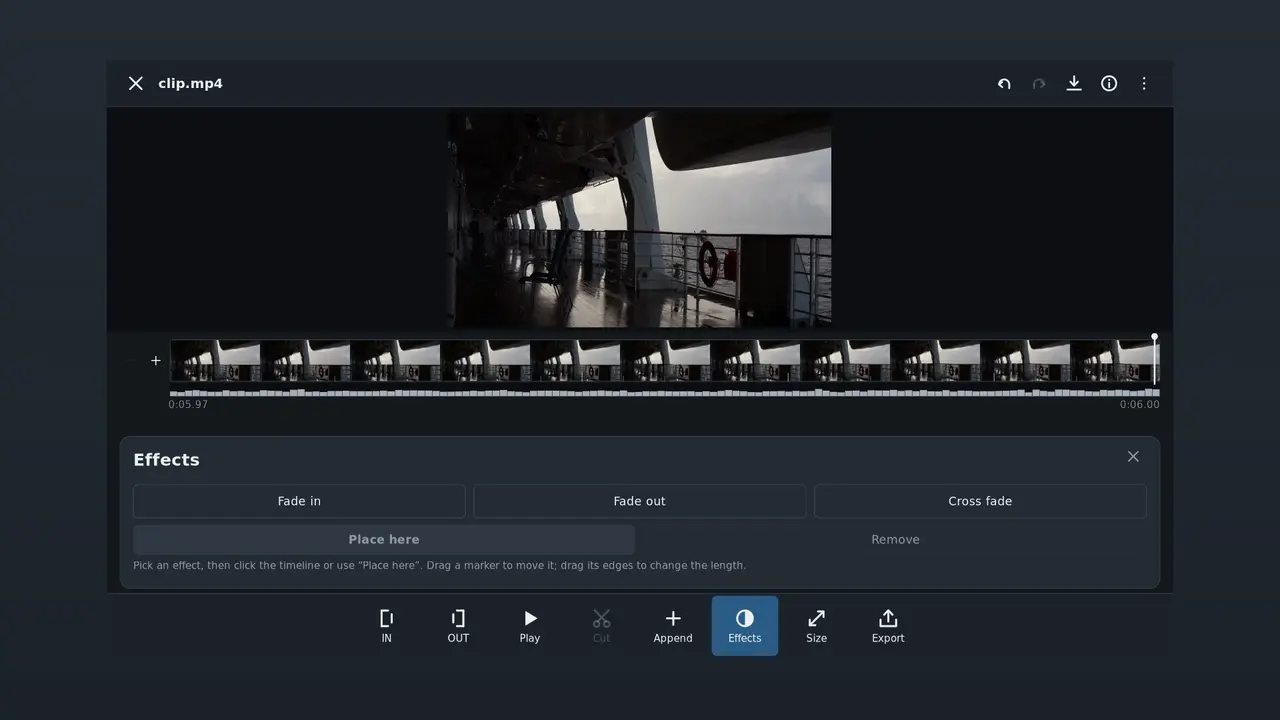
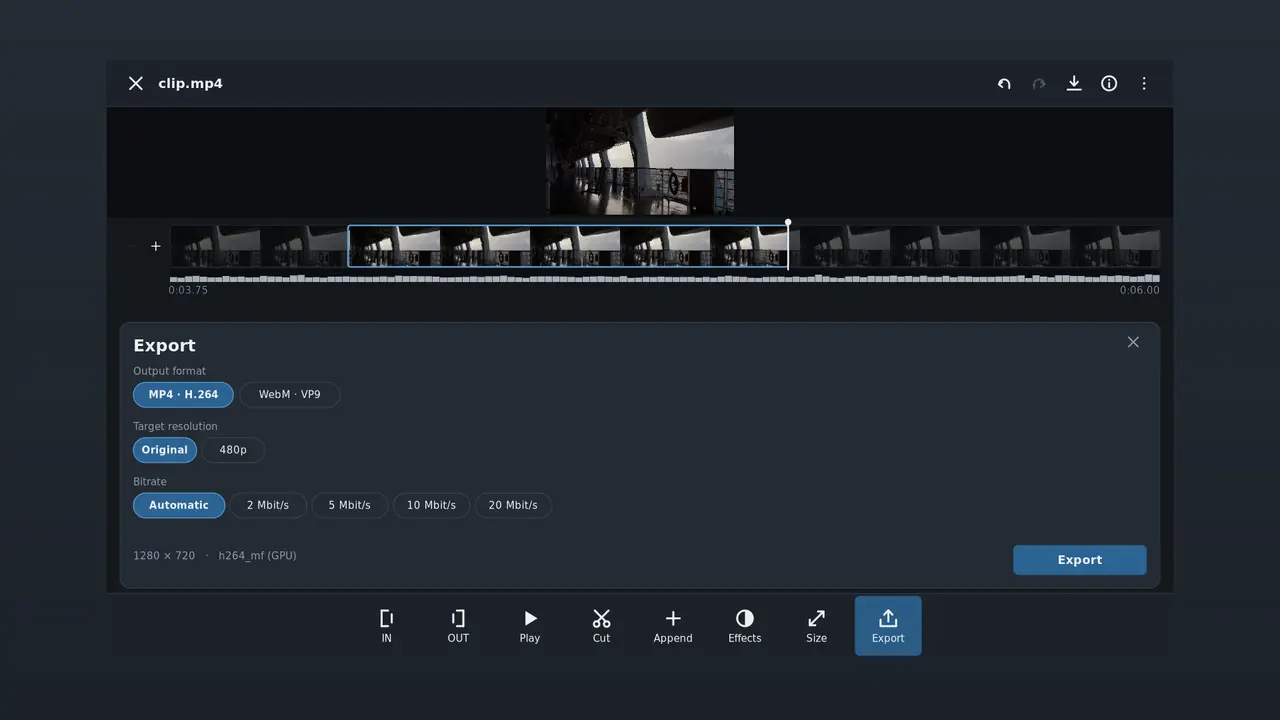
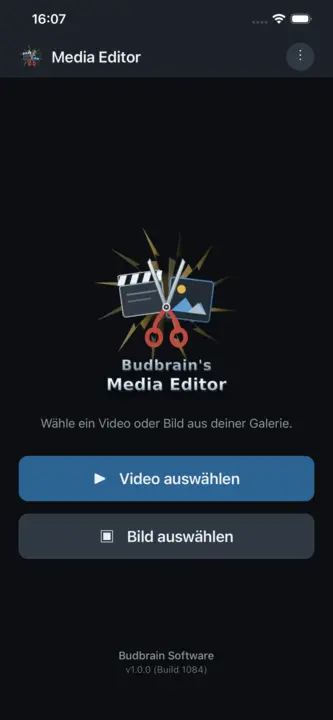
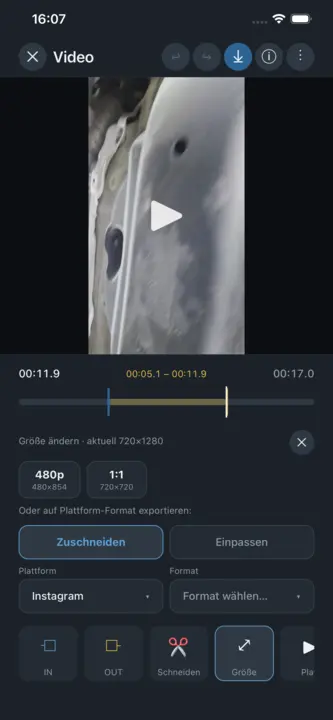
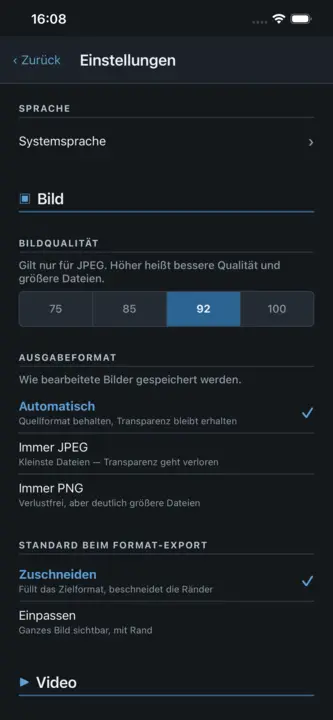
Chỉnh sửa video hoặc ảnh rồi lưu lại. Rút ngắn một đoạn phim hoặc thêm các clip, chuyển mờ giữa các clip, rồi lưu video với kích thước hoặc định dạng nhất định. Làm thẳng, cắt xén và chỉnh ảnh, sau đó lưu thành JPEG, PNG hoặc WebP.
Cắt và ghépMờ dần và chuyển mờCắt xén và chỉnh ảnhCấu hình xuất sẵn cho các nền tảng phổ biếnTệp raw của máy ảnhFFmpeg (LGPL)VAAPI · NVENCSDL2 · CairoGNOME / KDE / XFCE44 ngôn ngữ
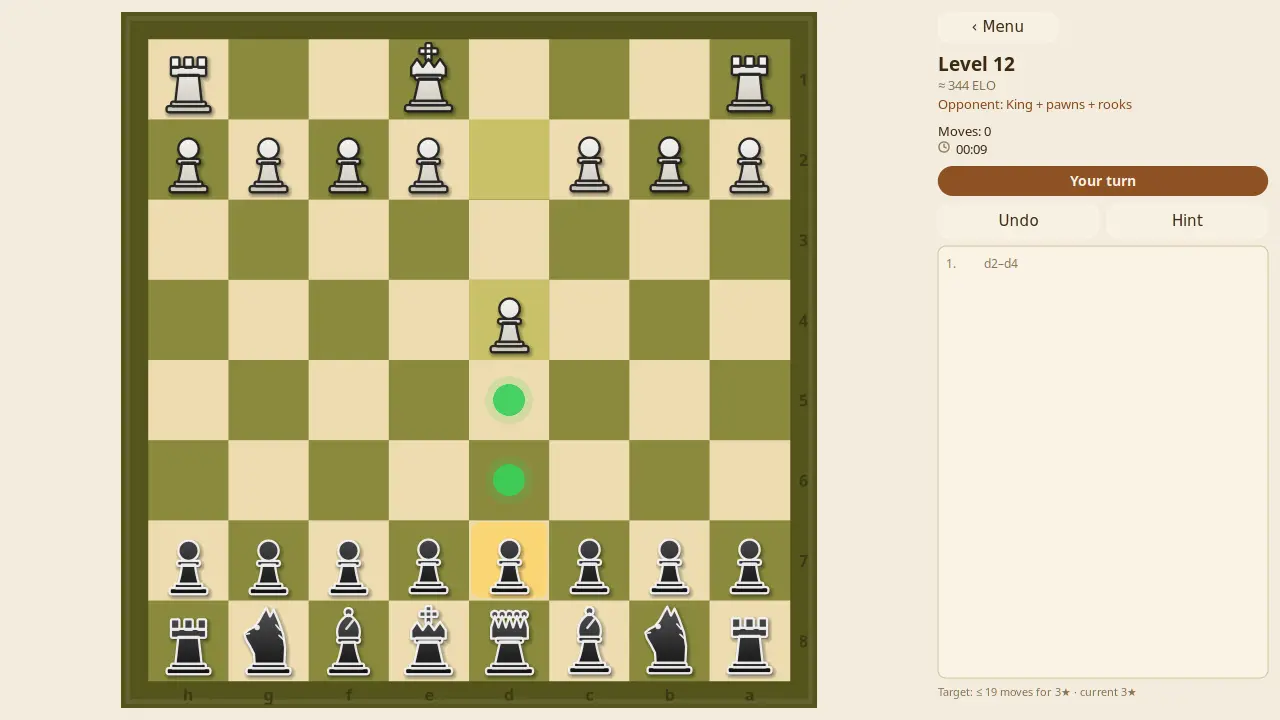
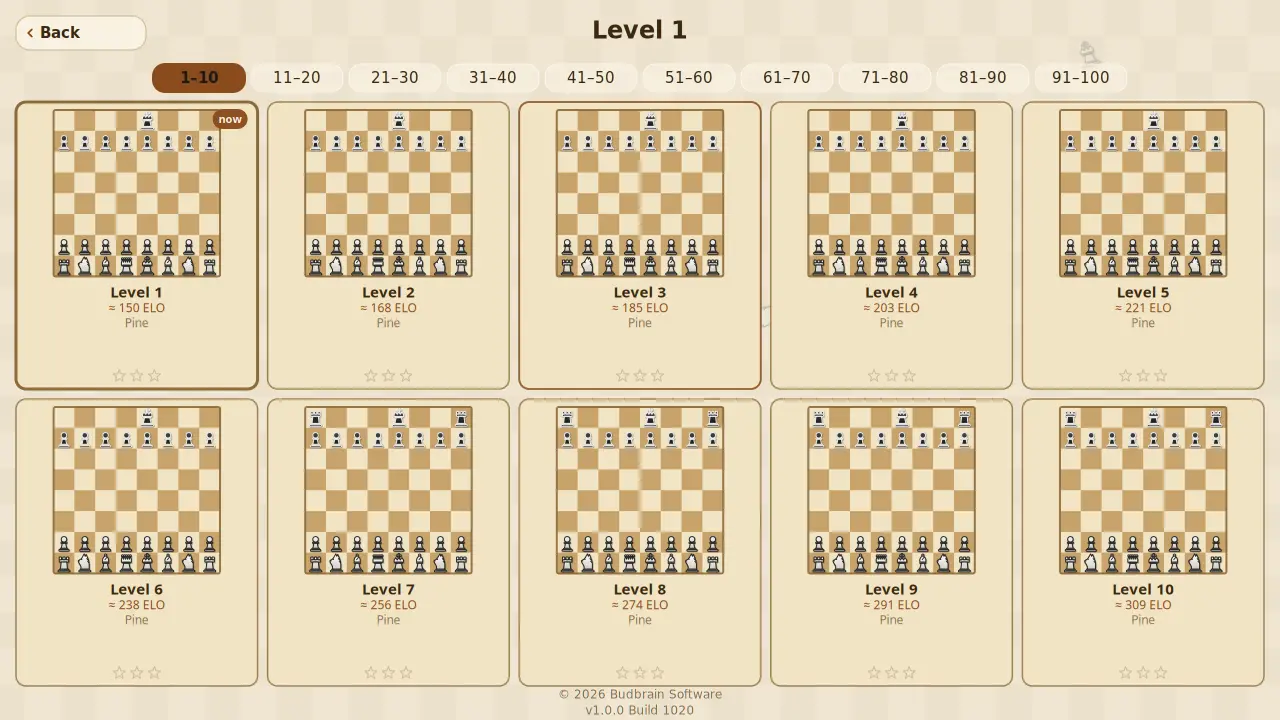
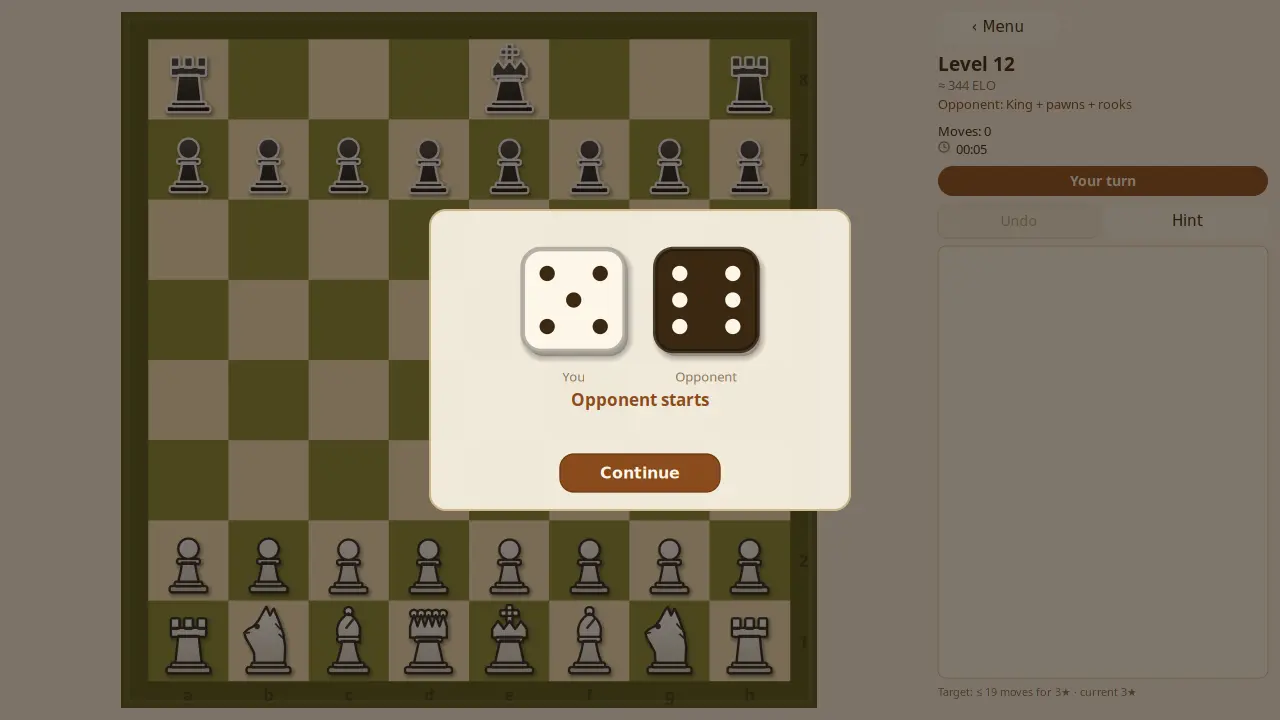
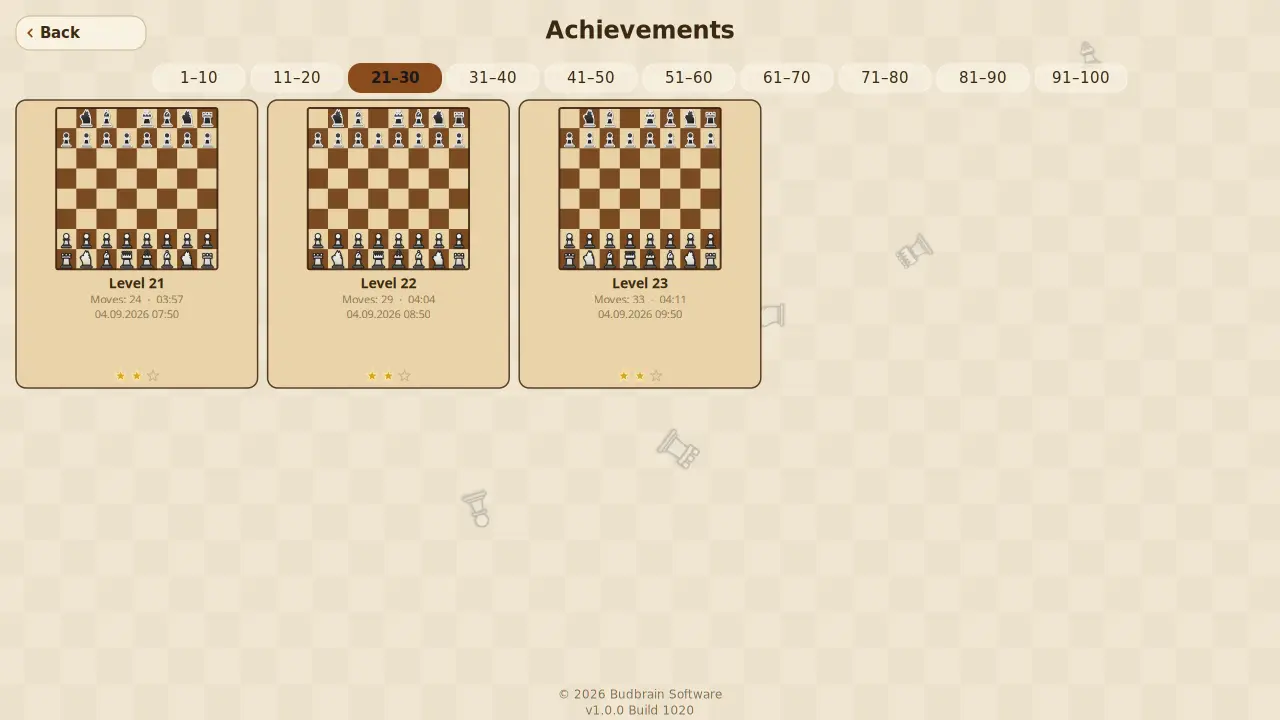
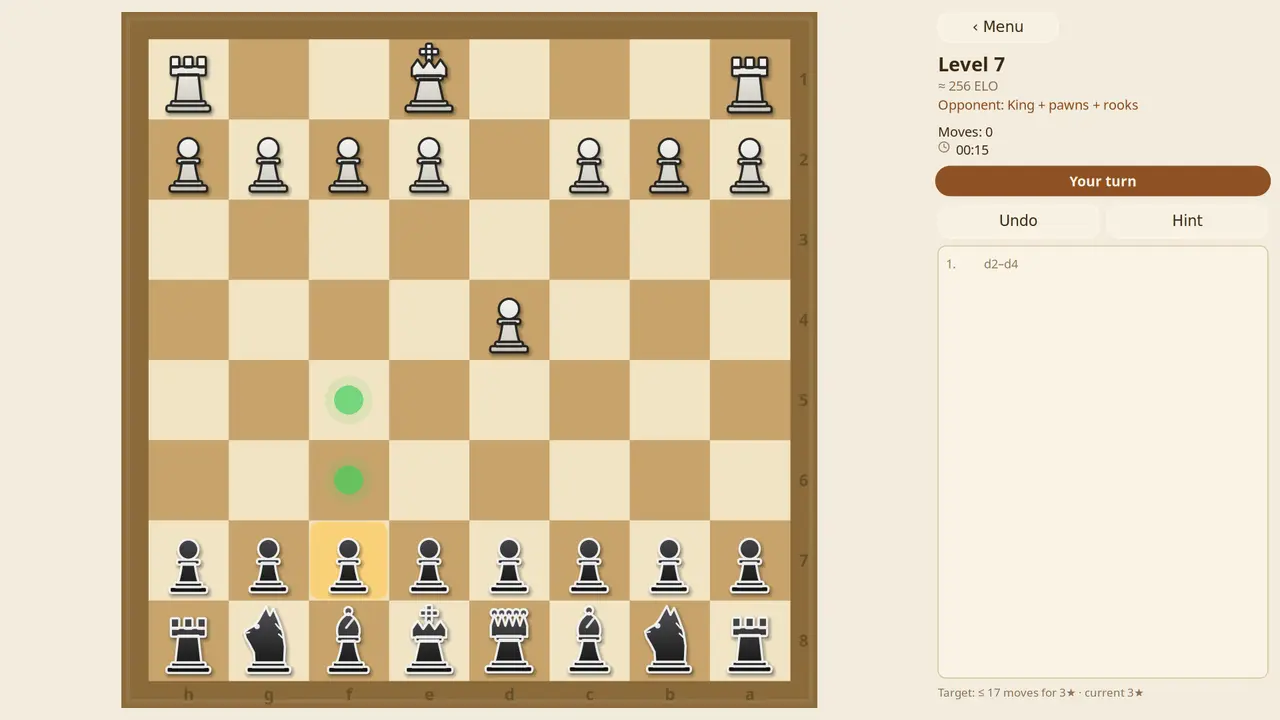
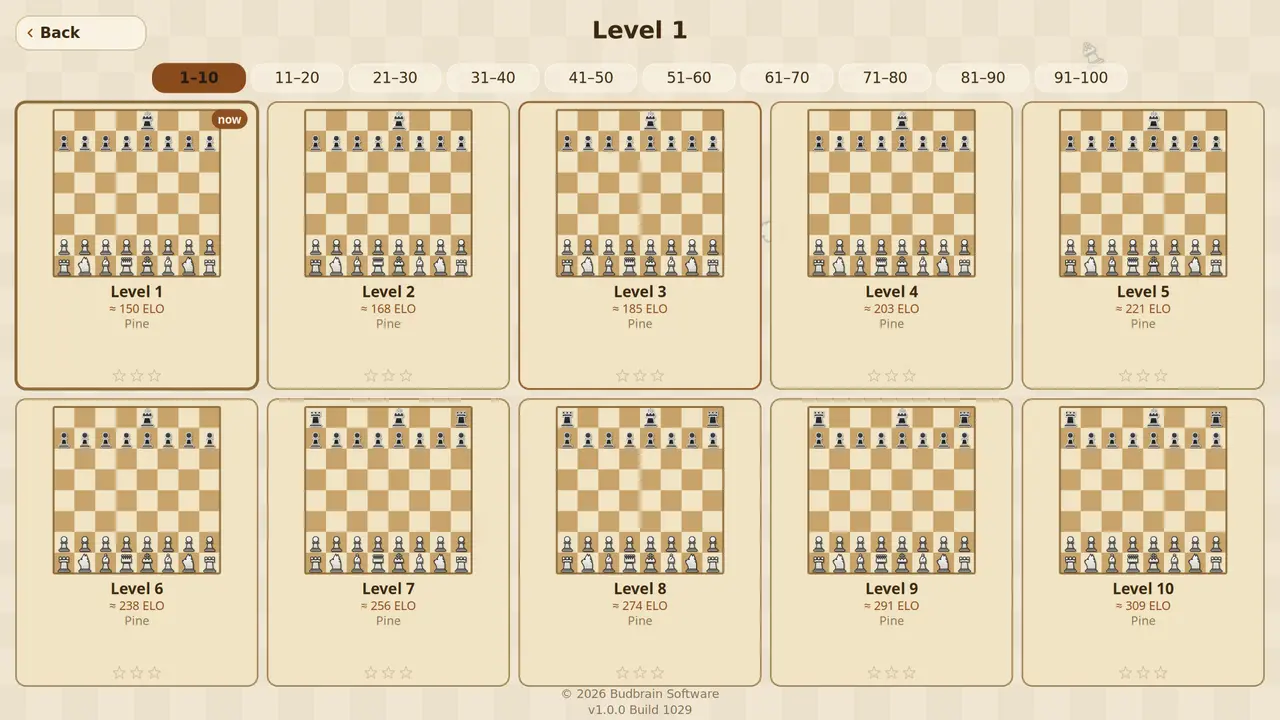
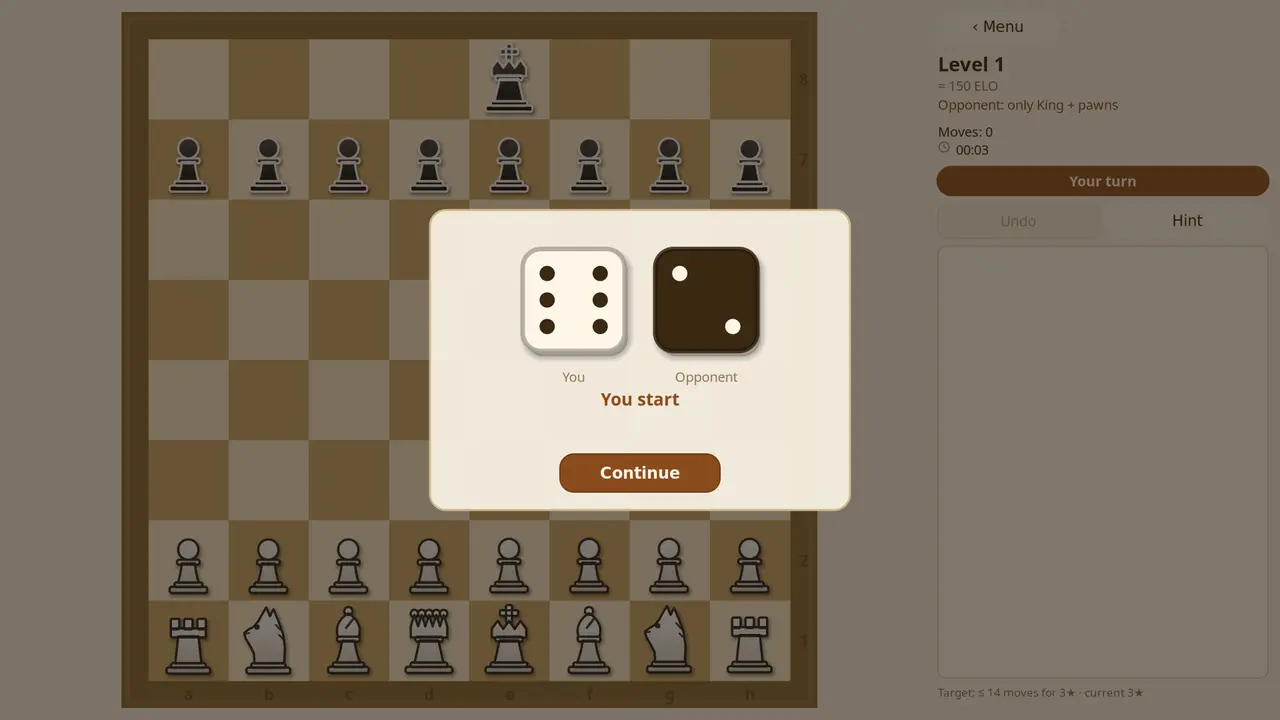
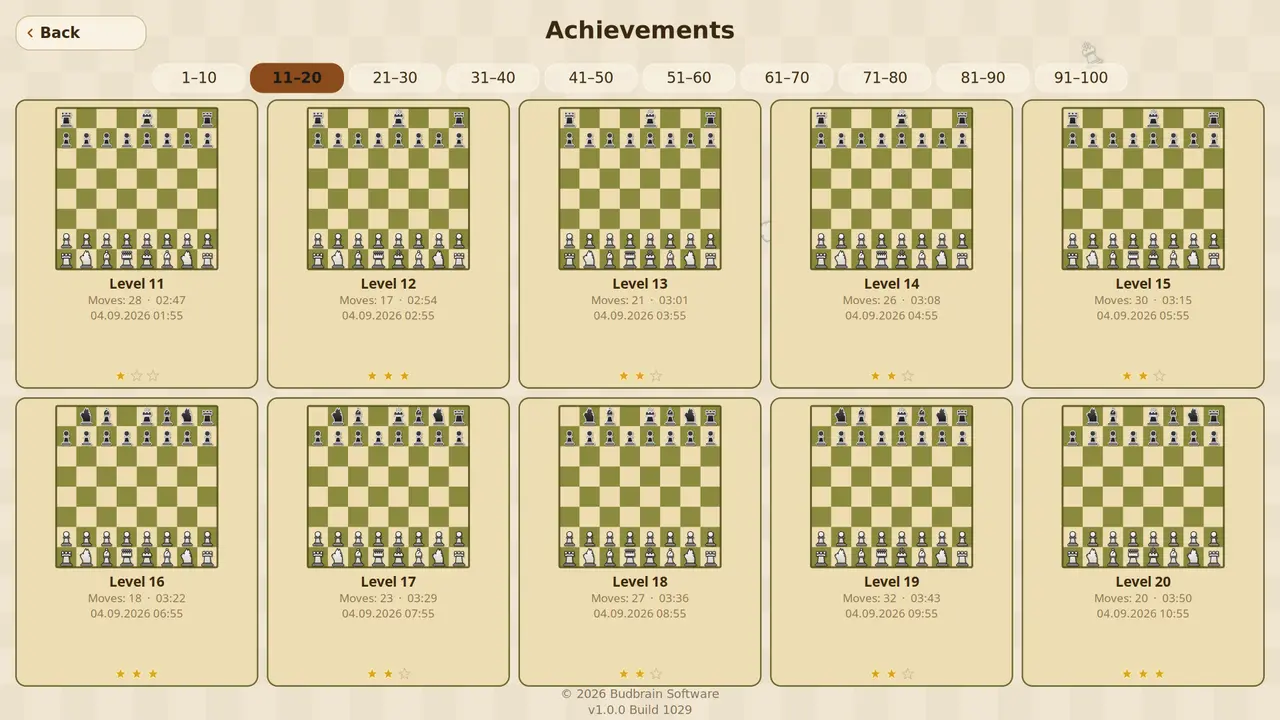
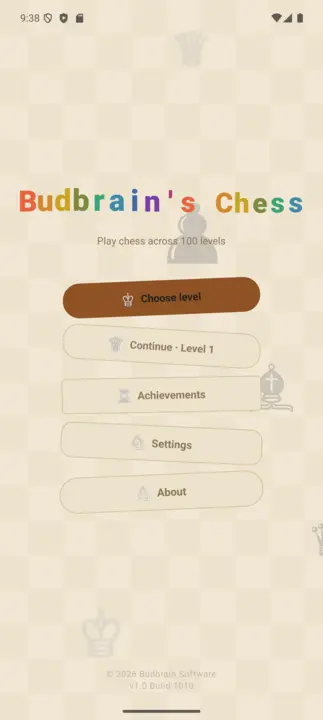
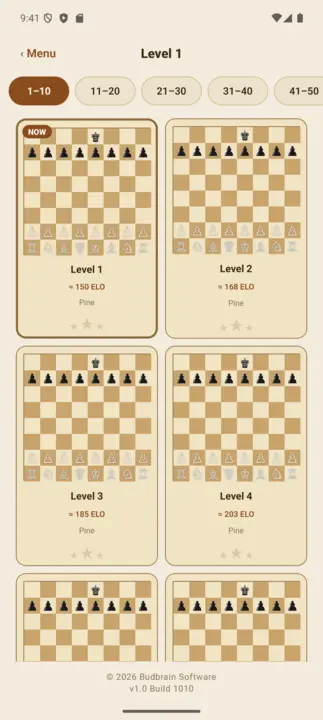
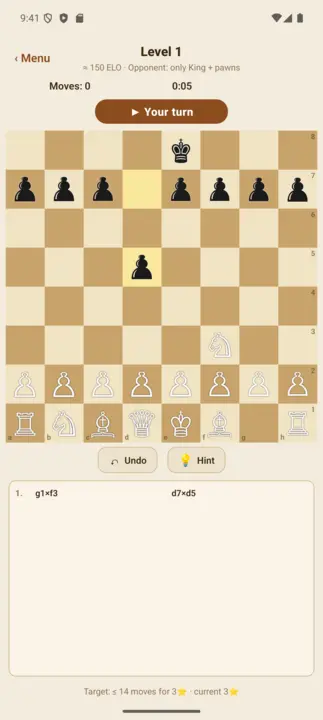
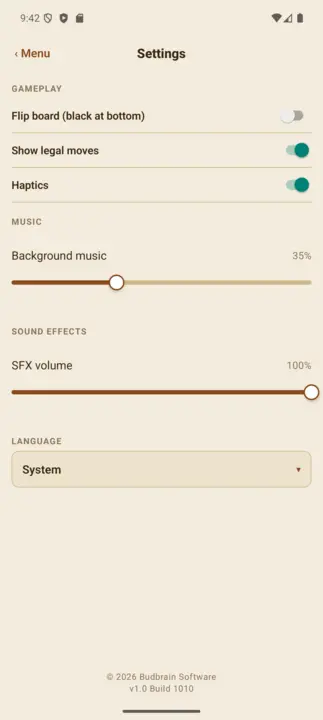
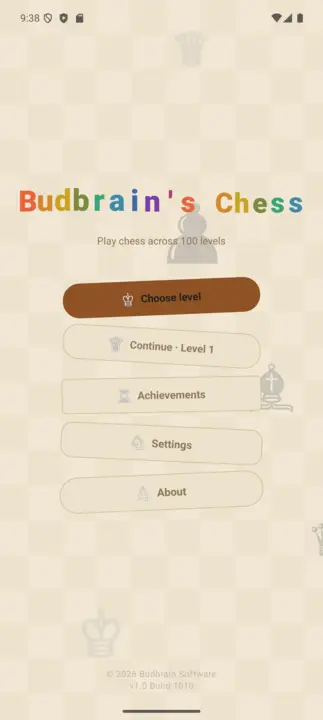
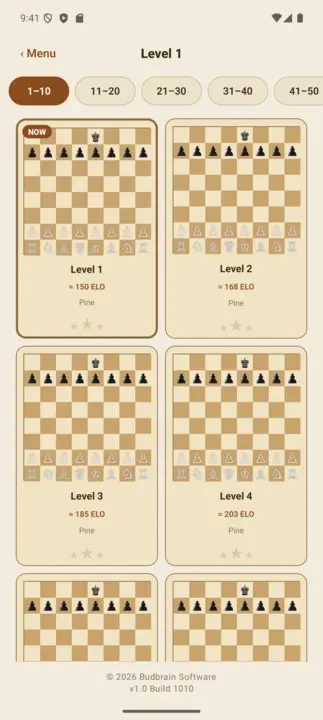
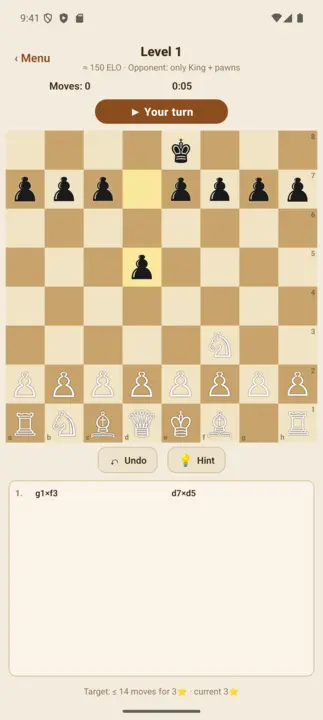
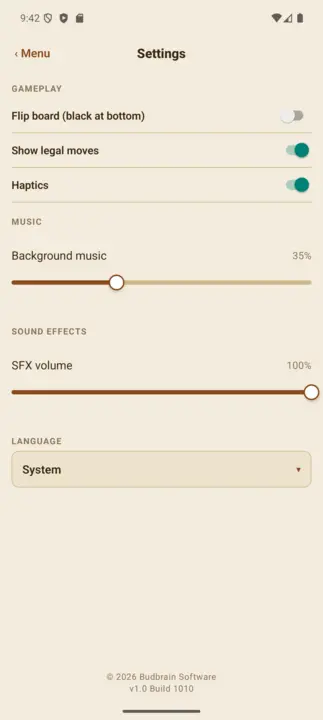
Một trăm màn cờ vua đấu với máy tính, từ ELO 150 đến 1900. Ở những màn đầu, đối thủ chơi với điểm chấp, rồi mạnh dần theo từng màn. Có gợi ý giúp bạn, quân bị đe dọa sẽ nhấp nháy, mọi nước đi đều có thể hoàn tác — và mỗi ván bạn thắng đều được lưu trong thư viện.
100 màn chơiELO 150 đến 1900Đối thủ chơi với điểm chấpGợi ý và hoàn tácThư viện các ván đã thắngOpenGLSDL2 · CairoGNOME / KDE / XFCE22 ngôn ngữ
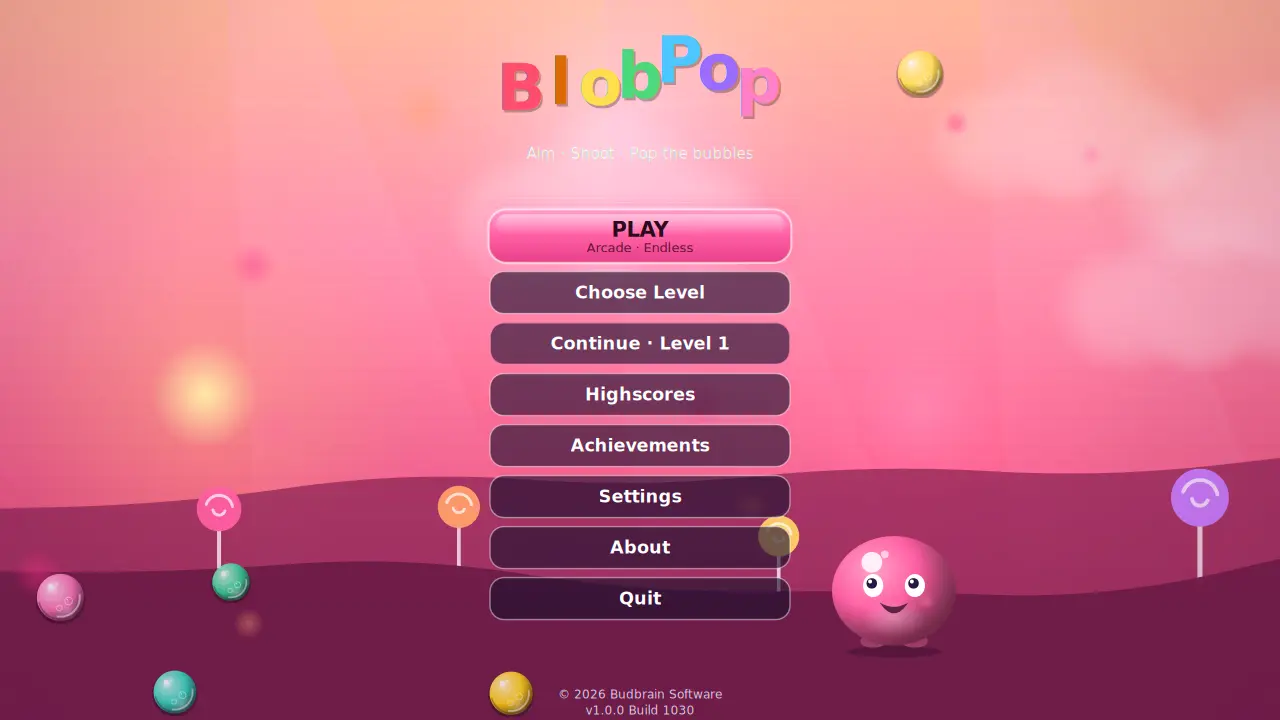
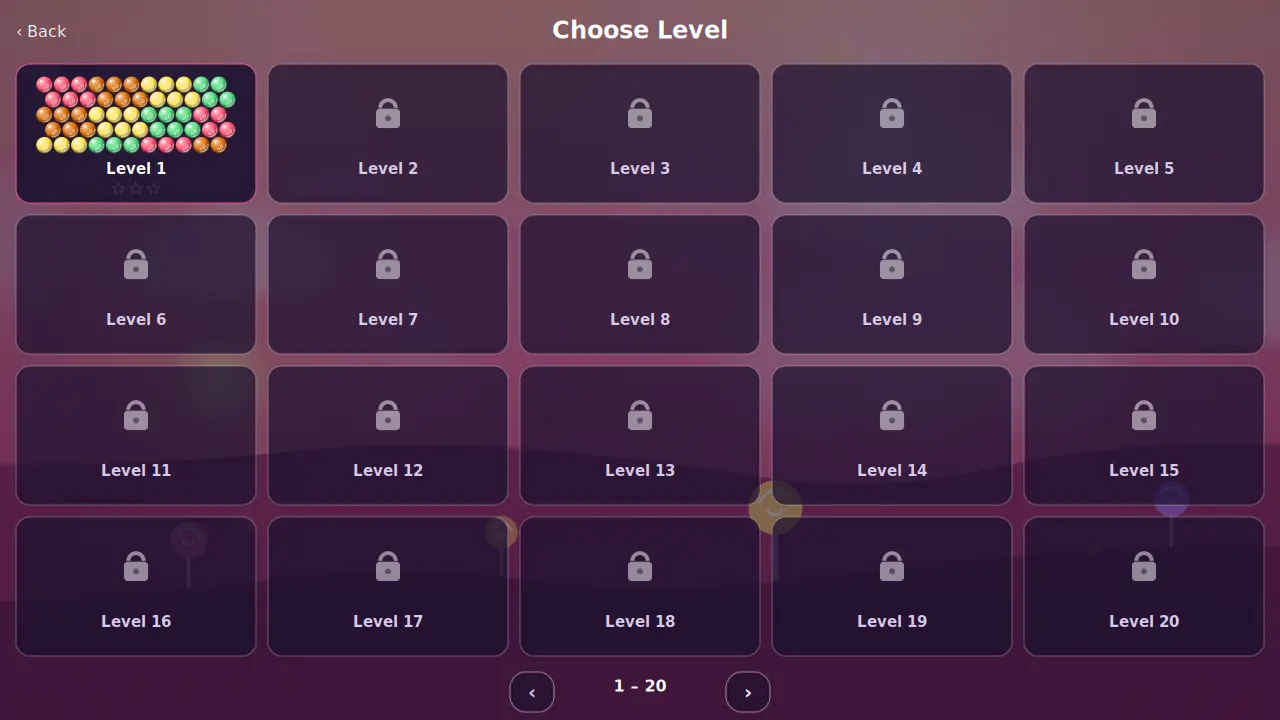
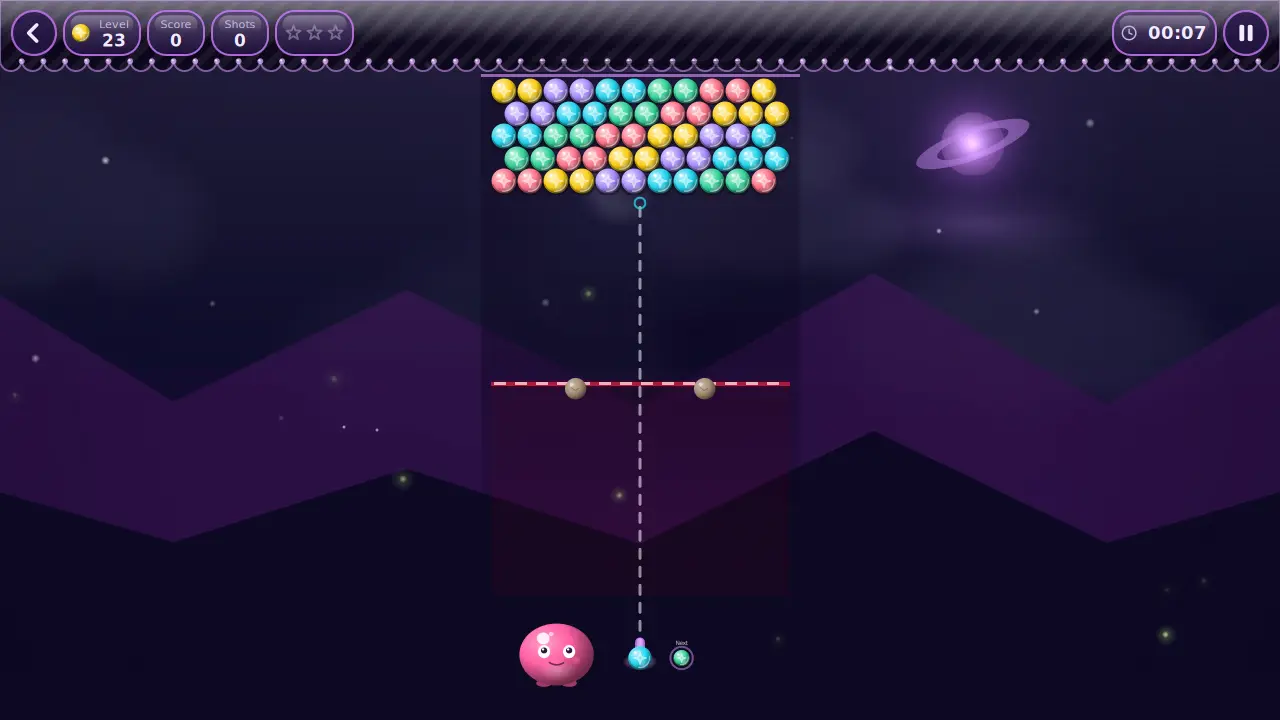
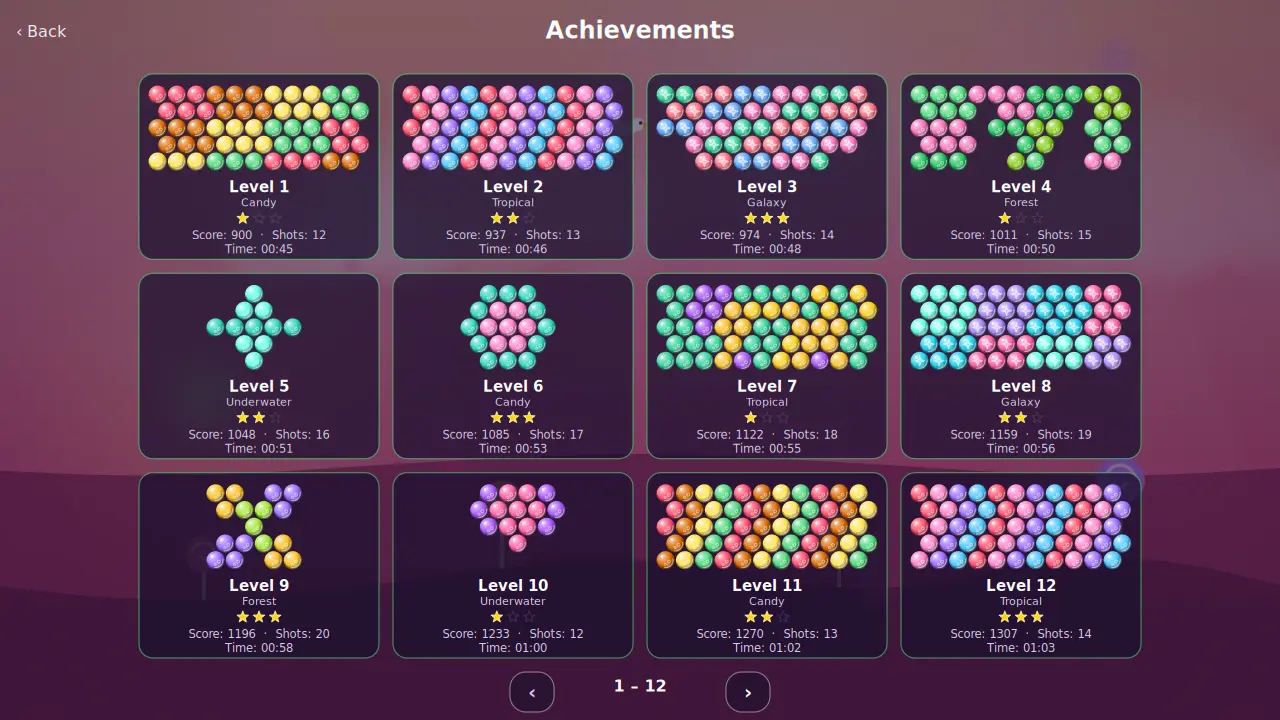
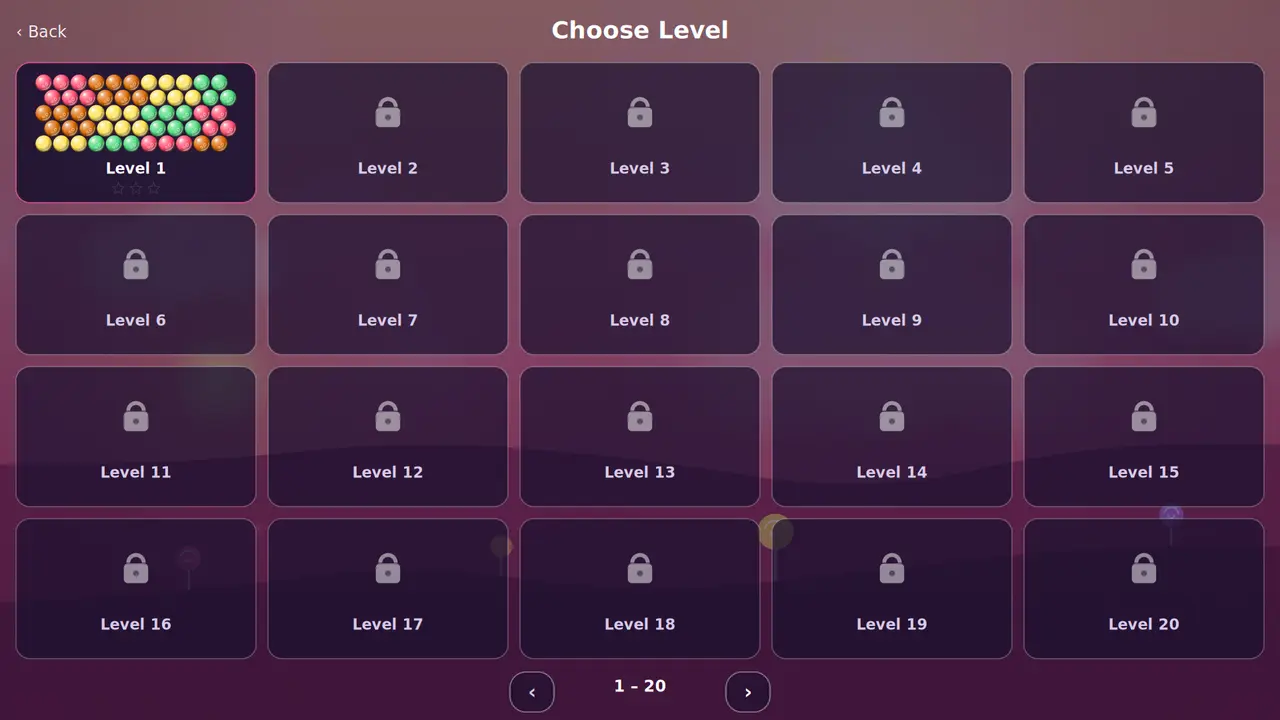
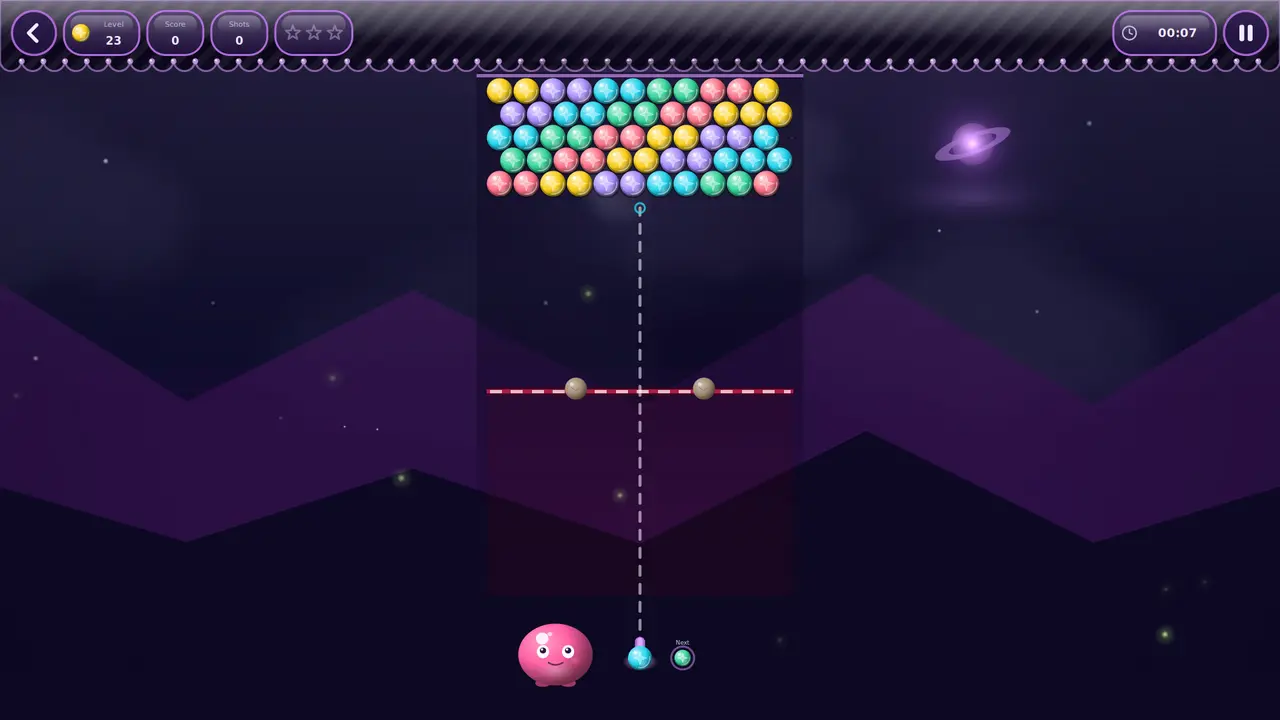
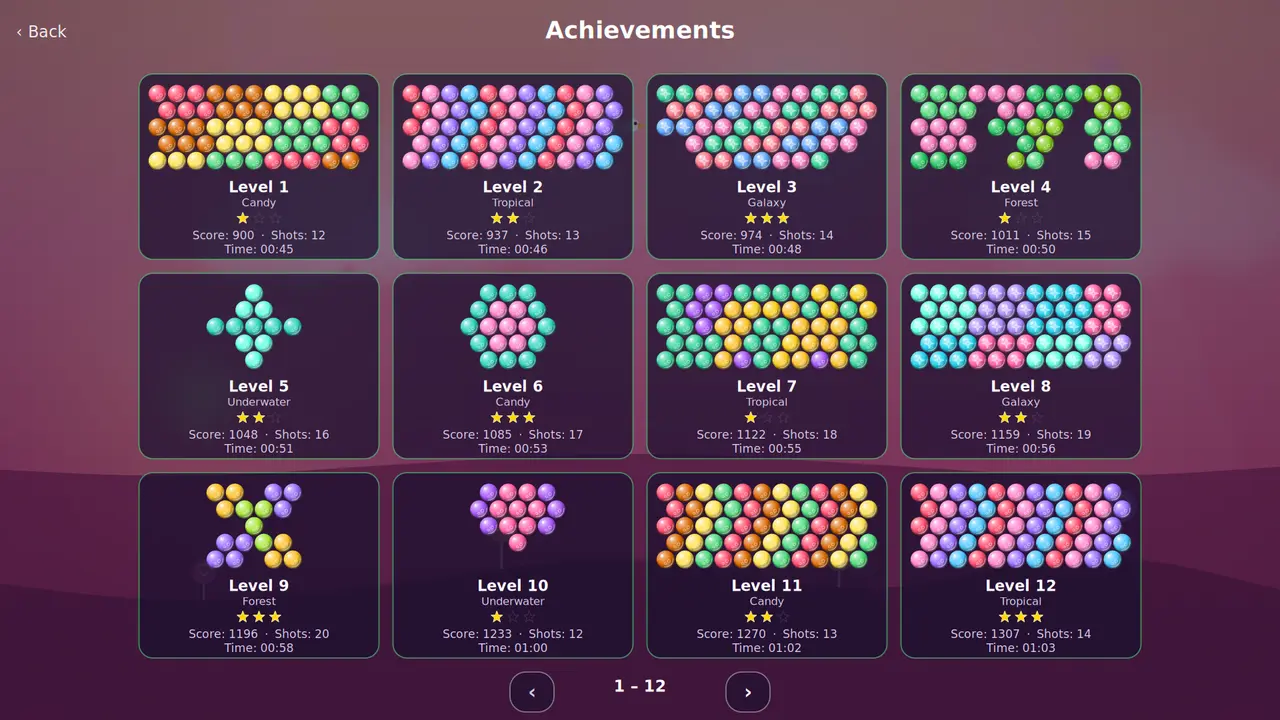
Một trăm màn chơi qua năm thế giới: ngắm, nhấp, gom ba bóng cùng màu lại với nhau. Cứ vài lần bắn, bàn chơi lại bị đẩy xuống một hàng — dọn sạch trước khi nó chạm đáy là bạn đạt ba sao. Thêm chế độ vô tận với bảng điểm cao.
100 màn chơiNăm thế giớiChế độ vô tậnNgày và đêmBảng điểm caoOpenGLSDL2 · CairoGNOME / KDE / XFCE22 ngôn ngữ
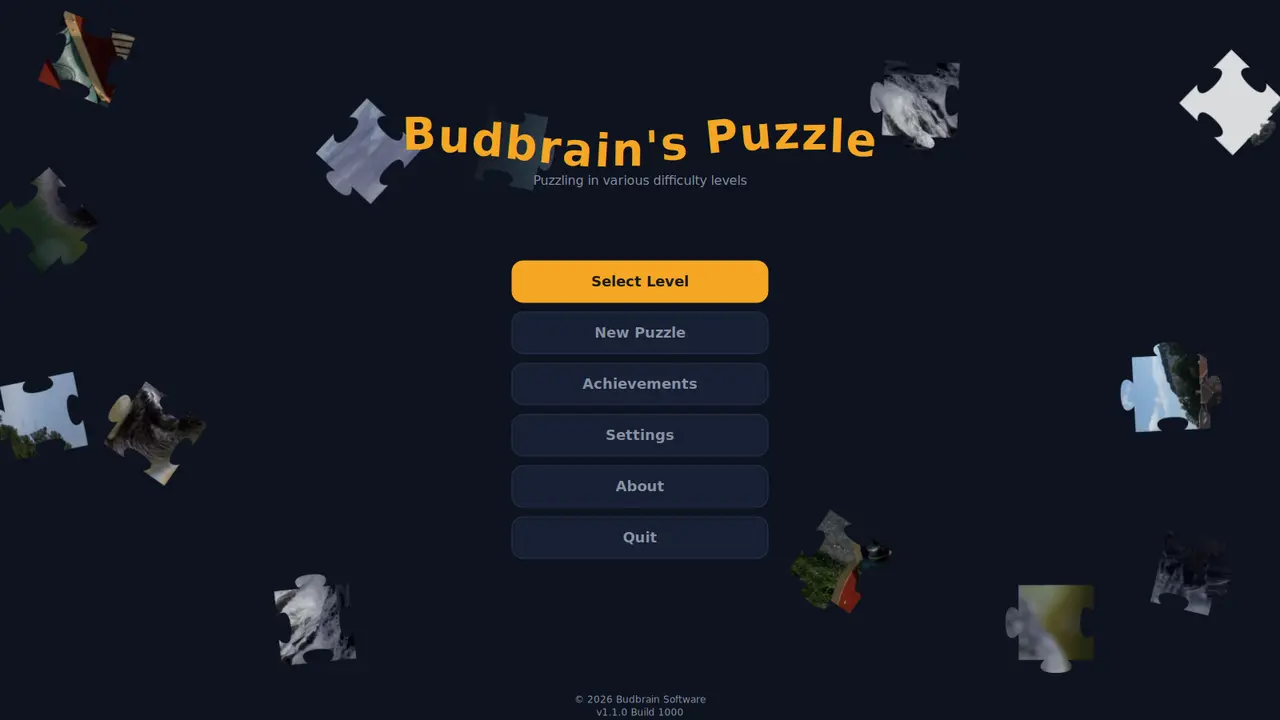
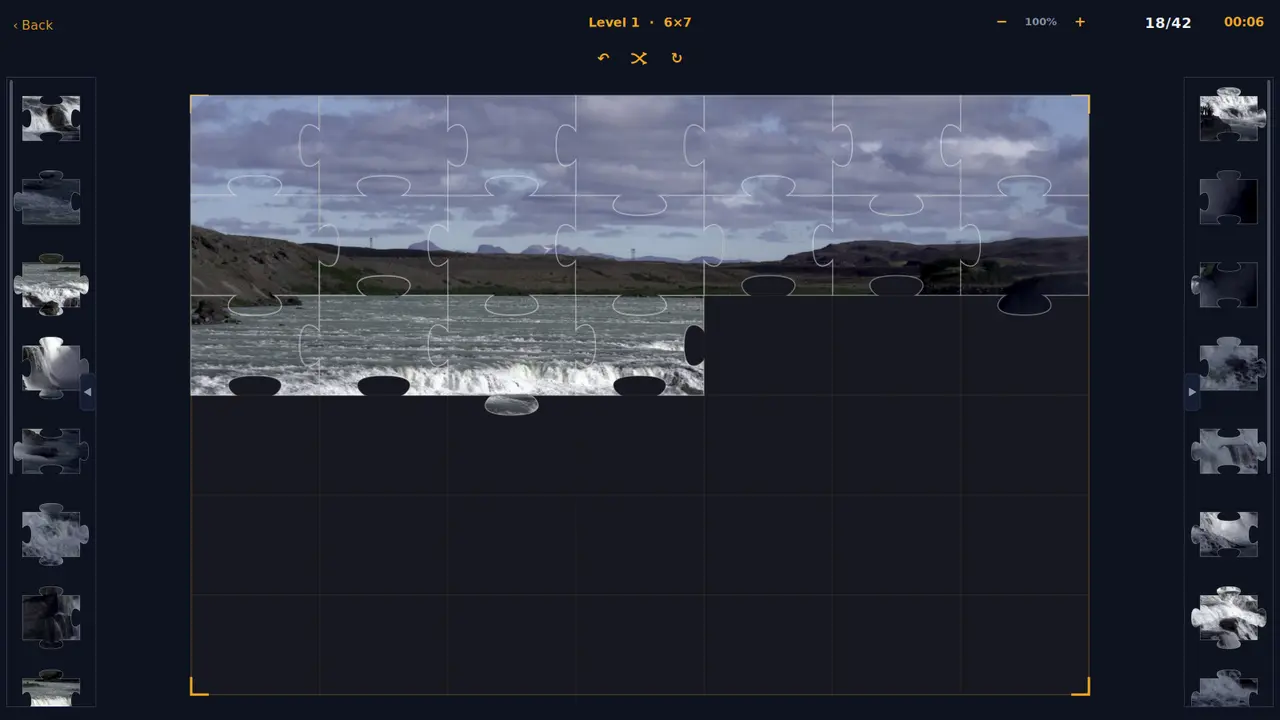
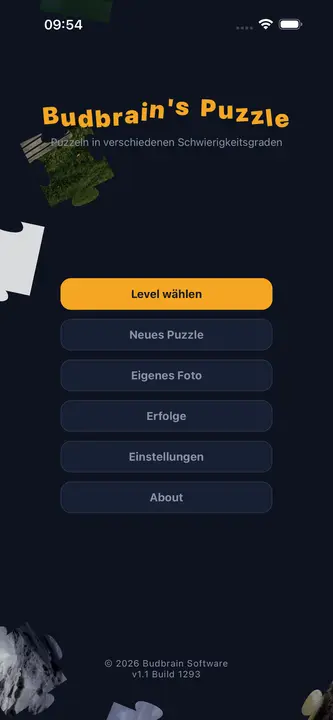
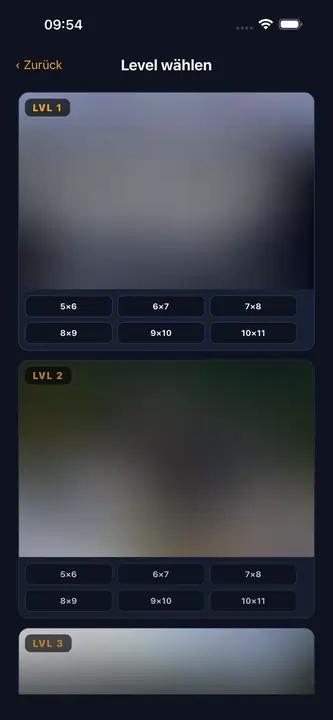
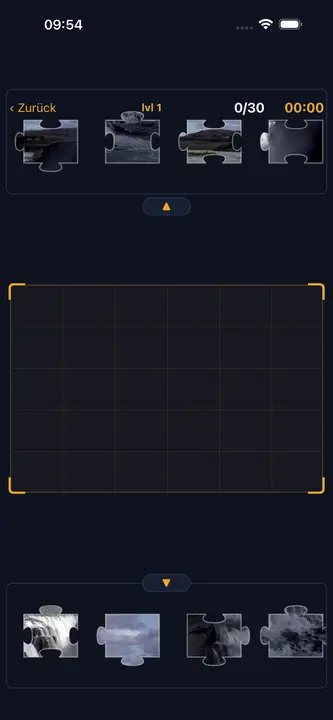
Bốn mươi bức ảnh biến thành trò ghép hình, mỗi bức có sáu kích cỡ từ ba mươi đến một trăm mười mảnh. Mảnh nào ở gần đúng vị trí sẽ tự khớp vào — bật chế độ xoay nếu bạn muốn khó hơn.
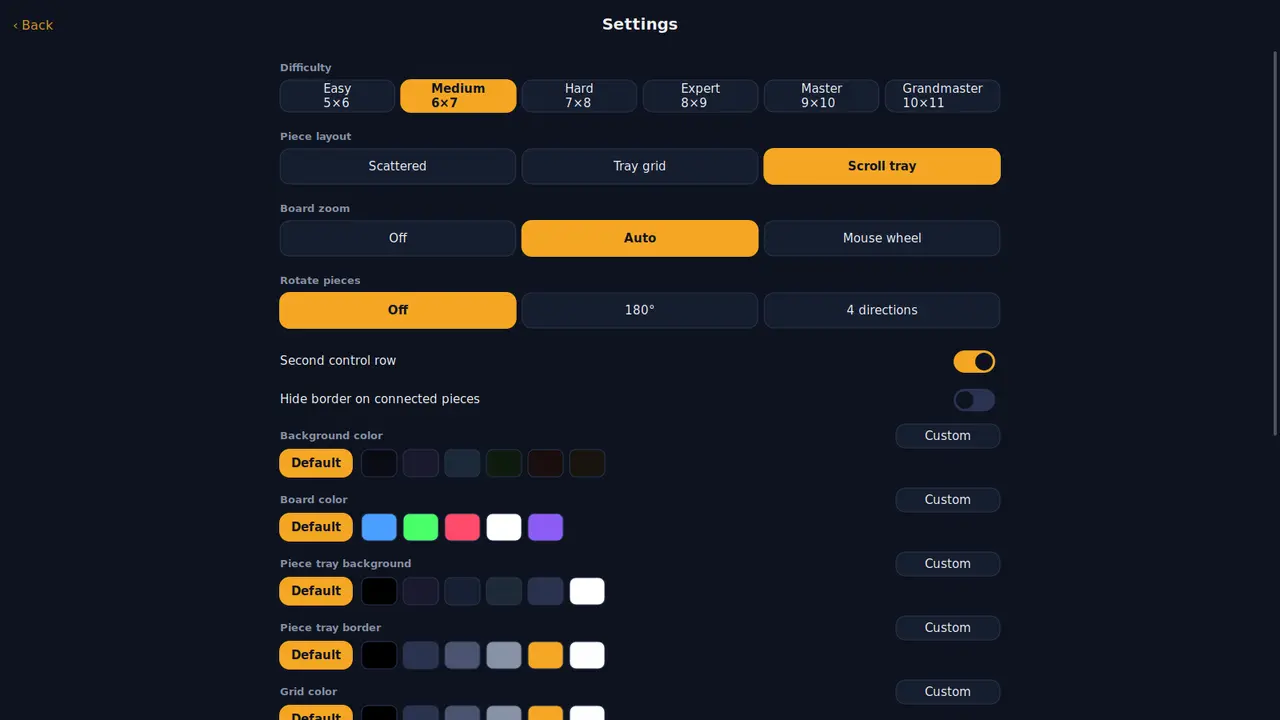
Bốn mươi bức ảnhSáu kích cỡ30 đến 110 mảnhMảnh ghép xoay đượcThư viện thành tíchMàu của riêng bạnOpenGLSDL2 · CairoGNOME / KDE / XFCE22 ngôn ngữ
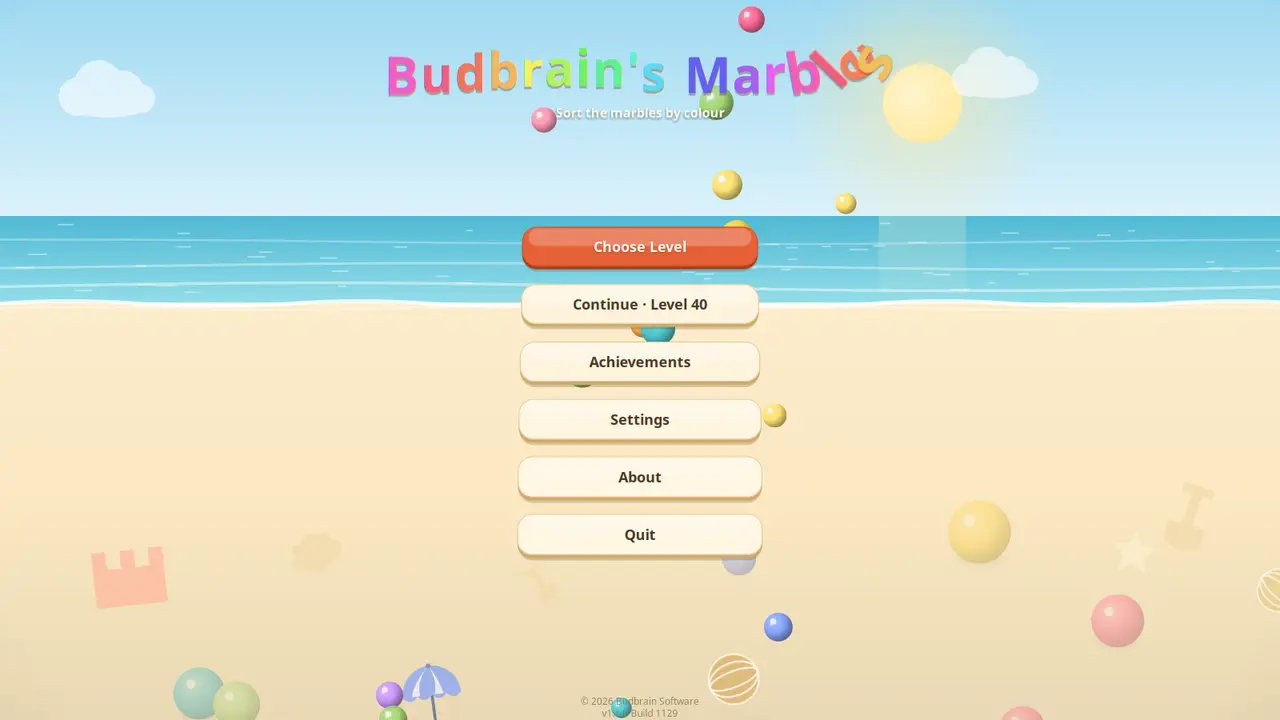
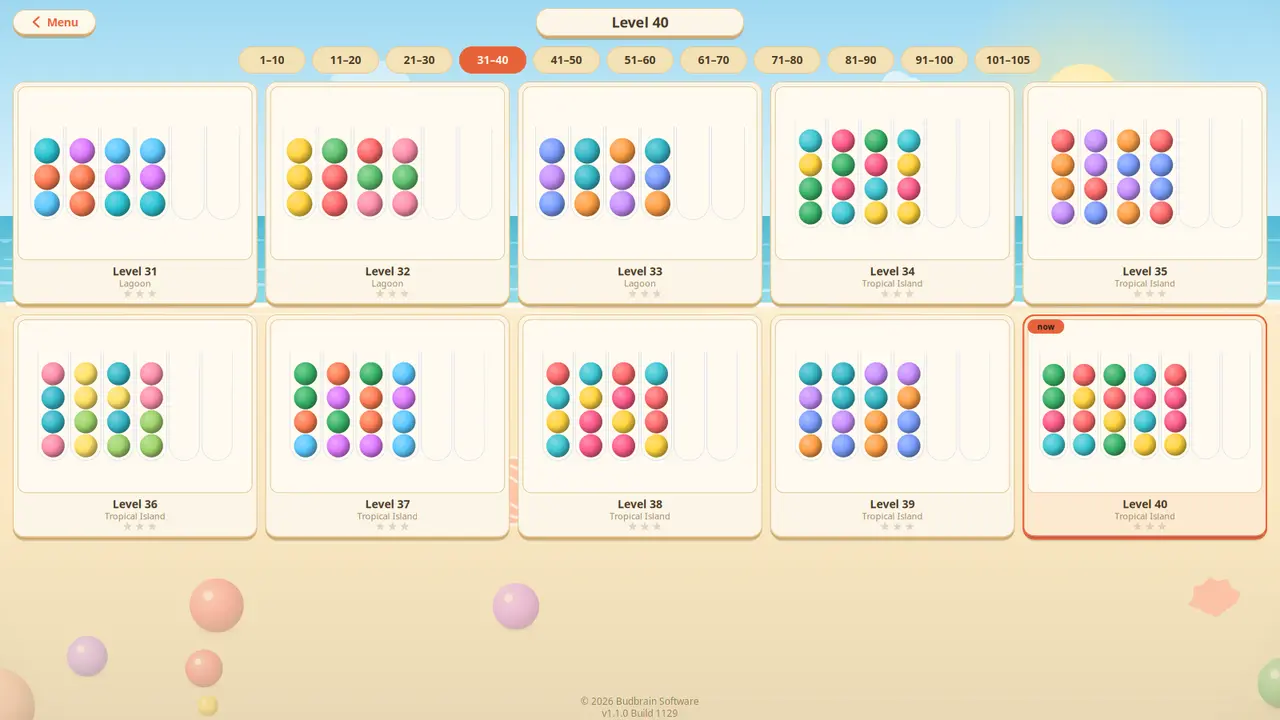
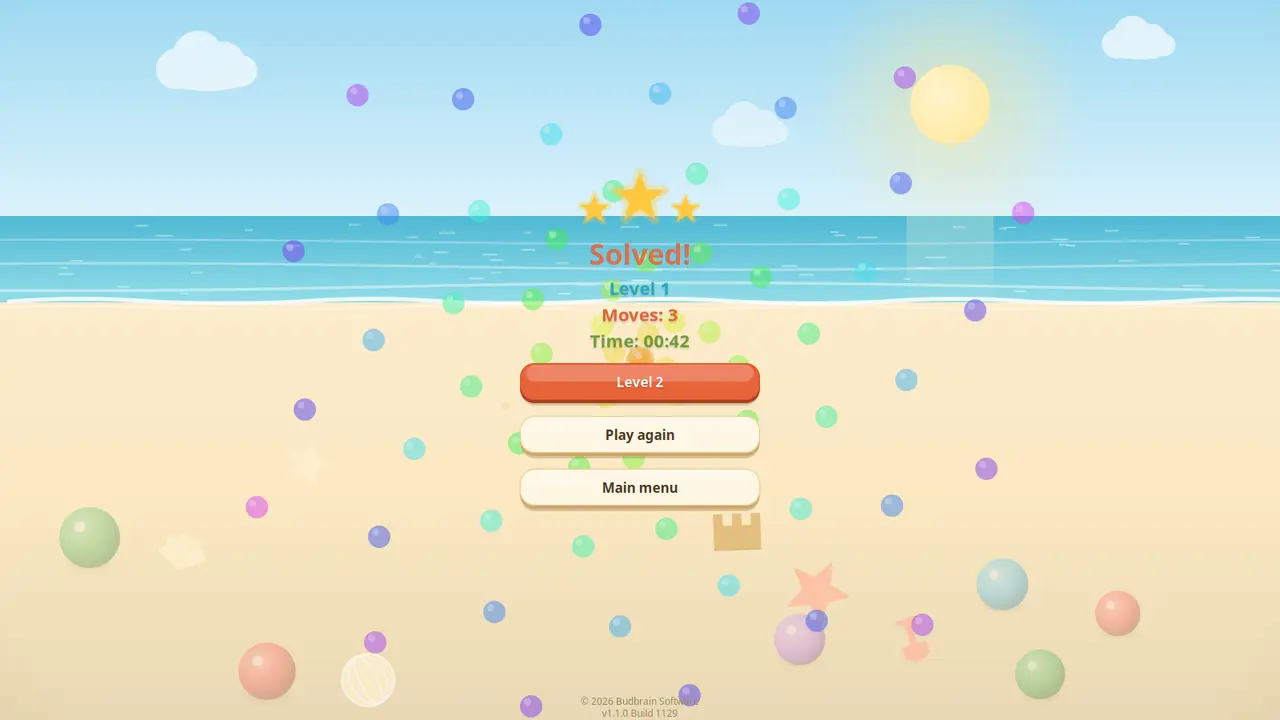
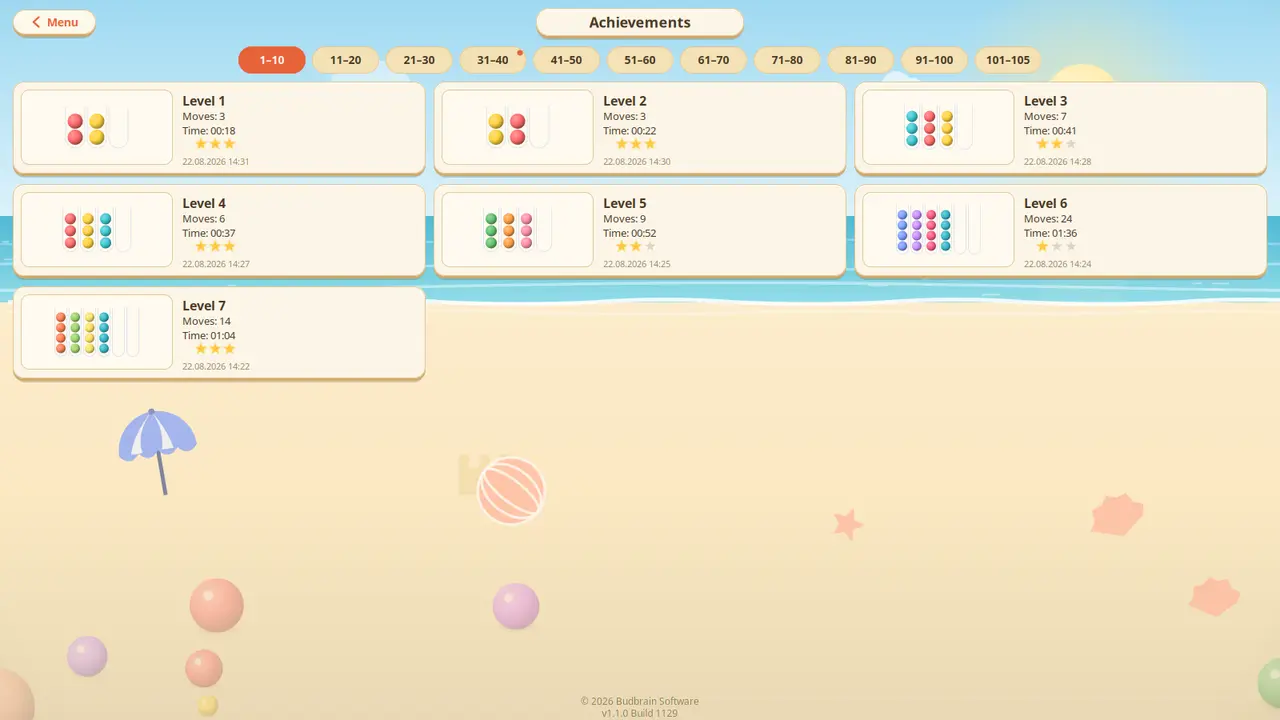
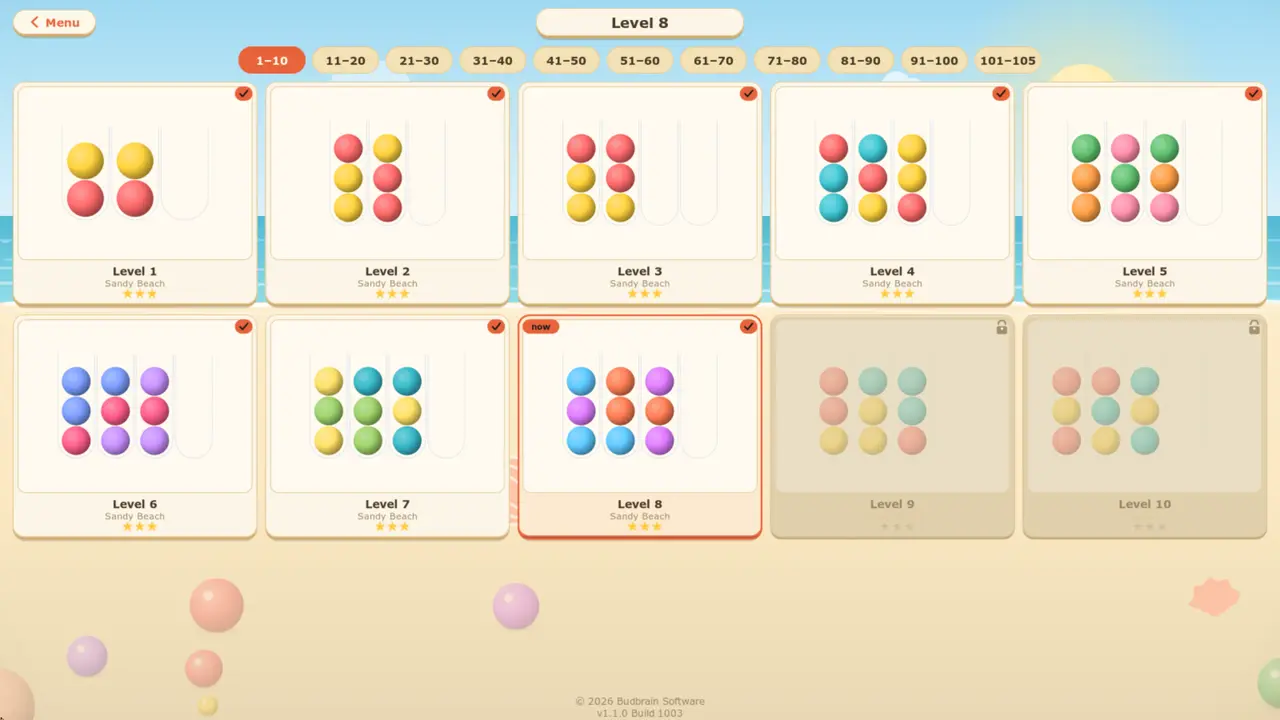
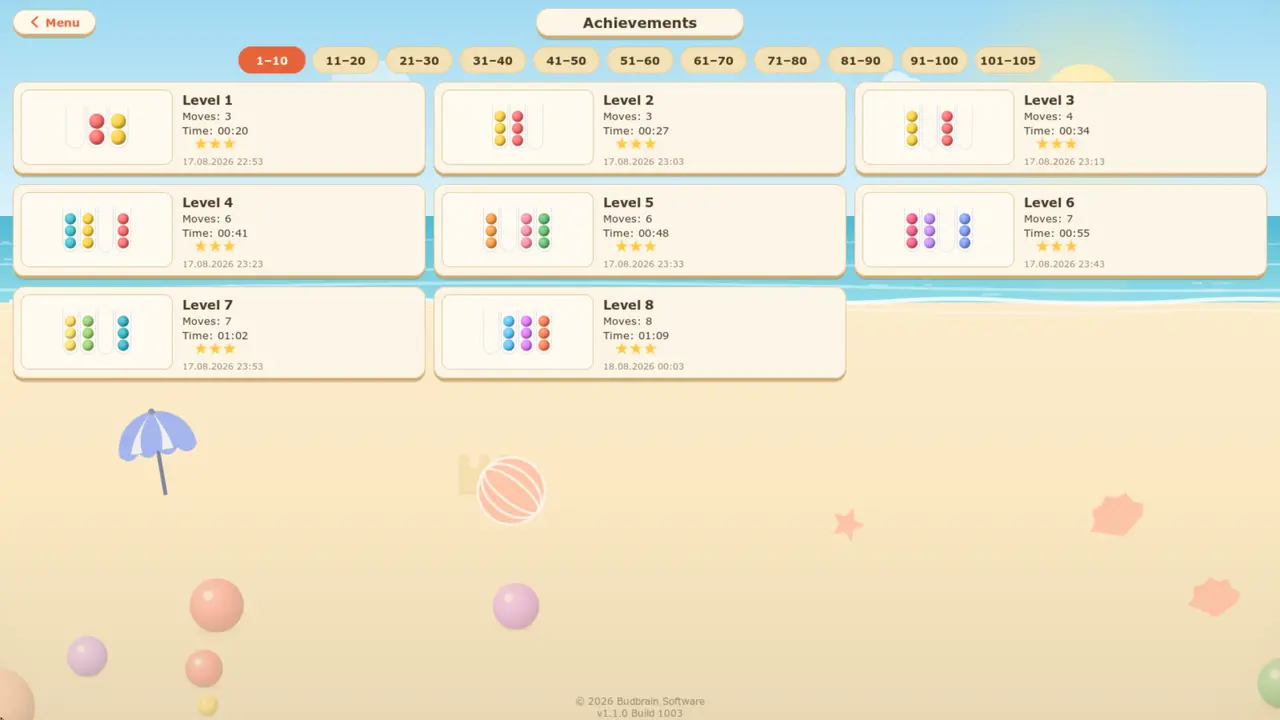
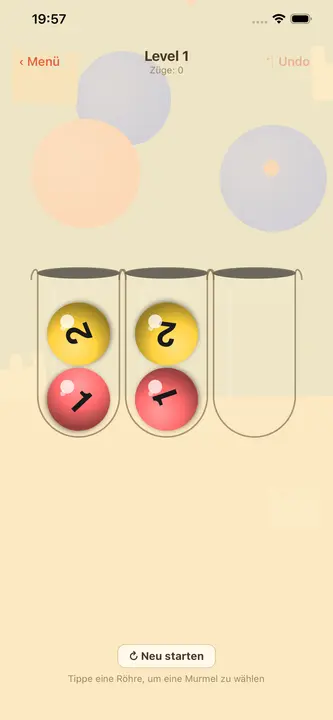
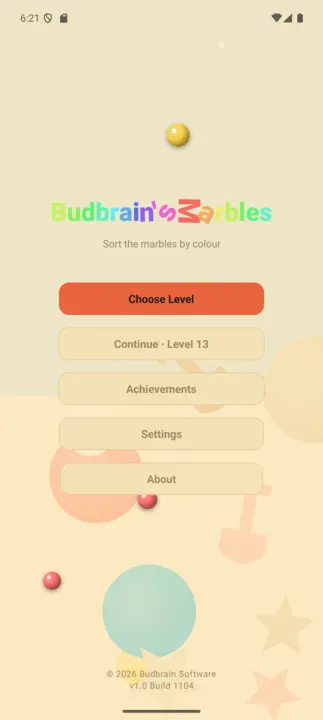
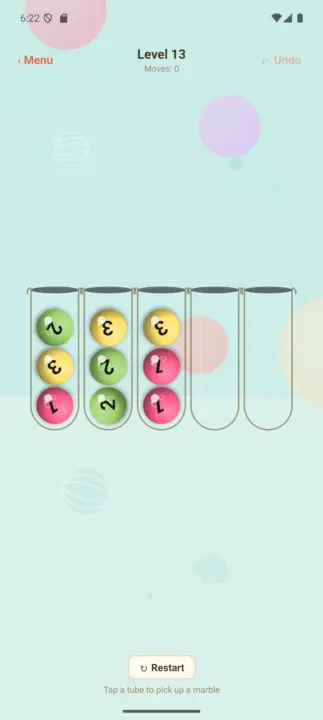
Xếp bi theo màu: chọn một ống, rồi chọn ống đích — viên bi trên cùng bay sang theo một đường cong. Một trăm lẻ năm câu đố trên năm bãi biển, và câu nào cũng giải được.
105 câu đốNăm bãi biểnCâu nào cũng giải đượcHoàn tác · Bắt đầu lạiBức tường thành tíchOpenGLSDL2 · CairoGNOME / KDE / XFCE22 ngôn ngữ
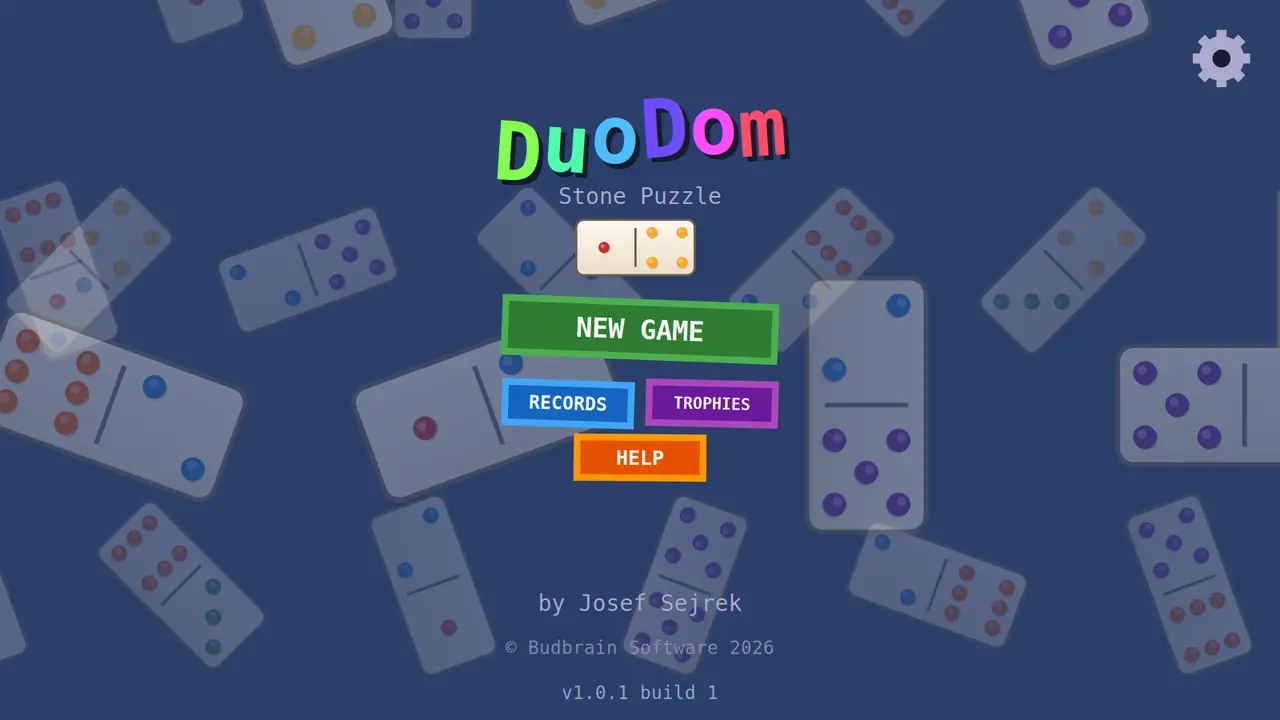
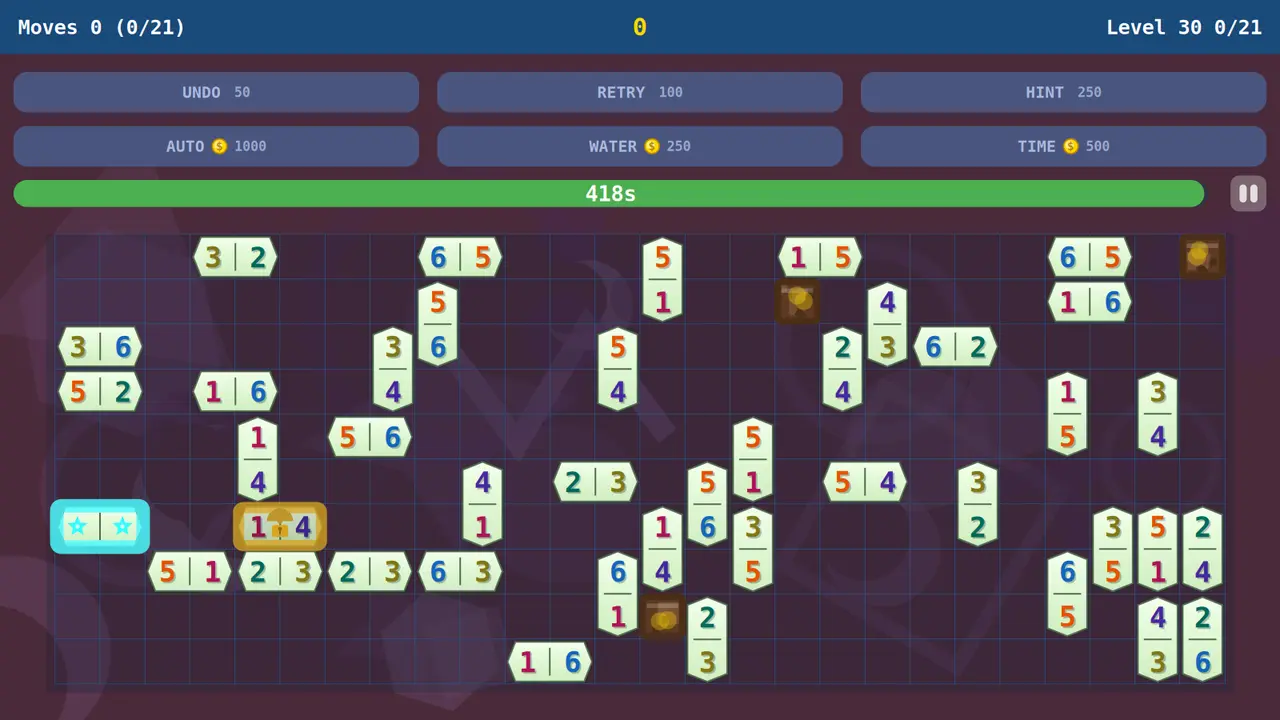
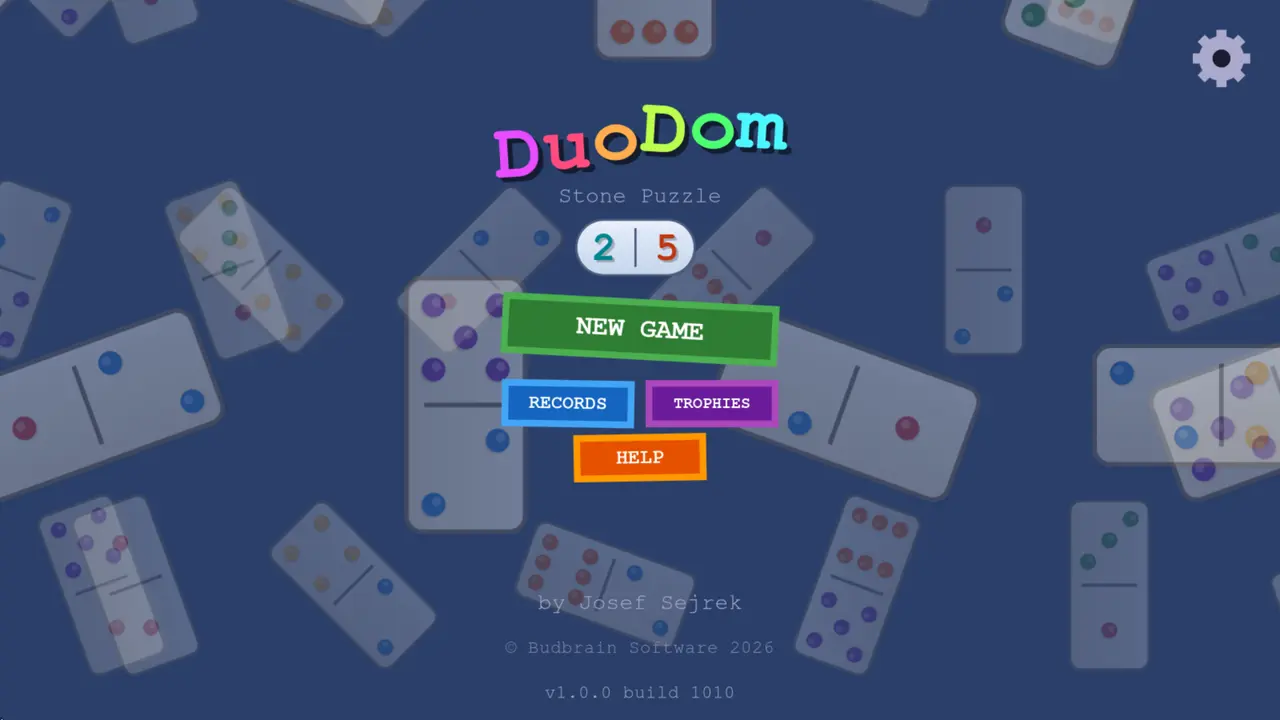
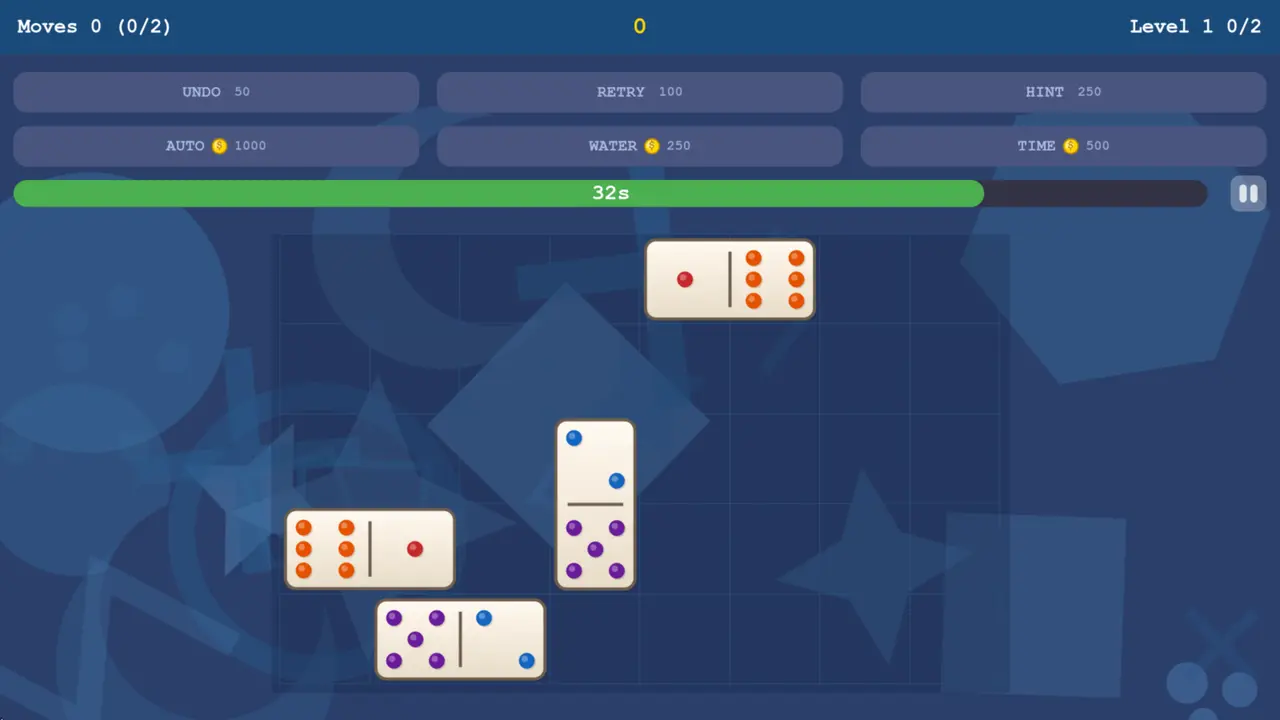
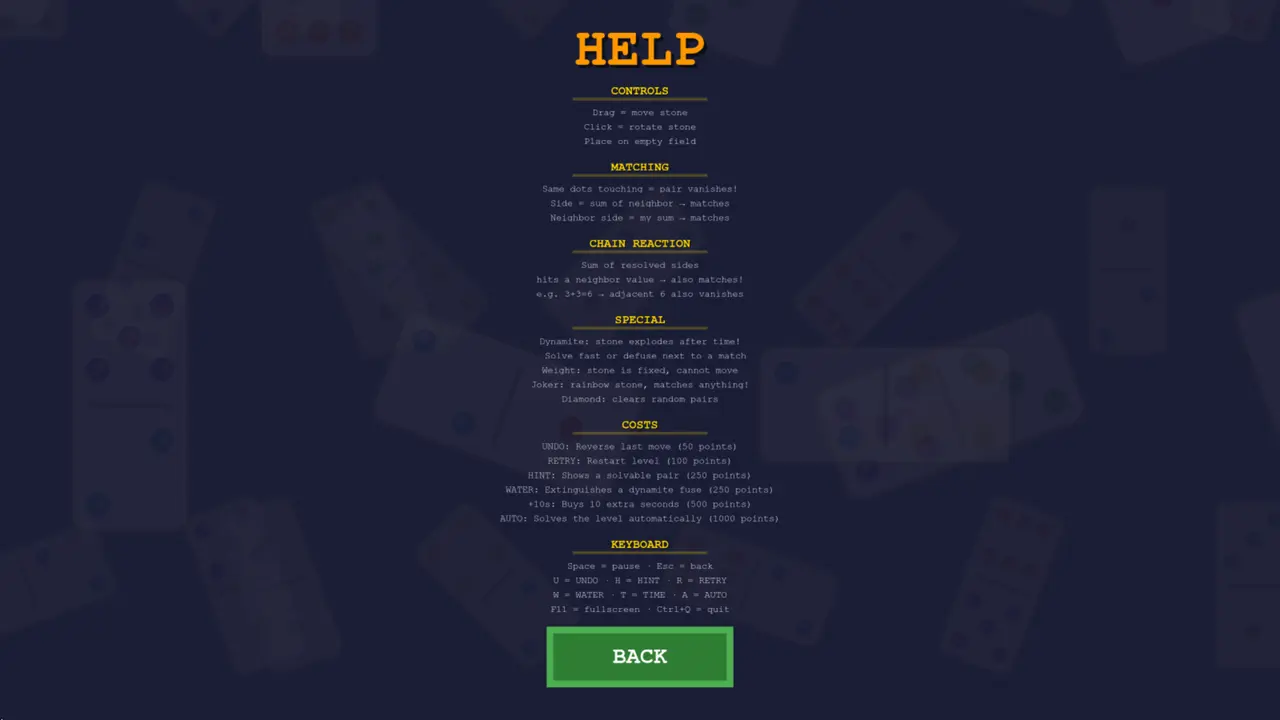
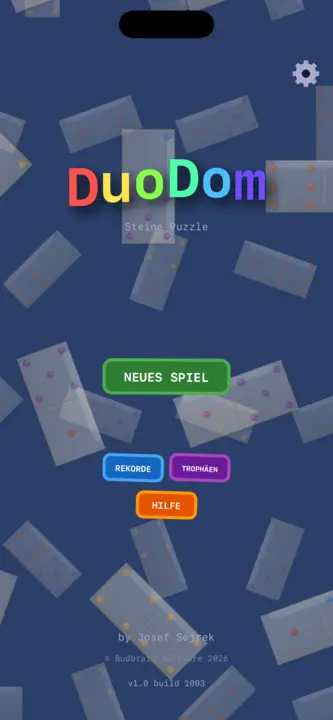
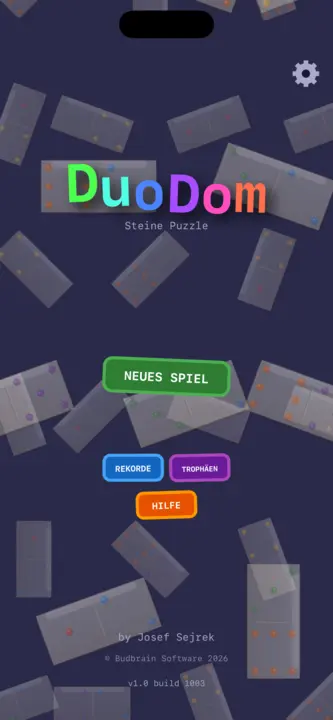
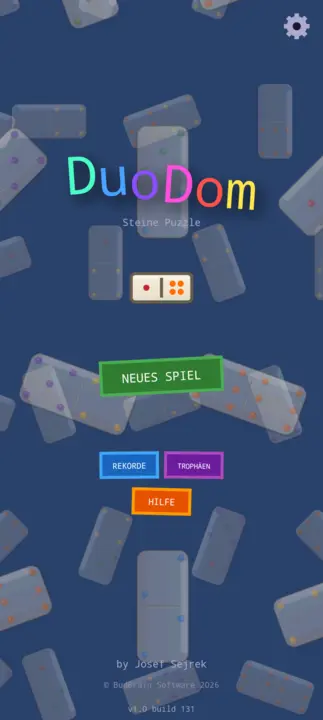
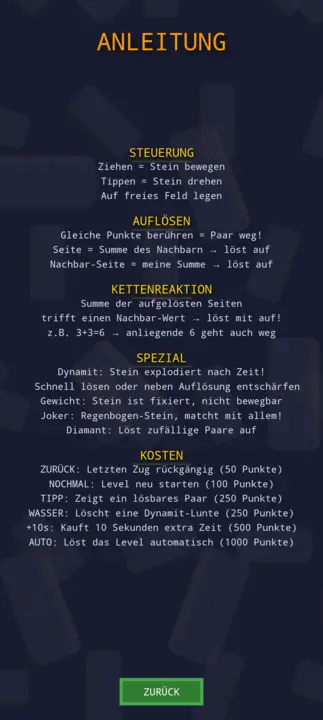
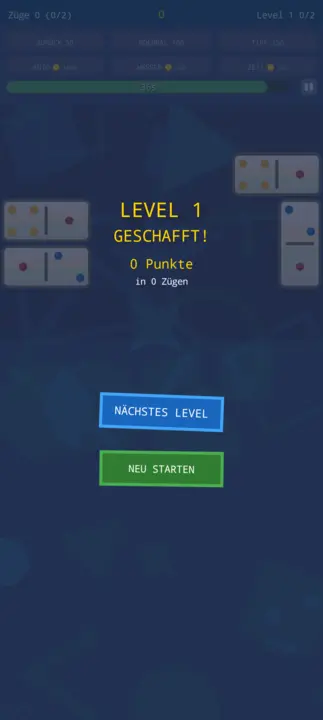
Trượt các quân domino lại với nhau: các chấm giống nhau hoặc tổng đúng sẽ làm cặp đó tan biến. Vô số màn chơi với thuốc nổ, lá joker và kim cương — và màn nào cũng có thể thắng.
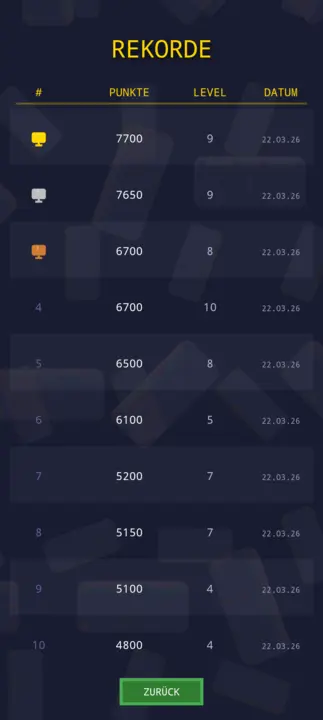
Vô số màn chơi17 loại quânThuốc nổ · Joker · Kim cươngHoàn tác · Gợi ý · NướcCúp thưởng & kỷ lụcOpenGLSDL2 · CairoGNOME / KDE / XFCE20 ngôn ngữ
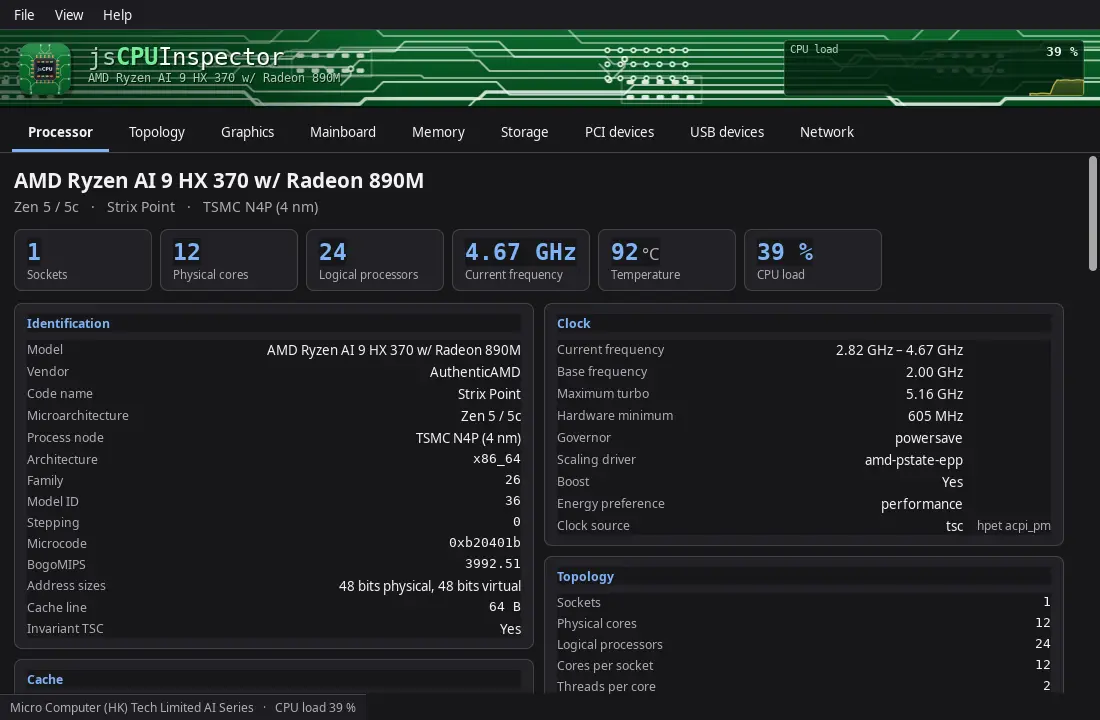
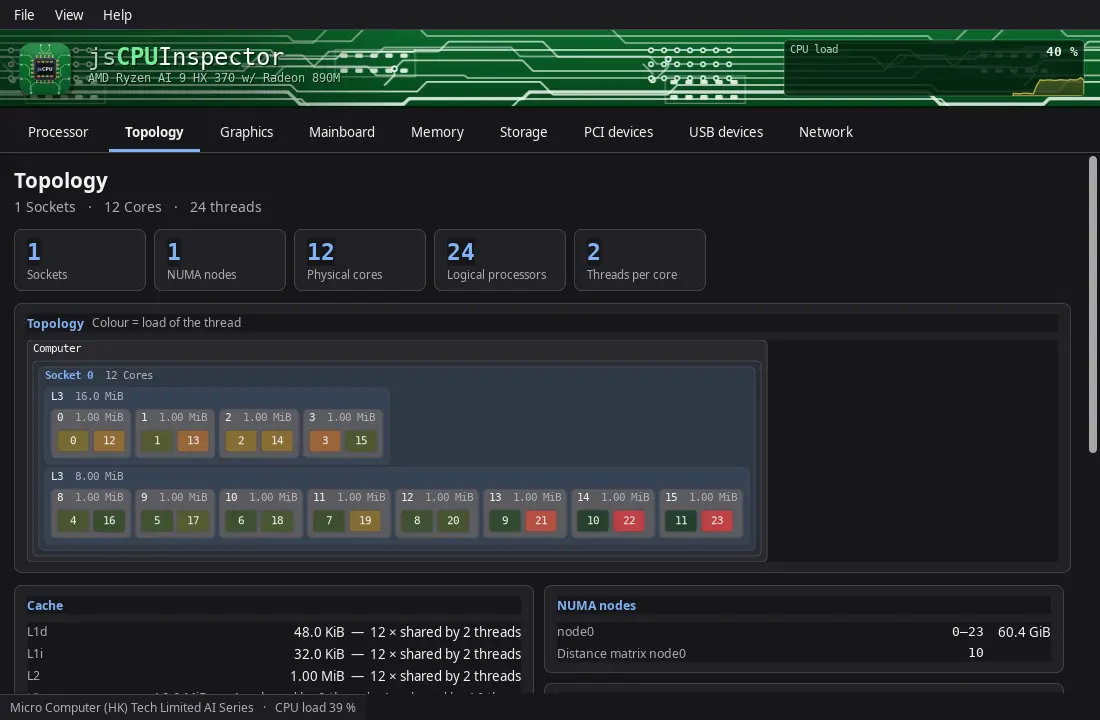
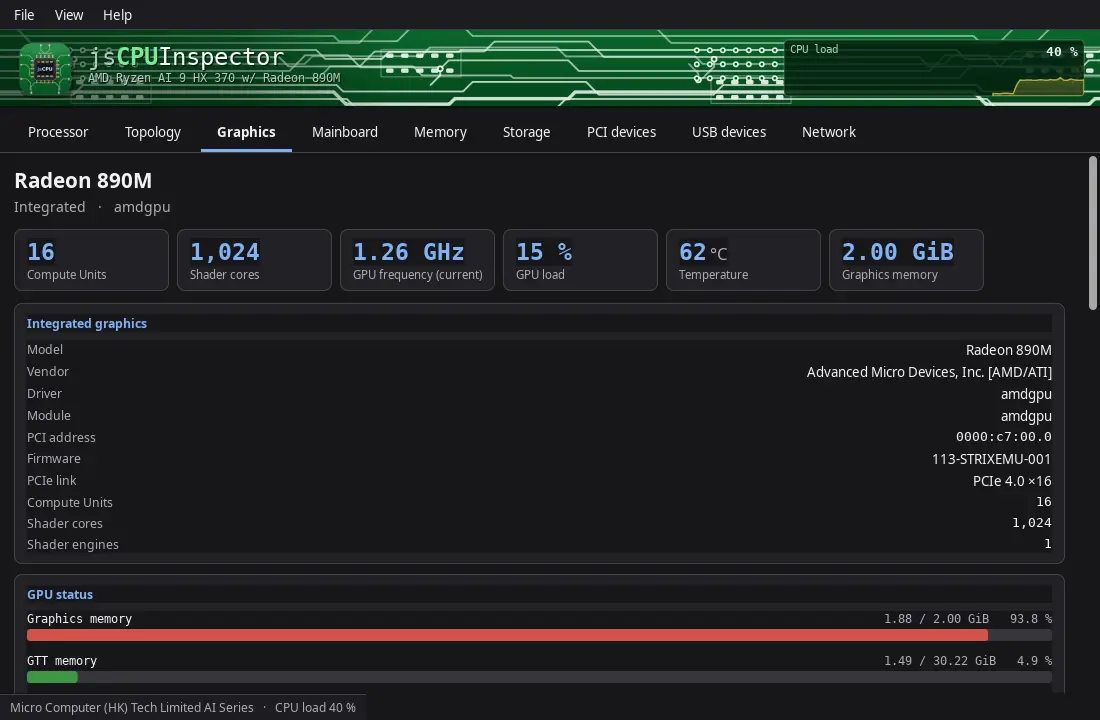
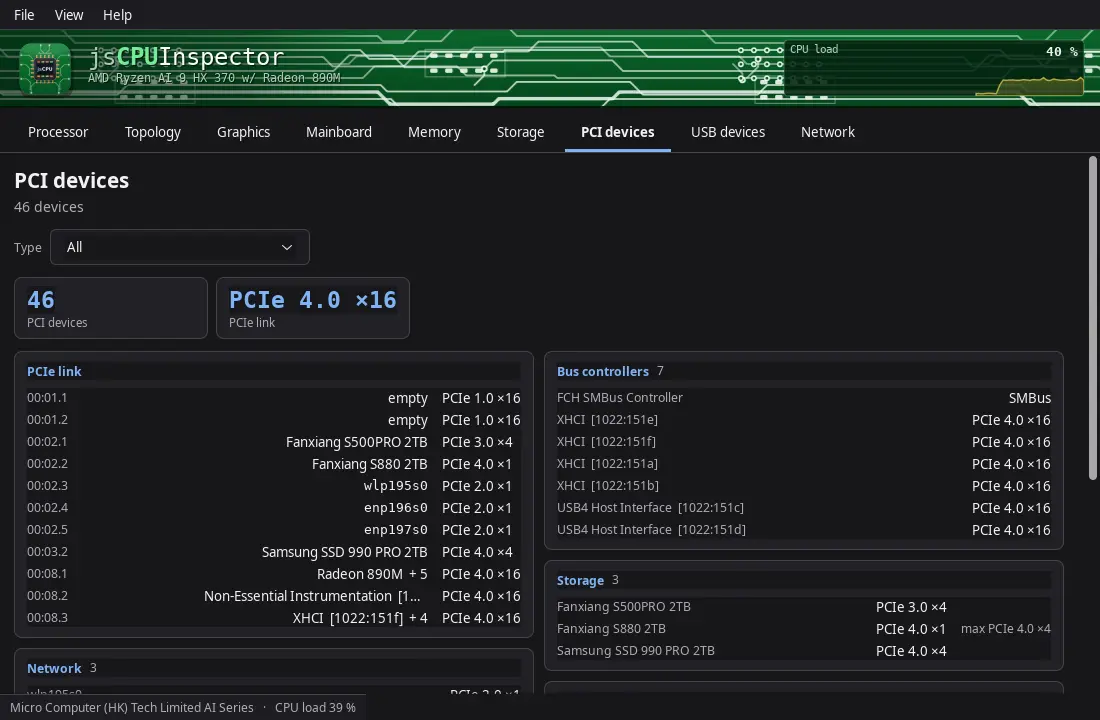
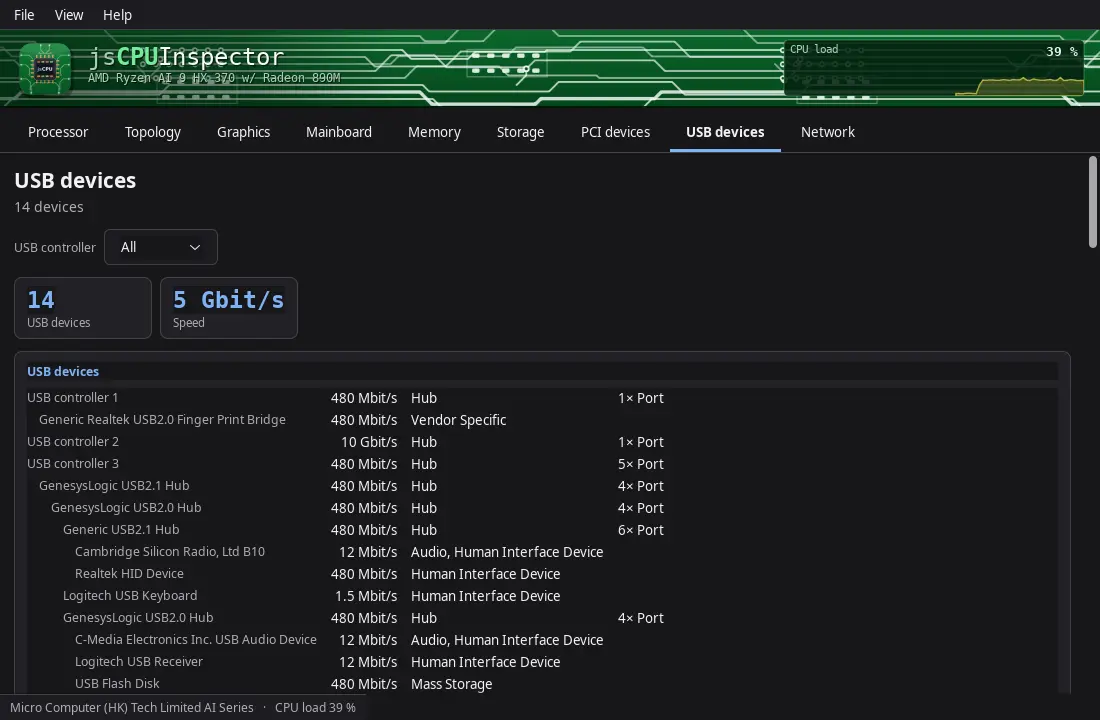
Hiển thị mọi chi tiết của bộ xử lý, bo mạch chủ và bộ nhớ: socket, nhân và luồng, dung lượng bộ nhớ đệm, tên mã và tiến trình sản xuất, bộ xử lý đồ họa, BIOS và chipset, cùng mọi khe cắm bộ nhớ — kèm ổ đĩa, thiết bị PCI, USB và mạng.
Xung nhịp và tải trực tiếp theo từng nhânCác cấp bộ nhớ đệm vẽ đúng tỷ lệCPUIDSMBIOSPCI · USBSMARTGTK3GNOME / KDE / XFCE83 ngôn ngữ
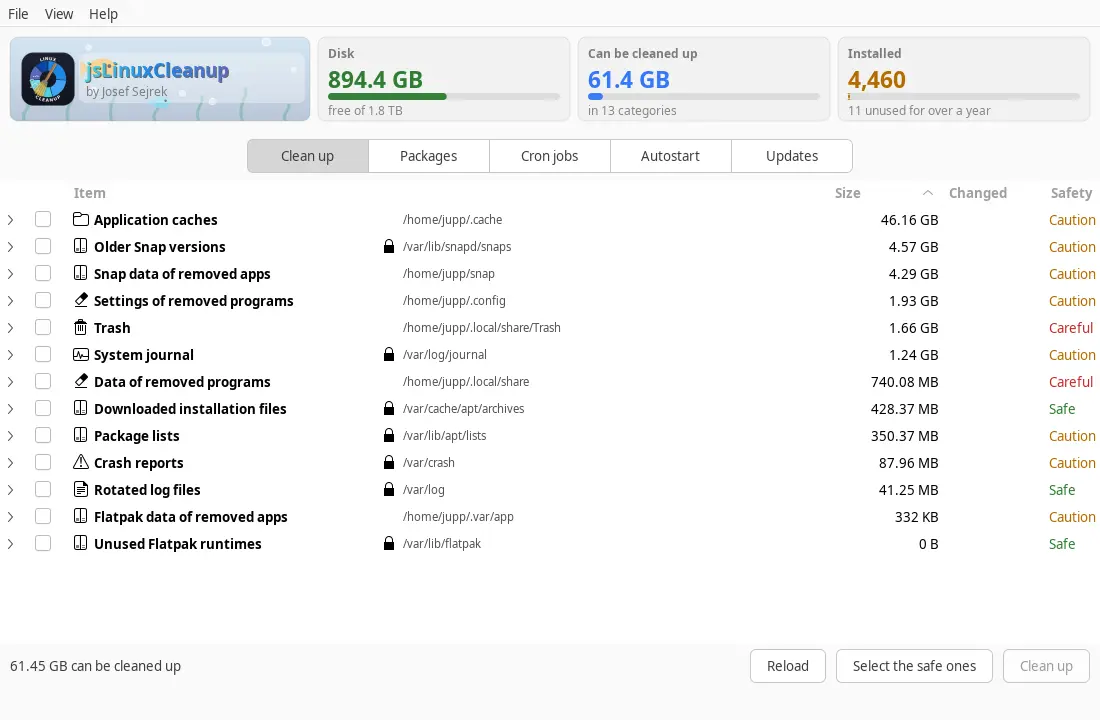
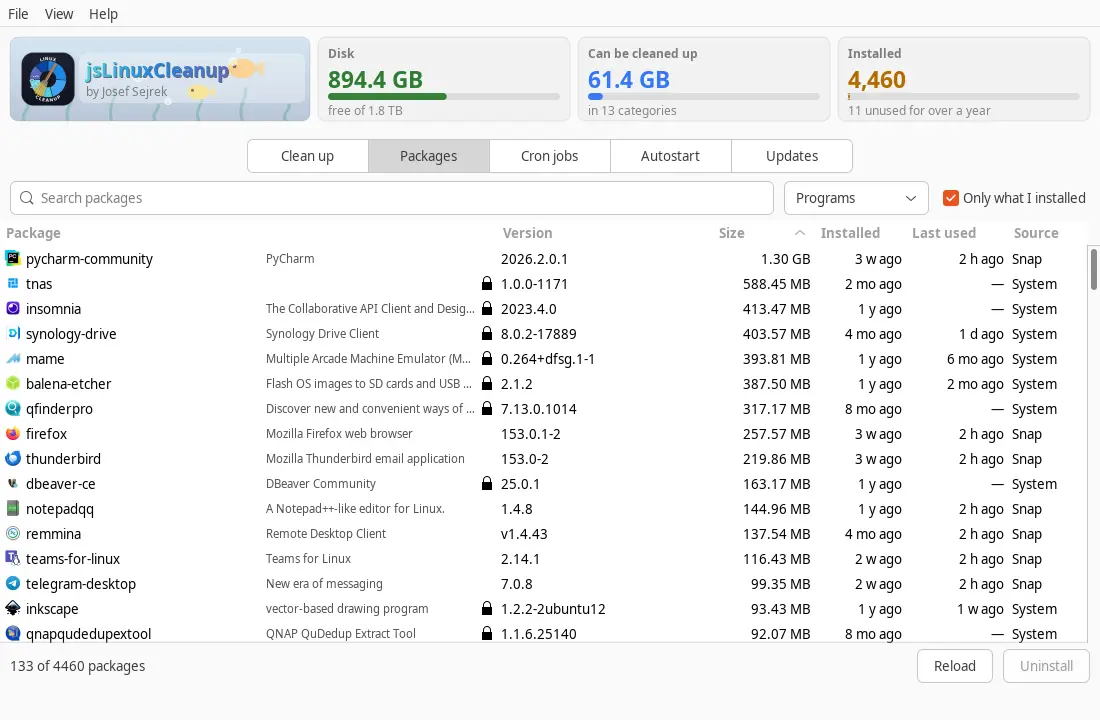
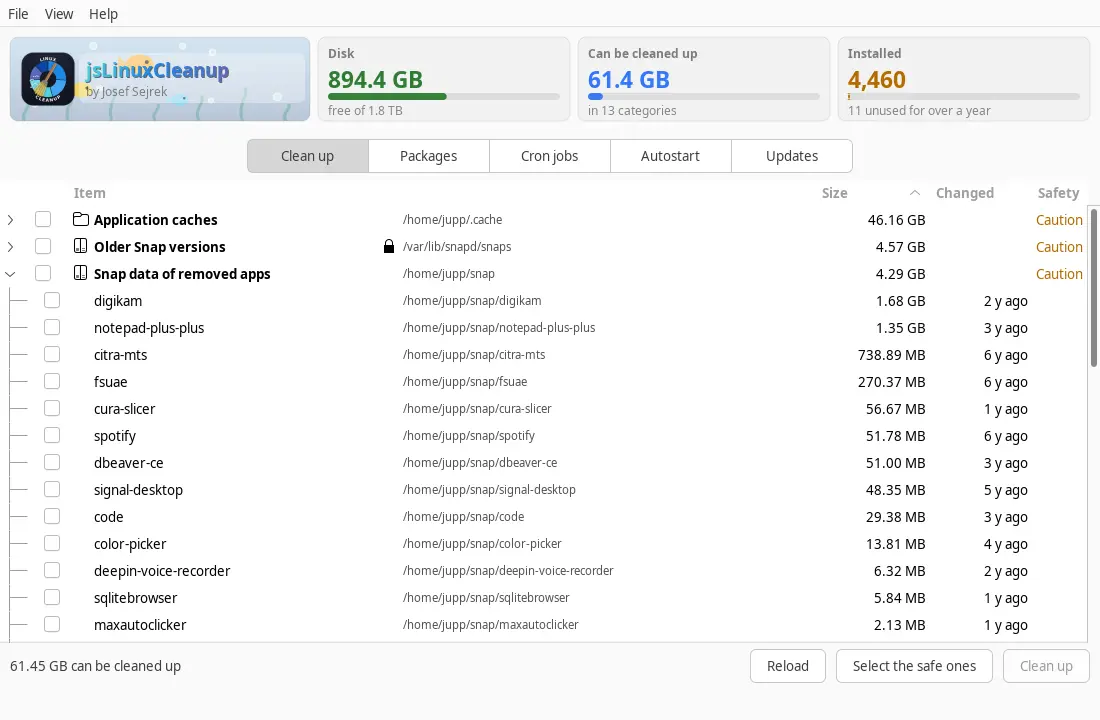
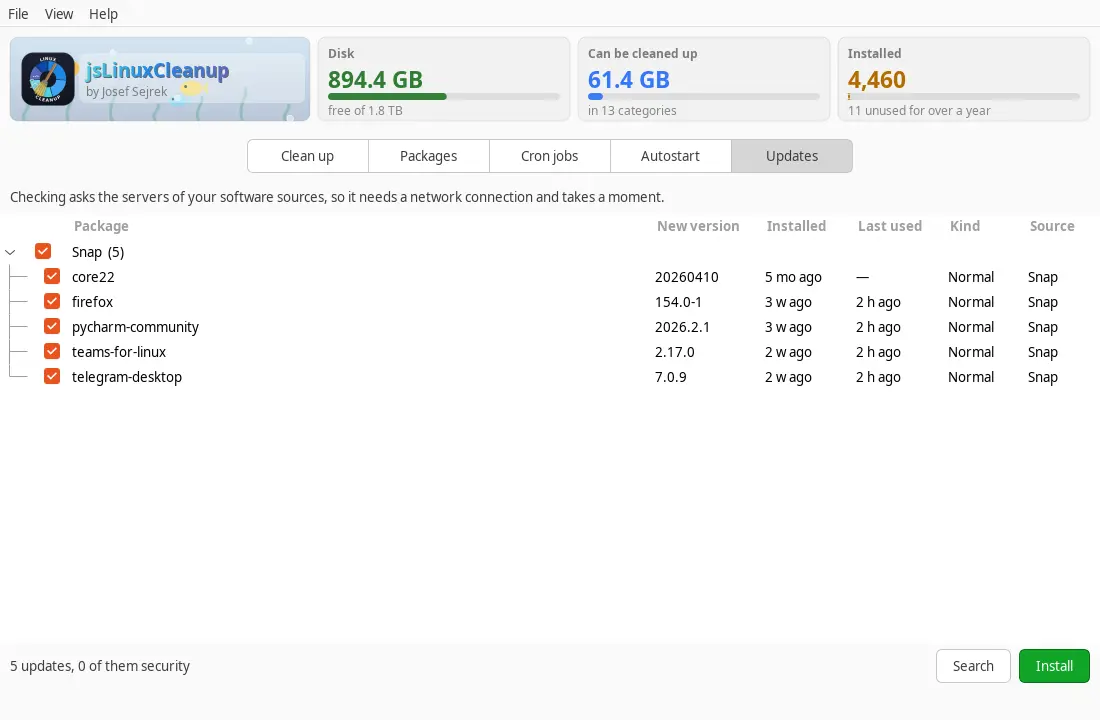
Cho bạn thấy thứ gì đang âm thầm lấp đầy ổ đĩa và những gì đã được cài đặt: nhật ký, bộ nhớ đệm, thùng rác và các phiên bản gói đã cũ, cùng mọi chương trình kèm kích thước, ngày cài đặt và lần dùng gần nhất — kể cả phần còn sót lại của chương trình đã gỡ, mục tự khởi động, lịch chạy và các bản cập nhật đang chờ.
apt · dnf · zypper · pacmanSnap & FlatpakjournaldDùng gần nhấtPhần còn sót lại của chương trình đã gỡLịch chạyAutostartGTK3GNOME / KDE / XFCE44 ngôn ngữ
Bộ nhớ đệm như ~/.gradle, ~/.npm hoặc ~/.cache nằm trong các thư mục ẩn mà một ứng dụng bị cô lập không tự xem được. Hãy chạy lệnh một lần rồi khởi động lại ứng dụng.
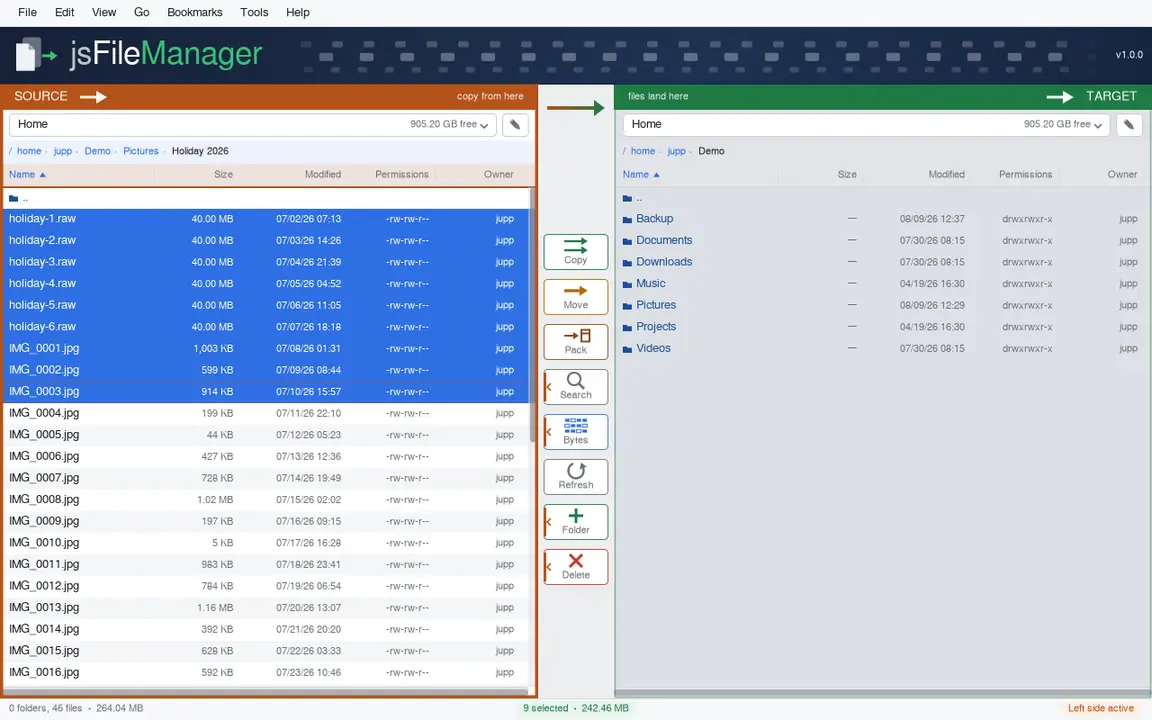
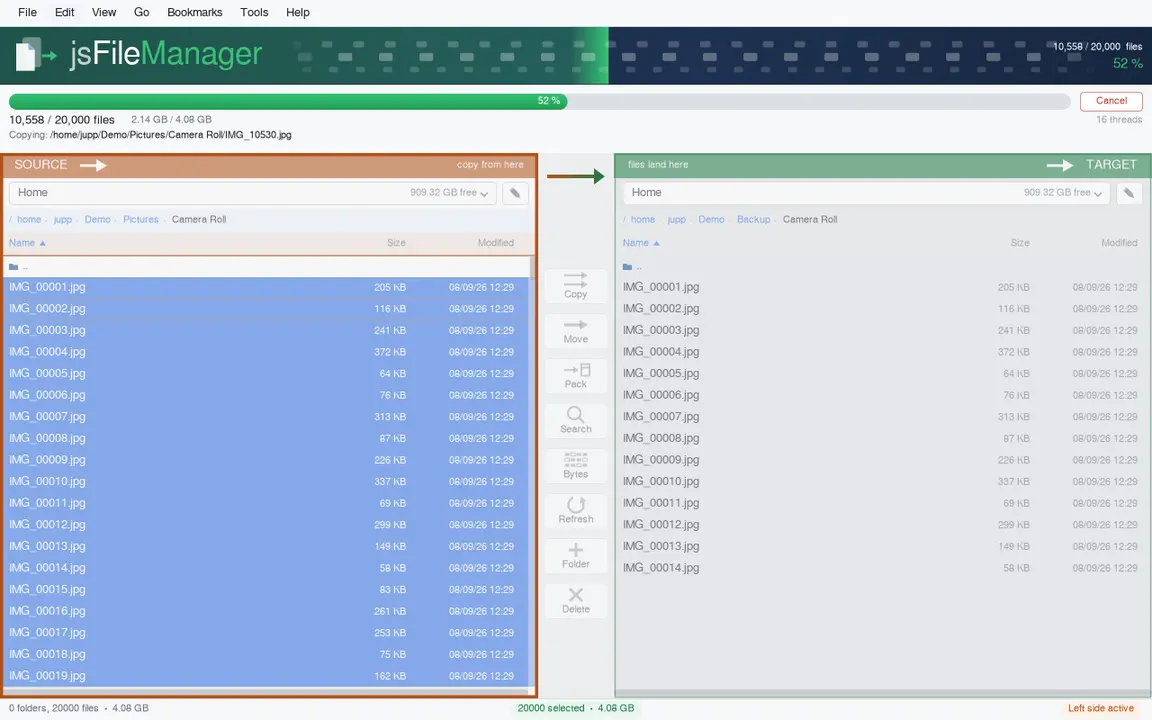
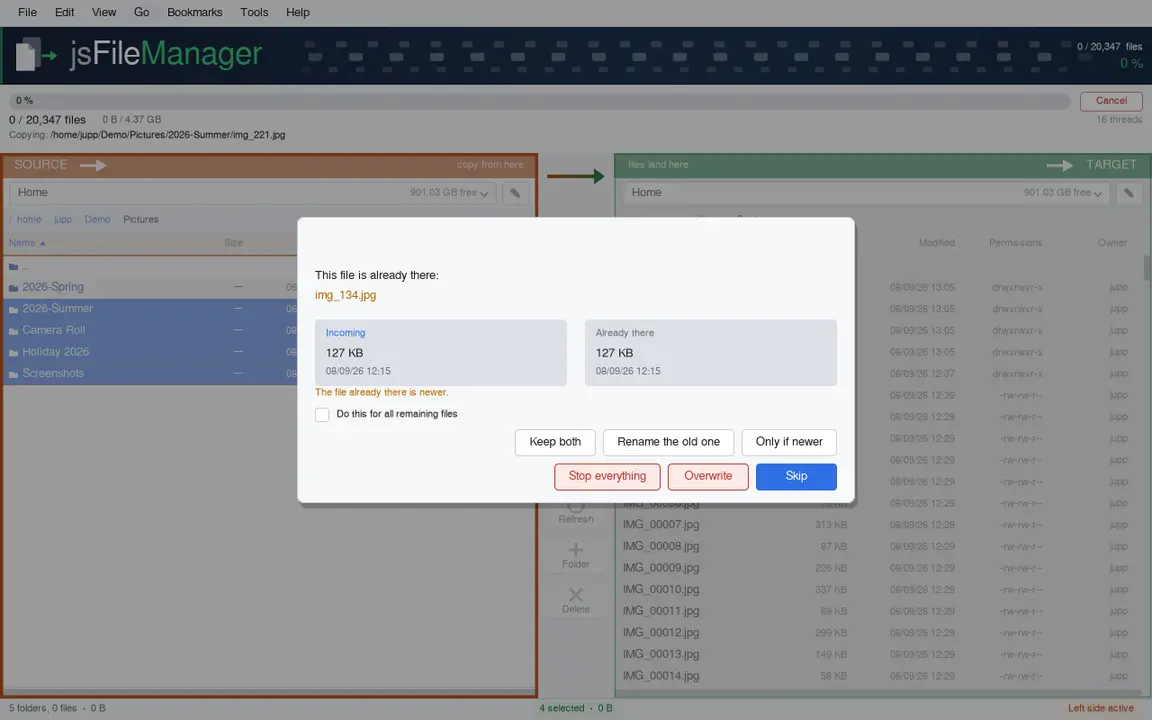
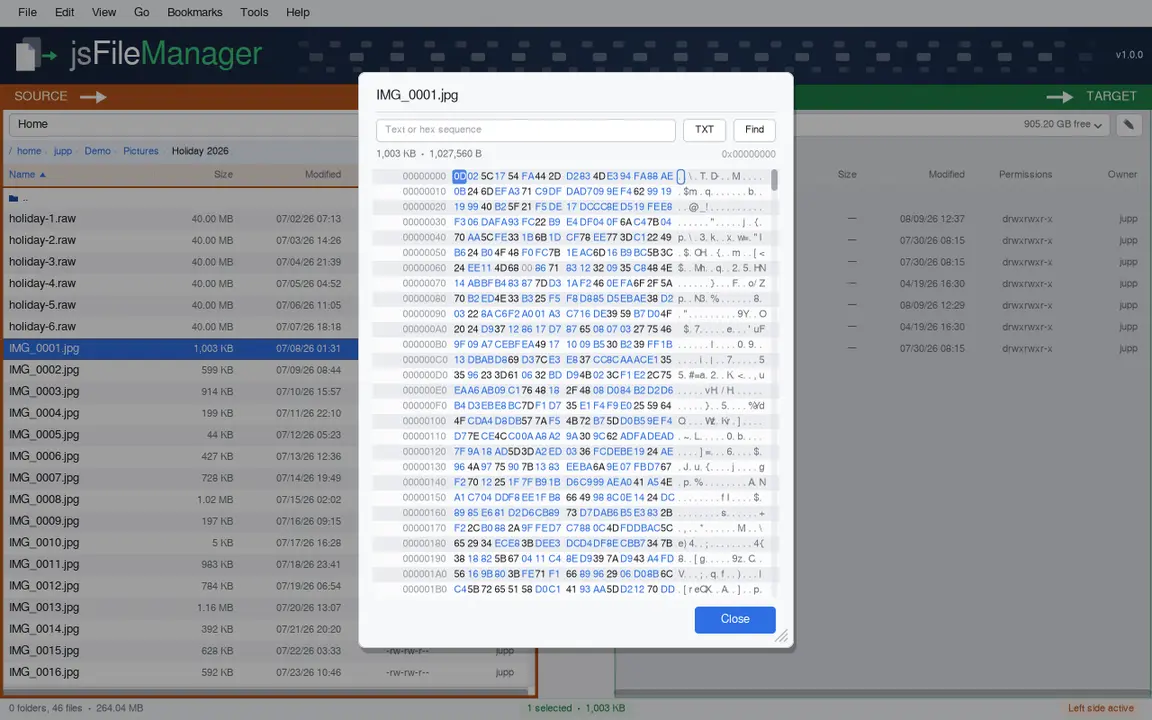
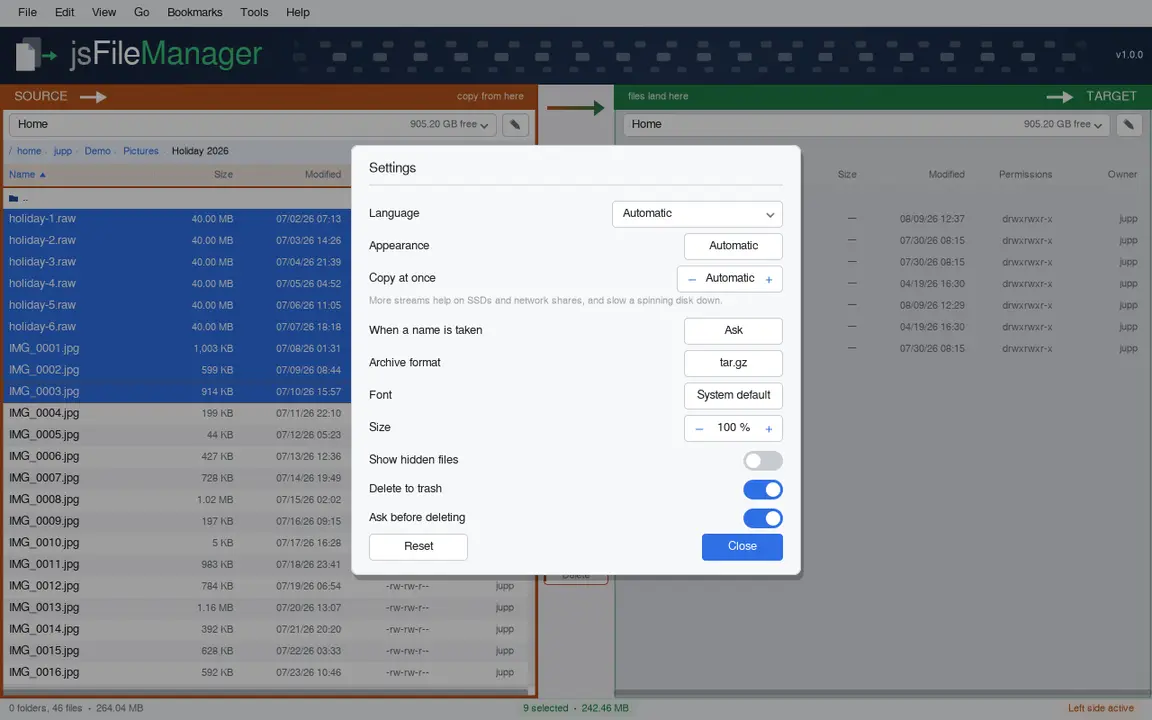
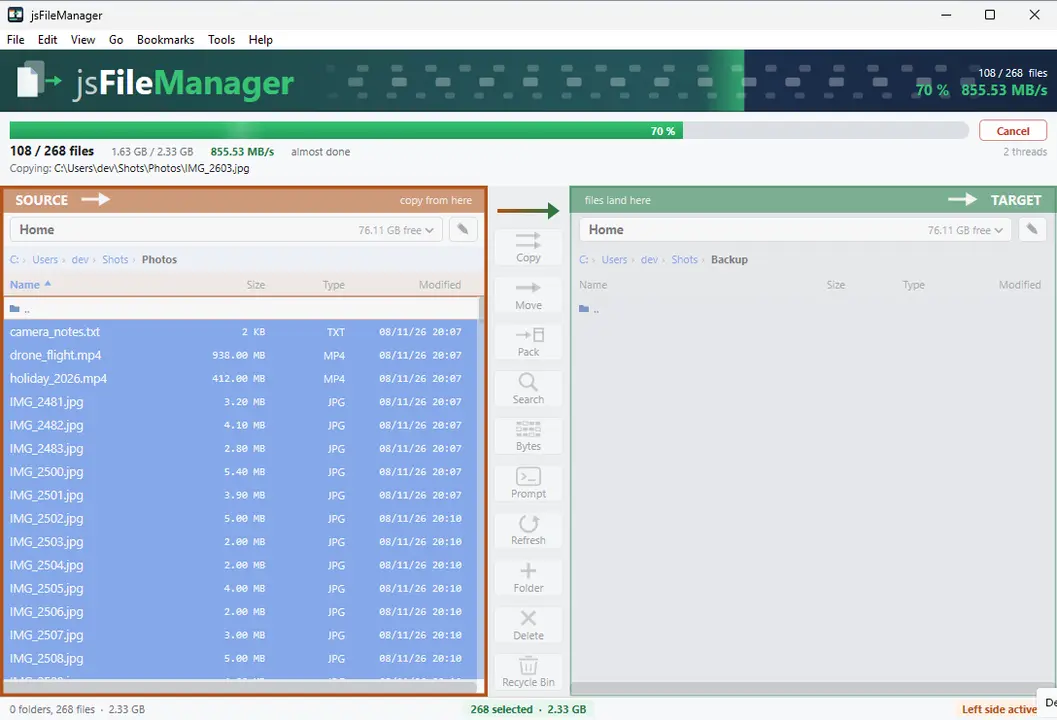
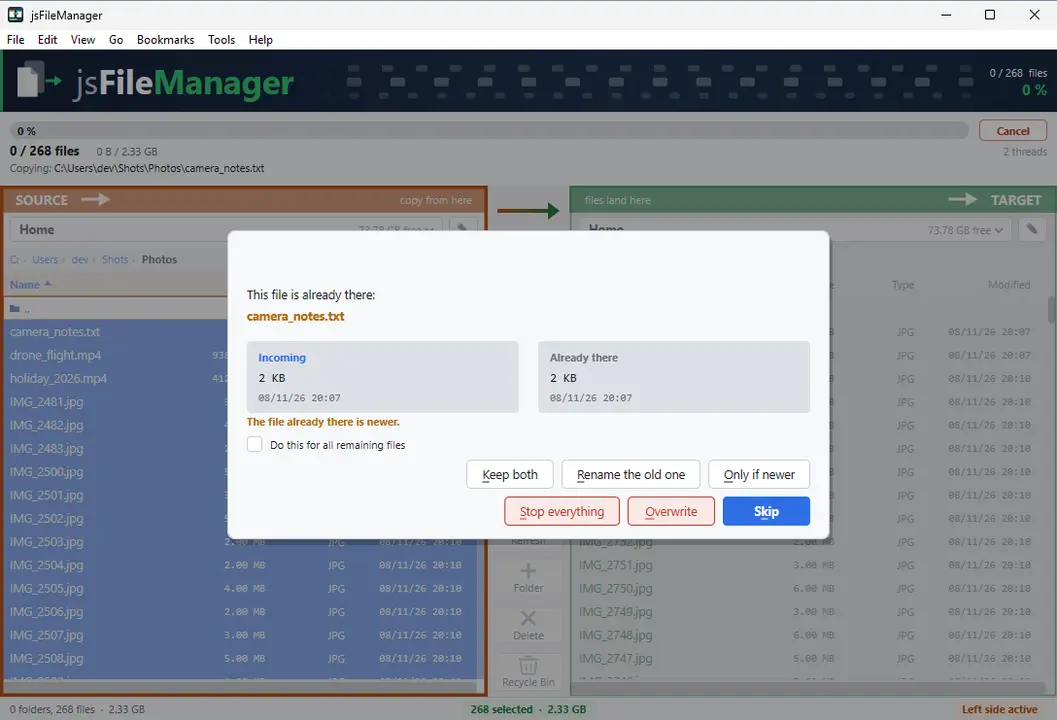
Hai thư mục cạnh nhau, với các nút ở giữa để chuyển tệp từ bên này sang bên kia. Khi đang sao chép, bạn thấy nó đã tiến được đến đâu, nhanh cỡ nào và có gì bị lỗi.
Hai thư mục cạnh nhauTiến độ trực tiếpTệp nén & xem byteQuyền & chủ sở hữuGTK3GNOME / KDE / XFCE44 ngôn ngữ
Cấp quyền truy cập USB, ổ đĩa mạng và các thư mục khác (Snap)
sudo sh -c 'for i in removable-media system-backup mount-observe; do snap connect jsfilemanager:$i; done'
Ban đầu một snap chỉ truy cập được thư mục riêng của bạn. Lệnh này cho phép thêm USB và thẻ nhớ, ổ đĩa mạng và các thư mục nằm ngoài thư mục riêng. Chạy một lần rồi khởi động lại ứng dụng — quyền này sẽ được giữ nguyên.
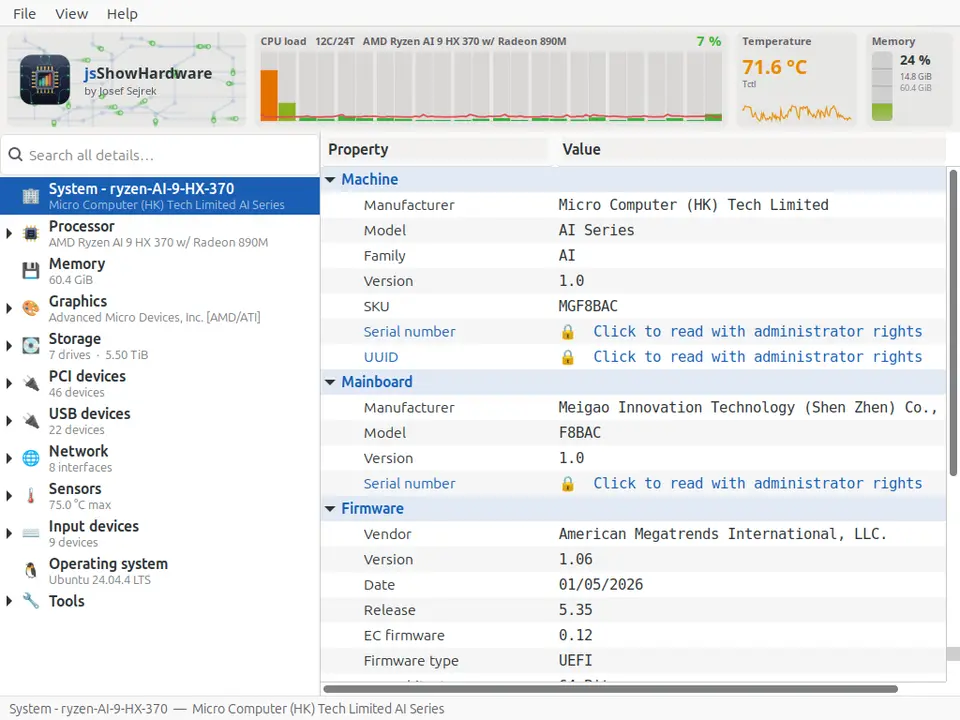
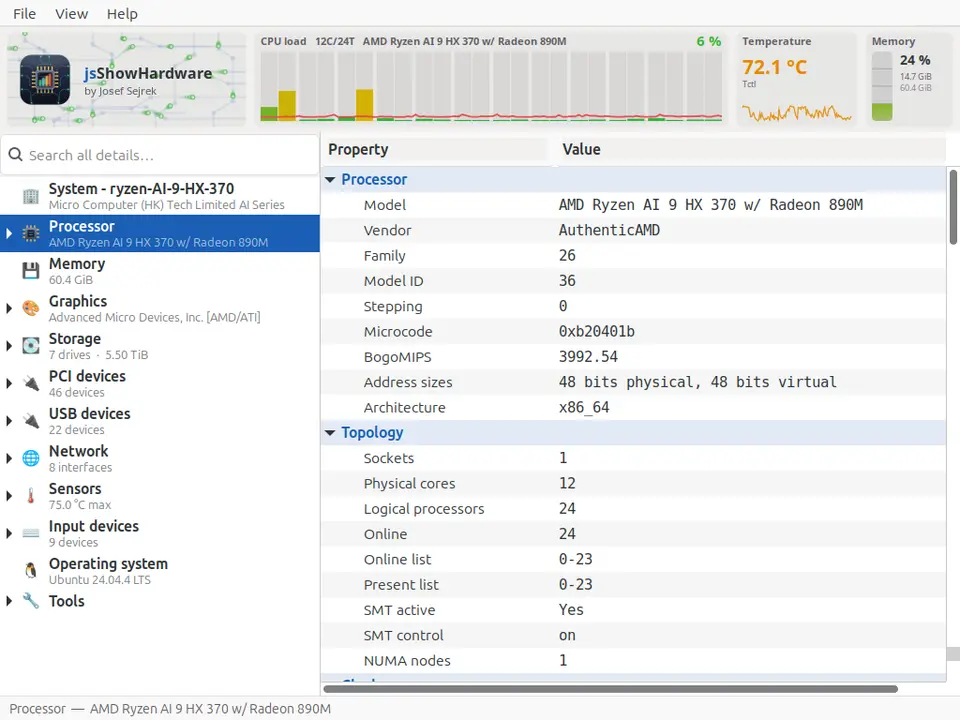
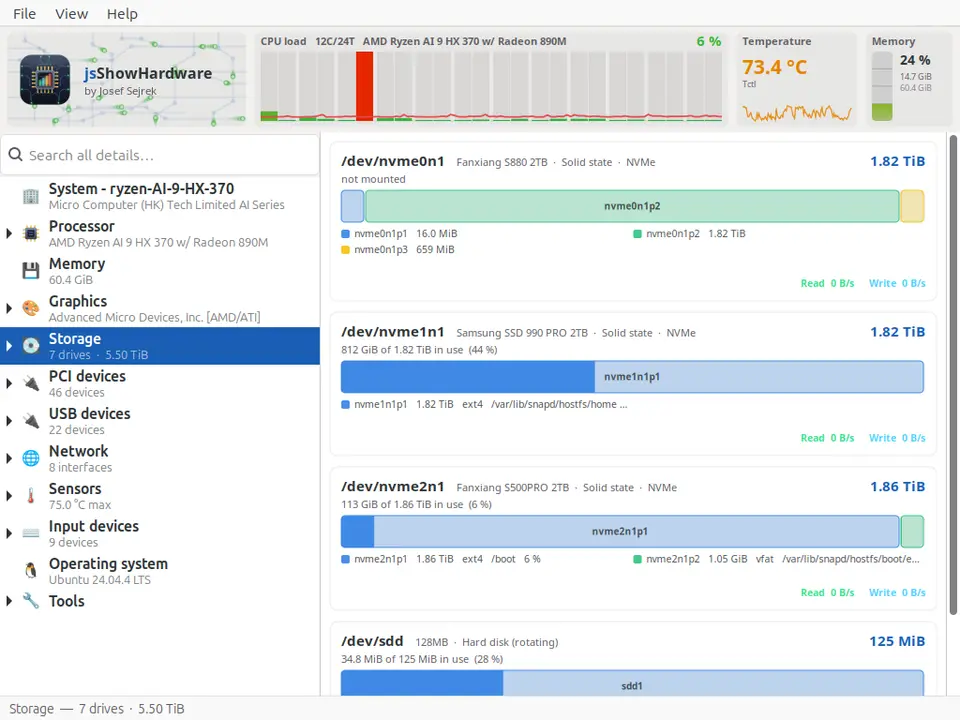
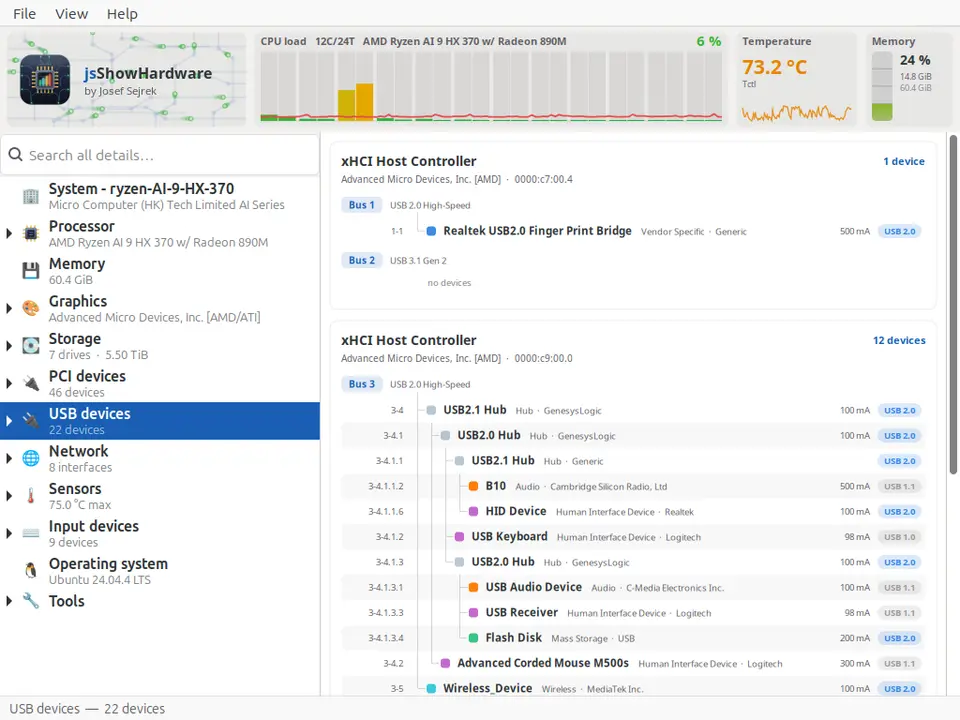
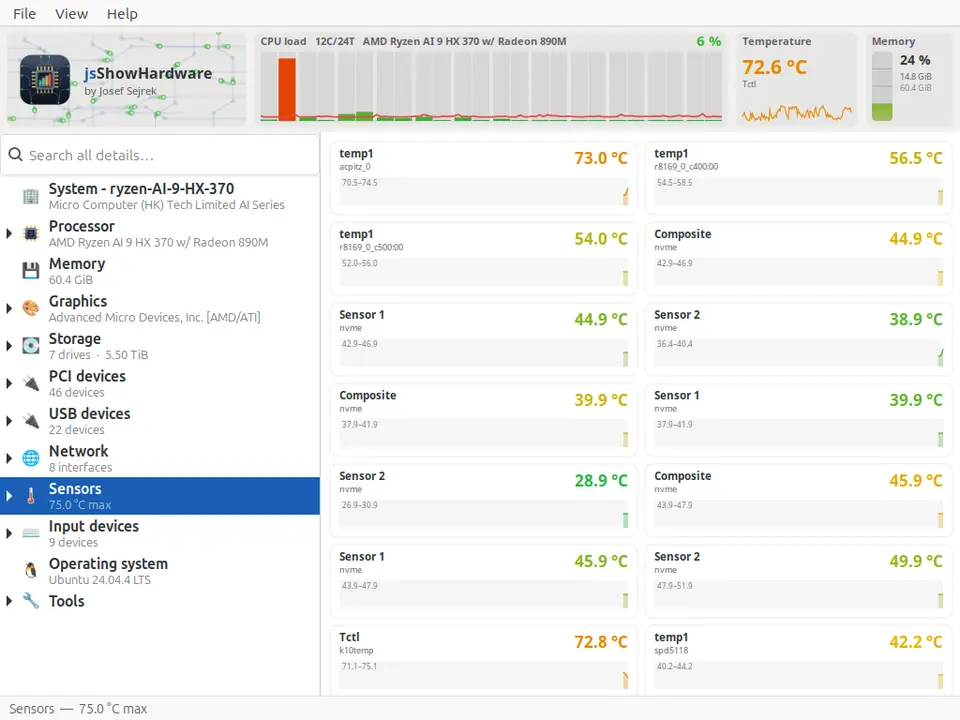
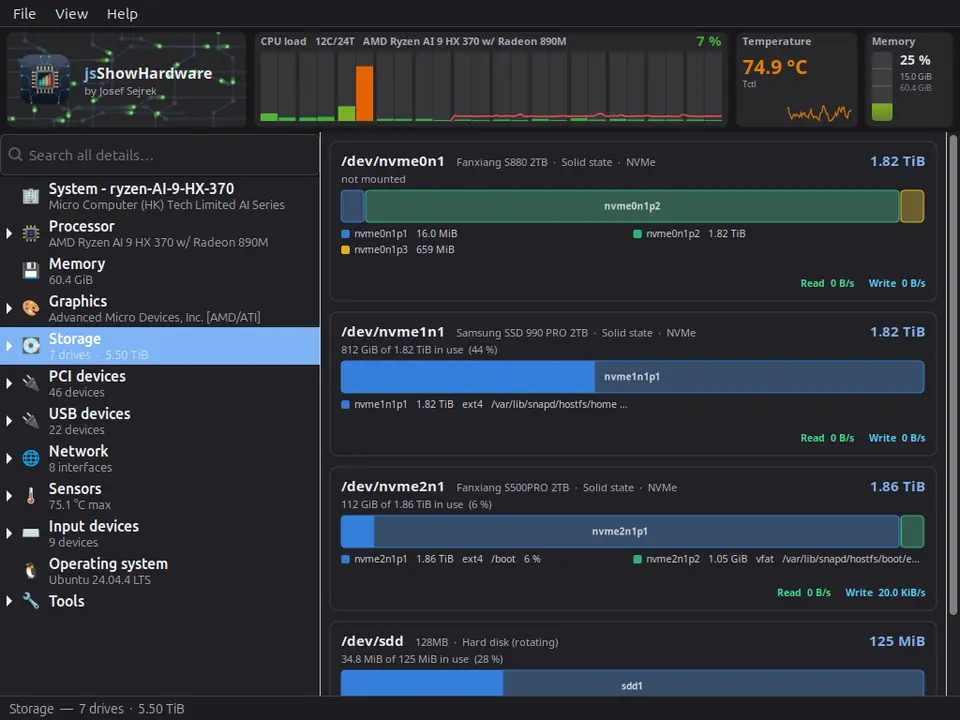
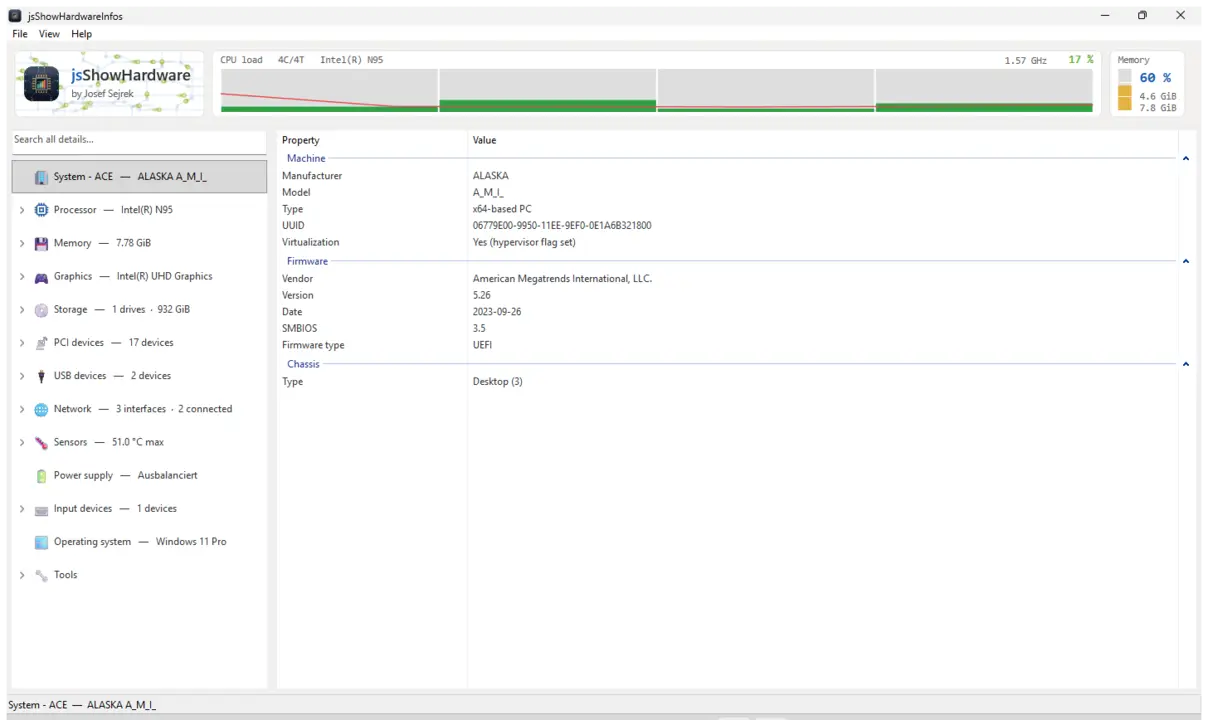
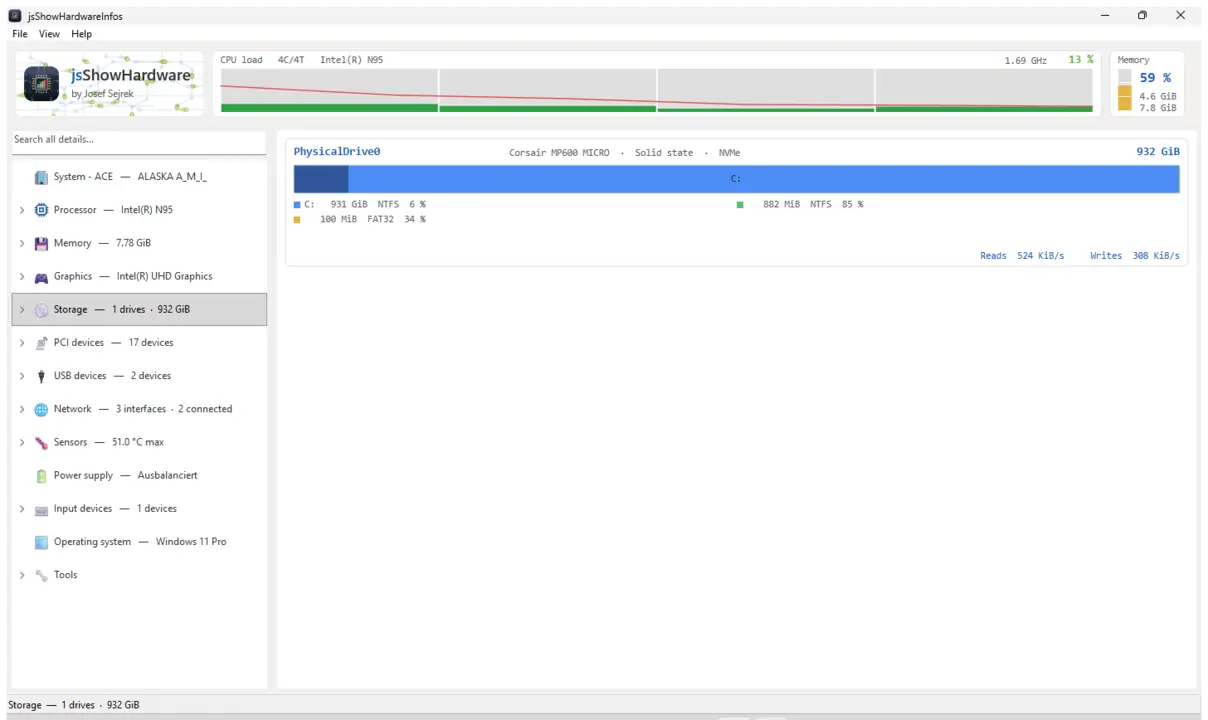
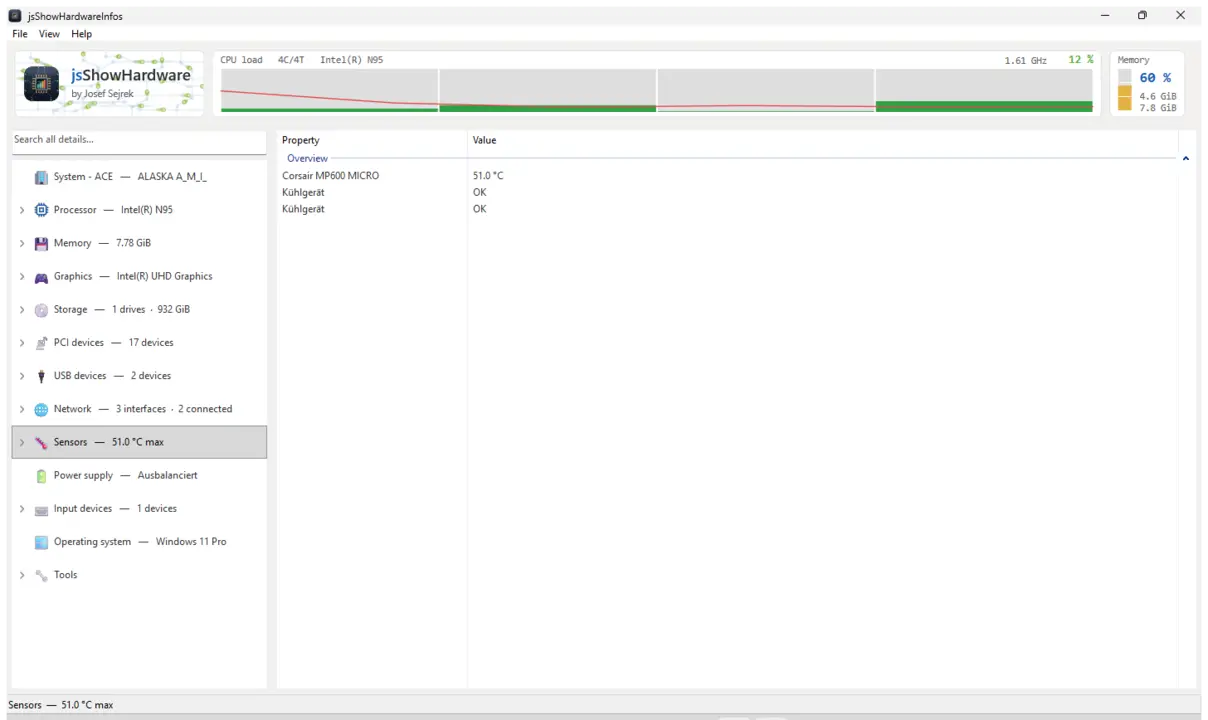
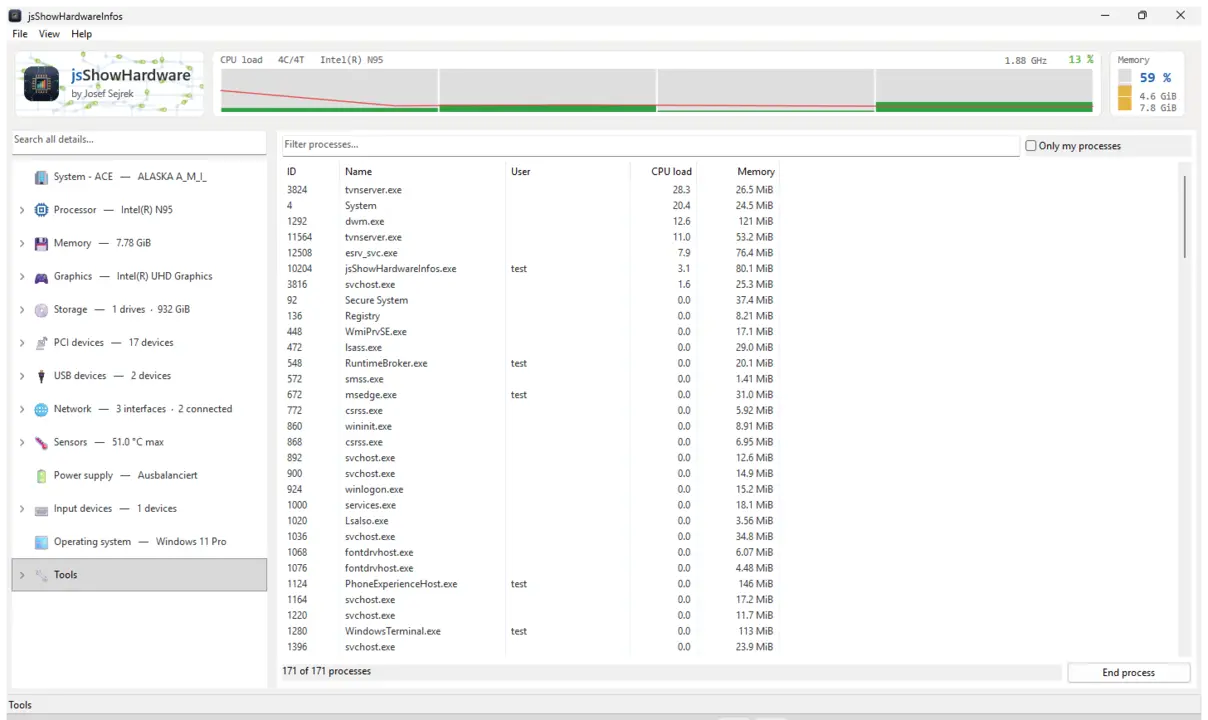
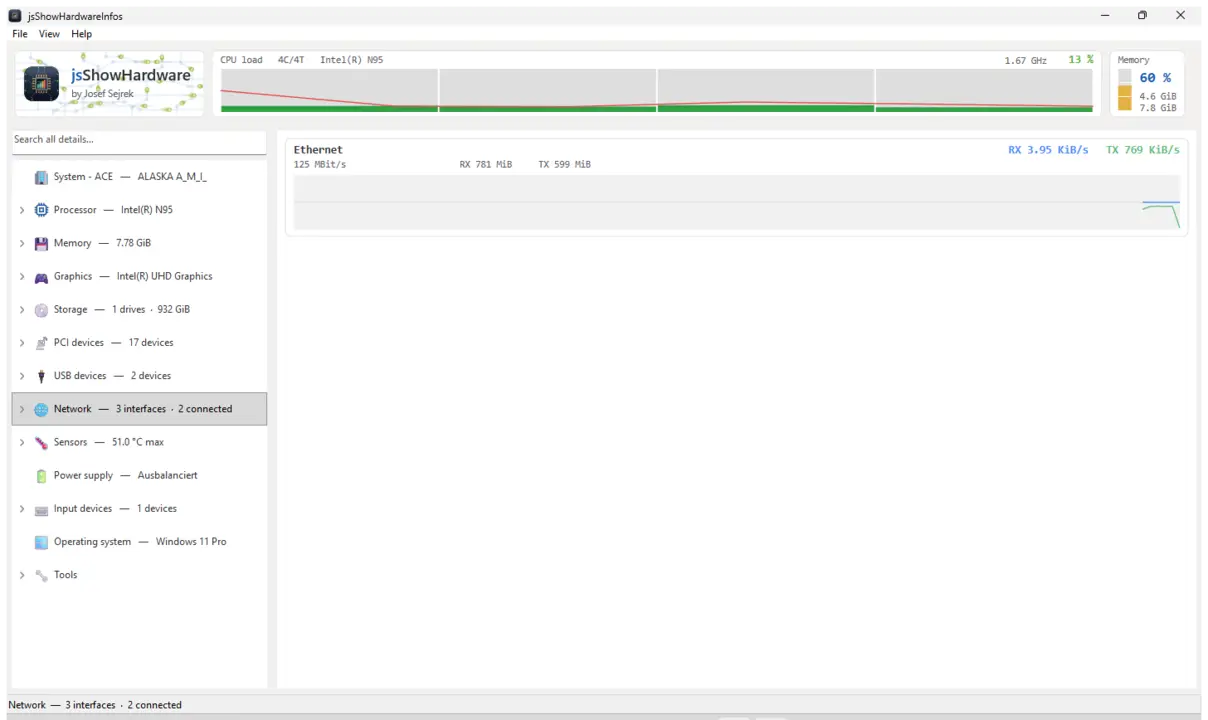
Hiển thị mọi chi tiết phần cứng mà máy tính của bạn tự báo cáo — bộ xử lý, bộ nhớ, đồ họa, ổ đĩa, mạng, cảm biến và mọi thứ được cắm vào, mỗi thứ nằm trên một nhánh riêng. Kèm một thanh trực tiếp hiển thị tải và nhiệt độ, tìm kiếm trên mọi giá trị và một báo cáo có thể lưu thành tệp văn bản để chuyển cho người khác.
CPU / RAM / GPUỔ đĩa & USBCảm biến & nhiệt độDanh sách tiến trìnhTìm kiếm trên mọi giá trịLưu báo cáoGTK3GNOME / KDE / XFCE44 ngôn ngữ
sudo sh -c 'for i in hardware-observe system-observe mount-observe; do snap connect jsshowhardwareinfos:$i; done'
Ban đầu một snap nhìn thấy rất ít về máy tính, nên nhiệt độ, cảm biến, ổ đĩa và dung lượng đĩa đã dùng sẽ để trống. Lệnh này chỉ cấp quyền đọc. Sau đó chỉ cần nhấp Làm mới là đủ, không cần khởi động lại.
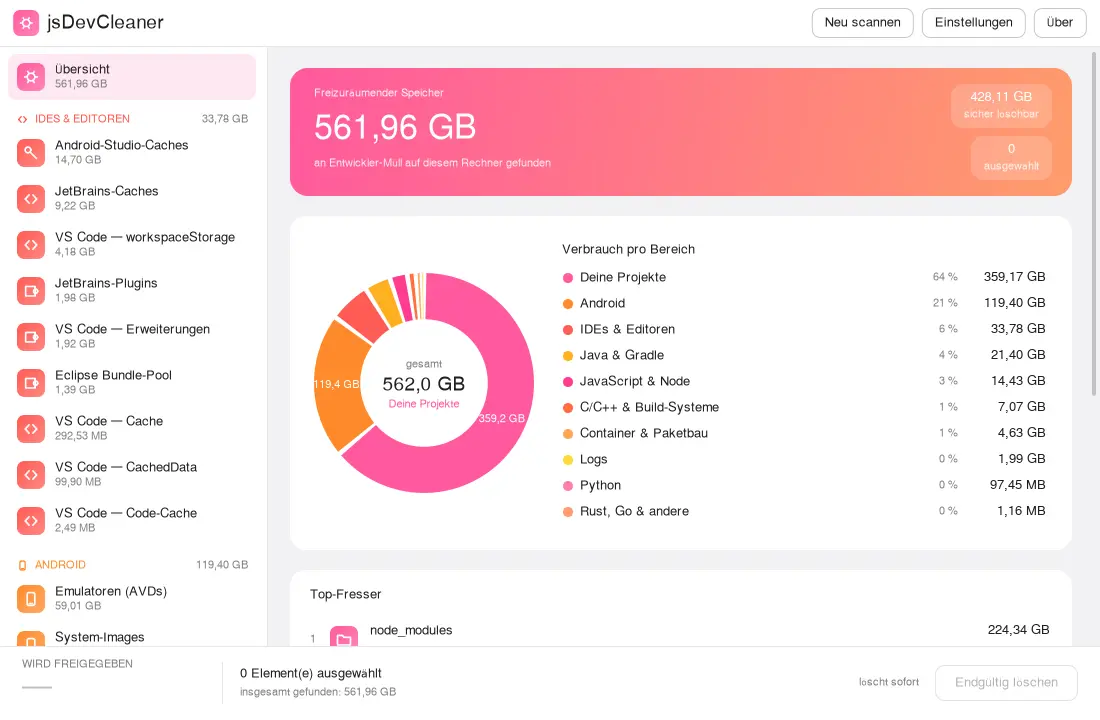
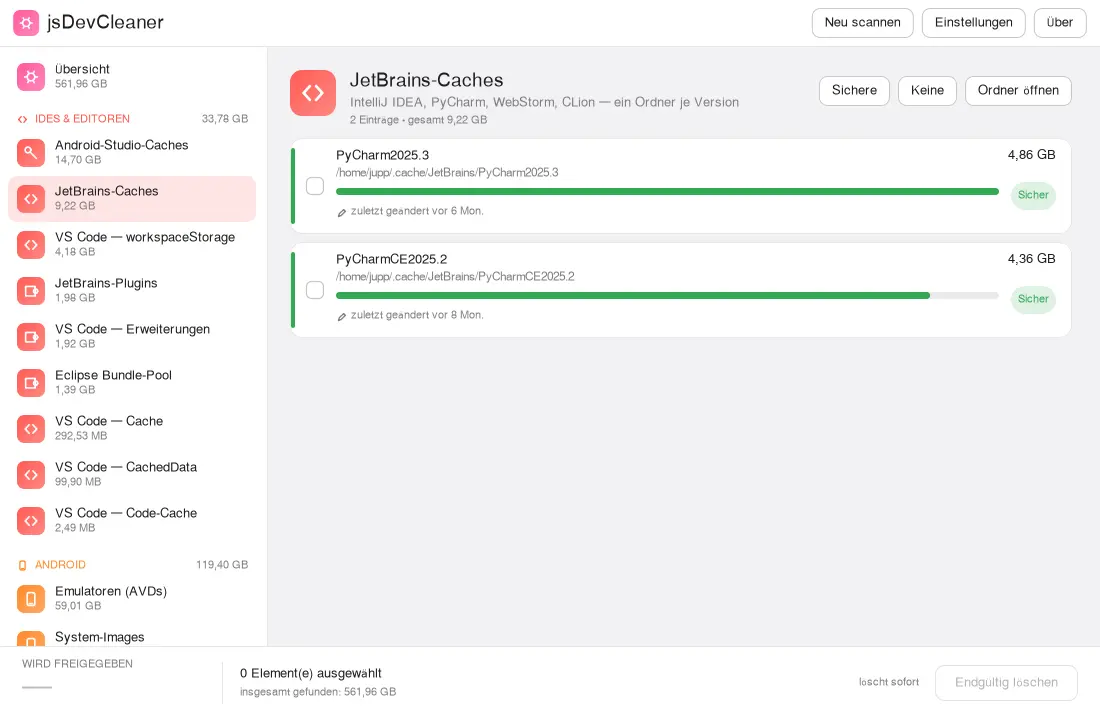
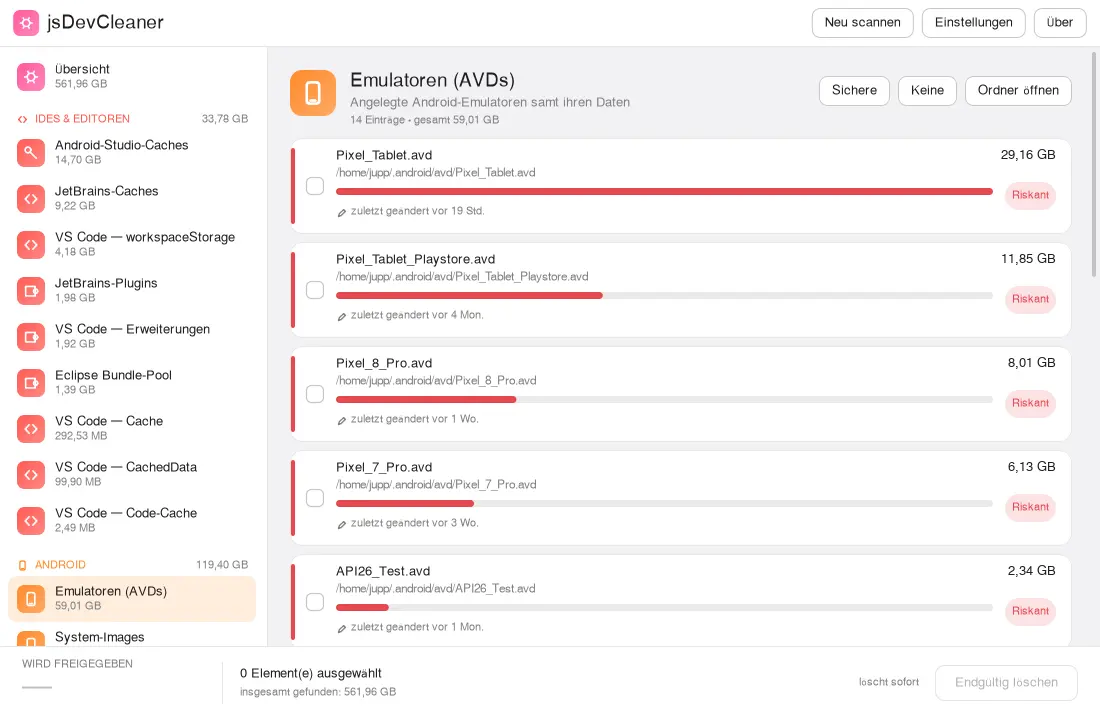
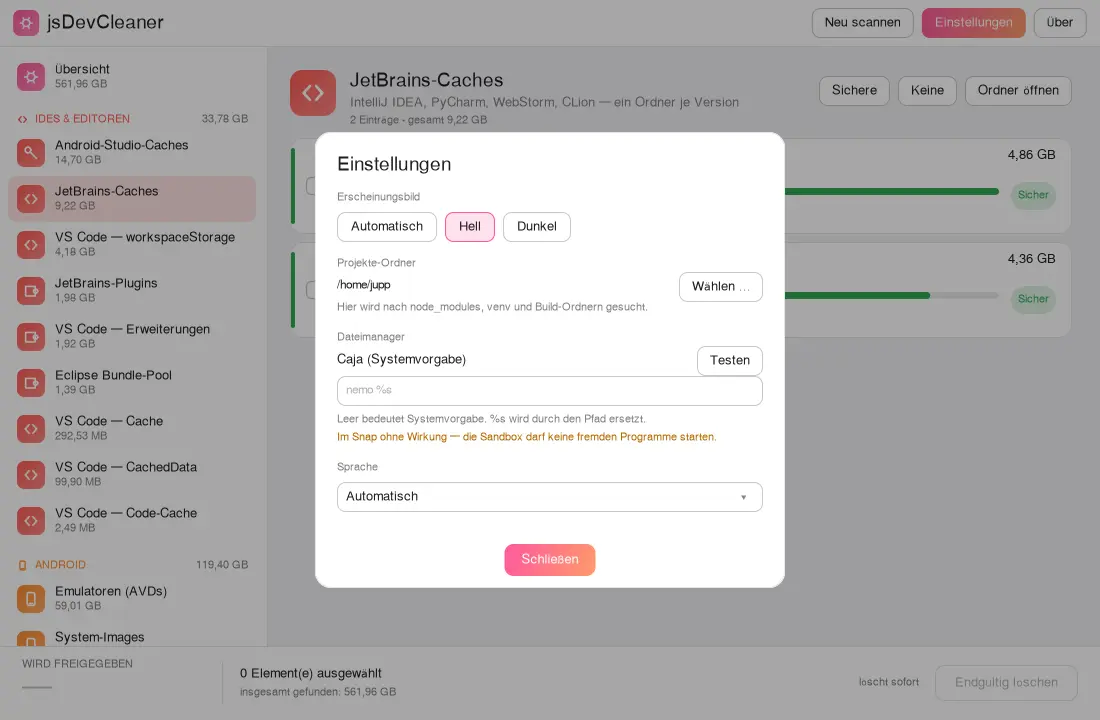
Cho bạn thấy các công cụ phát triển chiếm bao nhiêu chỗ: Android SDK và trình giả lập, bộ nhớ đệm của trình soạn thảo, các gói đã tải về và các thư mục phụ thuộc trong dự án của bạn. Mỗi mục được đánh giá là an toàn, cần thận trọng hoặc rủi ro, và chỉ những gì bạn đã đánh dấu và xác nhận mới bị xóa.
Android SDK & AVDsGradle & Mavennpm & YarnIDE-Cachesnode_modulesĐánh giá rủi roDự án của riêng bạnGTK3GNOME / KDE / XFCE44 ngôn ngữ
Bộ nhớ đệm như ~/.gradle, ~/.npm hoặc ~/.cache nằm trong các thư mục ẩn mà một ứng dụng bị cô lập không tự xem được. Hãy chạy lệnh một lần rồi khởi động lại ứng dụng.
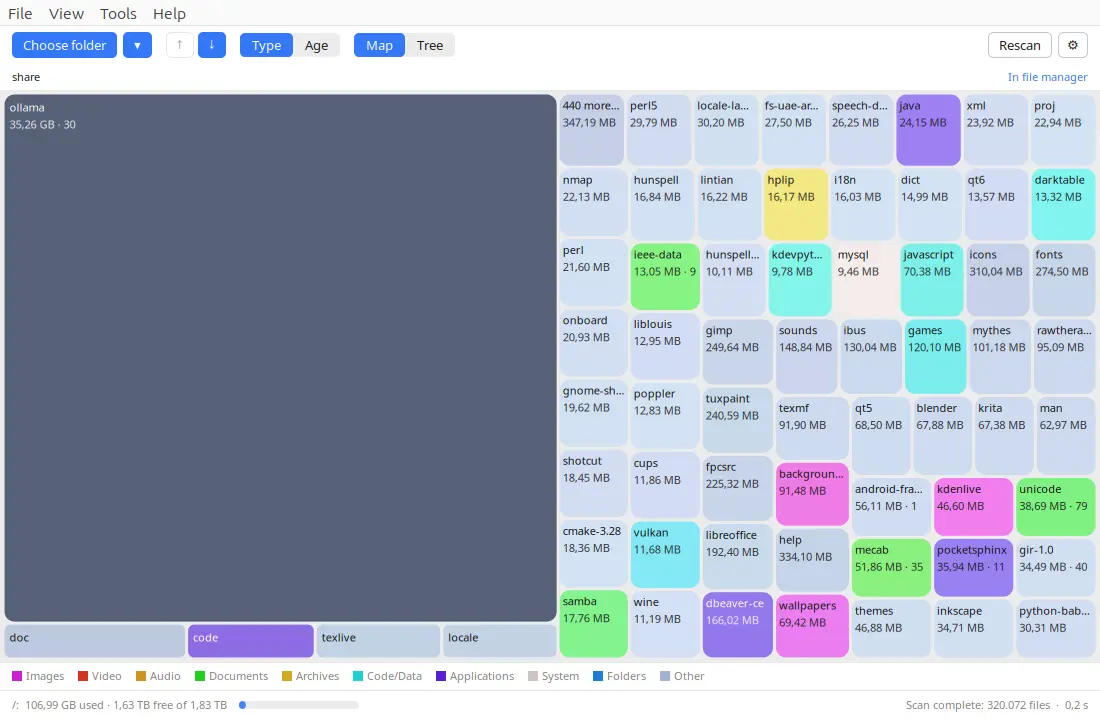
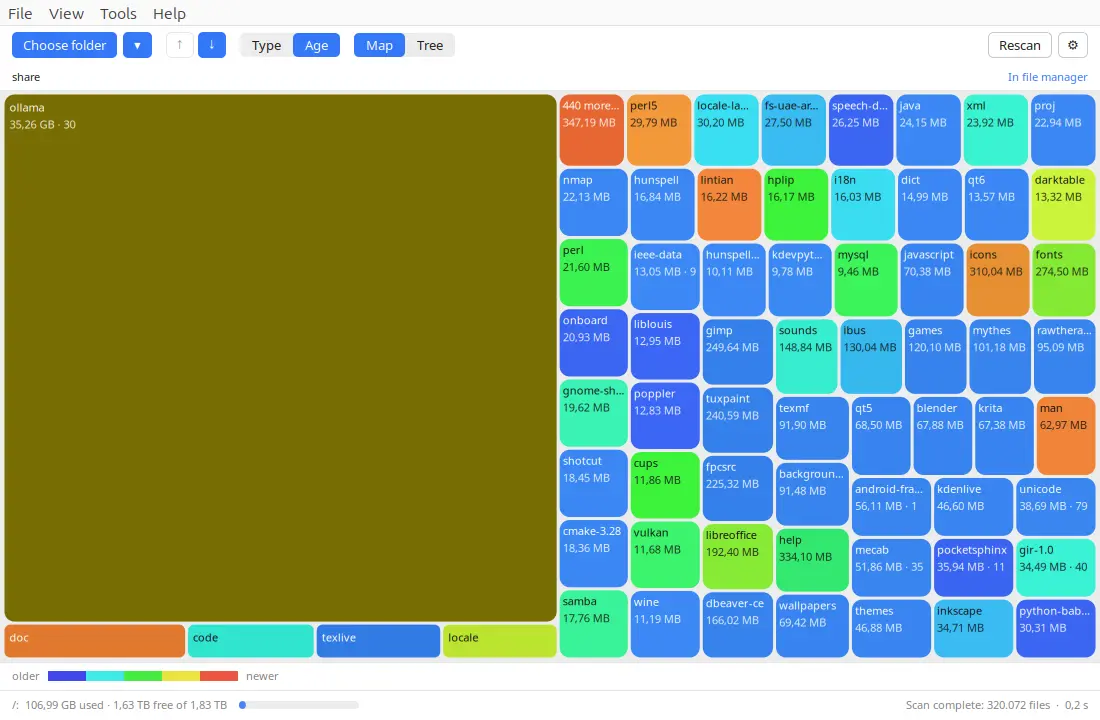
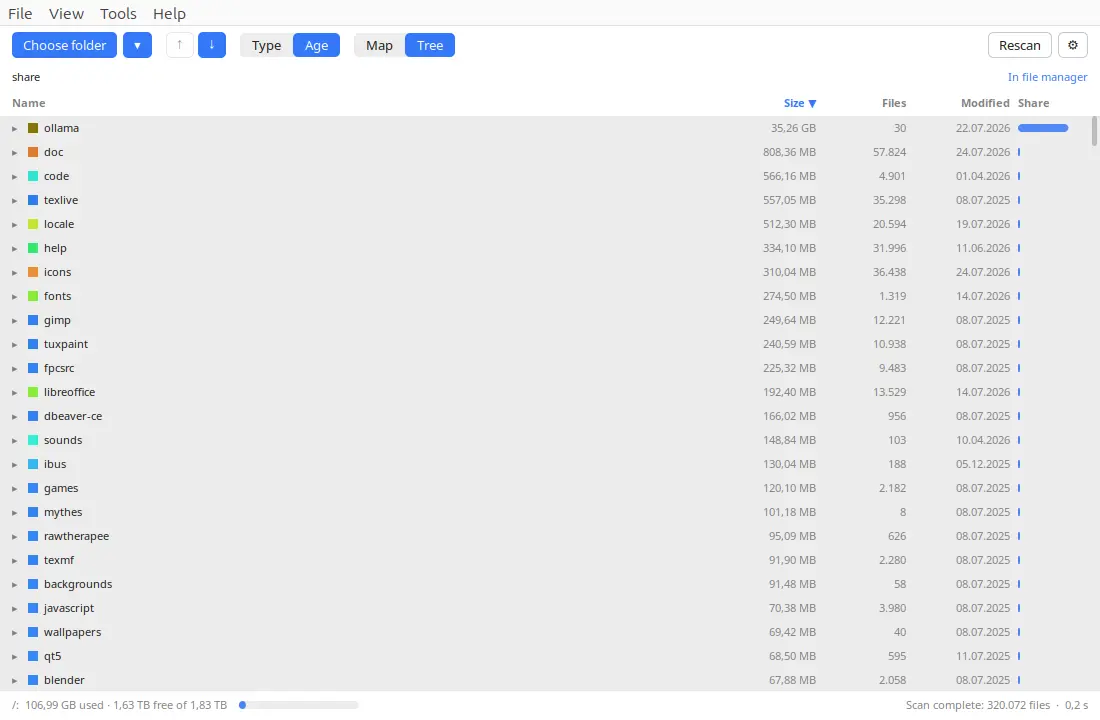
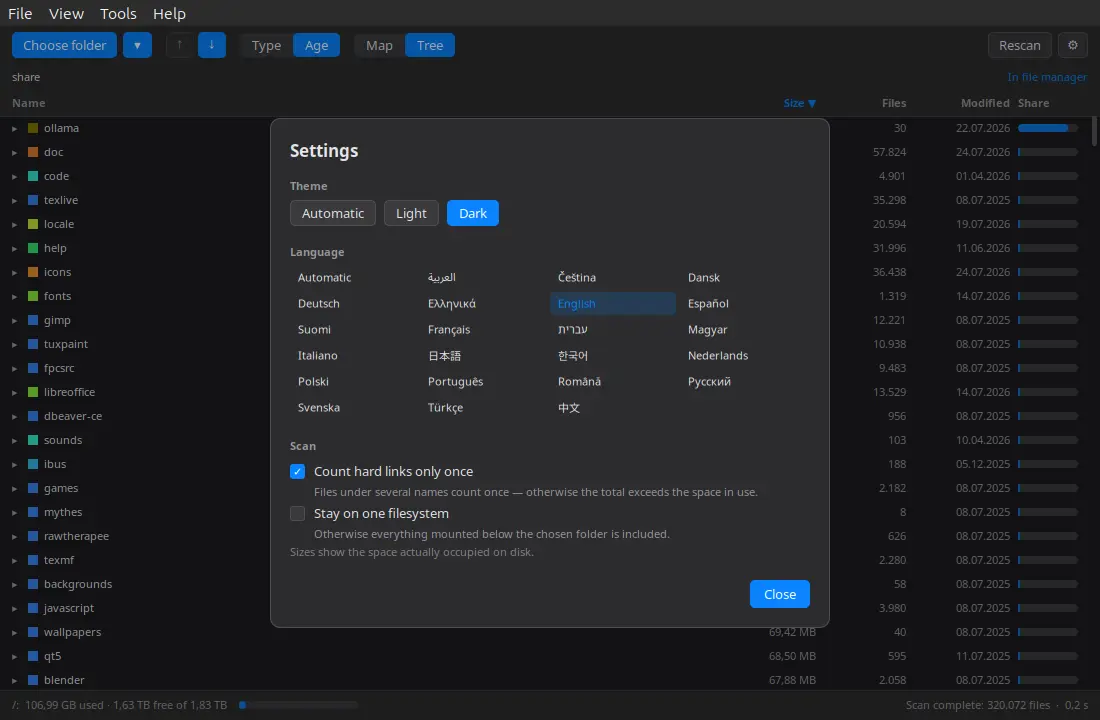
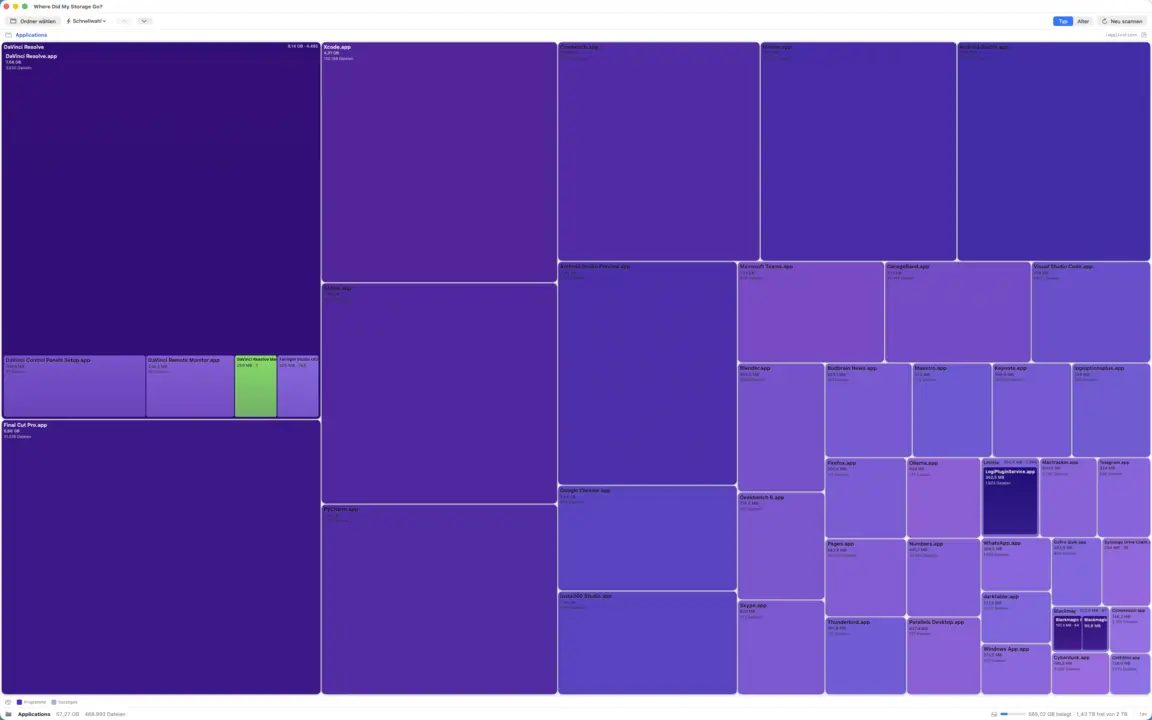
Cho bạn thấy dung lượng ổ đĩa đã đi đâu qua một treemap nhiều màu: nhấp vào để xem chi tiết, tìm những mục chiếm nhiều chỗ nhất và chuyển cùng lúc những thứ không cần nữa vào thùng rác. Tô màu theo loại tệp hoặc theo độ cũ, có thêm chế độ xem dạng cây có thể sắp xếp và cộng dồn tổng dung lượng bạn sẽ giải phóng được.
TreemapHeat-MapDrill-downChế độ xem dạng câyJunk-RadarChỉ chuyển vào Thùng rácGTK3GNOME / KDE / XFCE22 ngôn ngữ
Thư mục home và phương tiện lưu trữ rời hoạt động ngay. Với các thư mục hệ thống như /usr và /var, hãy chạy lệnh một lần rồi khởi động lại ứng dụng.
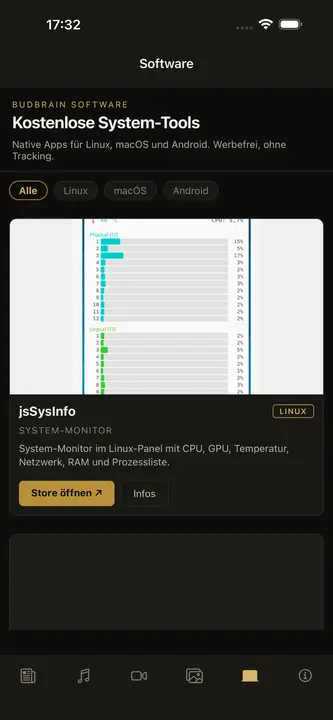
jsSysInfo
v1.14 · C++/GTK3
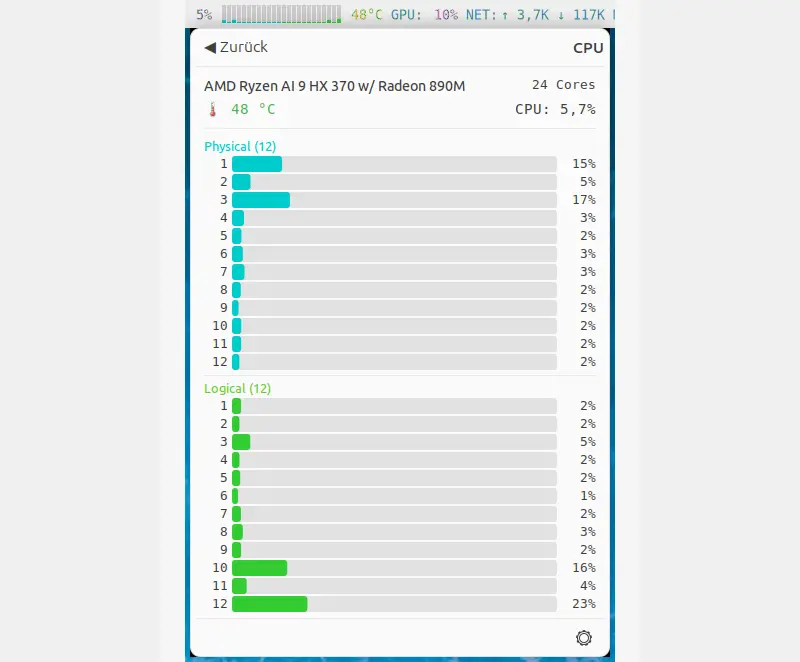
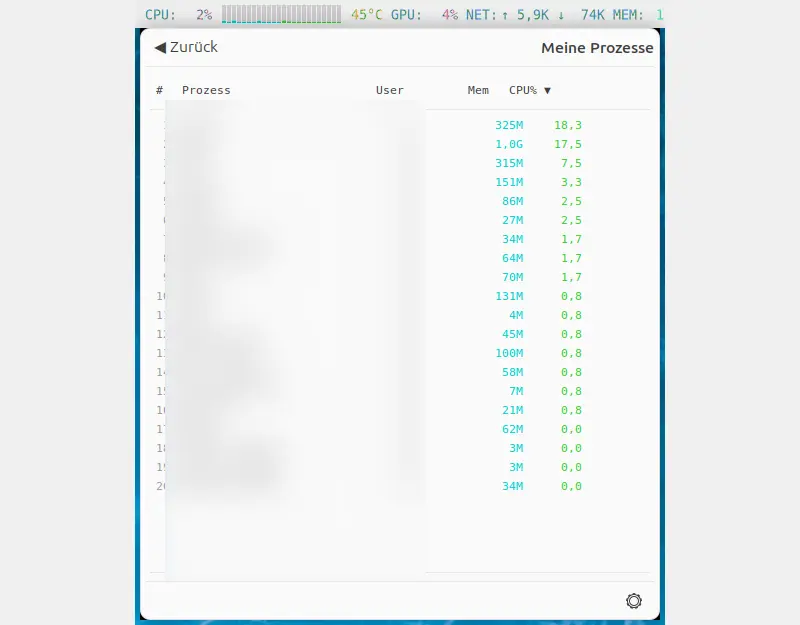
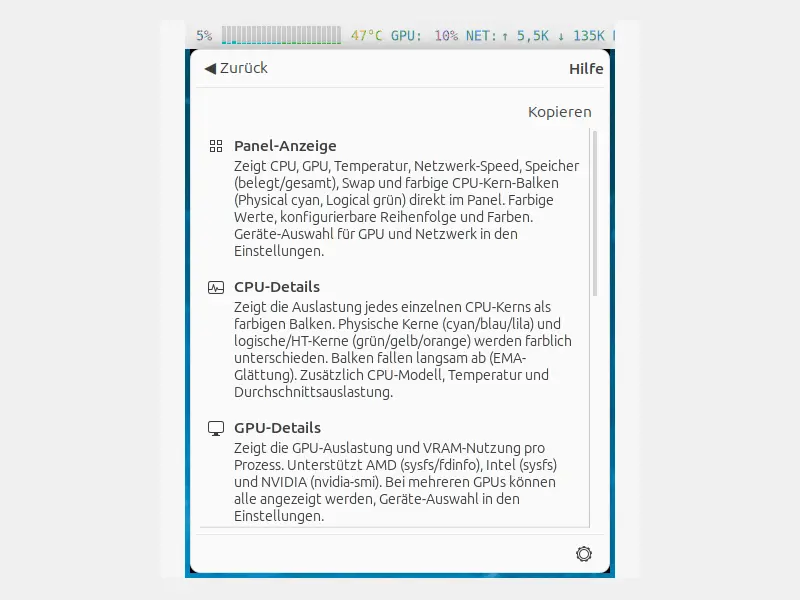
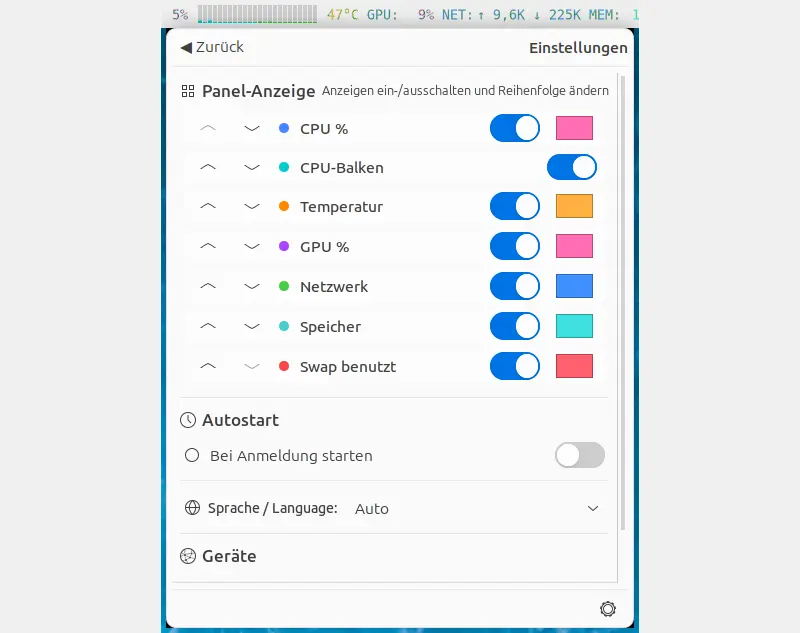
Trình giám sát hệ thống cho thanh bảng điều khiển Linux. Hiển thị mức dùng CPU, GPU, nhiệt độ, tốc độ mạng, bộ nhớ và swap bằng màu sắc trên thanh GNOME/KDE/XFCE.
CPU %Thanh CPUGPU %Nhiệt độMạngRAM & SwapDanh sách tiến trìnhTerminate/KillAutostartAMD / Intel / NVIDIA83 ngôn ngữ
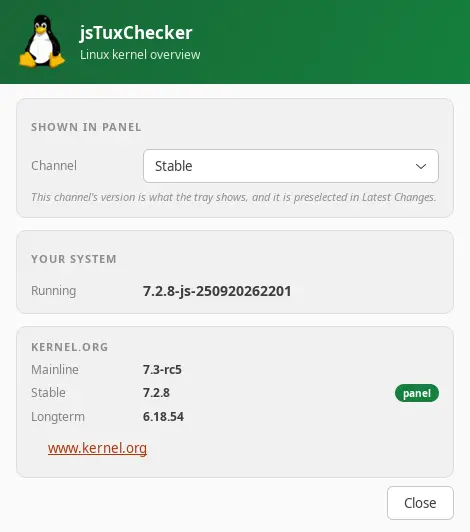
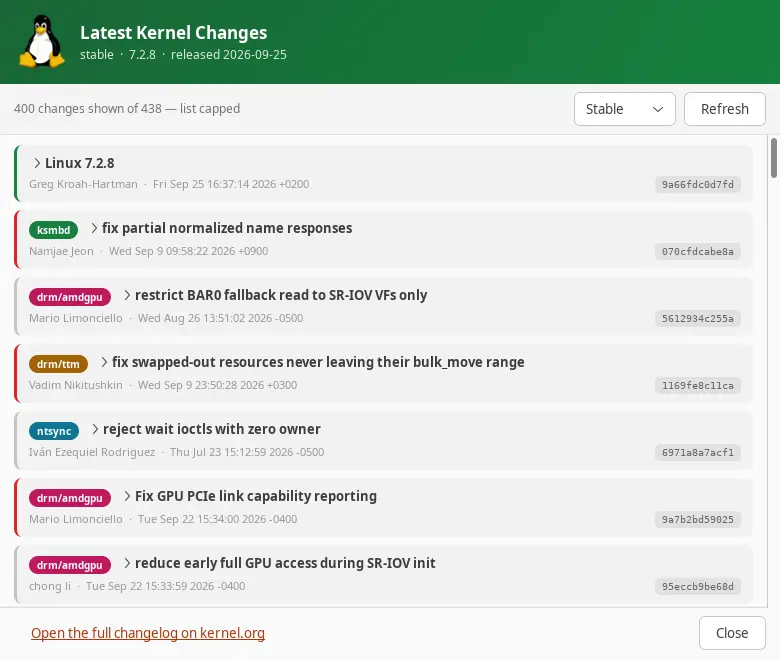
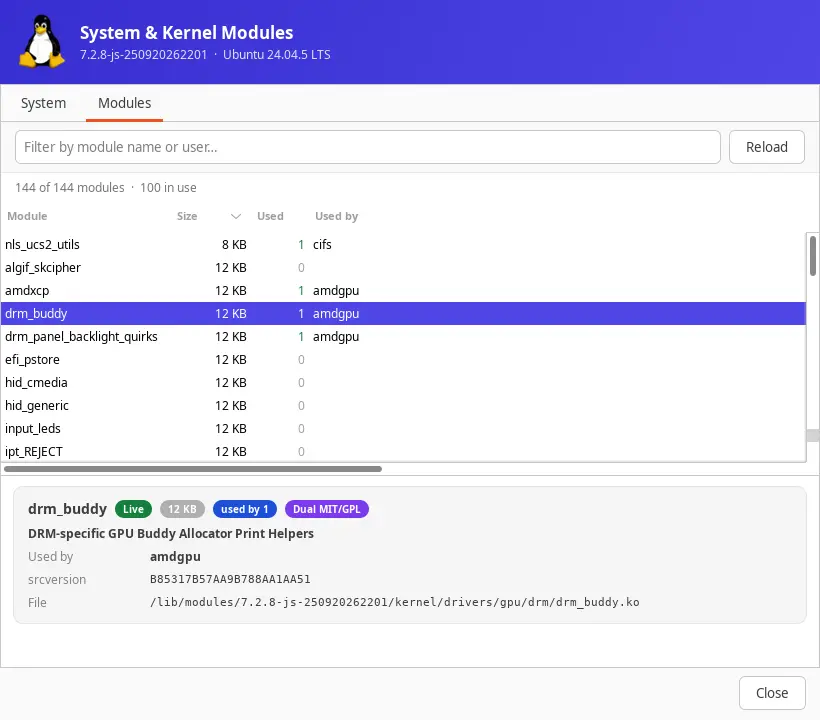
Trình kiểm tra phiên bản nhân Linux cho khay hệ thống. Kiểm tra kernel.org để tìm bản nhân mới và hiển thị các bản mainline, stable và longterm trên thanh bảng điều khiển.
Trò chơi, trình phát âm thanh, chỉnh sửa video và ảnh, trình quản lý tệp, tổng quan phần cứng và công cụ hệ thống cho Windows
Budbrain Quasarion
v1.0.1 · MSIX · Windows 10/11
Bay lượn như một chú chuồn chuồn qua những thế giới thần tiên rực sáng và đối đầu với những con thú khổng lồ.
Một con thú khổng lồ khác nhau ở cuối mỗi màn chơiTám loại ánh sáng cho chú chuồn chuồn của bạn, mỗi loại có tám cấpĐom đóm bay theo đường bay của bạnNâng cấp trong tổ và một cây kỹ năng lớn phát triển cùng bạnMột đường hầm kim cương theo nhịp nhạc sau mỗi thế giớiSáu mức độ khó, từ Dễ đến Điên rồBàn phím, tay cầm hoặc màn hình cảm ứngSDL2 · Cairo83 ngôn ngữ
jsBudbrainFindDblsOrRenameIt
v1.0.0 · MSIX · Windows 10/11
Tìm các tệp trùng lặp và dọn dẹp chúng — đồng thời đổi tên hàng loạt tệp cùng lúc theo quy tắc của riêng bạn, có xem trước và hoàn tác.
Tìm tệp trùng lặp thật sự theo nội dung, bất kể tên là gìTệp mới nhất được giữ lại – bạn quyết địnhChuyển vào thùng rác, di chuyển, xóa hoặc tạo liên kếtĐổi tên theo quy tắc kèm xem trước trực tiếpTìm tệp theo tên, loại, kích thước hoặc ngàyLưu các tìm kiếm, chạy nhiều tác vụ cùng lúcHoàn tác việc di chuyển và đổi tênSáng & tốiSDL2 · Cairo47 ngôn ngữ
jsBudbrainsFxStudio
v1.0.1 · MSIX · Windows 10/11
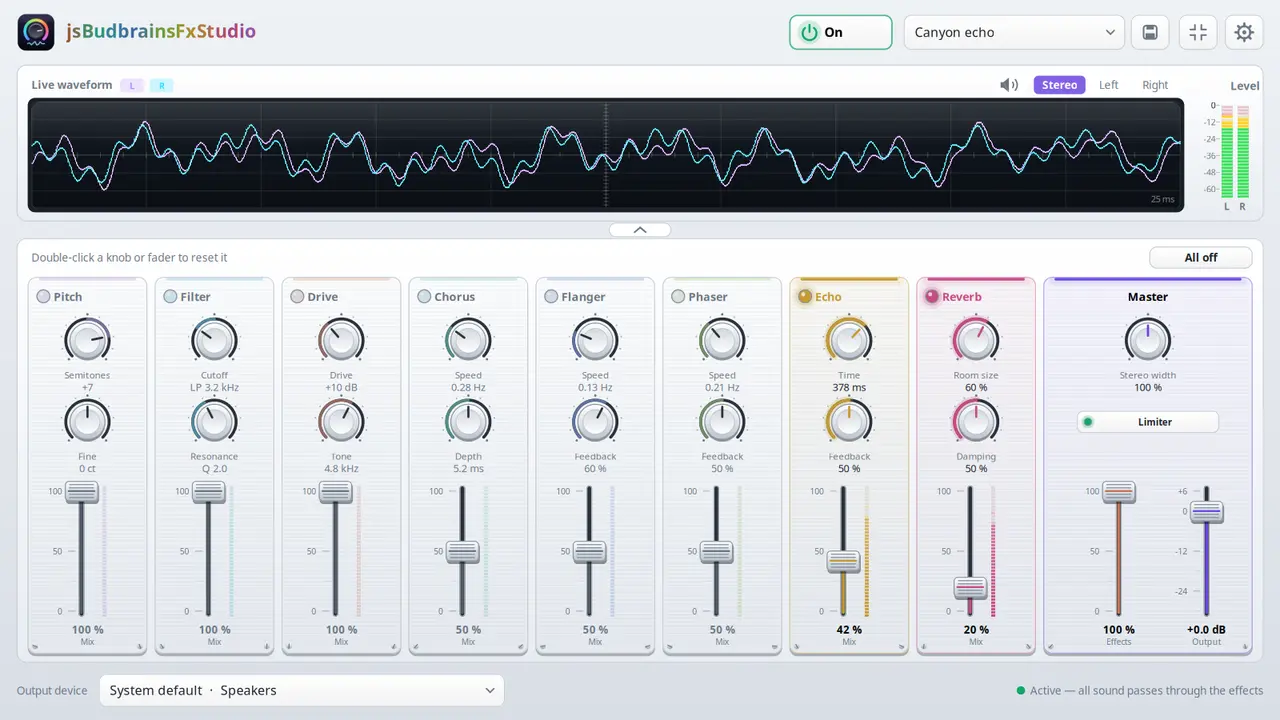
Hiệu ứng trực tiếp cho mọi thứ máy tính của bạn phát — hồi âm, vang vọng, cao độ và nhiều hơn nữa, được trộn vào âm thanh bằng một thanh fader.
Tám hiệu ứng: cao độ, bộ lọc, drive, chorus, flanger, phaser, vang vọng, hồi âmMỗi hiệu ứng có núm xoay và fader trộn riêngMột fader duy nhất trộn mọi hiệu ứng vào bản trộn chínhDạng sóng trực tiếp và đồng hồ đo mức âmCác thiết lập dựng sẵn như phòng hòa nhạc hoặc vang vọng hẻm núi, cùng thiết lập của riêng bạn"Tắt tất cả" chỉ bằng một cú nhấp — và bật lại bằng cú nhấp tiếp theoBộ giới hạn bảo vệ tai và loaHoạt động cùng với jsBudbrainEqualizerNút tắt tiếng khi điện thoại reoChọn loa hoặc tai nghe của bạnCửa sổ nhỏ luôn nằm trên cùngThiết lập một lần – Windows sẽ hỏi xin quyền của bạnSáng & tốiSDL2 · Direct3D 1144 ngôn ngữ
jsBudbrainLimiter
v1.0.0 · MSIX · Windows 10/11
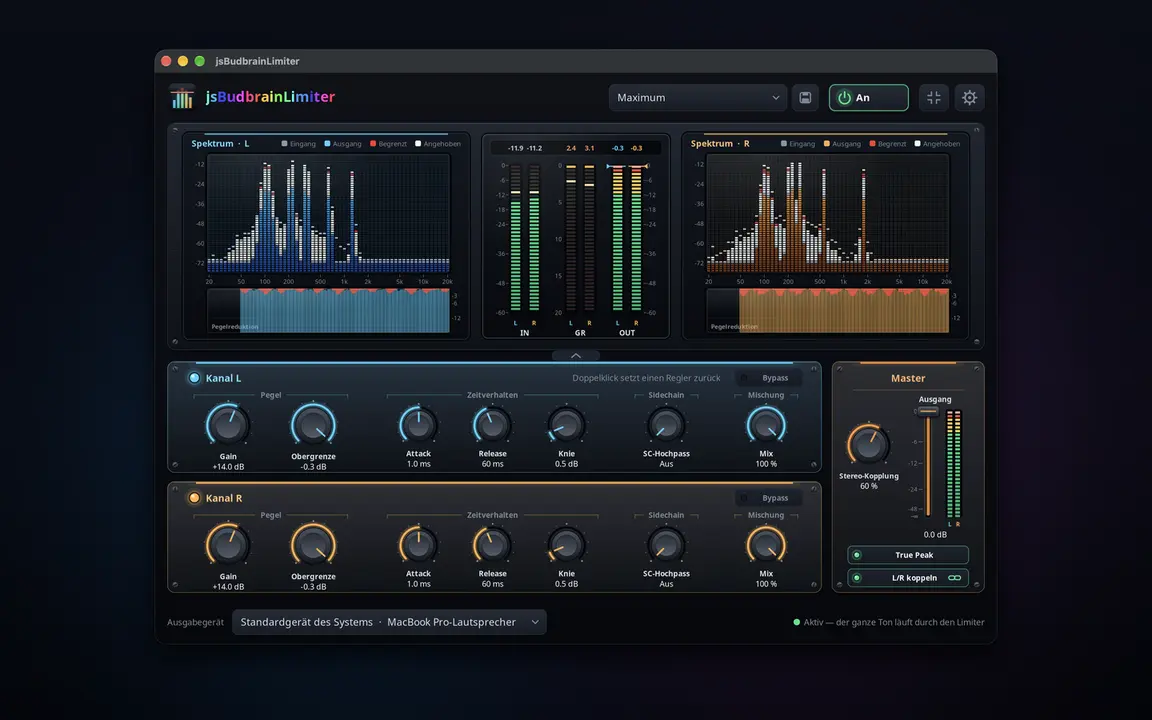
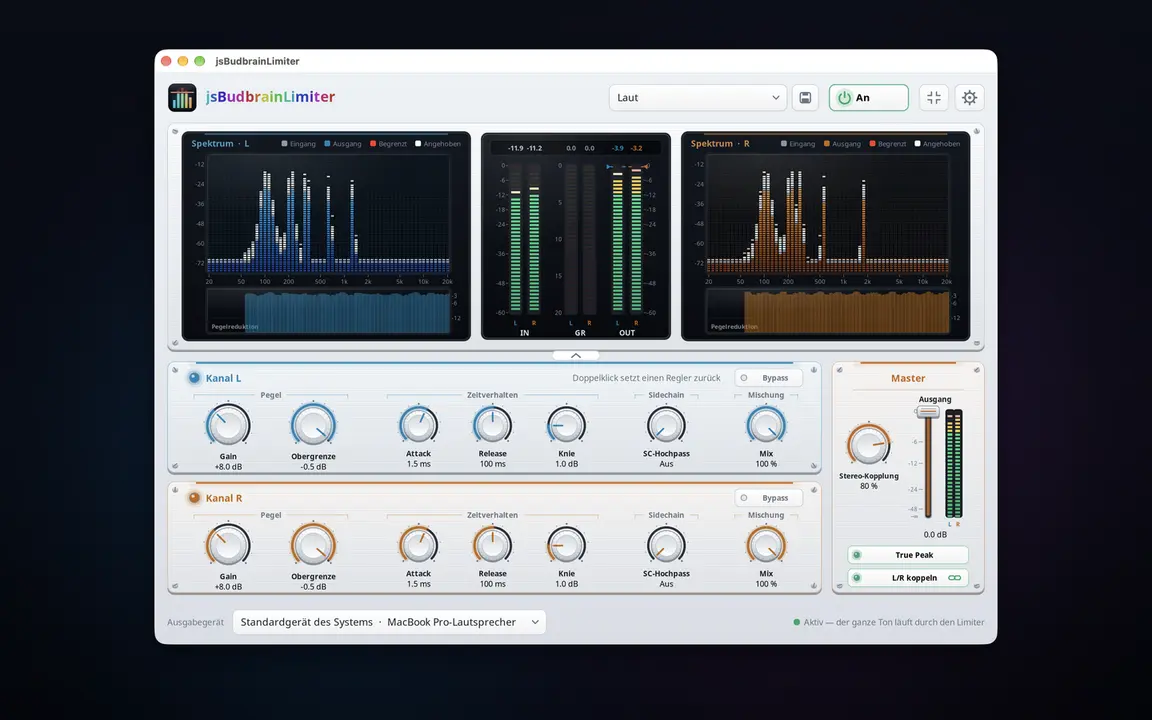
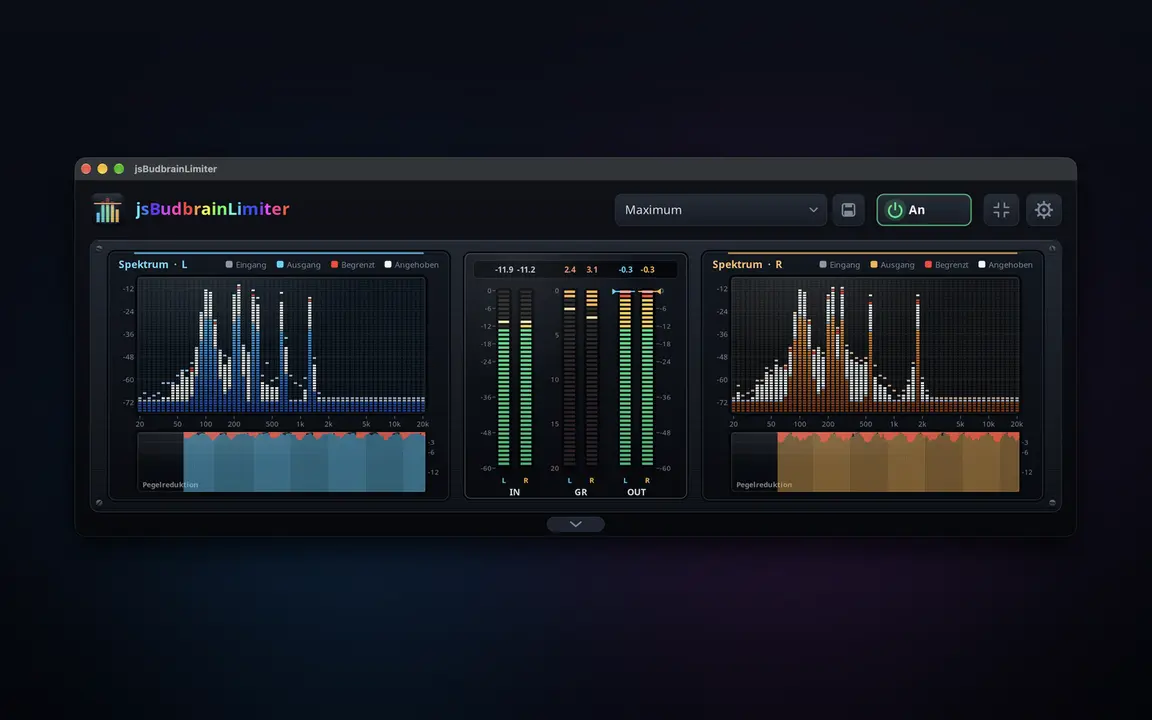
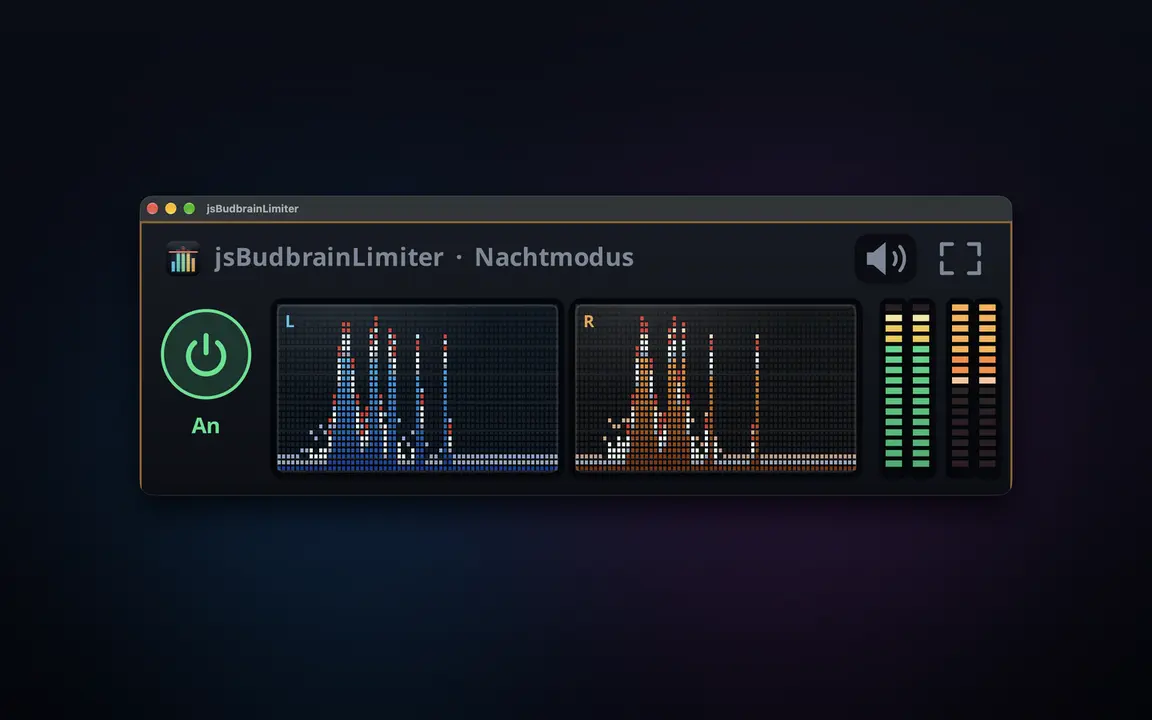
Bộ giới hạn cho mọi thứ máy tính của bạn phát — to hơn mà không bao giờ vượt ngưỡng, với hai màn hình phổ tần cho thấy nó đang làm gì.
Điều khiển riêng cho kênh trái và kênh phảiGain, ceiling, attack, release, knee, sidechain high-pass và mixTrue peak bắt được cả những đỉnh ngắn nhấtFader đầu ra kèm đồng hồ đo mức cho cả hai kênhHai màn hình phổ tần cho thấy phần được nâng lên và phần bị giới hạnLịch sử gain reduction và số đo đỉnhCác thiết lập dựng sẵn, cùng thiết lập của riêng bạnHoạt động cùng với jsBudbrainCompressor, jsBudbrainEqualizer và jsBudbrainsFxStudioNút tắt tiếng khi điện thoại reoChọn loa hoặc tai nghe của bạnCửa sổ nhỏ luôn nằm trên cùngThiết lập một lần – Windows sẽ hỏi xin quyền của bạnSáng & tốiSDL2 · Direct3D 1144 ngôn ngữ
jsBudbrainCompressor
v1.0.1 · MSIX · Windows 10/11
Độ ấm của đèn điện tử và bộ nén kiểu phòng thu cho mọi thứ máy tính của bạn phát — với những bóng đèn phát sáng và đồng hồ VU.
Tiền khuếch đại đèn mô phỏng với drive, bias và fatBass, mid, treble và presenceBộ nén với threshold, ratio, attack, release, knee, make-up và mixHai đồng hồ VU với chuyển động kim như thậtĐèn càng làm việc nhiều thì càng sáng hơnCác thiết lập dựng sẵn cho đèn và bộ nén, cùng thiết lập của riêng bạnBộ giới hạn bảo vệ tai và loaHoạt động cùng với jsBudbrainEqualizer và jsBudbrainsFxStudioNút tắt tiếng khi điện thoại reoChọn loa hoặc tai nghe của bạnCửa sổ nhỏ luôn nằm trên cùngThiết lập một lần – Windows sẽ hỏi xin quyền của bạnSáng & tốiSDL2 · Direct3D 1144 ngôn ngữ
jsBudbrainLaufwerksTest
v1.0.0 · MSIX · Windows 10/11
Đo tốc độ ghi và đọc của một ổ đĩa — với hai đồng hồ đo mức trực tiếp, biểu đồ và việc kiểm tra từng khối.
Tốc độ ghi và đọc trực tiếpTheo dung lượng (1–16 GB) hoặc theo thời gian (5 giây – 16 phút)Mọi khối đều được kiểm traCho thấy lúc một ổ đĩa nhanh bắt đầu hụt hơiUSB, thẻ nhớ, ổ đĩa mạngLịch sử mọi bài kiểm tra, lưu thành văn bảnThang đo mở rộng đến 1.000.000 MB/s cho RAID máy chủSáng & tốiSDL2 · Cairo47 ngôn ngữ
Budbrain Cave Rescue
v1.0.0 · MSIX · Windows 10/11
Bay vào những hang động sâu trên Mặt Trăng và đưa các phi hành gia mắc kẹt trở về nhà an toàn.
100 màn chơi trên mười thế giớiTrọng lực thựcBốn nút, không gì hơnNâng cấp tàu của bạn bằng kinh nghiệmBốn mức độ khóThư viện nhiệm vụ kèm bản đồ chuyến bayBàn phím, chuột hoặc tay cầmSDL2 · Cairo44 ngôn ngữ
jsBudbrainEqualizer
v1.0.1 · MSIX · Windows 10/11
Bộ cân bằng âm thanh cho mọi thứ máy tính của bạn phát — kèm phổ tần trực tiếp.
Mười thanh trượt, từ bass trầm sâu đến treble sáng rõHiển thị trực tiếp những gì đang phát — trái, phải hoặc cả haiCác thiết lập âm thanh dựng sẵn và của riêng bạn, lưu dưới một cái tênNút tắt tiếng khi điện thoại reoChọn loa hoặc tai nghe của bạnThu gọn các thanh trượt, chỉ giữ lại phần hiển thịCửa sổ nhỏ luôn nằm trên cùngKhởi động khi bạn đăng nhập, nếu bạn muốnThiết lập một lần – Windows sẽ hỏi xin quyền của bạnSáng & tốiSDL2 · Direct3D 1144 ngôn ngữ
jsBudbrainPlayer
v1.0.0 · MSIX · Windows 10/11
Phát các bản ghi âm từ một thư mục — ngẫu nhiên hoặc theo thứ tự, vào những giờ bạn chọn.
Phát các bản ghi âm từ một thư mục, kể cả ổ đĩa mạngNgẫu nhiên hoặc theo thứ tựChỉ trong khoảng giữa hai thời điểm trong ngàyChỉ vào những ngày trong tuần bạn đánh dấuCân bằng các bản ghi có độ lớn khác nhauKhởi động cùng Windows và tự chạy tiếpMP3WASAPI · Direct2D44 ngôn ngữ
Budbrain’s Media Editor
v1.0.0 · MSIX · Windows 10/11
Chỉnh sửa video hoặc ảnh rồi lưu lại. Rút ngắn một đoạn phim hoặc thêm các clip, chuyển mờ giữa các clip, rồi lưu video với kích thước hoặc định dạng nhất định. Làm thẳng, cắt xén và chỉnh ảnh, sau đó lưu thành JPEG, PNG hoặc WebP.
Cắt và ghépMờ dần và chuyển mờCắt xén và chỉnh ảnhCấu hình xuất sẵn cho các nền tảng phổ biếnTệp raw của máy ảnhFFmpeg (LGPL)NVENC · AMF · Media FoundationSDL2 · Direct3D 1144 ngôn ngữ
Astonischika
v1.0.0 · MSIX · Windows 10/11
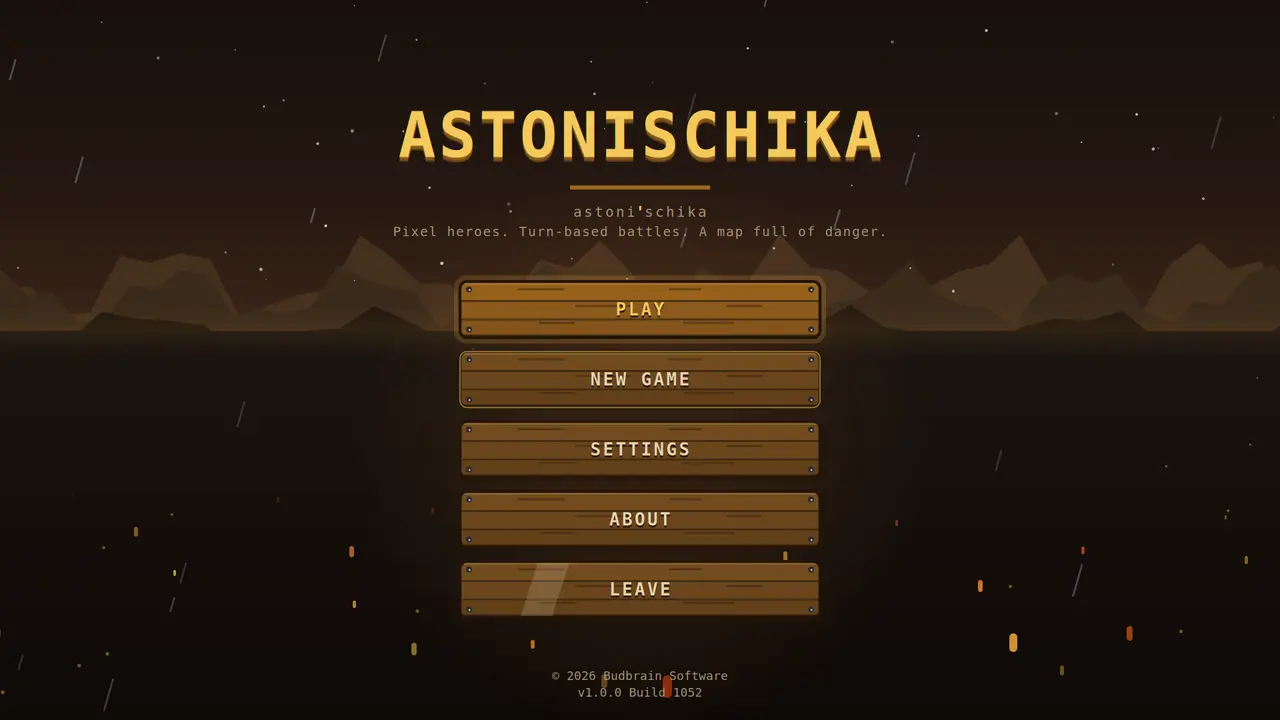
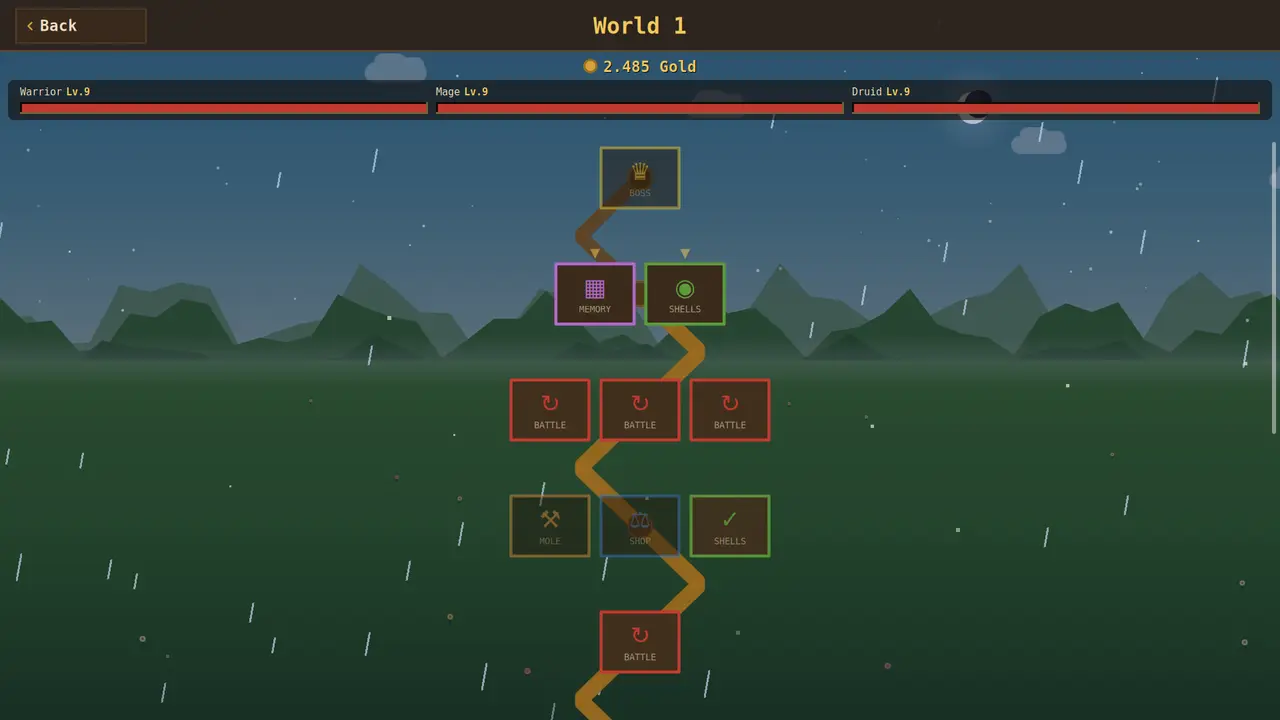
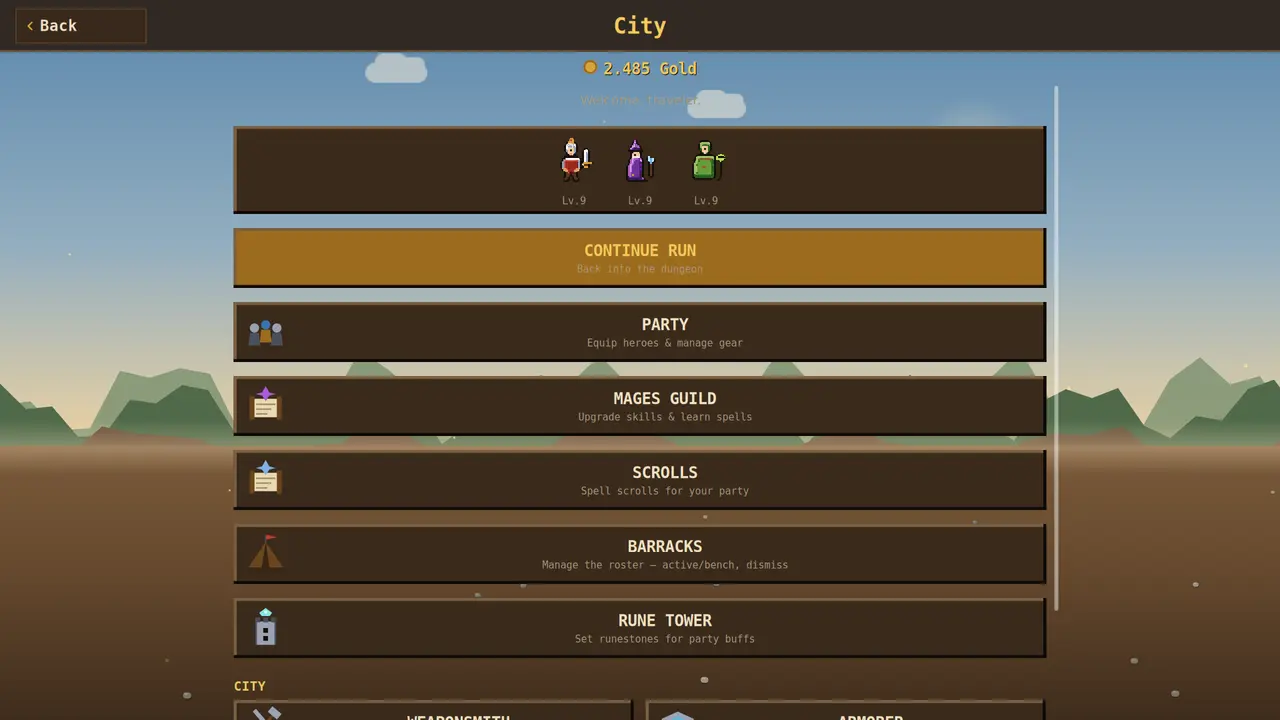
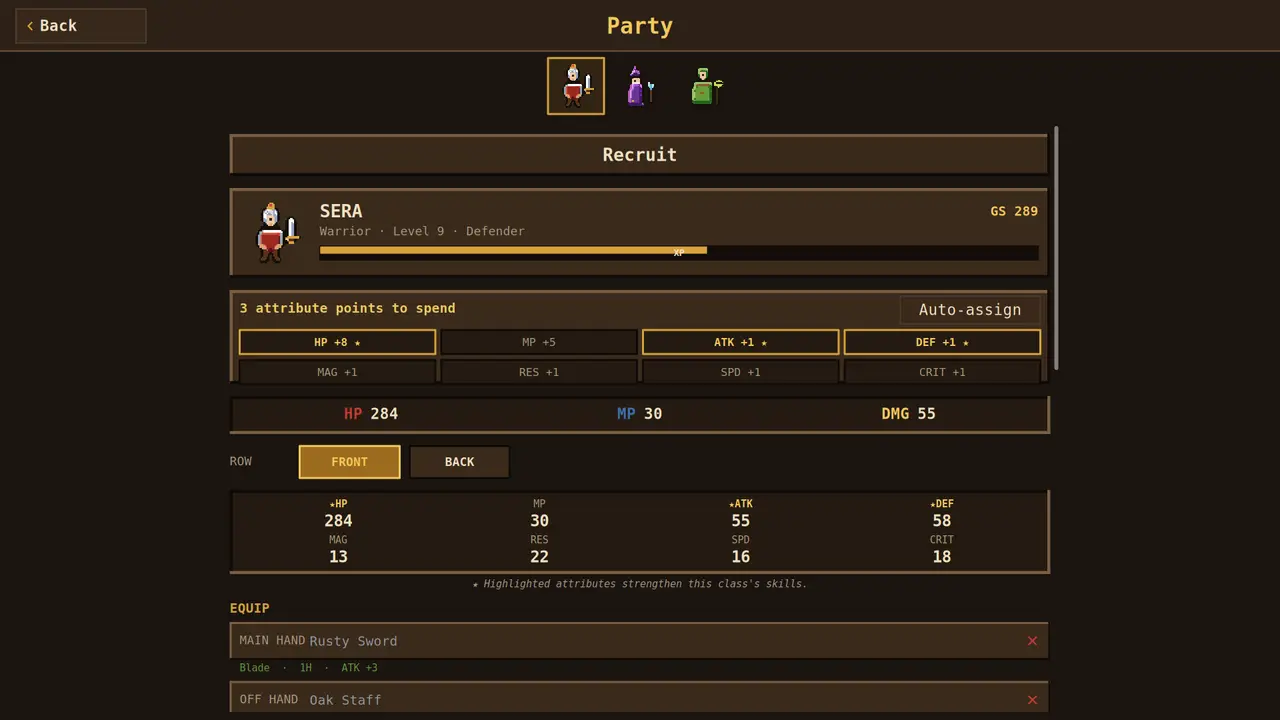
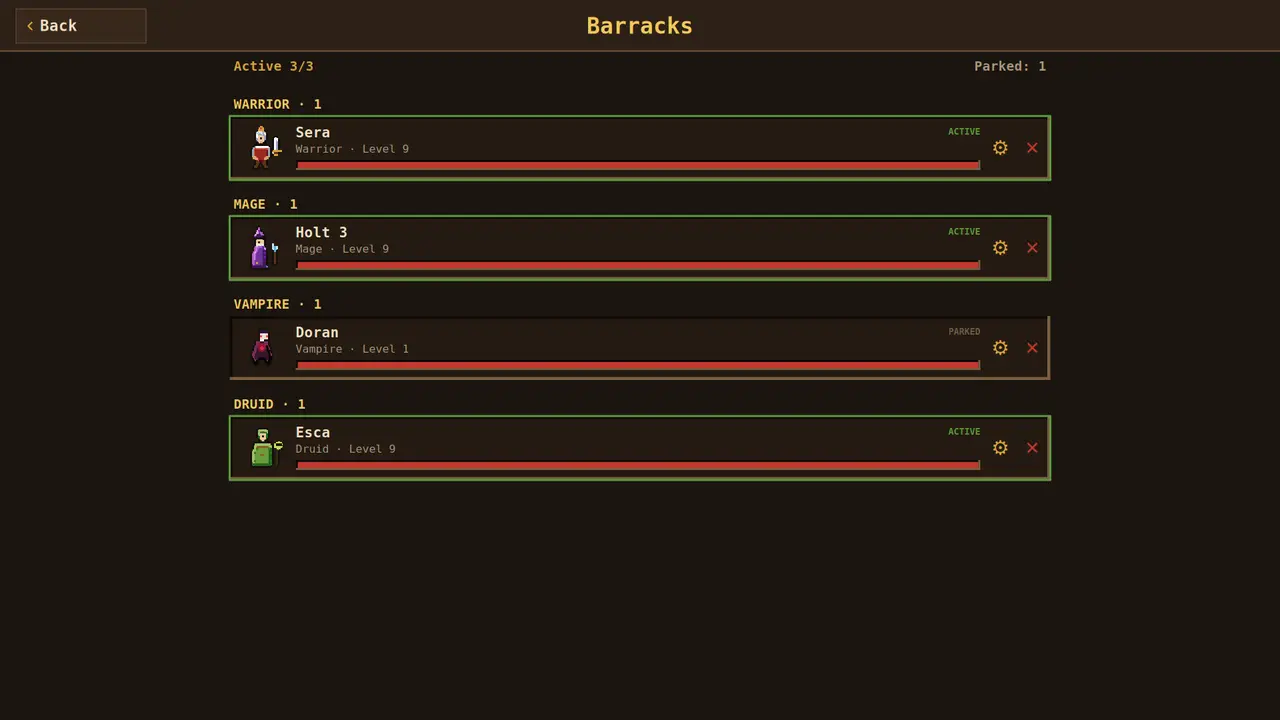
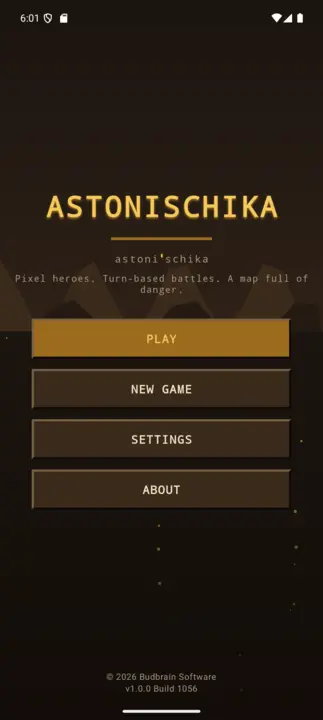
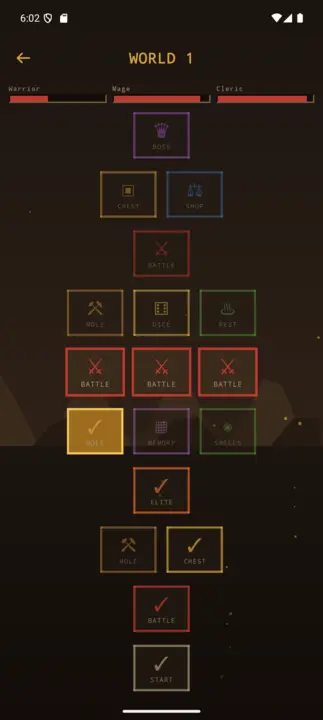
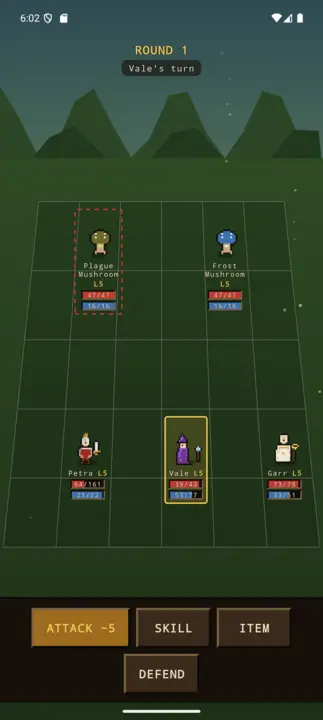
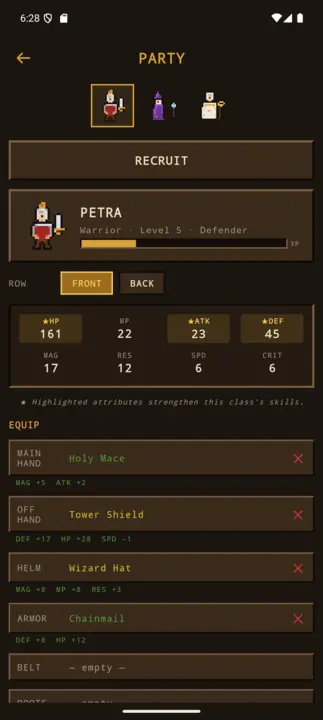
RPG pixel: chọn ba anh hùng, chiến đấu theo lượt, chiến lợi phẩm, một bản đồ đầy hiểm nguy.
Party-RPGPixel-ArtTheo lượt3 trong 8 anh hùngChiến lợi phẩm & trang bịTrung tâm thành phốSDL2 · Cairo44 ngôn ngữ
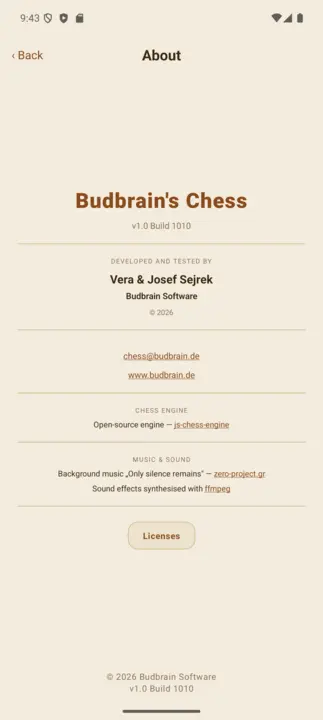
Budbrain’s Chess
v1.0.0 · MSIX · Windows 10/11
Một trăm màn cờ vua đấu với máy tính, từ ELO 150 đến 1900. Ở những màn đầu, đối thủ chơi với điểm chấp, rồi mạnh dần theo từng màn. Có gợi ý giúp bạn, quân bị đe dọa sẽ nhấp nháy, mọi nước đi đều có thể hoàn tác — và mỗi ván bạn thắng đều được lưu trong thư viện.
100 màn chơiELO 150 đến 1900Đối thủ chơi với điểm chấpGợi ý và hoàn tácThư viện các ván đã thắngSDL2 · Cairo22 ngôn ngữ
BlobPop
v1.0.0 · MSIX · Windows 10/11
Một trăm màn chơi qua năm thế giới: ngắm, nhấp, gom ba bóng cùng màu lại với nhau. Cứ vài lần bắn, bàn chơi lại bị đẩy xuống một hàng — dọn sạch trước khi nó chạm đáy là bạn đạt ba sao. Thêm chế độ vô tận với bảng điểm cao.
100 màn chơiNăm thế giớiChế độ vô tậnNgày và đêmBảng điểm caoSDL2 · Cairo22 ngôn ngữ
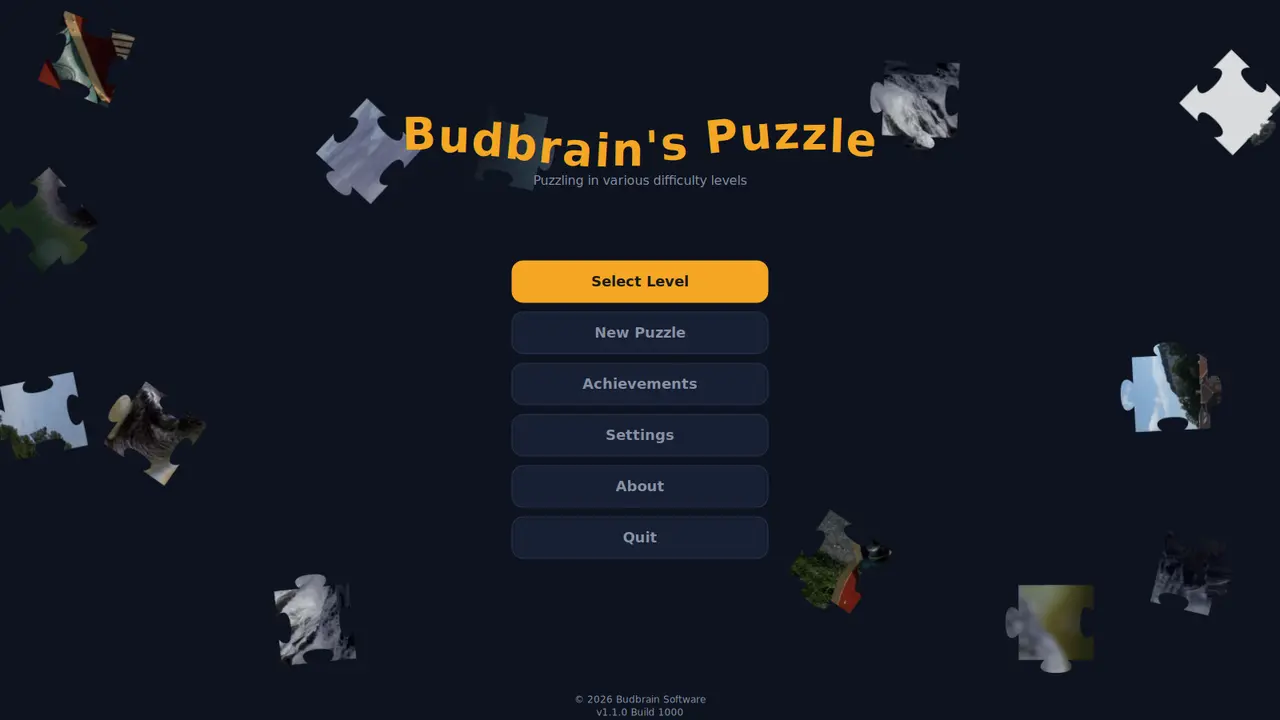
Budbrain’s Puzzle
v1.1.0 · MSIX · Windows 10/11
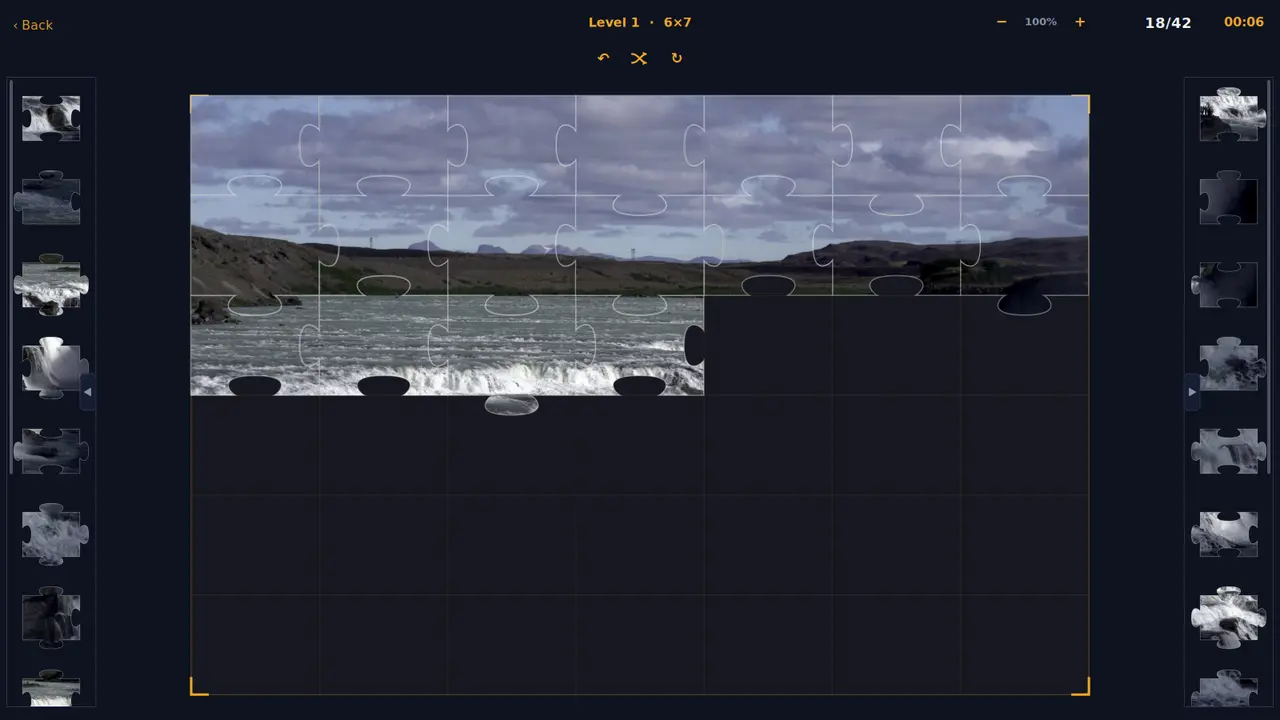
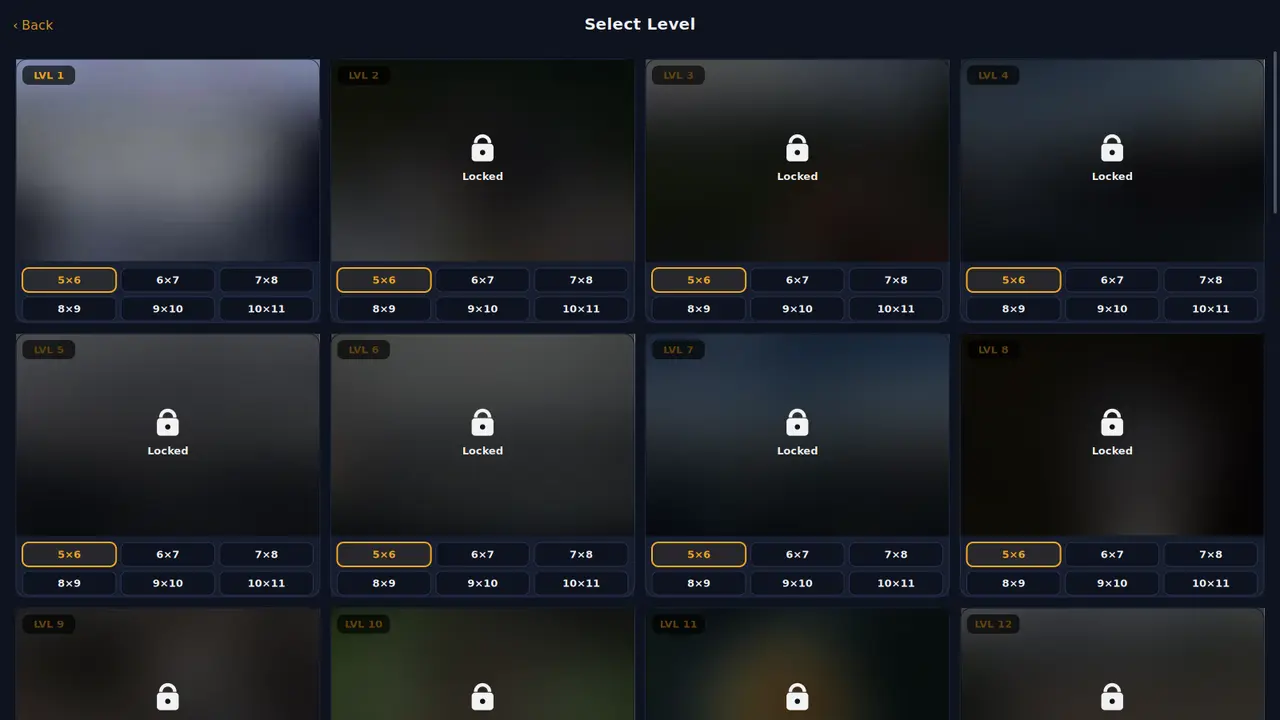
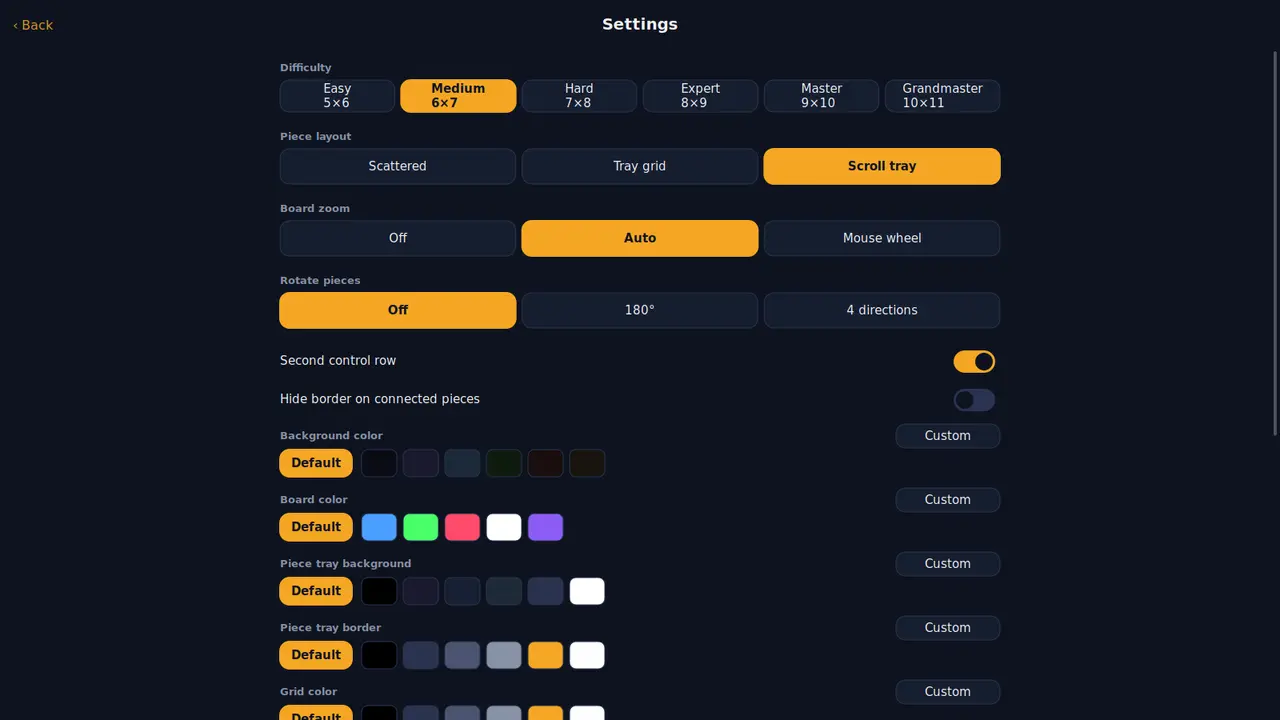
Bốn mươi bức ảnh biến thành trò ghép hình, mỗi bức có sáu kích cỡ từ ba mươi đến một trăm mười mảnh. Mảnh nào ở gần đúng vị trí sẽ tự khớp vào — bật chế độ xoay nếu bạn muốn khó hơn.
Bốn mươi bức ảnhSáu kích cỡ30 đến 110 mảnhMảnh ghép xoay đượcThư viện thành tíchMàu của riêng bạnSDL2 · Cairo22 ngôn ngữ
FarmIsFun
v1.0.1 · MSIX · Windows 10/11
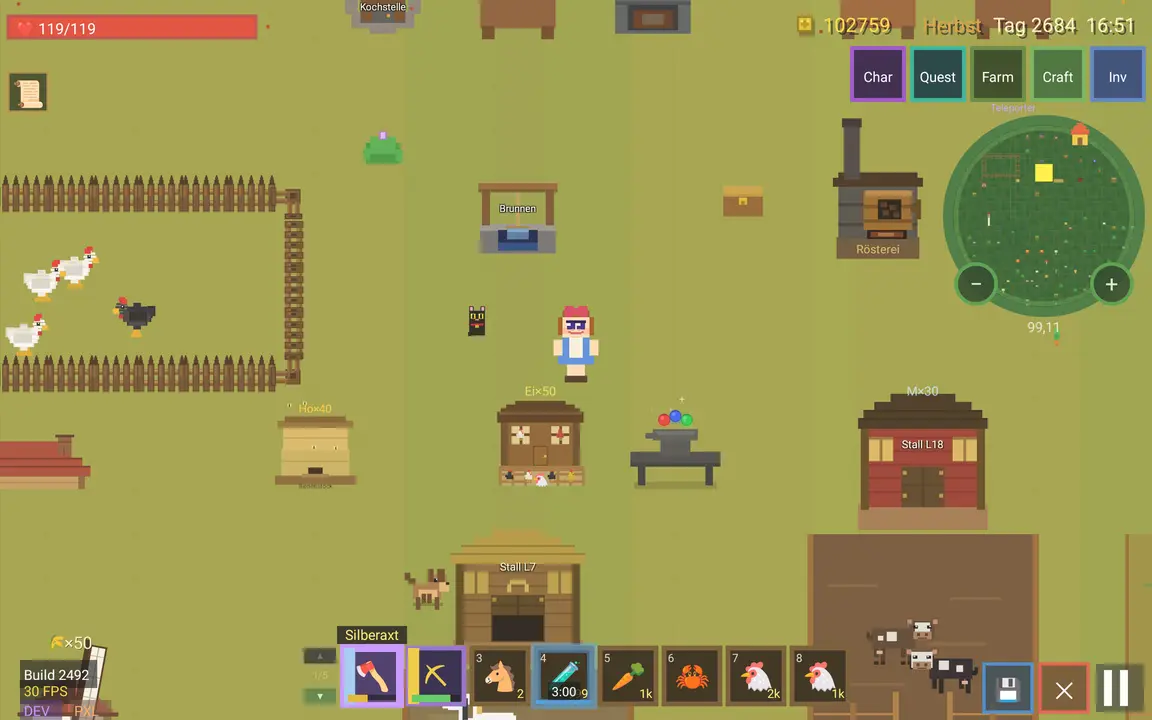
Xây dựng một nông trại từ mảnh đất trống: dọn đất, gieo trồng, nuôi động vật, đào mỏ. Hơn 300 vật phẩm, 231 công thức, bốn mùa — và tự động lưu.
Hơn 300 vật phẩm231 công thứcSáu loại động vậtBốn mùaMỏ · câu cá · săn bắnChuột · bàn phím · tay cầmSDL2 · Cairo22 ngôn ngữ
Budbrain’s Mahjong
v1.1.1 · MSIX · Windows 10/11
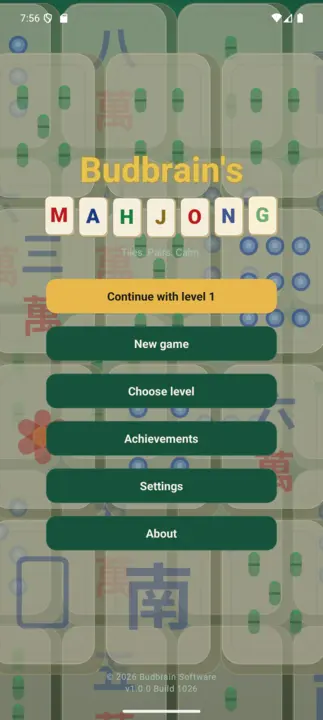
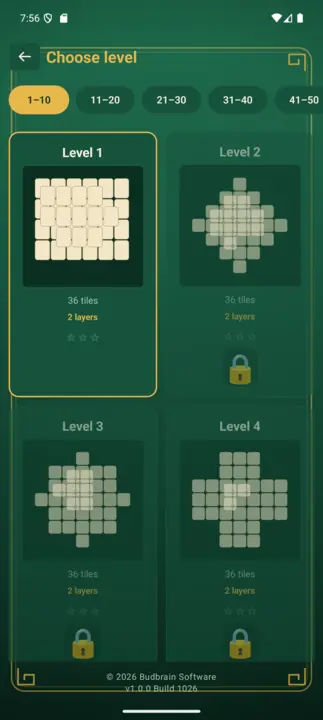
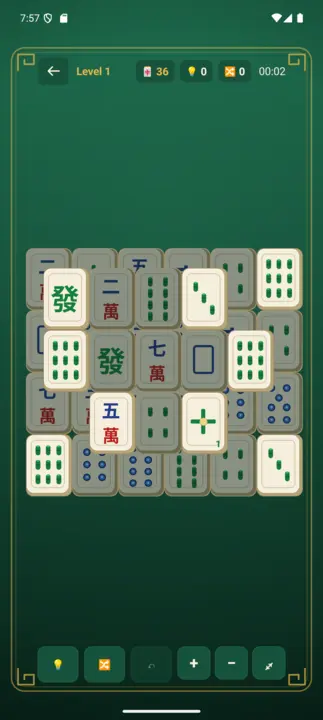
Mahjong solitaire với một trăm màn chơi: hai quân giống nhau còn tự do sẽ biến mất, mười chiếc bàn vẽ tay, và mỗi bàn bạn hoàn thành đều được lưu lại thành một bức ảnh.
100 màn chơiMười chiếc bànGợi ý · Xáo trộn · Hoàn tácBức tường thành tíchSDL2 · Cairo22 ngôn ngữ
Budbrain’s Marbles
v1.1.0 · MSIX · Windows 10/11
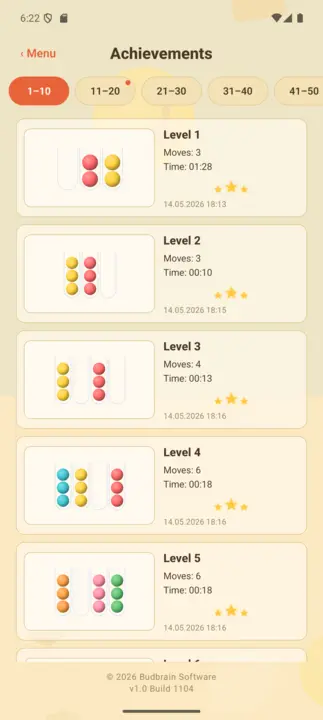
Xếp bi theo màu: chọn một ống, rồi chọn ống đích — viên bi trên cùng bay sang theo một đường cong. Một trăm lẻ năm câu đố trên năm bãi biển, và câu nào cũng giải được.
105 câu đốNăm bãi biểnCâu nào cũng giải đượcHoàn tác · Bắt đầu lạiBức tường thành tíchSDL2 · Cairo22 ngôn ngữ
DuoDom
v1.0.0 · MSIX · Windows 10/11
Trượt các quân domino lại với nhau: các chấm giống nhau hoặc tổng đúng sẽ làm cặp đó tan biến. Vô số màn chơi với thuốc nổ, lá joker và kim cương — và màn nào cũng có thể thắng.
Vô số màn chơi17 loại quânThuốc nổ · Joker · Kim cươngHoàn tác · Gợi ý · NướcCúp thưởng & kỷ lụcSDL2 · Cairo20 ngôn ngữ
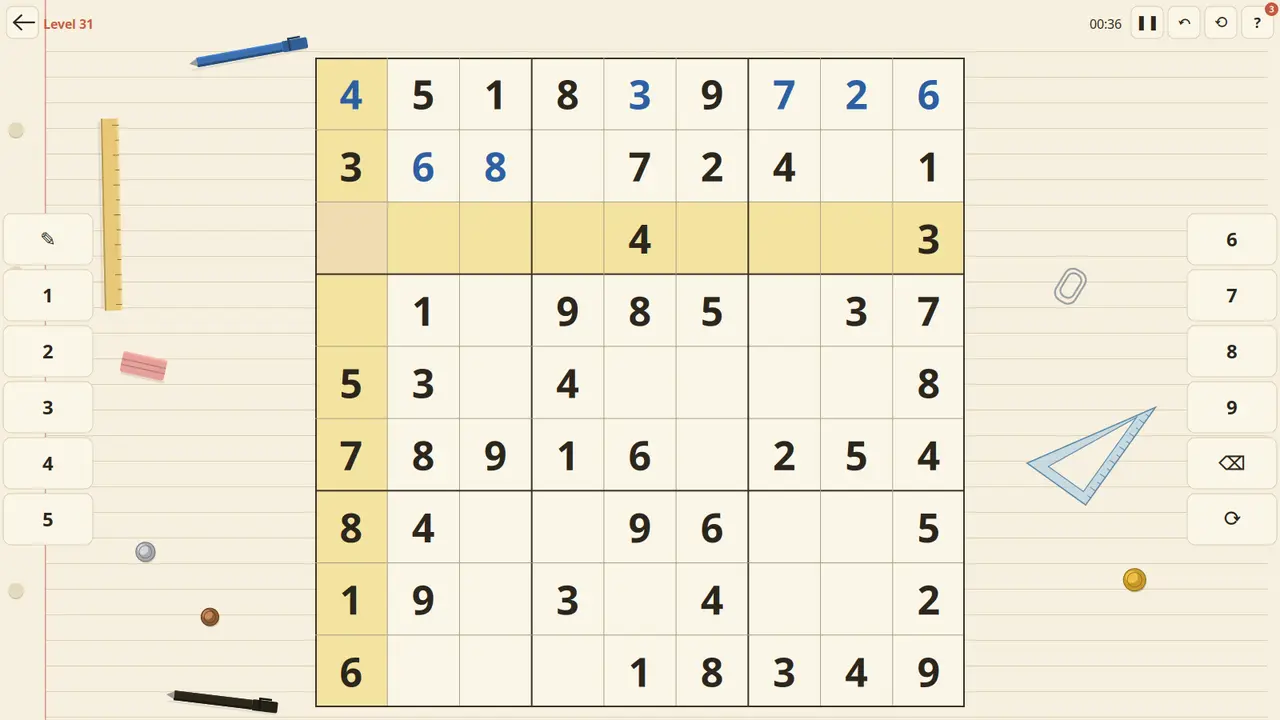
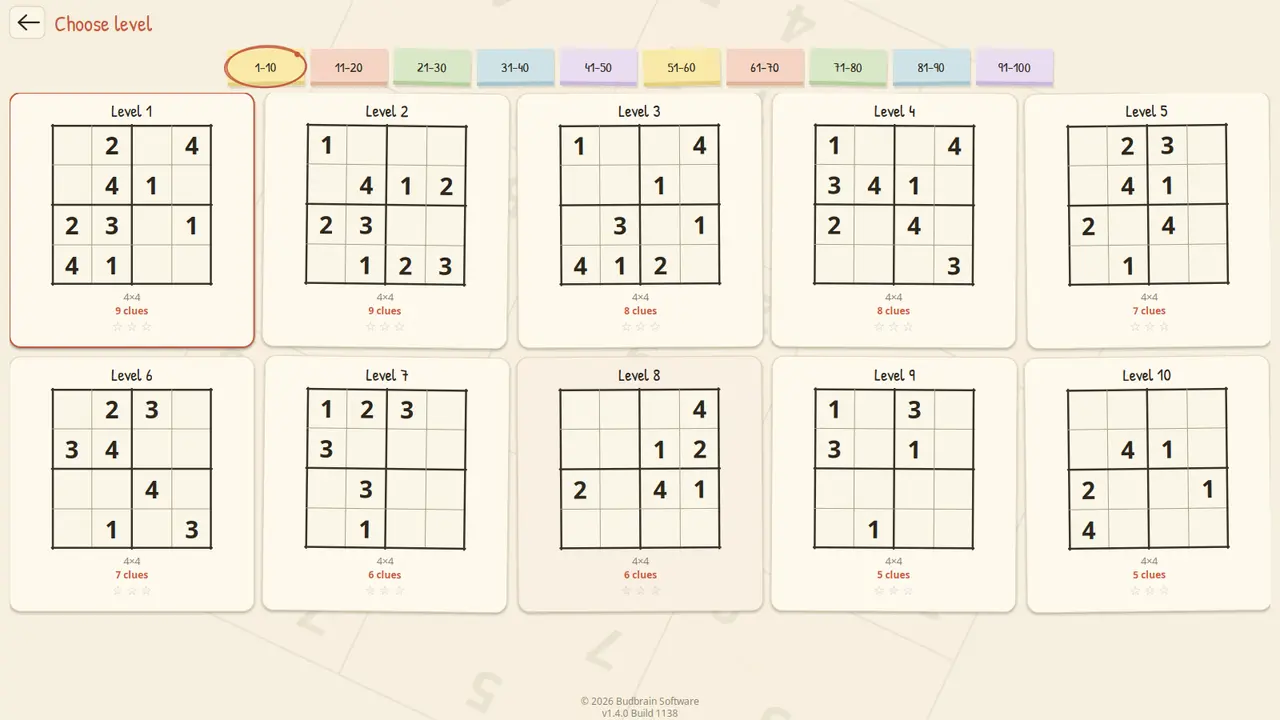
Budbrain’s Sudoku
v1.4.1 · MSIX · Windows 10/11
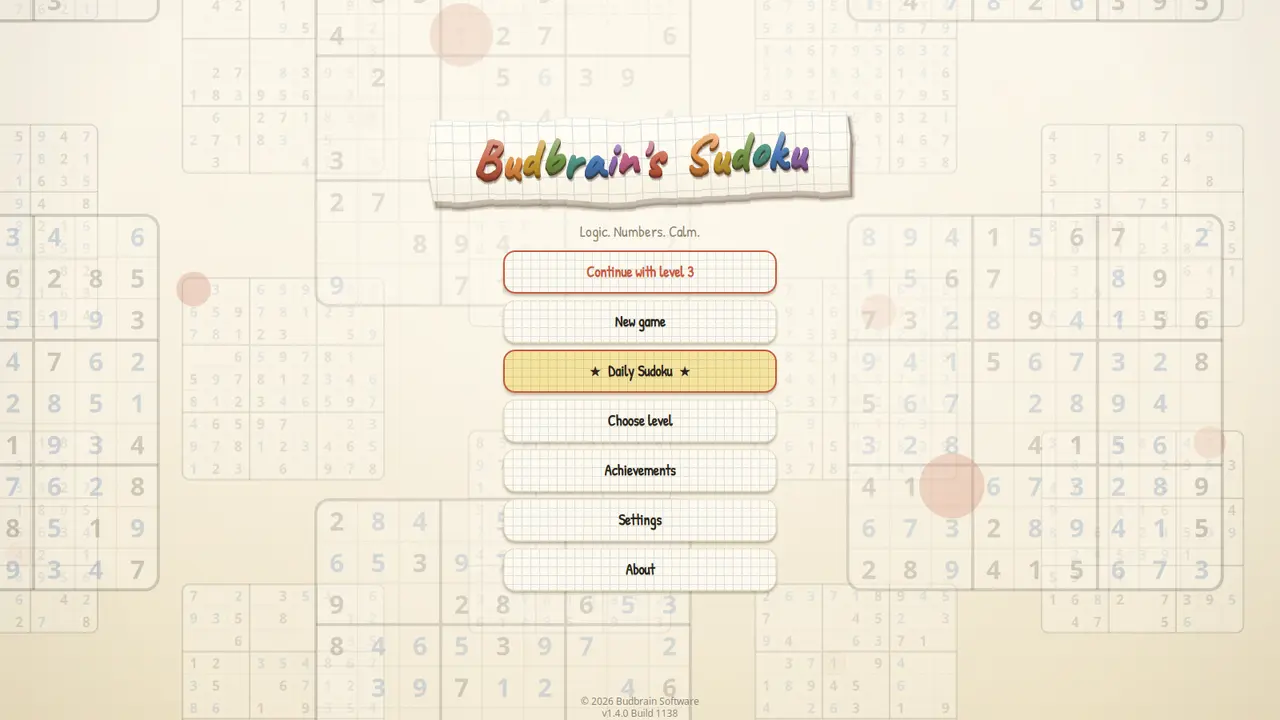
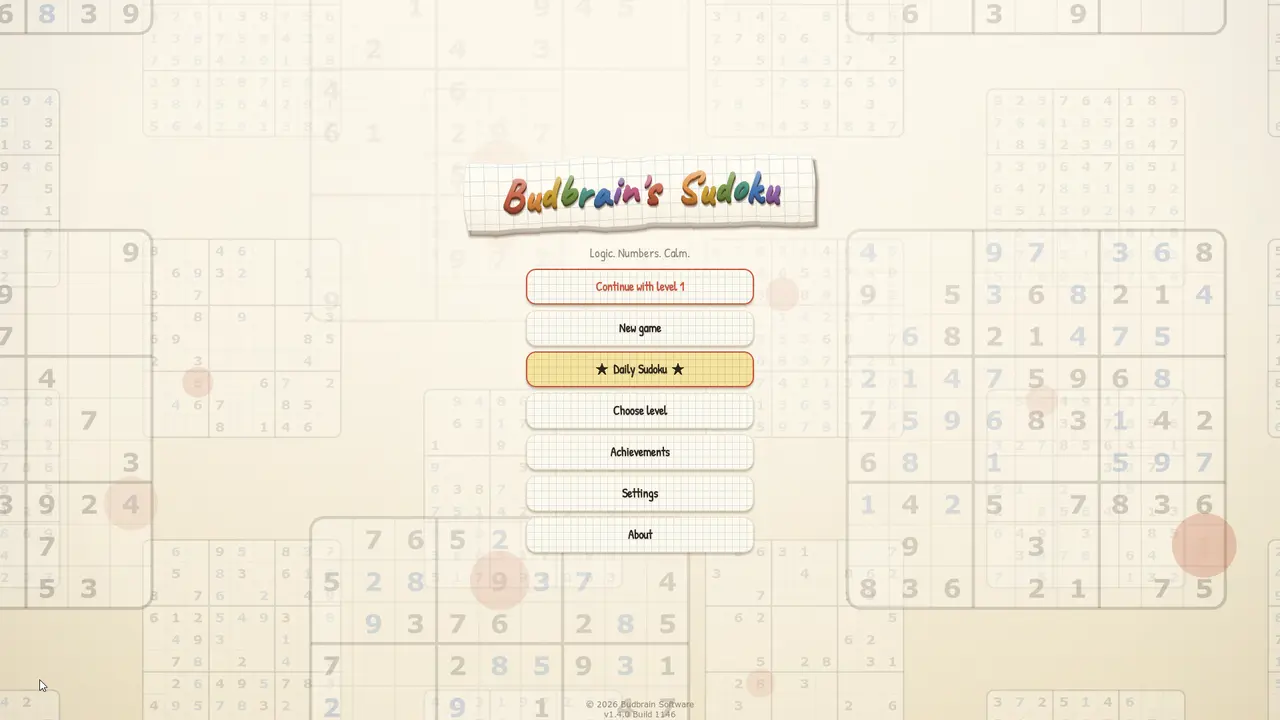
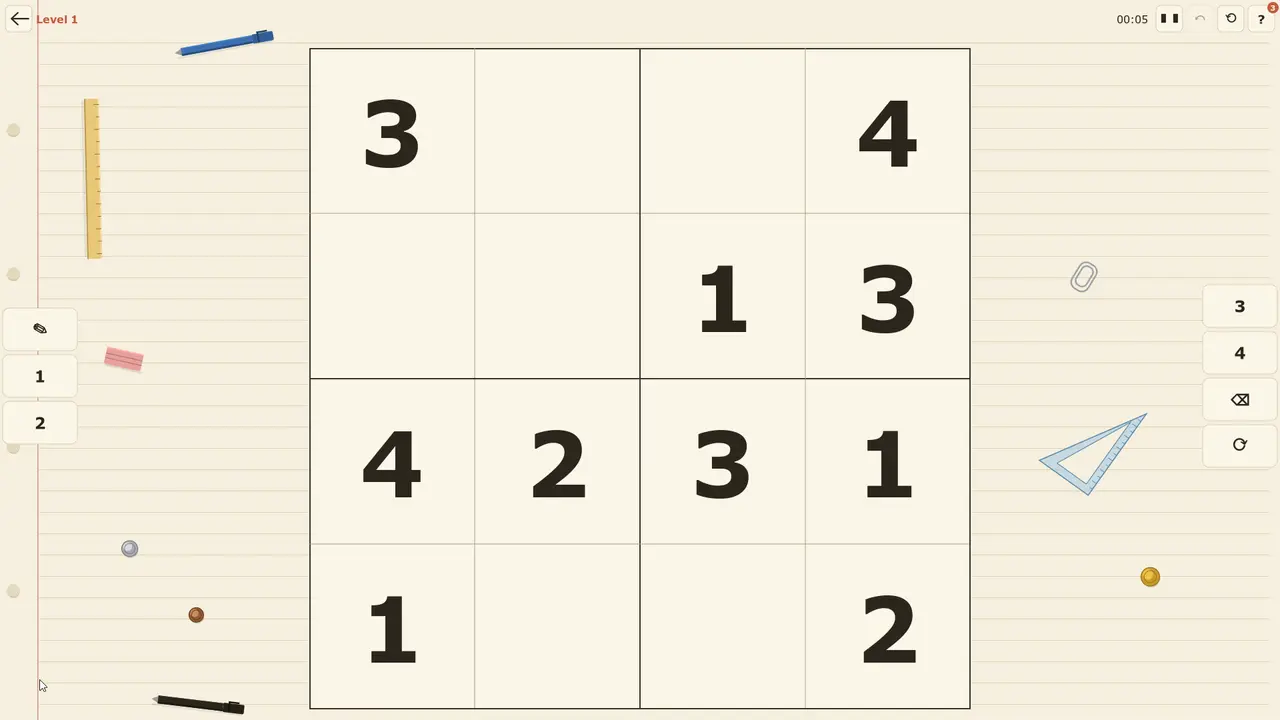
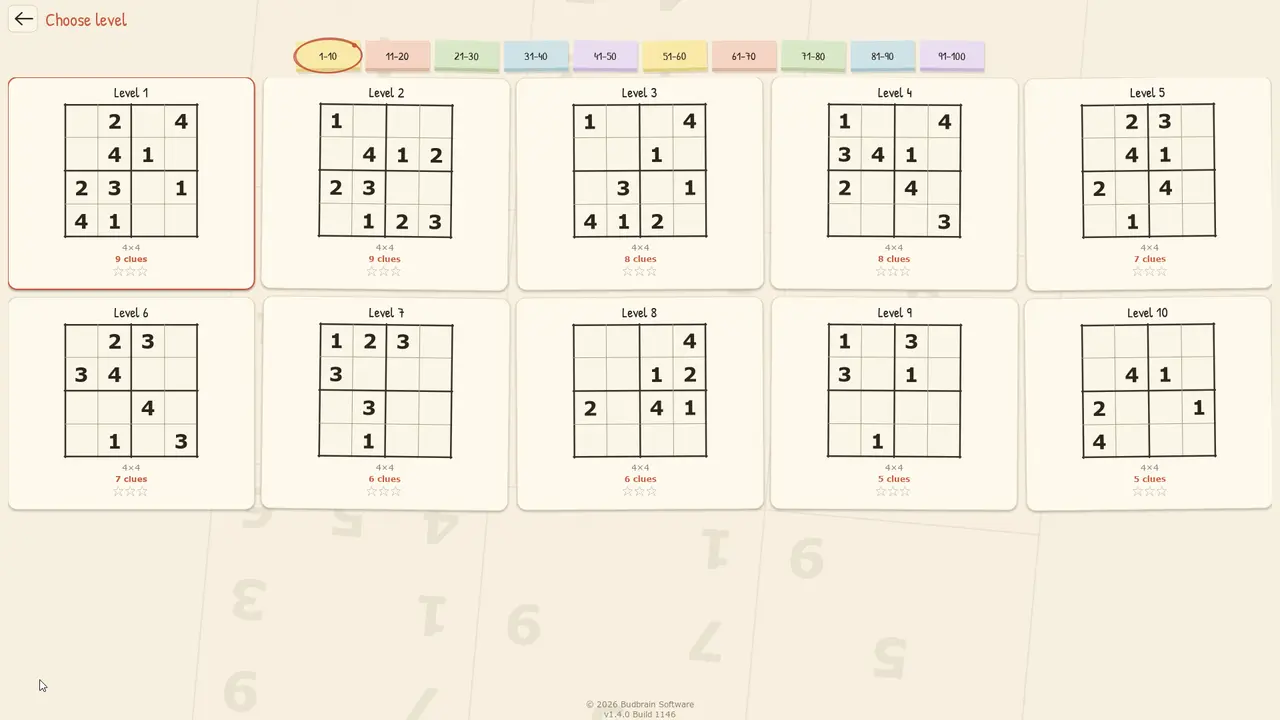
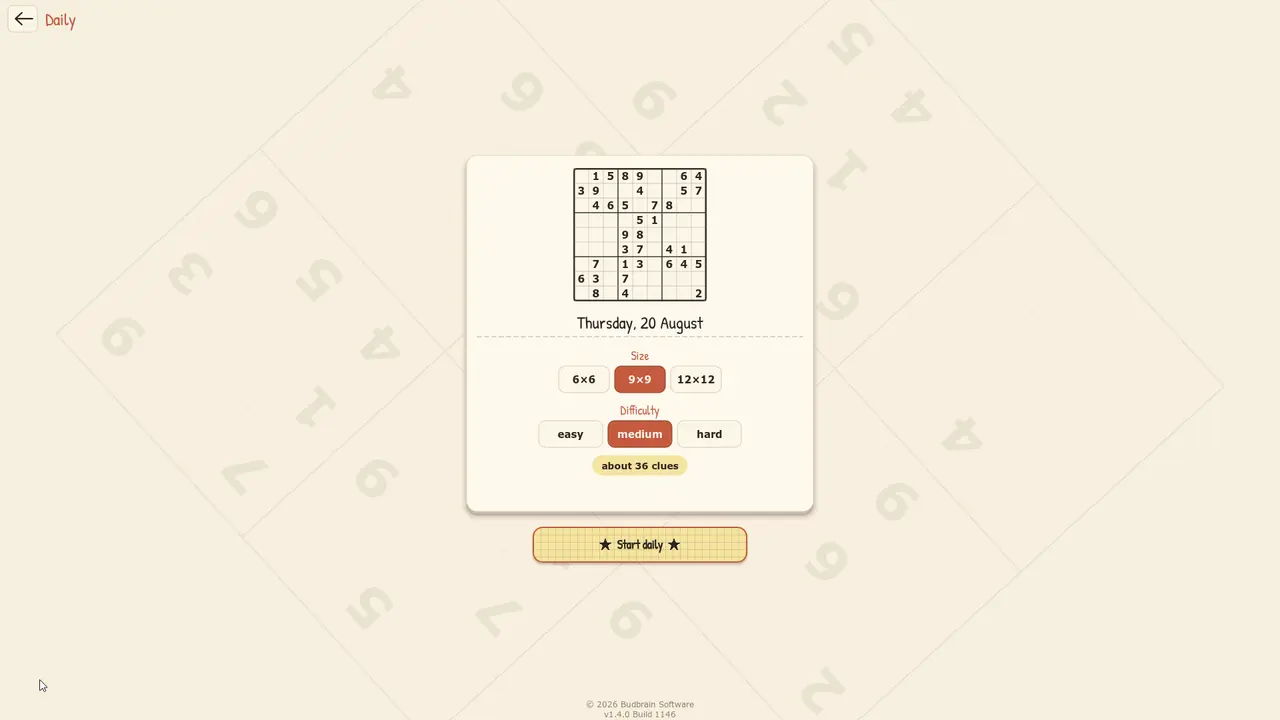
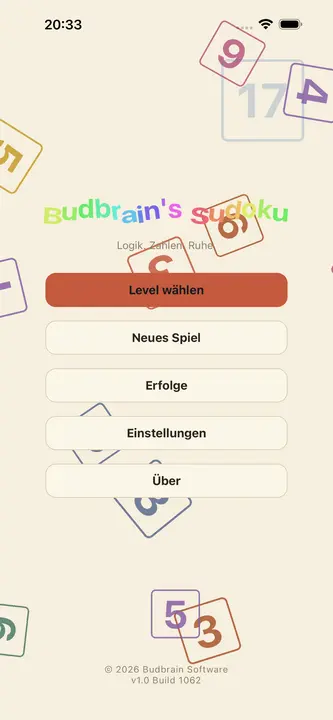
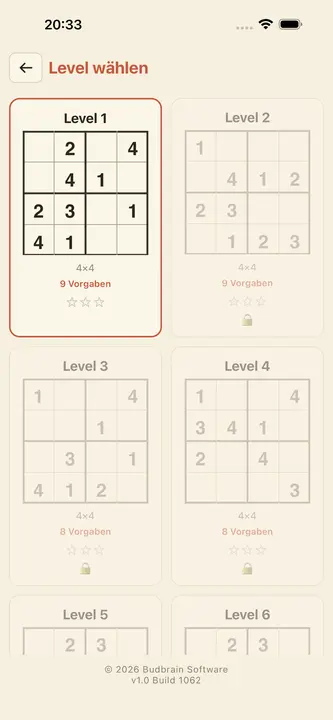
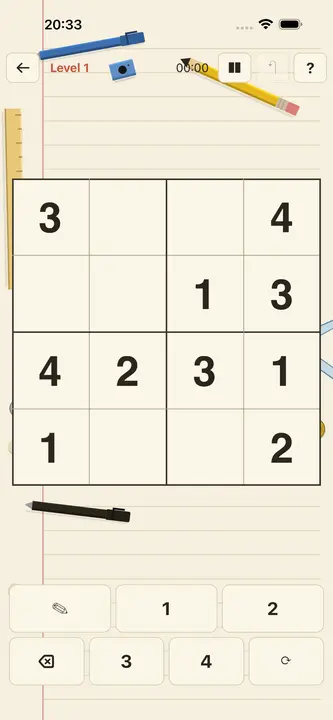
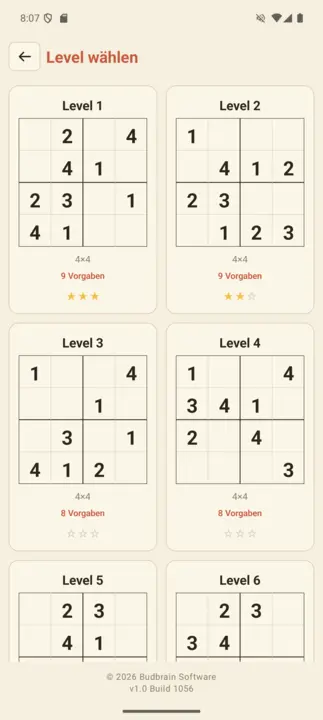
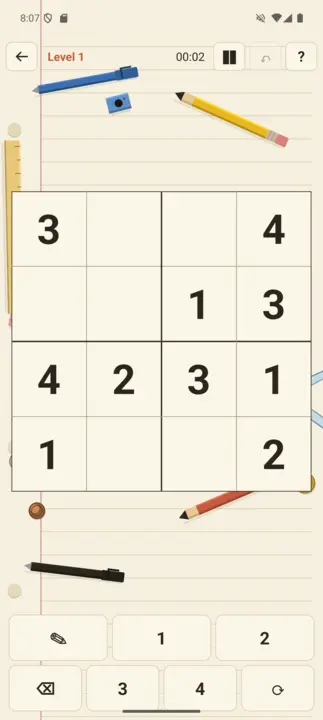
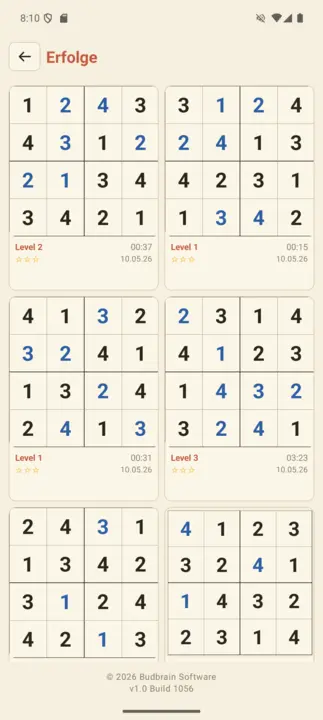
Sudoku từ 4×4 đến 25×25: một trăm màn chơi trên giấy sổ tay, một câu đố mỗi ngày và một bức tường lưu giữ mọi bảng bạn đã giải.
Một trình quản lý tệp có hai khung duyệt tệp cạnh nhau: bên trái là nơi tệp xuất phát, bên phải là nơi tệp sẽ đến, và ở giữa là các nút — sao chép, di chuyển, nén, tìm kiếm, xem hex, thư mục mới, xóa.
Hai thư mục cạnh nhauTiến độ trực tiếpỔ đĩa & USBTệp nén & xem byteDrag & DropSáng & tối44 ngôn ngữ
jsShowHardwareInfos
v1.0 · Win32/Direct2D · Windows 10/11
Hiển thị mọi chi tiết phần cứng mà PC của bạn tự báo cáo — bộ xử lý, bộ nhớ, đồ họa, ổ đĩa, cổng, mạng và cảm biến, mỗi thứ nằm trên một nhánh riêng. Kèm một thanh trực tiếp hiển thị tải và nhiệt độ, tìm kiếm trên mọi giá trị và một báo cáo có thể lưu thành tệp văn bản hoặc sao chép vào bộ nhớ tạm.
CPU / RAM / GPUỔ đĩa & USBCảm biến & nhiệt độDanh sách tiến trìnhTìm kiếm trên mọi giá trịLưu báo cáoSáng & tối44 ngôn ngữ
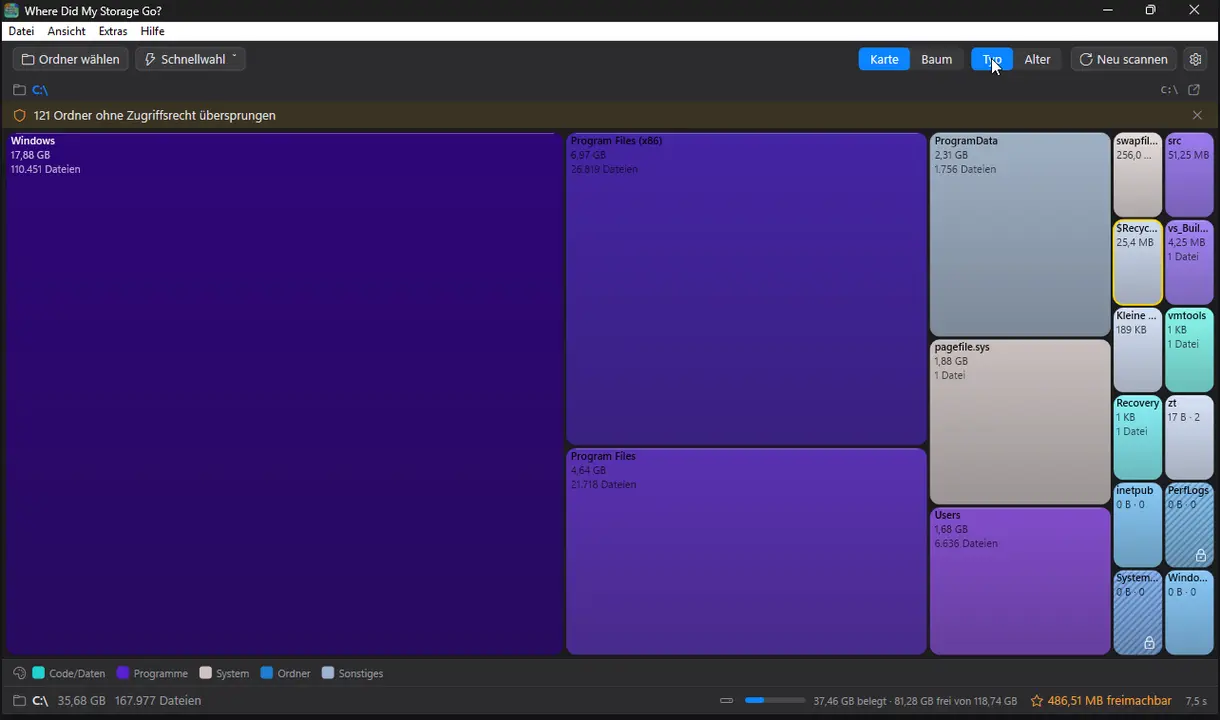
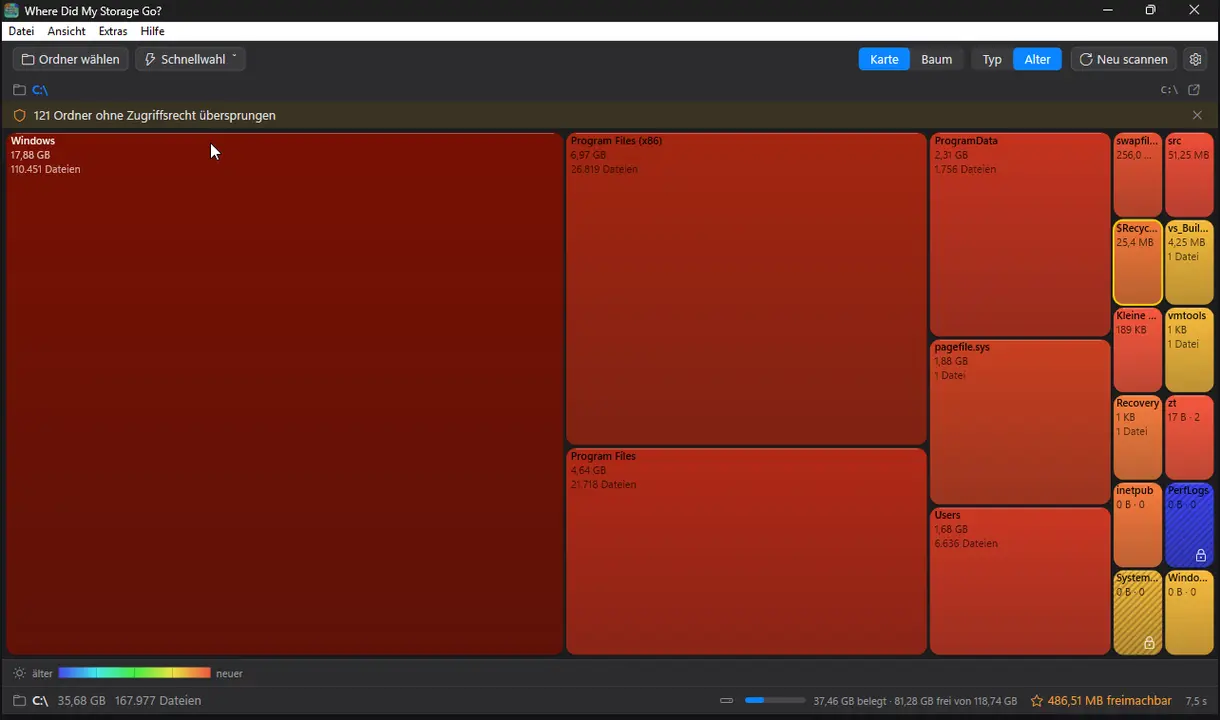
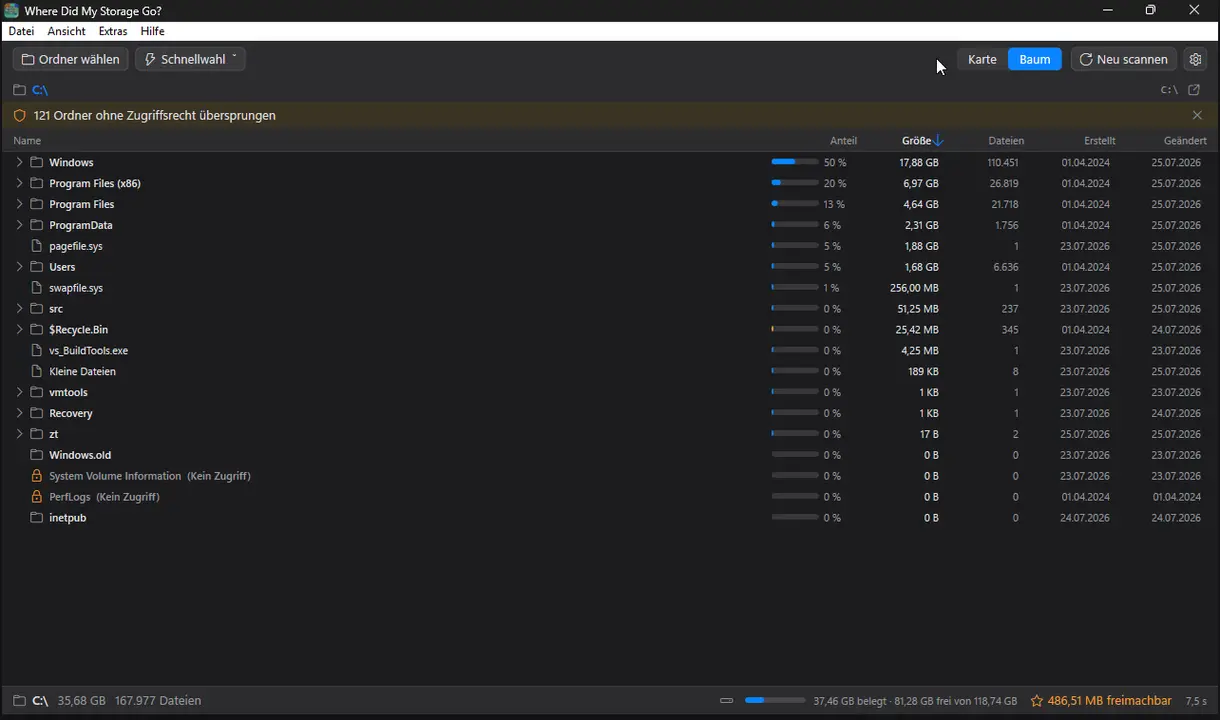
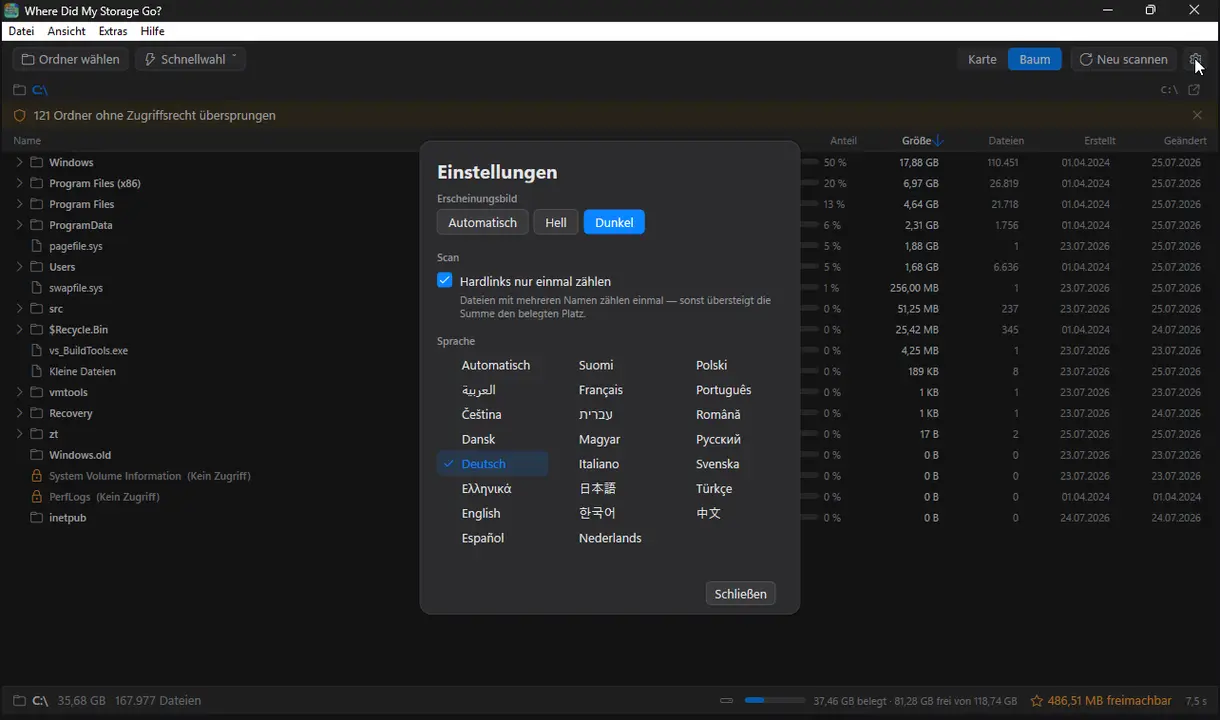
Where Did My Storage Go?
v1.0 · Win32/Direct2D · Windows 10/11
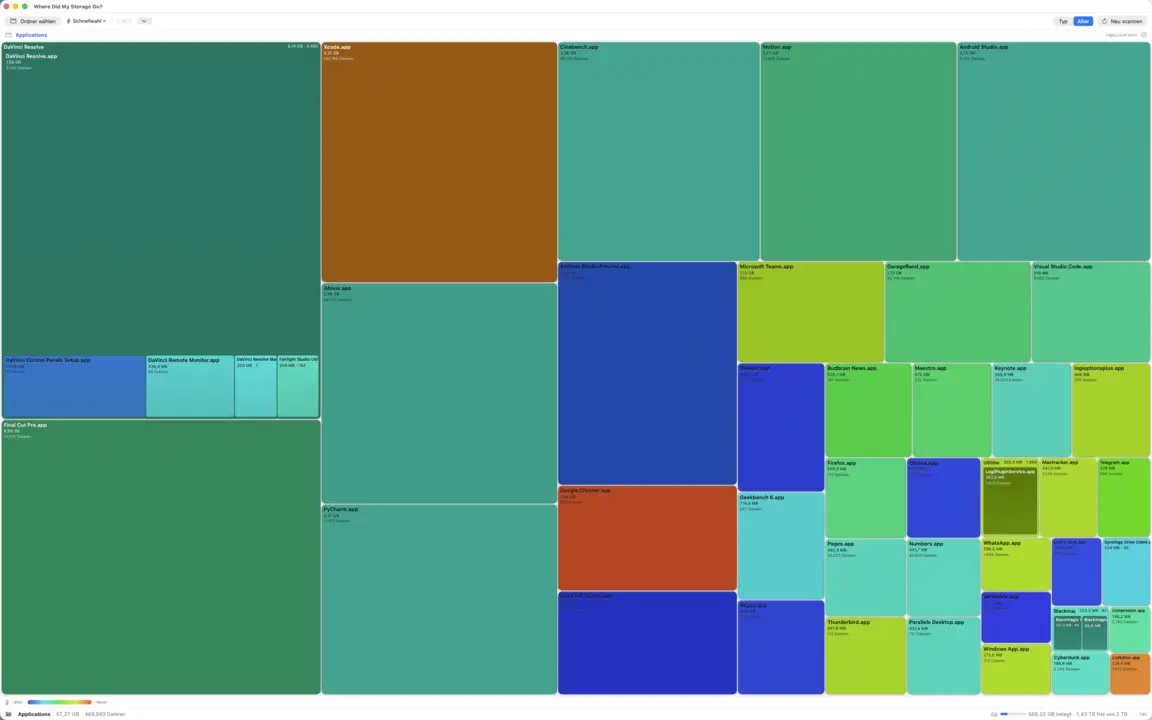
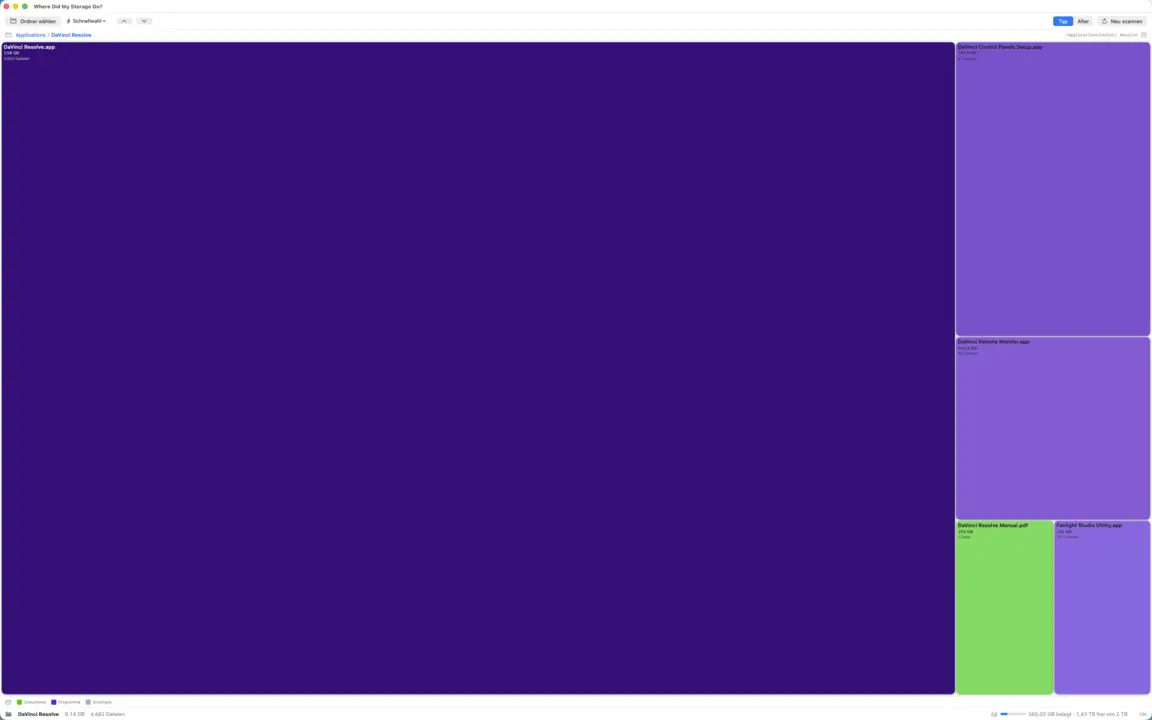
Nhìn thoáng qua là biết thứ gì đang chiếm đầy ổ đĩa — thư mục hiển thị dưới dạng bản đồ mã hóa màu, kích thước chính xác, chỉ xóa vào Thùng rác.
TreemapHeat-MapDrill-downChế độ xem dạng câyJunk-RadarChỉ chuyển vào Thùng rácMulti-Core-ScanSáng & tối22 ngôn ngữ
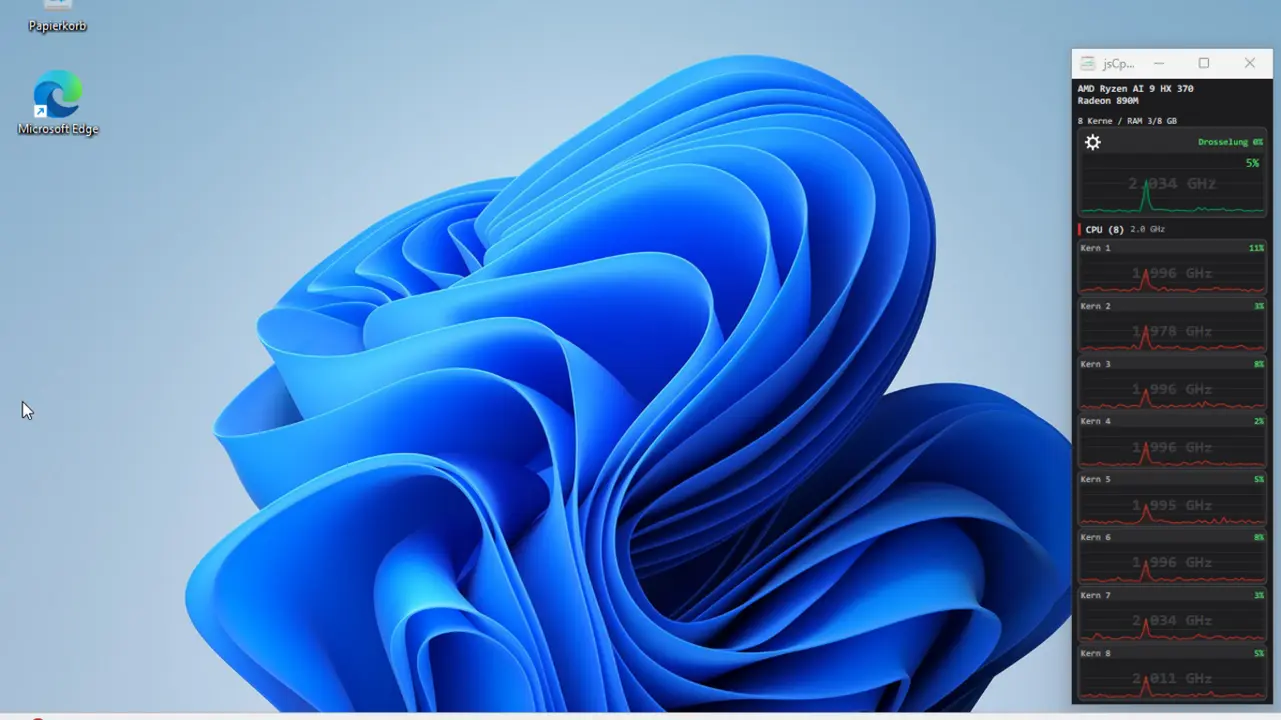
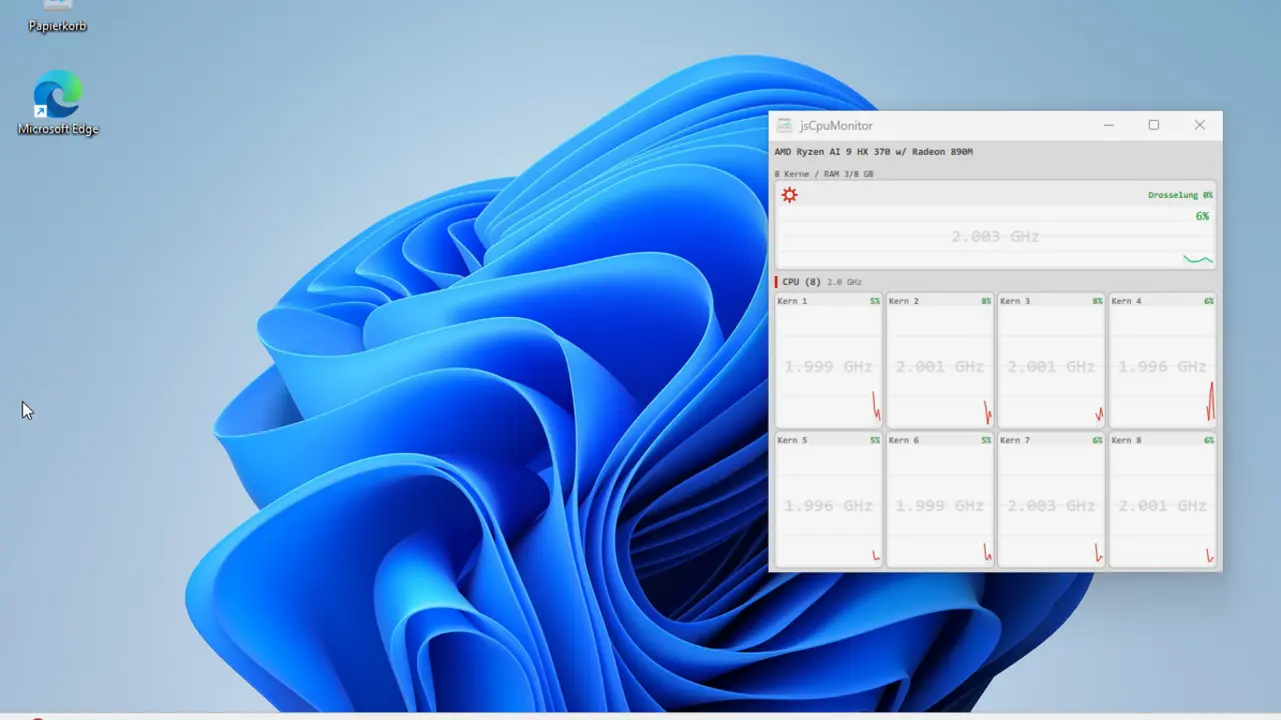
jsCPUMonitor
v1.0 · Win32/Direct2D · Windows 10/11
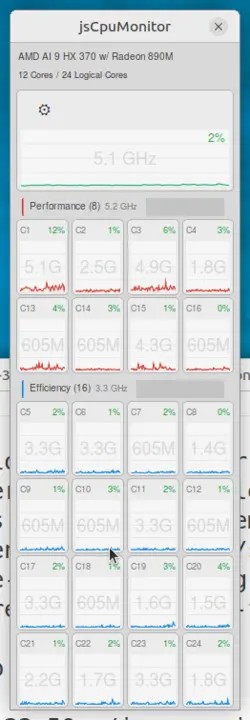
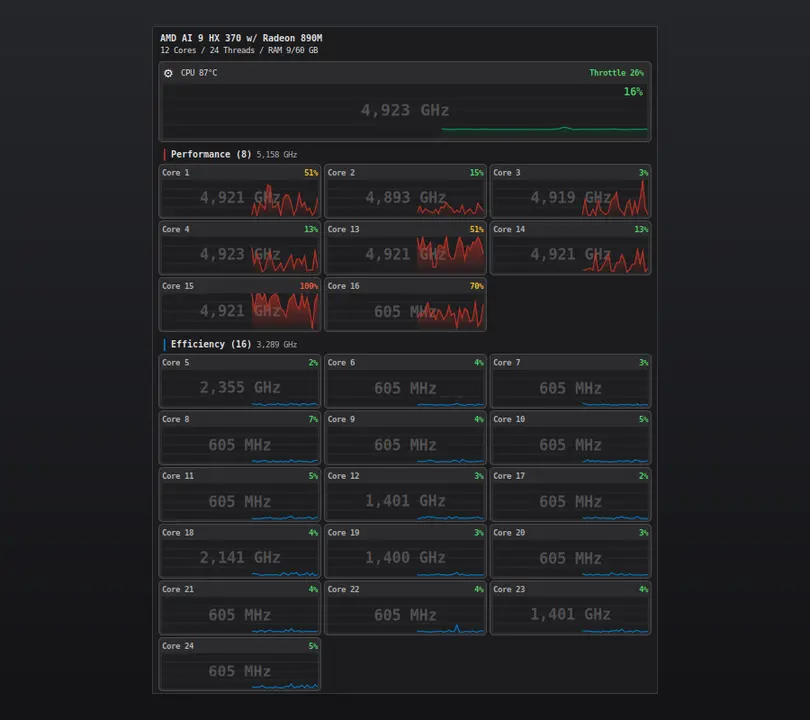
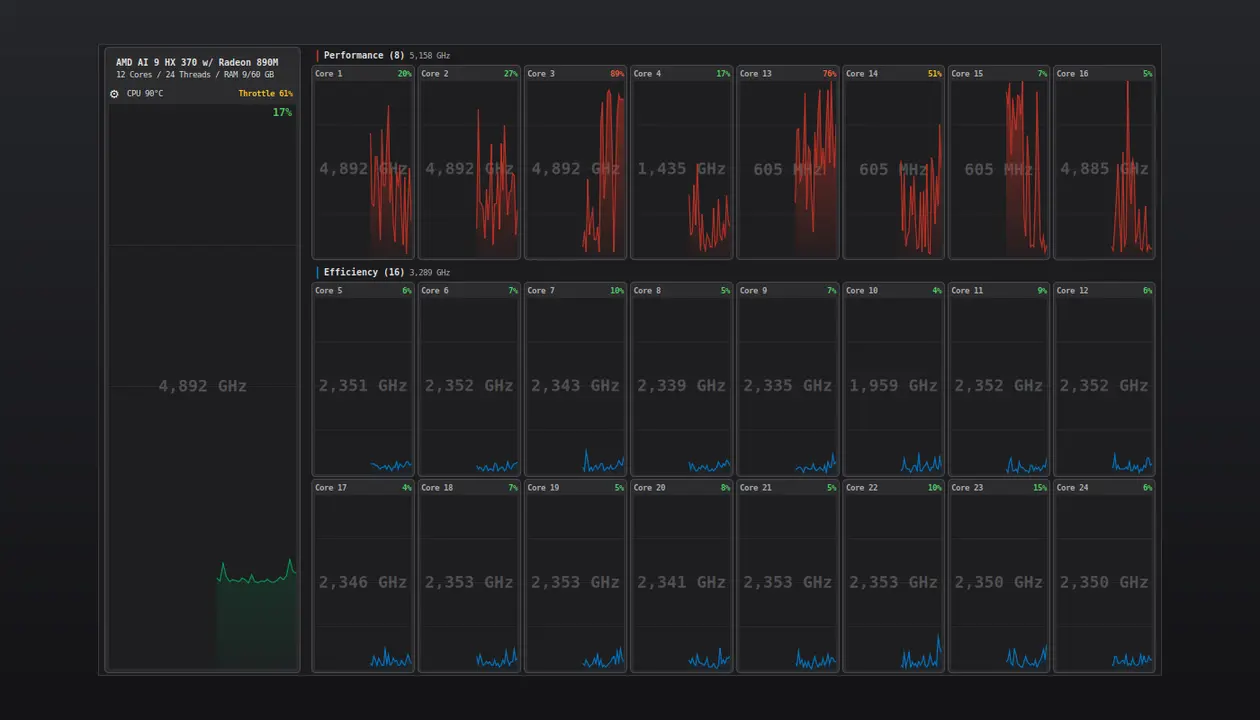
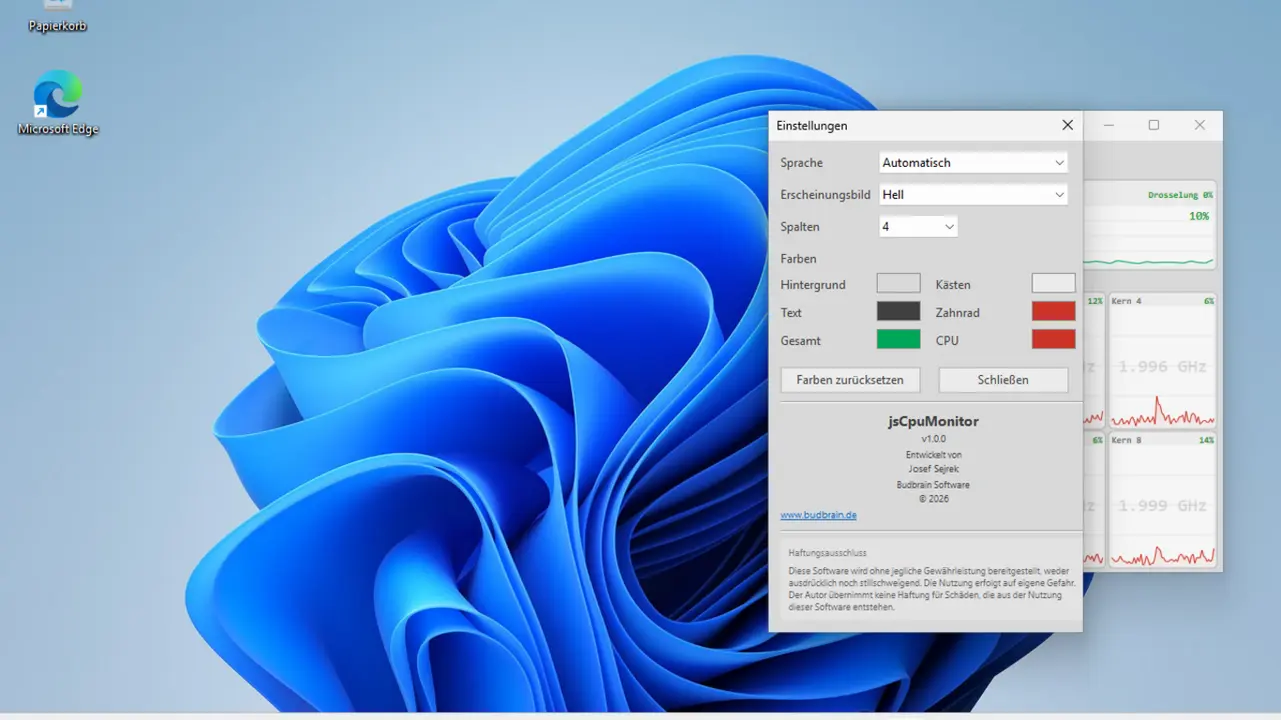
Trình giám sát CPU cho Windows: một dải cửa sổ mỏng với biểu đồ lịch sử trực tiếp cho từng nhân, tốc độ xung nhịp, nhóm nhân hiệu năng/tiết kiệm điện, bộ nhớ và nhiệt độ. Được xây dựng gốc bằng Win32 và Direct2D.
Per-Core ChartsTốc độ xung nhịpNhận diện nhân P/ENhiệt độRAMLuôn ở trên cùngSáng & tốiMàu tùy chỉnh22 ngôn ngữ
Trò chơi, công cụ âm thanh, công cụ thanh menu, công cụ dọn bộ nhớ đệm và phân tích dung lượng ổ đĩa cho macOS
Cài đặt: Các ứng dụng này chưa được Apple chứng nhận (không có notarization), nên macOS sẽ hiện cảnh báo ở lần chạy đầu tiên. Cách cài đặt vẫn được như sau:
Tải tệp ZIP về và giải nén
Mở Terminal (Applications → Utilities → Terminal)
Chuyển vào thư mục đã giải nén: cd ~/Downloads/AppName
Chạy tập lệnh cài đặt: bash install.sh
Tập lệnh sẽ sao chép ứng dụng vào /Applications, gỡ dấu cách ly và khởi chạy ứng dụng.
Không có install.sh? Nếu ZIP không có tập lệnh, hãy tự di chuyển tệp .app vào /Applications, sau đó trong Terminal chạy: xattr -cr /Applications/AppName.app rồi nhấp đúp để mở.
jsBudbrainLimiter
v1.0.0 · Mac App Store · macOS 14.2+
Bộ giới hạn cho mọi thứ máy tính của bạn phát — to hơn mà không bao giờ vượt ngưỡng, với hai màn hình phổ tần cho thấy nó đang làm gì.
Điều khiển riêng cho kênh trái và kênh phảiGain, ceiling, attack, release, knee, sidechain high-pass và mixTrue peak bắt được cả những đỉnh ngắn nhấtFader đầu ra kèm đồng hồ đo mức cho cả hai kênhHai màn hình phổ tần cho thấy phần được nâng lên và phần bị giới hạnLịch sử gain reduction và số đo đỉnhCác thiết lập dựng sẵn, cùng thiết lập của riêng bạnHoạt động cùng với jsBudbrainCompressor, jsBudbrainEqualizer và jsBudbrainsFxStudioNút tắt tiếng khi điện thoại reoChọn loa hoặc tai nghe của bạnCửa sổ nhỏ luôn nằm trên cùngThiết lập một lần – macOS sẽ hỏi xin quyền của bạnSáng & tốiApple Silicon44 ngôn ngữ
jsBudbrainCompressor
v1.0.1 · Mac App Store · macOS 14.2+
Độ ấm của đèn điện tử và bộ nén kiểu phòng thu cho mọi thứ máy tính của bạn phát — với những bóng đèn phát sáng và đồng hồ VU.
Tiền khuếch đại đèn mô phỏng với drive, bias và fatBass, mid, treble và presenceBộ nén với threshold, ratio, attack, release, knee, make-up và mixHai đồng hồ VU với chuyển động kim như thậtĐèn càng làm việc nhiều thì càng sáng hơnCác thiết lập dựng sẵn cho đèn và bộ nén, cùng thiết lập của riêng bạnBộ giới hạn bảo vệ tai và loaHoạt động cùng với jsBudbrainEqualizer và jsBudbrainsFxStudioNút tắt tiếng khi điện thoại reoChọn loa hoặc tai nghe của bạnCửa sổ nhỏ luôn nằm trên cùngThiết lập một lần – macOS sẽ hỏi xin quyền của bạnSáng & tốiApple Silicon44 ngôn ngữ
jsBudbrainsFxStudio
v1.0.1 · Mac App Store · macOS 14.2+
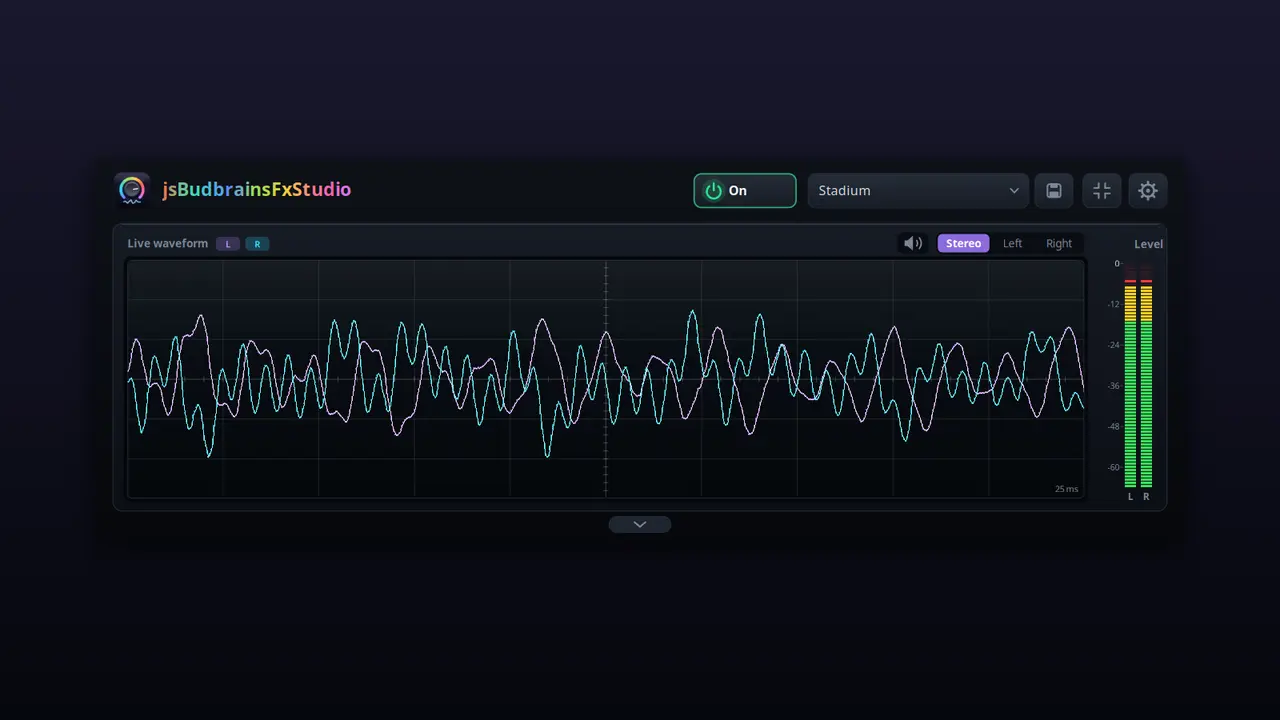
Hiệu ứng trực tiếp cho mọi thứ máy tính của bạn phát — hồi âm, vang vọng, cao độ và nhiều hơn nữa, được trộn vào âm thanh bằng một thanh fader.
Tám hiệu ứng: cao độ, bộ lọc, drive, chorus, flanger, phaser, vang vọng, hồi âmMỗi hiệu ứng có núm xoay và fader trộn riêngMột fader duy nhất trộn mọi hiệu ứng vào bản trộn chínhDạng sóng trực tiếp và đồng hồ đo mức âmCác thiết lập dựng sẵn như phòng hòa nhạc hoặc vang vọng hẻm núi, cùng thiết lập của riêng bạn"Tắt tất cả" chỉ bằng một cú nhấp — và bật lại bằng cú nhấp tiếp theoBộ giới hạn bảo vệ tai và loaHoạt động cùng với jsBudbrainEqualizerNút tắt tiếng khi điện thoại reoChọn loa hoặc tai nghe của bạnCửa sổ nhỏ luôn nằm trên cùngThiết lập một lần – macOS sẽ hỏi xin quyền của bạnSáng & tốiApple Silicon44 ngôn ngữ
jsBudbrainEqualizer
v1.0.2 · Mac App Store · macOS 14.2+
Bộ cân bằng âm thanh cho mọi thứ máy tính của bạn phát — kèm phổ tần trực tiếp.
Mười thanh trượt, từ bass trầm sâu đến treble sáng rõHiển thị trực tiếp những gì đang phát — trái, phải hoặc cả haiCác thiết lập âm thanh dựng sẵn và của riêng bạn, lưu dưới một cái tênNút tắt tiếng khi điện thoại reoChọn loa hoặc tai nghe của bạnThu gọn các thanh trượt, chỉ giữ lại phần hiển thịCửa sổ nhỏ luôn nằm trên cùngKhởi động khi bạn đăng nhập, nếu bạn muốnThiết lập một lần – macOS sẽ hỏi xin quyền của bạnSáng & tốiApple Silicon44 ngôn ngữ
Budbrain Cave Rescue
v1.0.1 · Mac App Store · macOS 12+
Bay vào những hang động sâu trên Mặt Trăng và đưa các phi hành gia mắc kẹt trở về nhà an toàn.
100 màn chơi trên mười thế giớiTrọng lực thựcBốn nút, không gì hơnNâng cấp tàu của bạn bằng kinh nghiệmBốn mức độ khóThư viện nhiệm vụ kèm bản đồ chuyến bayBàn phím, chuột hoặc tay cầmApple Silicon44 ngôn ngữ
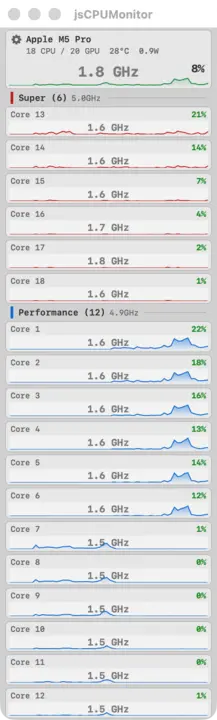
jsCPUMonitor
v1.4 · Swift/SwiftUI · macOS
Giám sát CPU theo thời gian thực cho macOS. Cửa sổ nổi với biểu đồ từng nhân, nhiệt độ, tần số và mức tiêu thụ điện cho Apple Silicon.
Per-Core ChartsSuper/Performance/EfficiencyTemperatur Chỉ có ZIPCPU-Frequenz Chỉ có ZIPPowerFloating WindowApple SiliconLaunch at Login
Ứng dụng từ cửa hàng không thể đọc các giá trị được đánh dấu "Chỉ có ZIP": nó chạy trong sandbox của Apple. Bản tải trực tiếp thì làm được. Đổi lại, bản này chưa được notarize — hãy làm theo hướng dẫn ở trên ở lần chạy đầu tiên.
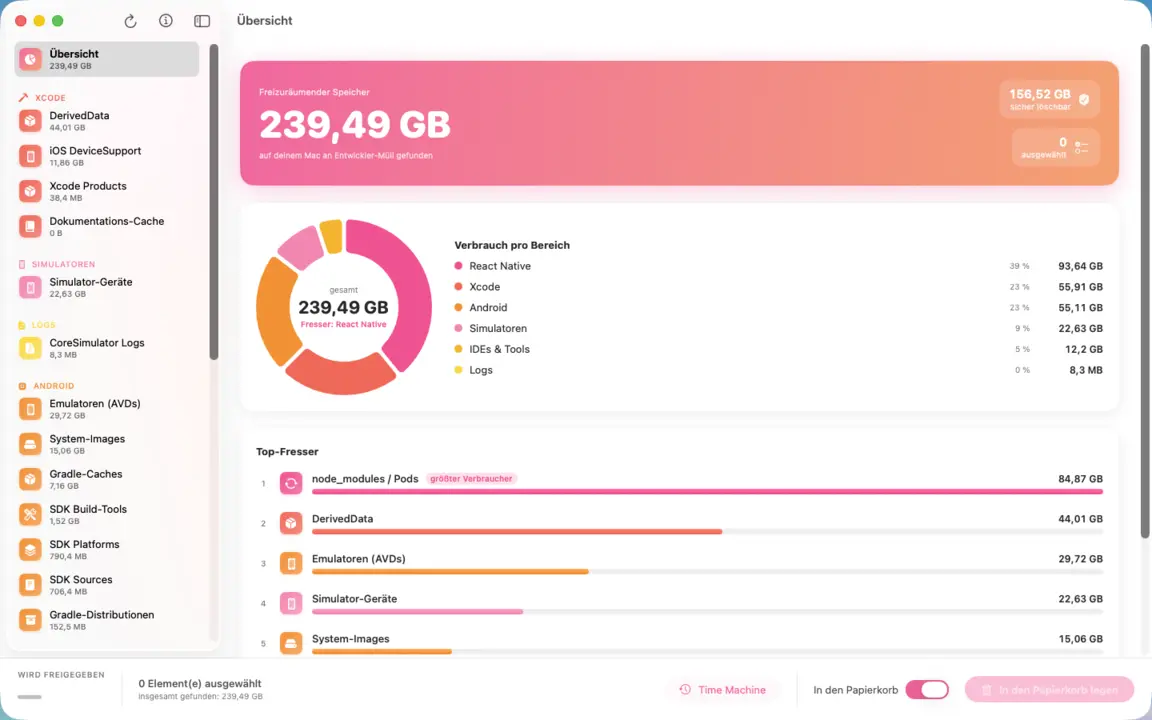
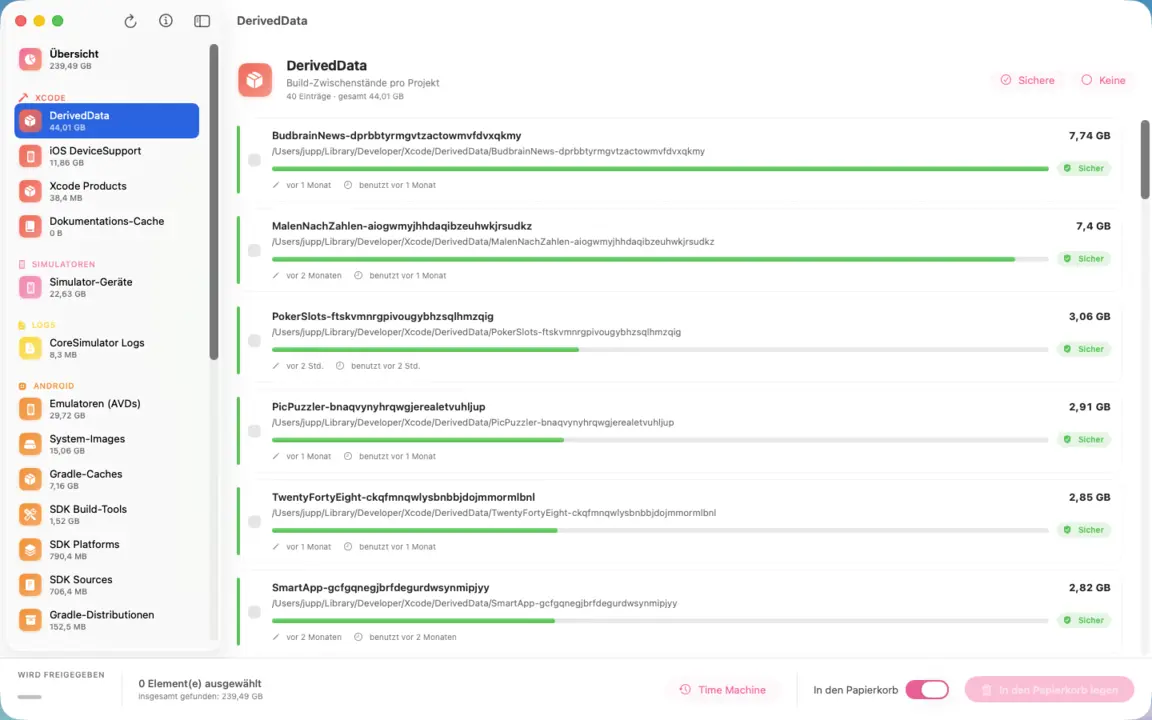
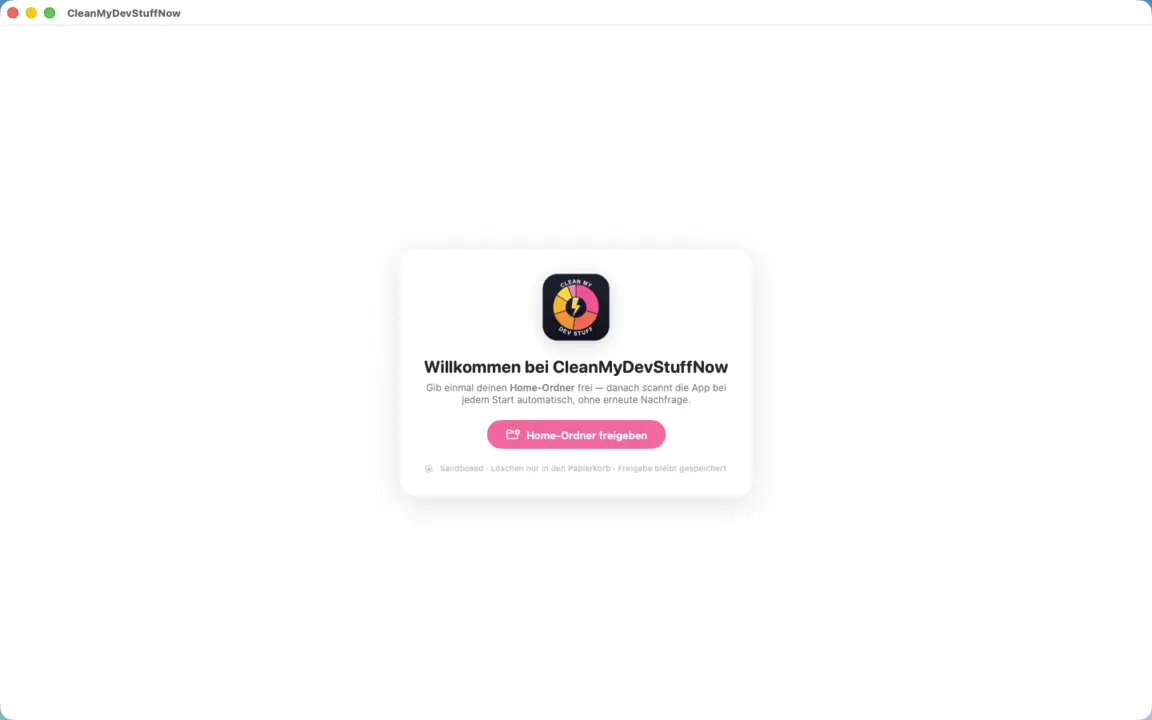
Dọn sạch những thứ lộn xộn của nhà phát triển khỏi Mac của bạn: bản lưu trữ Xcode, DerivedData và trình giả lập, Android SDK, thư mục npm và Pods, bộ nhớ đệm của trình soạn thảo. Biểu đồ tròn cho thấy ngay khu vực nào chiếm nhiều nhất; mỗi mục ghi rõ đường dẫn, kích thước và lần dùng gần nhất. Chỉ những gì bạn đánh dấu mới bị xóa — và mọi thứ đều chuyển vào Thùng rác.
Xcode & DerivedDataSimulatorenAndroid SDK & AVDsnpm, Yarn & PodsIDE-CachesĐánh giá rủi roDự án của riêng bạnChỉ chuyển vào Thùng rácApple Silicon
Where Did My Storage Go?
v1.0 · Swift/SwiftUI · macOS 14+
Cho bạn thấy dung lượng ổ đĩa đã đi đâu qua một treemap nhiều màu: nhấp vào để xem chi tiết, tìm những mục chiếm nhiều chỗ nhất và chuyển thẳng những thứ không cần thiết vào Thùng rác. Quét đa nhân cực nhanh, bản đồ nhiệt và radar tệp rác. Hoàn toàn ngoại tuyến.
TreemapHeat-MapDrill-downJunk-RadarMulti-Core-ScanReveal in FinderChỉ chuyển vào Thùng rácApp Sandbox
jsSysInfo
v1.2 · Swift/SwiftUI · macOS 14+
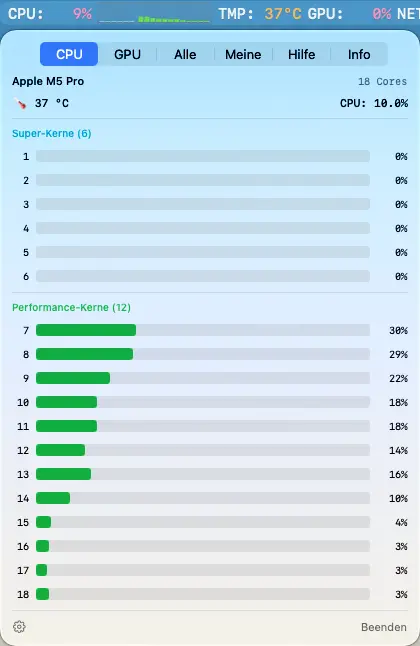
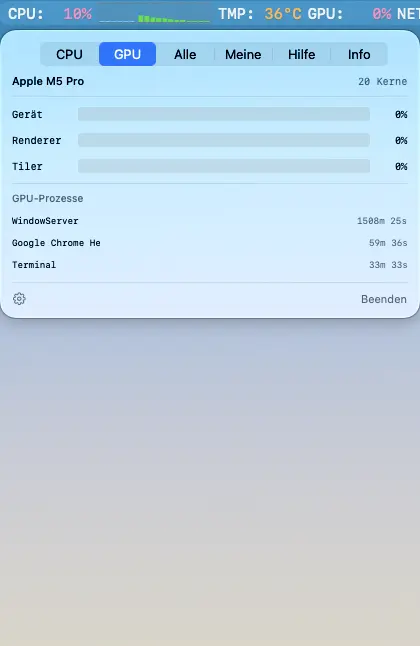
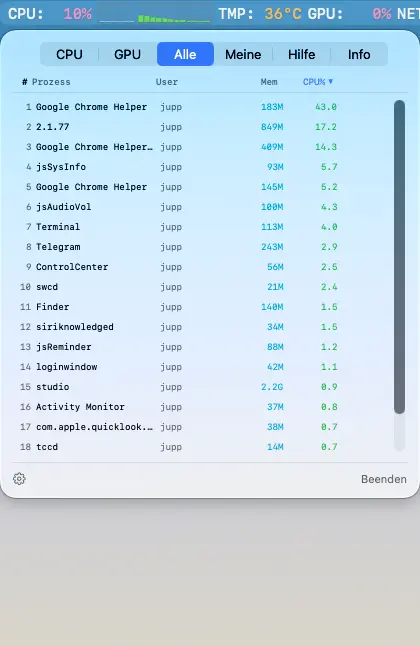
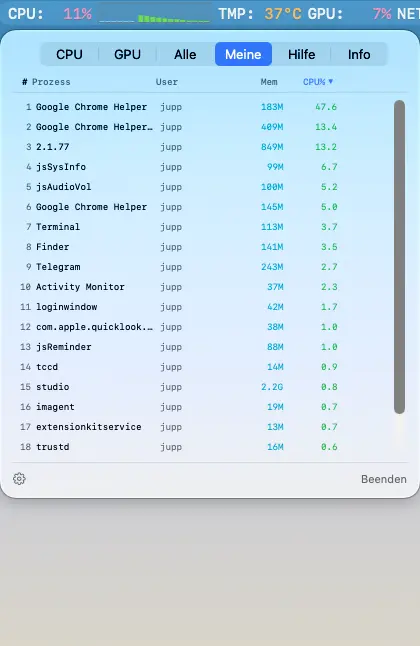
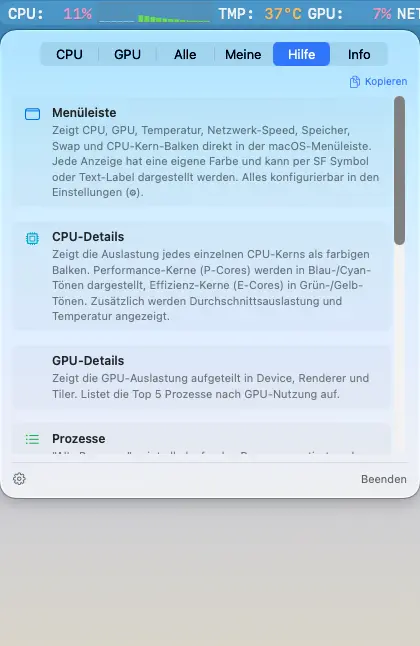
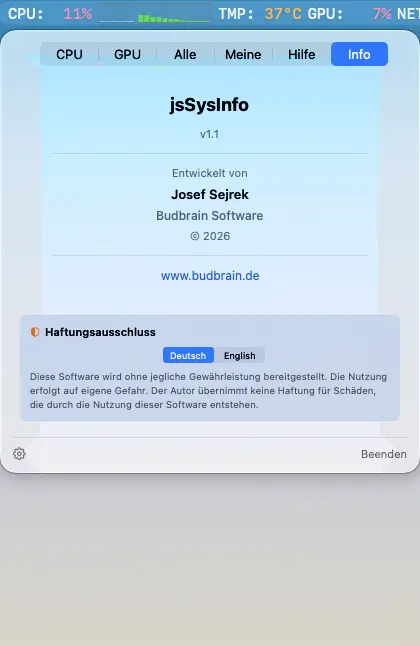
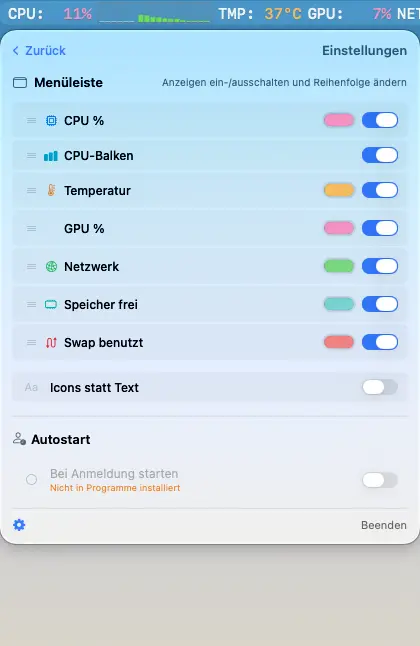
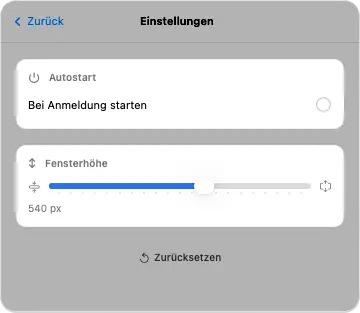
Trình giám sát hệ thống cho thanh menu macOS. Mức dùng CPU, GPU, nhiệt độ, tốc độ mạng và thanh CPU từng nhân hiển thị ngay trên thanh menu. Cũng có bản cho Linux (xem phía trên).
CPU %CPU-BalkenGPU %TemperaturNetzwerkRAM & SwapProzesslisteApple SiliconUniversal BinaryDE / EN
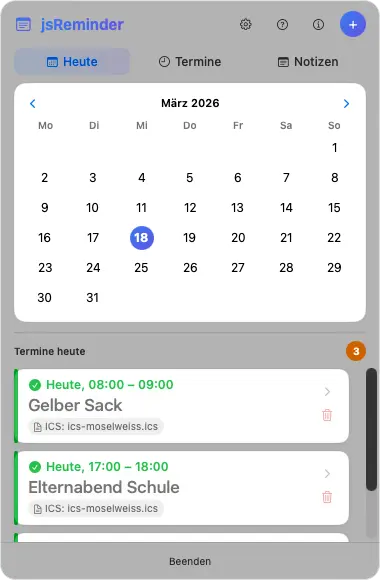
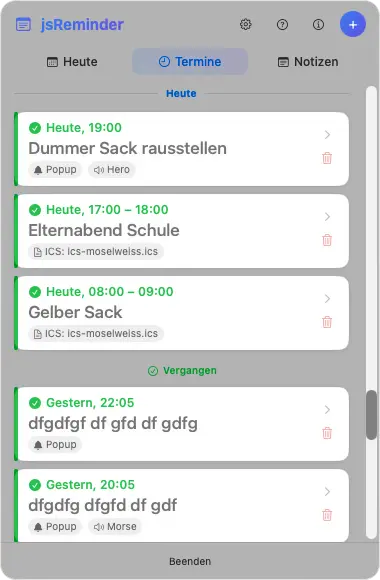
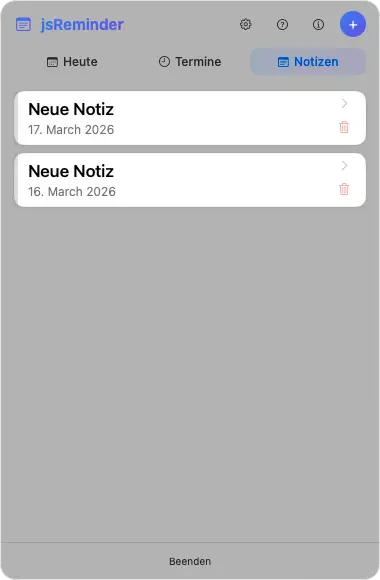
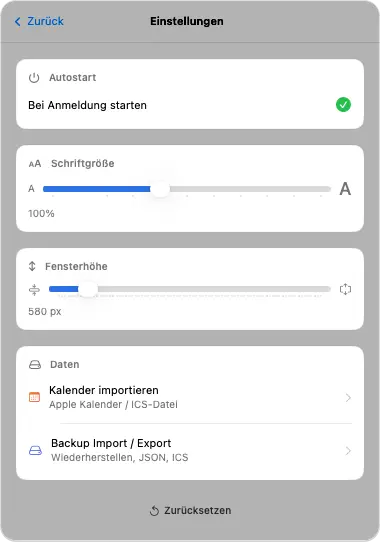
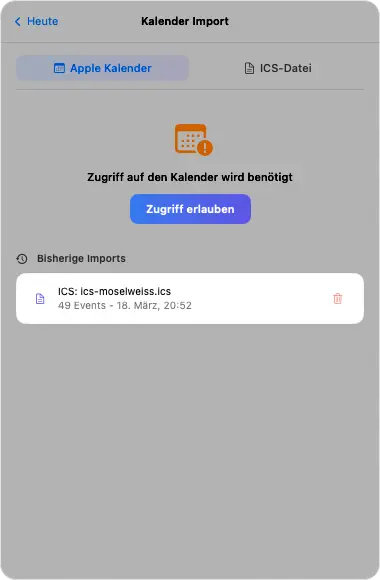
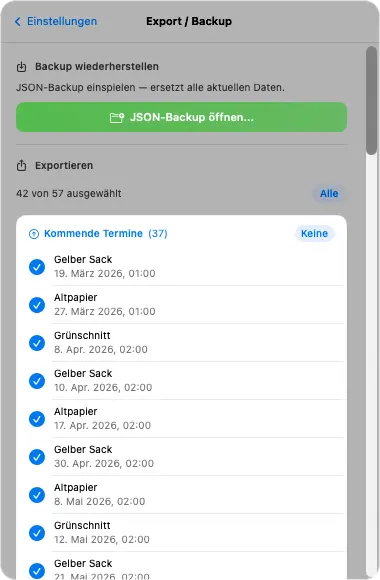
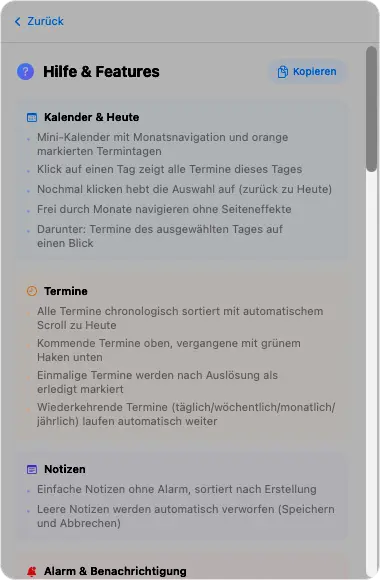
Ứng dụng ghi chú và nhắc việc trên thanh menu. Lịch với chế độ xem theo ngày, cuộc hẹn và ghi chú, sự kiện lặp lại, nhập lịch (ICS), sao lưu/xuất dữ liệu.
LịchCuộc hẹnGhi chúAlarm / SoundLặp lạiICS ImportBackup/ExportAutostartDE / EN
jsMenueGroups
Swift/SwiftUI · macOS 14+
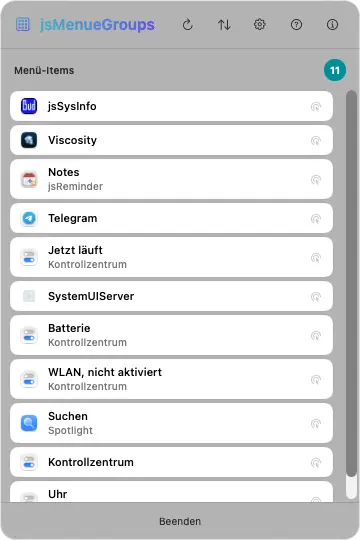
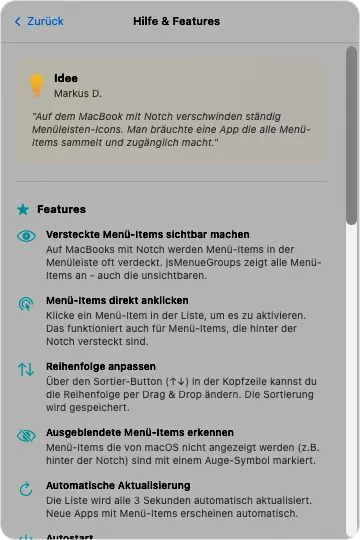
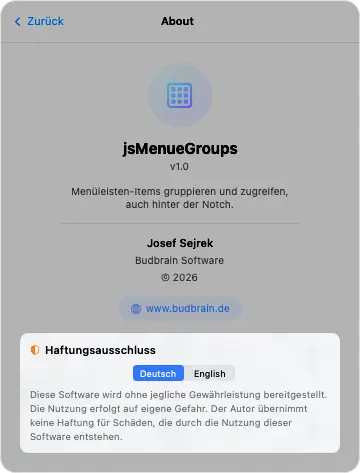
Trình sắp xếp thanh menu. Gom nhóm và hiển thị các mục trên thanh menu bị che sau phần notch của MacBook. Nhấp là truy cập được ngay.
Menu Bar ItemsNotch-WorkaroundChuyển tiếp cú nhấpNhận diện biểu tượng
Trò chơi và ứng dụng iOS miễn phí cho iPhone và iPad
Budbrain Cave Rescue
v1.0.2 · iPhone & iPad · iOS 16+
Bay vào những hang động sâu trên Mặt Trăng và đưa các phi hành gia mắc kẹt trở về nhà an toàn.
100 màn chơi trên mười thế giớiTrọng lực thựcBốn nút, không gì hơnNâng cấp tàu của bạn bằng kinh nghiệmBốn mức độ khóThư viện nhiệm vụ kèm bản đồ chuyến bay44 ngôn ngữ
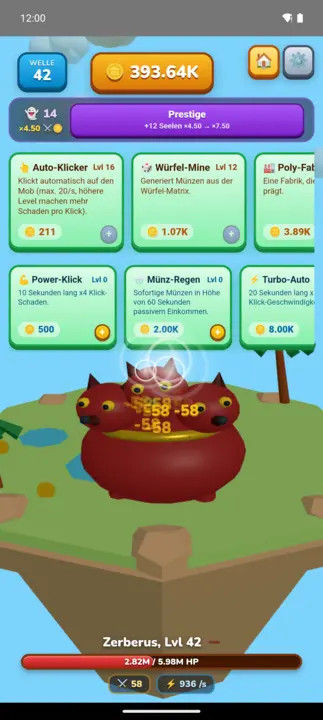
Budbrain’s Klickeridu
Capacitor · iOS 13+
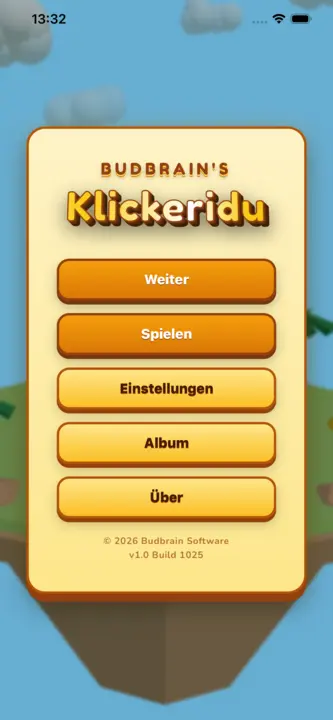
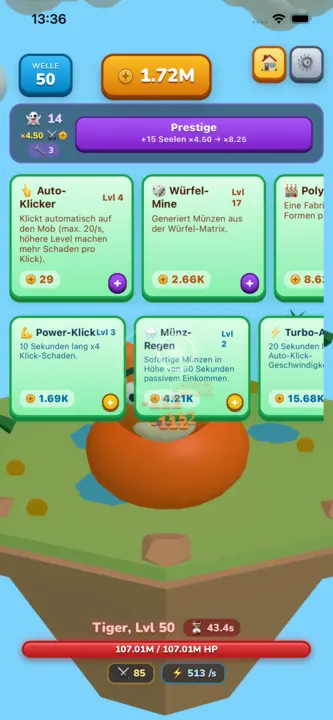
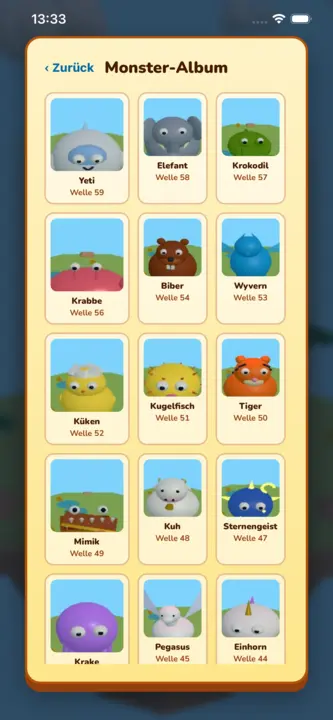
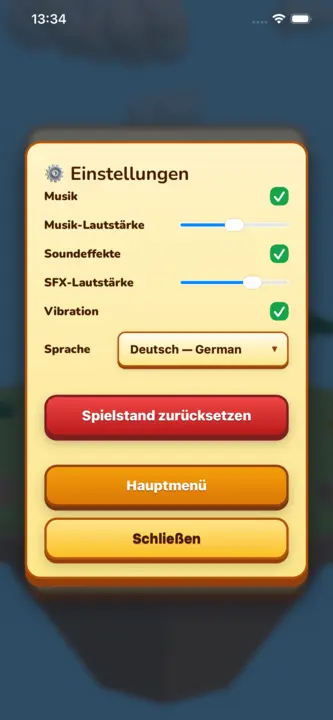
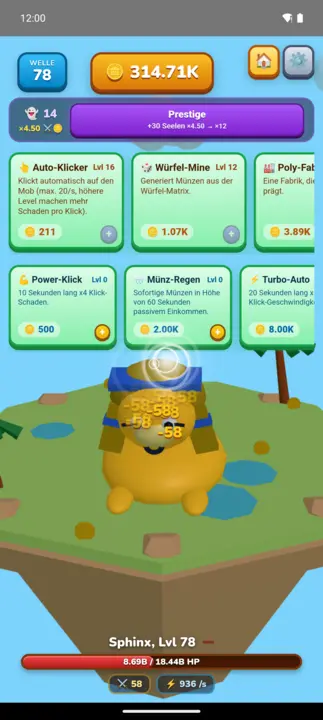
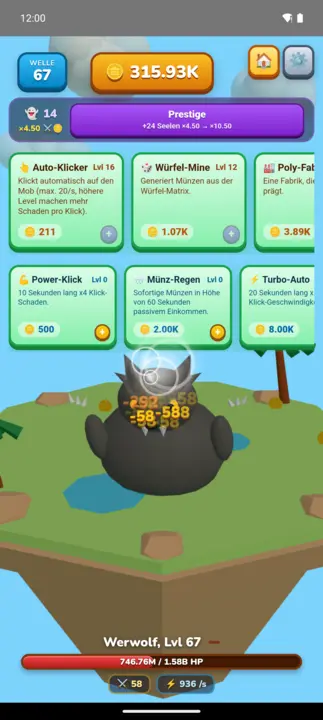
Game nhấp chuột 3D đáng yêu trên một hòn đảo lơ lửng: chạm vào nhân vật, kiếm xu, mua nâng cấp và lần lượt đánh bại 100 quái vật làm thủ công qua từng đợt. Cứ mỗi đợt thứ mười lại có một trùm với đồng hồ đếm ngược; prestige sẽ đặt lại mọi thứ và giúp mỗi lượt chơi mạnh hơn vĩnh viễn.
Idle-Clicker100 quái vật 3D10 nâng cấp · 3 kỹ năngPrestige & linh hồnAlbum quái vật22 ngôn ngữHoàn toàn ngoại tuyến
Budbrain’s Media Editor
React Native · iOS 15+
Budbrain Media Editor giúp cắt video và chỉnh sửa ảnh của bạn — ngay trên thiết bị của bạn. Mỗi lần chỉnh sửa đều tạo ra một tệp mới. Những gì có trong thư viện của bạn sẽ không bao giờ bị sửa đổi hay ghi đè.
Cắt videoChỉnh sửa ảnhBản gốc được giữ nguyên4K · 1080p · 720pEXIF22 ngôn ngữHoàn toàn ngoại tuyến
Budbrain’s Poker Slots
React Native · iOS 15+
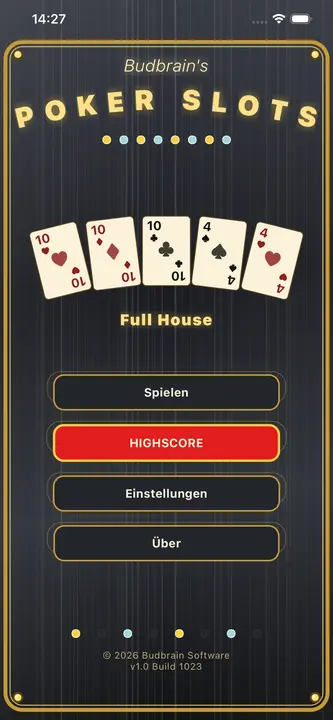
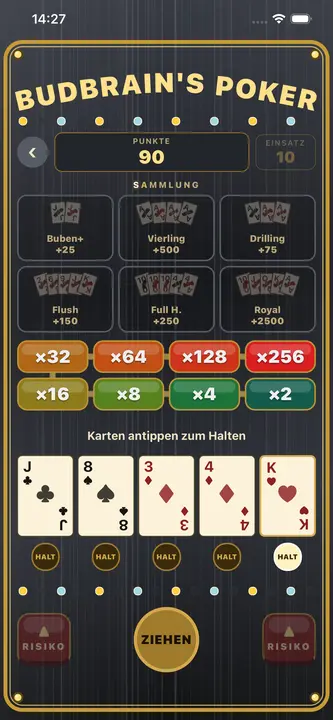
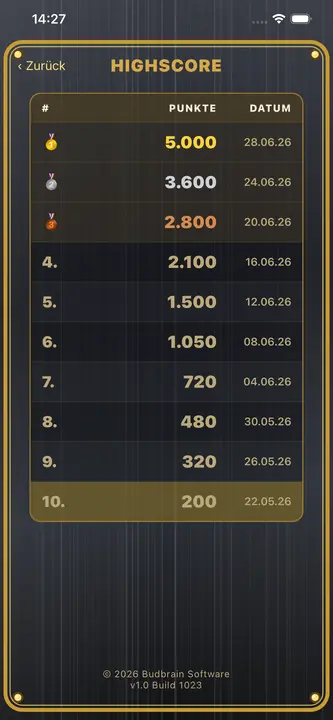
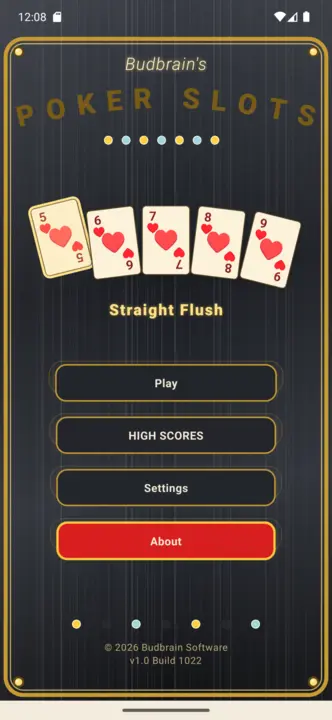
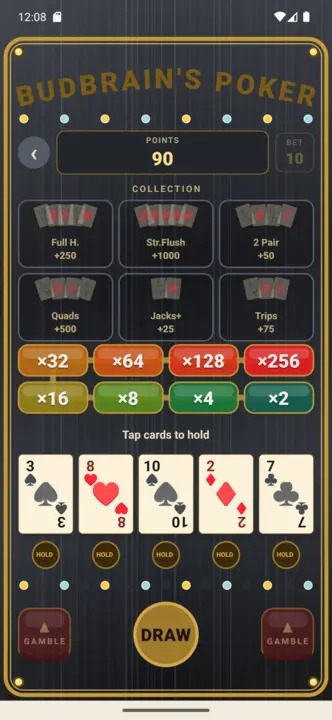
Budbrain Poker Slots là máy xèng video poker theo phong cách các máy arcade cổ điển. Chỉ chơi bằng xu vui ảo: không dùng tiền thật, không có giao dịch mua, không trả thưởng. Lưu ý: Đây là cờ bạc mô phỏng. Trò chơi này không cung cấp cờ bạc bằng tiền thật hay cơ hội giành tiền hoặc giải thưởng thật. Việc luyện tập hoặc thành công ở trò chơi này không có nghĩa là sẽ thành công trong cờ bạc bằng tiền thật trong tương lai.
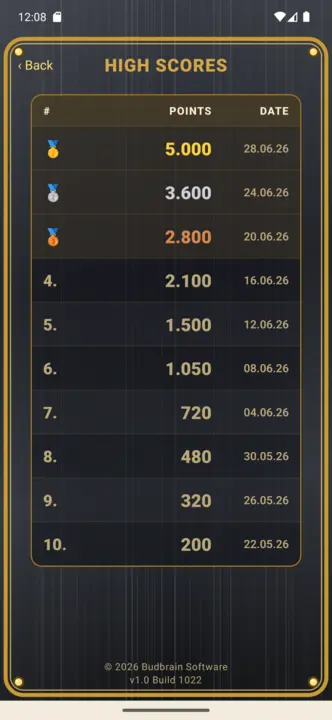
Video PokerGiữ bài & rút bàiBậc thang đặt cượcChỉ dùng xu vuiCờ bạc mô phỏng22 ngôn ngữHoàn toàn ngoại tuyến
Budbrain’s Mahjong
React Native · iOS 15+
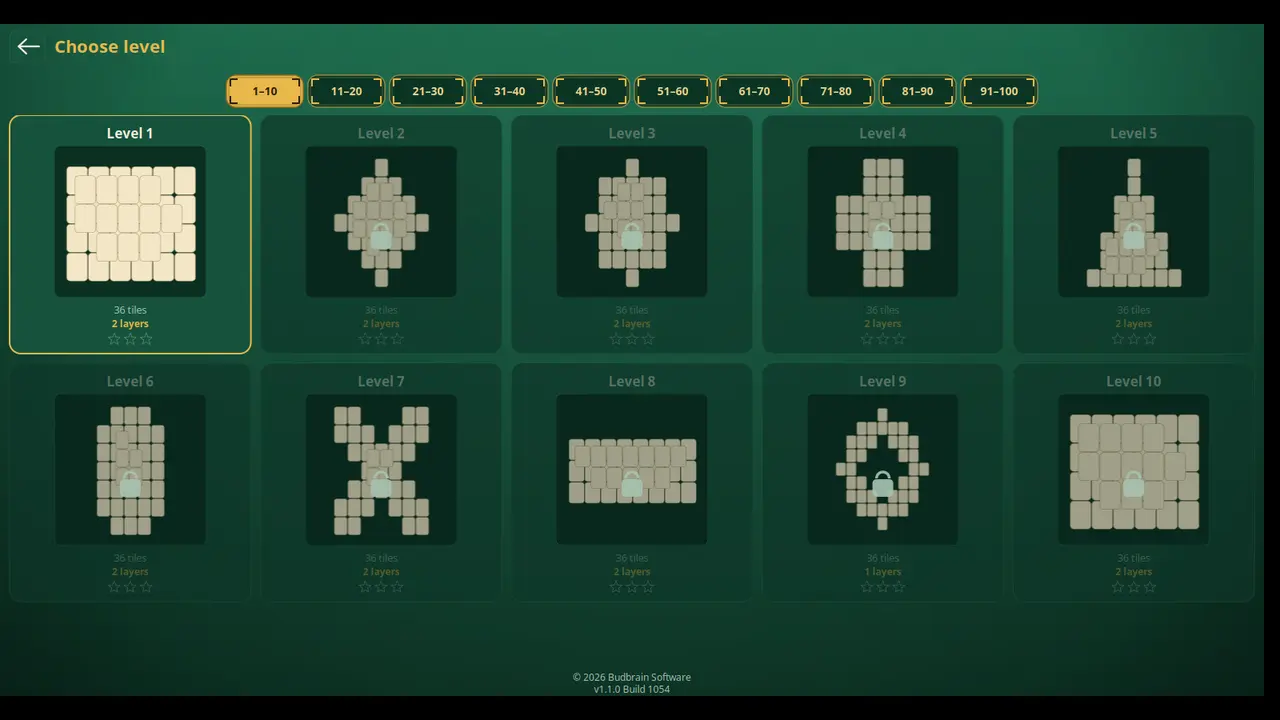
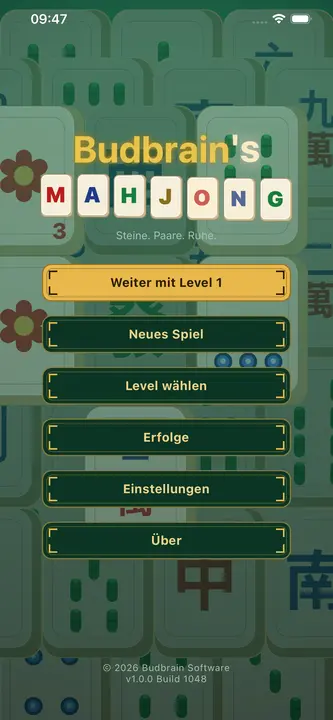
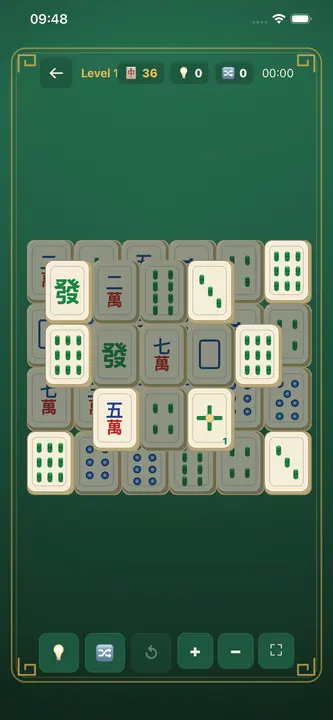
Mahjong Solitaire được làm tỉ mỉ với các quân bài tự vẽ: 100 màn chơi chia thành 10 cấp độ, từ khởi đầu nhẹ nhàng với 36 quân đến bộ đầy đủ 144 quân. Chạm vào hai quân giống nhau còn tự do để dọn sạch toàn bộ bố cục. Cách chia bài đảm bảo có lời giải, chức năng xáo trộn, 10 giao diện bàn chơi kiểu Trung Hoa, chấm điểm 3 sao và thư viện ảnh. 22 ngôn ngữ. Hoàn toàn ngoại tuyến.
Mahjong Solitaire100 LevelsQuân bài tự vẽĐảm bảo có lời giảiChấm điểm 3 sao22 ngôn ngữHoàn toàn ngoại tuyến
Astonischika
React Native · iOS 15+
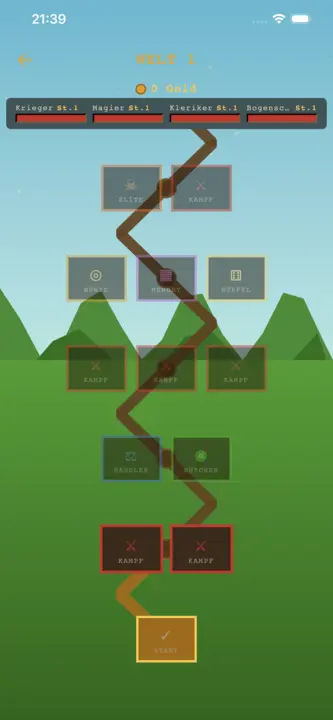
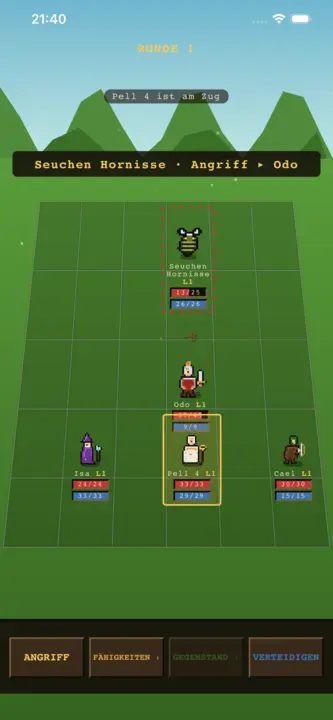
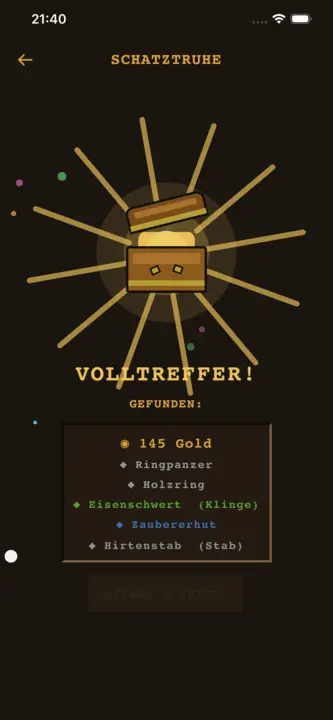
RPG nhóm theo lượt, được vẽ pixel thủ công: lập đội 3 người từ 6 lớp anh hùng (Chiến binh, Pháp sư, Giáo sĩ, Đạo chích, Ma cà rồng, Druid) và leo lên bản đồ nút phân nhánh – đánh quái vật, nghỉ bên đống lửa, mở rương lấy chiến lợi phẩm và gặp thương nhân cho đến khi đối đầu trùm. Anh hùng lên cấp, phân bổ điểm thuộc tính và trang bị đồ nhặt được thuộc sáu bậc hiếm. Thành phố là trung tâm cố định với thương nhân và quán rượu; nếu một lượt chơi thất bại, các anh hùng của bạn vẫn được giữ lại (roguelite). 22 ngôn ngữ. Hoàn toàn ngoại tuyến.
Party-RPGPixel-ArtTheo lượt3 trong 6 anh hùngChiến lợi phẩm & trang bịTrung tâm thành phố22 ngôn ngữHoàn toàn ngoại tuyến
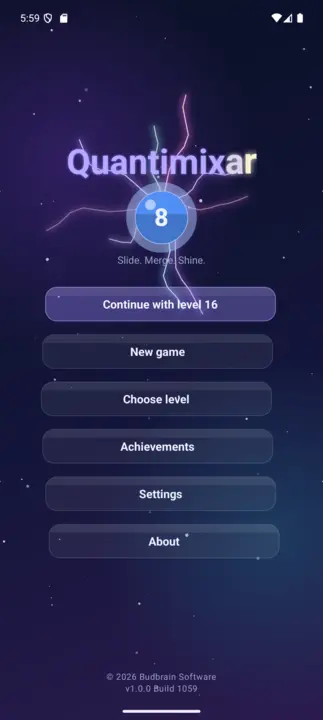
Quantimixar
React Native · iOS 15+
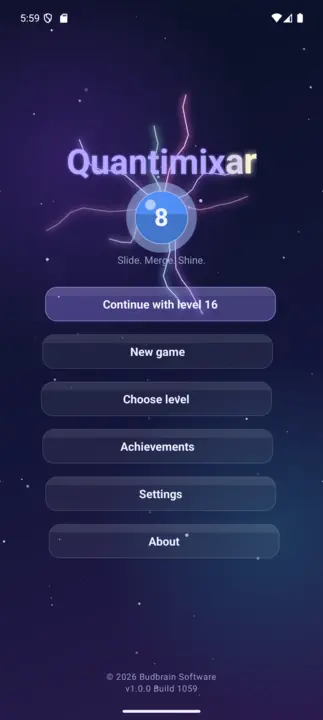
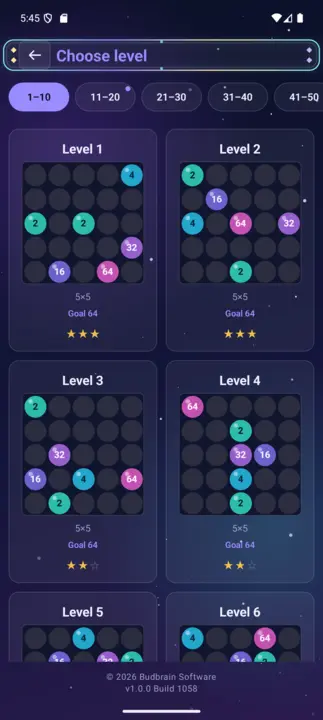
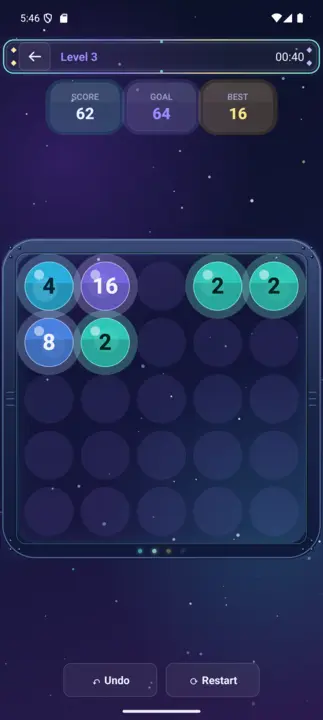
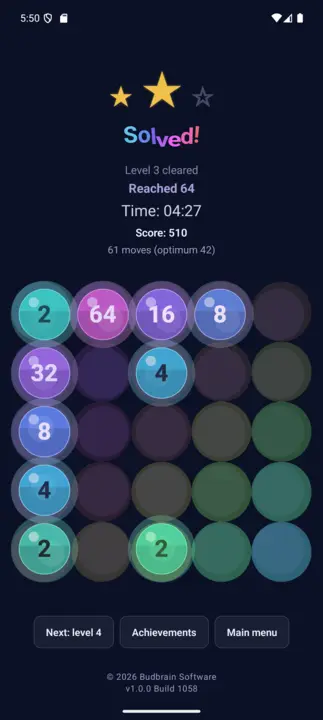
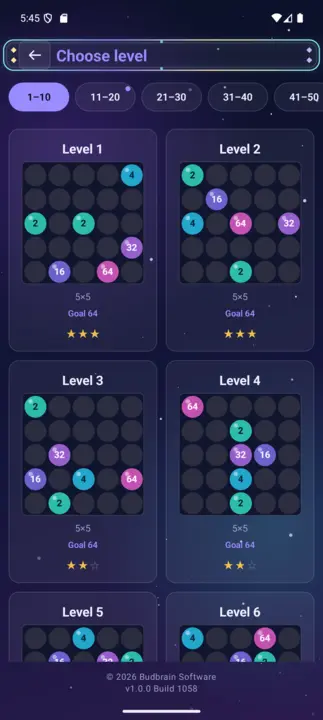
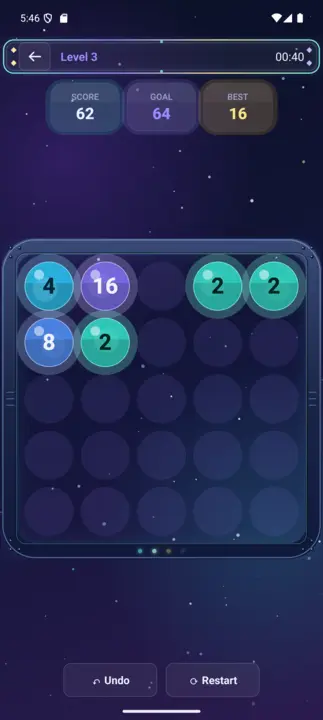
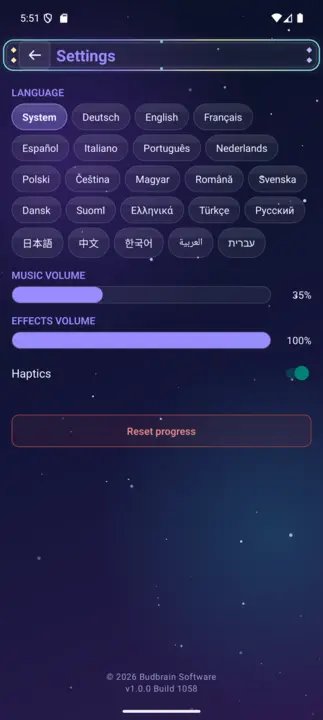
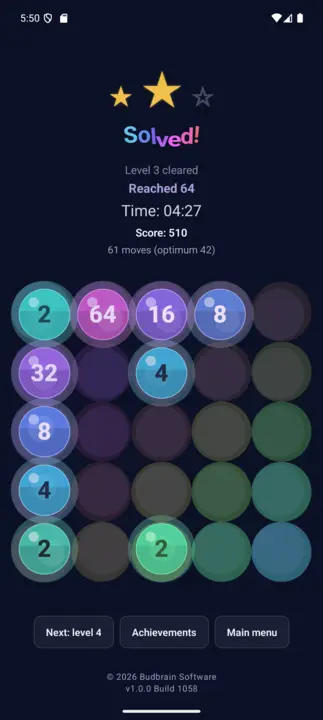
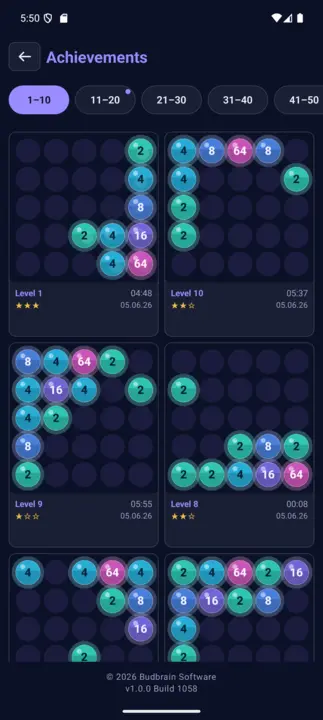
Trò xếp gộp số với phong cách không gian sâu thẳm: vuốt những viên bi thủy tinh phát sáng lại với nhau để hợp nhất các giá trị giống nhau. Chiến dịch 100 màn từ 64 đến 8192 trên bàn 4×4, 5×5 và 6×6, có các ô đặc biệt (×2, ÷2, hố, bom), chấm điểm 3 sao và thư viện thành tích. 22 ngôn ngữ. Hoàn toàn ngoại tuyến.
Merge-Puzzle100 Levels4×4 – 6×6đến 8192Ô đặc biệt & bomChấm điểm 3 sao22 ngôn ngữHoàn toàn ngoại tuyến
Budbrain's Sudoku
React Native · iOS 15+
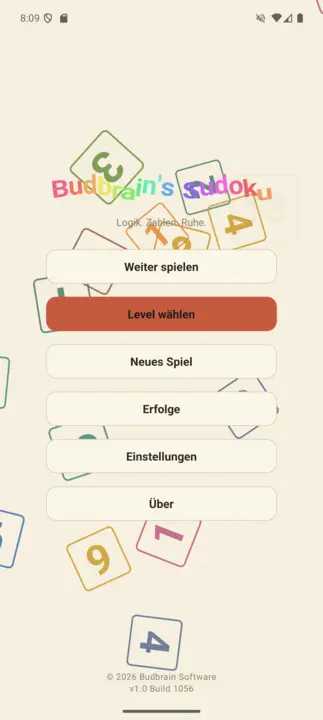
Trò Sudoku được làm tỉ mỉ với giao diện sổ tay ấm áp: 100 màn chơi chia thành 10 cấp độ, từ 4×4 nhẹ nhàng đến 25×25 đầy thử thách – kể cả ô hình chữ nhật. Chấm điểm 3 sao cho mỗi màn, thư viện thành tích, hỗ trợ đầy đủ VoiceOver và TalkBack. Hoàn toàn ngoại tuyến.
100 Levels4×4 – 25×25Chấm điểm 3 saoThư viện thành tíchVoiceOver22 ngôn ngữHoàn toàn ngoại tuyến
Budbrain's Puzzle
React Native · iOS 15+
Trò ghép hình cổ điển với ảnh gốc do chính Josef Sejrek chụp. 6 mức độ khó từ Dễ (12 mảnh) đến Đại kiện tướng (300 mảnh), mảnh ghép có phần lồi và lõm như thật, thu phóng bằng hai ngón tay và thư viện thành tích. Hoàn toàn ngoại tuyến.
Jigsaw Puzzle6 mức độ khó12–300 mảnhẢnh gốcPinch-to-ZoomThư viện thành tíchHoàn toàn ngoại tuyến
DuoDom
SwiftUI · iOS 17+
Trò xếp hình trượt thư giãn phong cách pixel-art cổ điển: trượt các viên đá qua ô trống cho đến khi hai viên giống nhau nằm cạnh nhau – chúng sẽ biến mất thành một cặp. Mọi màn chơi đều được bộ giải tích hợp đảm bảo có lời giải. Điểm cao, cúp thưởng, 20 ngôn ngữ, 60 FPS.
Pixel ArtXếp hình trượtĐã kiểm tra bằng bộ giảiHighscoresCúp thưởng20 ngôn ngữ60 FPSHoàn toàn ngoại tuyến
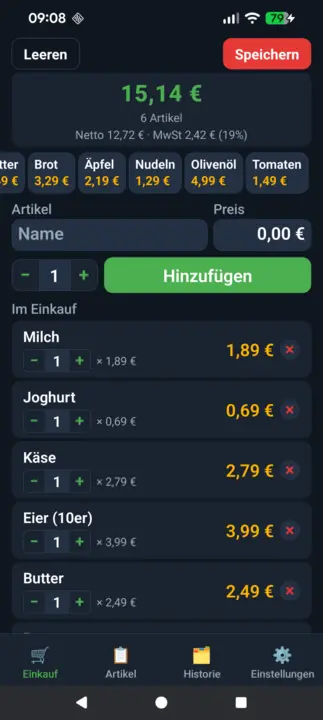
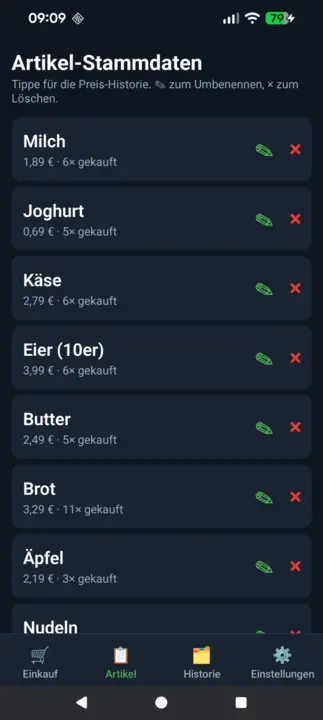
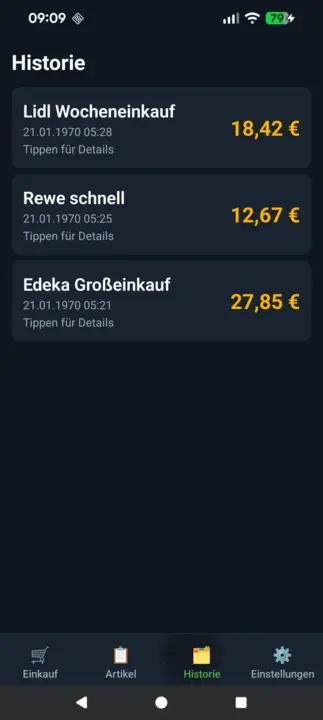
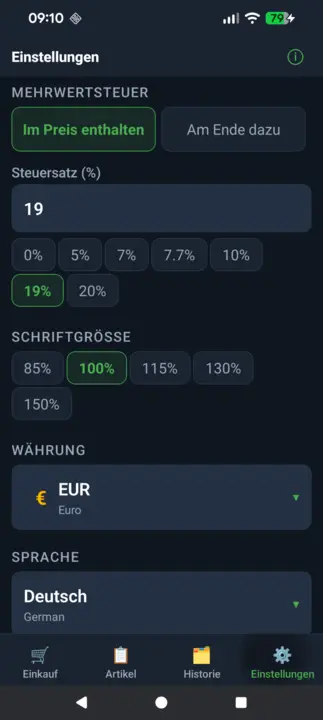
jsKassenrechner
React Native · iOS 15+
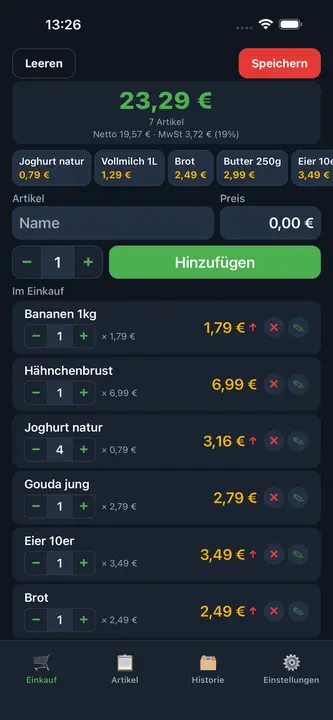
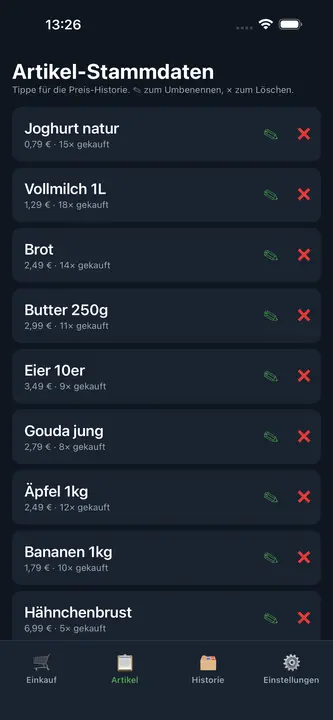
Máy tính mua sắm nhanh cho iPhone và iPad: bỏ hàng vào giỏ và xem tổng tiền cập nhật ngay tại cửa hàng. Có tính thuế VAT linh hoạt, mặt hàng thêm nhanh, lịch sử giá, lịch sử mua hàng và sao lưu được mã hóa. Hoàn toàn ngoại tuyến.
Tổng tiền tức thờiTính thuế VATQuick-AddLịch sử giáSao lưu được mã hóaNhiều loại tiền tệHoàn toàn ngoại tuyến
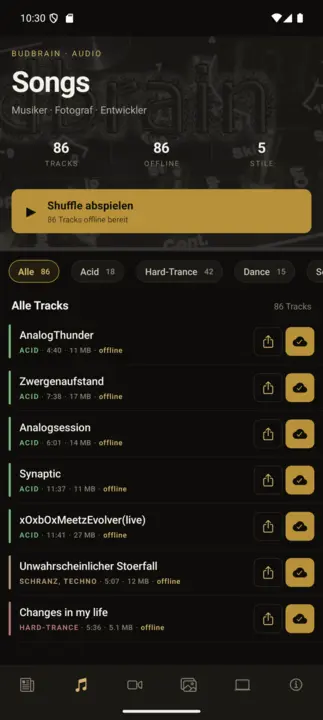
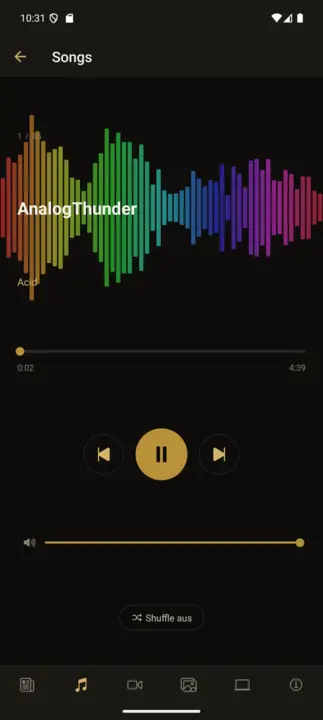
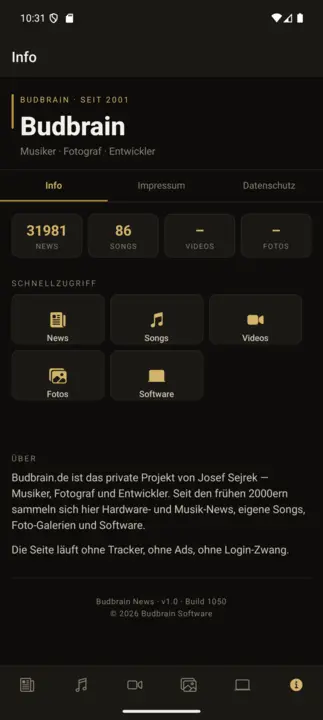
Budbrain News
React Native · iOS 15+
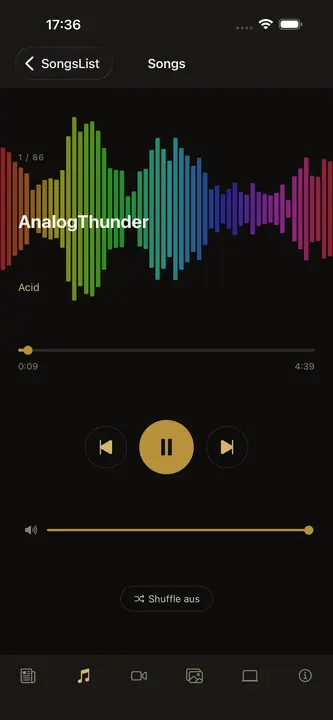
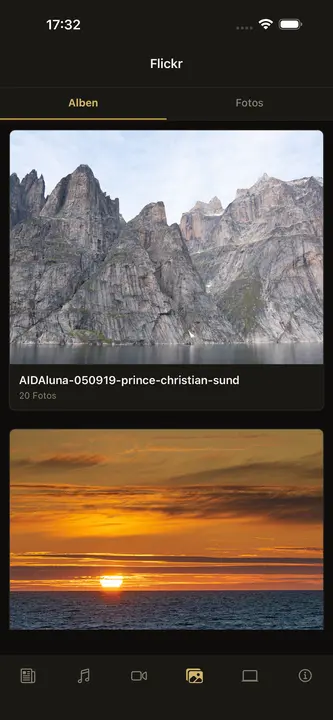
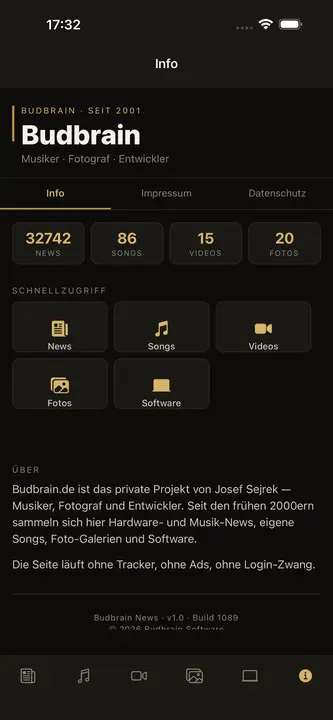
Ứng dụng đồng hành chính thức của budbrain.de – nơi lưu giữ âm nhạc và các dự án của Josef Sejrek từ năm 2001. 86 bản nhạc gốc được tích hợp sẵn để nghe ngoại tuyến hoàn toàn, trình phát nhạc có máy hiện sóng thời gian thực, bảng tin trực tiếp, video YouTube và thư viện ảnh Flickr. Giao diện có 22 ngôn ngữ.
86 TracksTrình phát ngoại tuyếnMáy hiện sóngLive-NewsYouTubeThư viện ảnh Flickr22 ngôn ngữShuffle
Budbrain's Marbles
React Native · iOS 15+
Trò xếp bi đầy ấm cúng: chạm vào một ống để lấy viên bi trên cùng, chạm vào ống khác để thả xuống – xếp sao cho mỗi ống chỉ có một màu. 105 màn chơi đã được kiểm chứng bằng BFS trong 5 thế giới bãi biển, chấm điểm 3 sao, thư viện thành tích, những viên bi 3D sáng bóng. 22 ngôn ngữ. Hoàn toàn ngoại tuyến.
105 Levels5 thế giới bãi biểnChấm điểm 3 saoThư viện thành tíchBi 3D22 ngôn ngữHoàn toàn ngoại tuyến
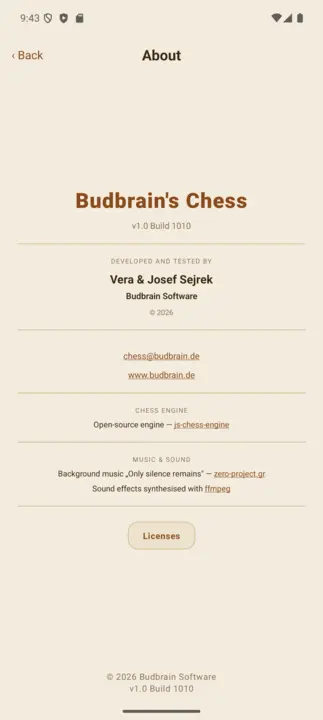
Budbrain's Chess
React Native · iOS 15+
100 màn cờ vua đấu với AI trong giao diện giấy da ấm áp – từ ELO 150 cho người mới bắt đầu đến ELO 1900 cho người chơi câu lạc bộ. Có gợi ý, hoàn tác, thư viện thành tích và 22 ngôn ngữ. Hoàn toàn ngoại tuyến.
100 LevelsELO 150 – 1900Hint & UndoThư viện thành tíchGiao diện giấy da22 ngôn ngữHoàn toàn ngoại tuyến
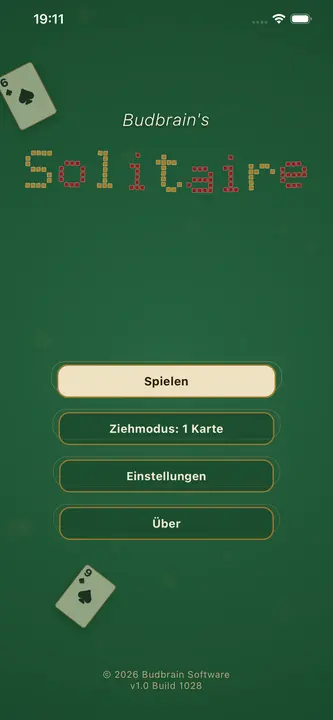
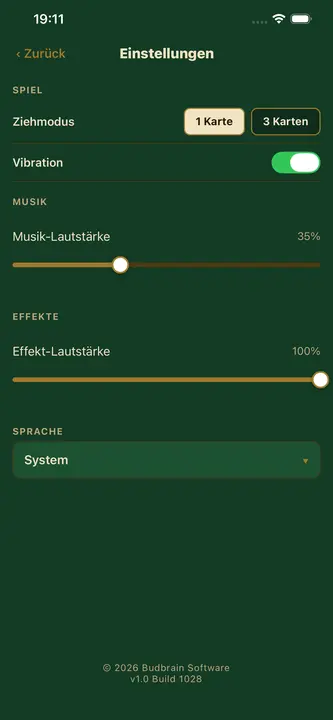
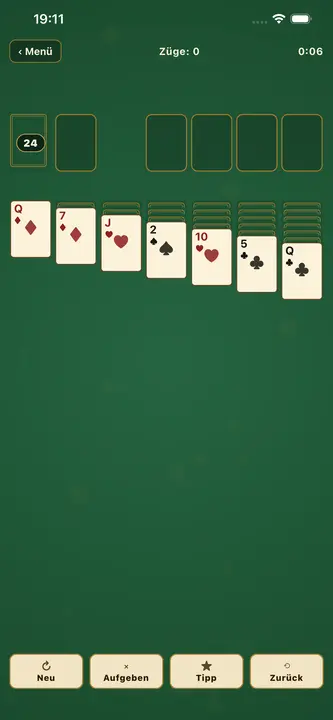
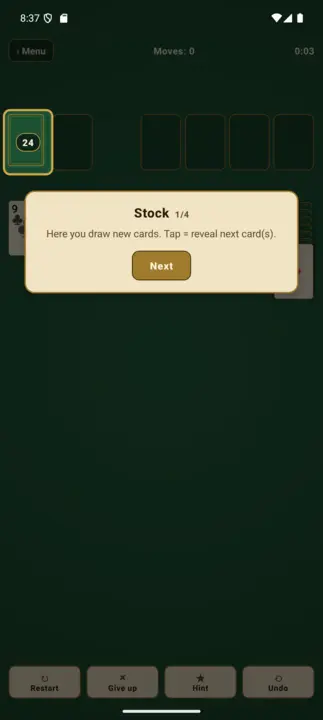
Budbrain's Solitaire
React Native · iOS 15+
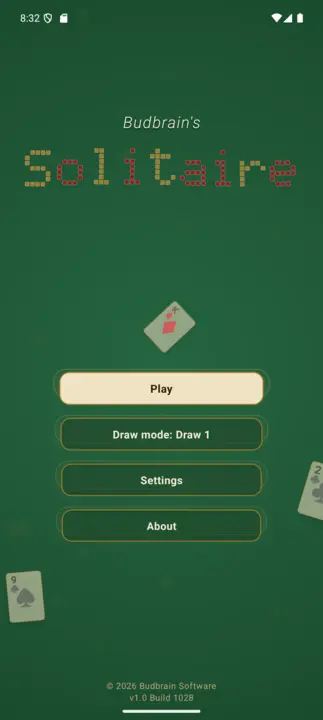
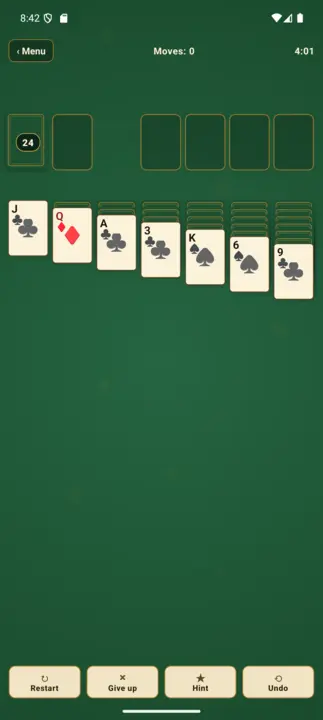
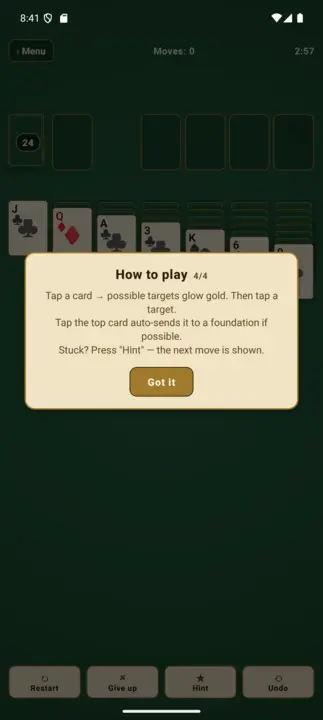
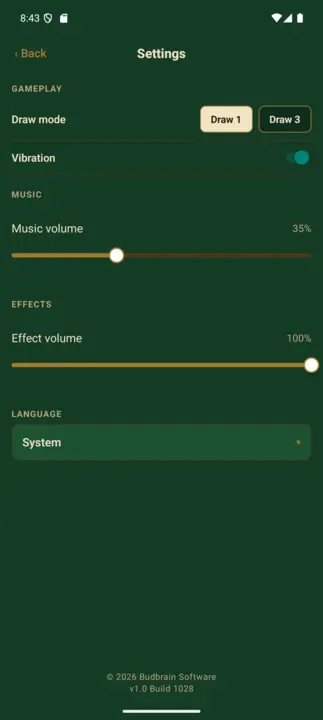
Bài Klondike solitaire cổ điển trong phong cách giấy da xanh ấm áp – như một phòng chơi bài xưa bên chiếc bàn phủ nỉ. Có chế độ rút 1 lá và rút 3 lá, điều khiển chạm-chạm (đích được tô vàng), nút gợi ý, hoàn tác, tự động hoàn thành và lớp hướng dẫn cho người mới. 22 ngôn ngữ, hỗ trợ VoiceOver đầy đủ. Hoàn toàn ngoại tuyến.
KlondikeRút 1 & Rút 3 láĐiều khiển chạm-chạmHint & UndoTự động hoàn thànhVoiceOver22 ngôn ngữHoàn toàn ngoại tuyến
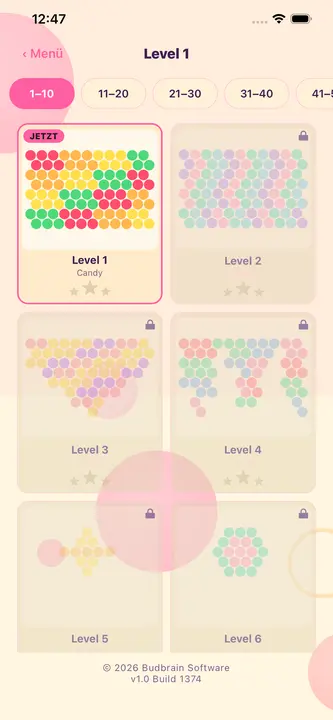
BlobPop
React Native · iOS 15+
Game bắn bong bóng kiểu arcade: ngắm, bắn, nổ. Ghép ba bong bóng cùng màu để làm nổ cả cụm và tạo hiệu ứng nổ dây chuyền. 100 màn chơi trong 5 thế giới đầy màu sắc với chấm điểm 3 sao, cùng chế độ arcade vô tận. 22 ngôn ngữ. Hoàn toàn ngoại tuyến.
Bubble Shooter100 Levels5 thế giới đầy màu sắcChế độ arcade vô tậnChấm điểm 3 sao22 ngôn ngữHoàn toàn ngoại tuyến
Trò chơi và ứng dụng Android miễn phí
Budbrain’s Klickeridu
Capacitor · Android 5.1+
Game nhấp chuột 3D đáng yêu trên một hòn đảo lơ lửng: chạm vào nhân vật, kiếm xu, mua nâng cấp và lần lượt đánh bại 100 quái vật làm thủ công qua từng đợt. Cứ mỗi đợt thứ mười lại có một trùm với đồng hồ đếm ngược; prestige sẽ đặt lại mọi thứ và giúp mỗi lượt chơi mạnh hơn vĩnh viễn.
Idle-Clicker100 quái vật 3D10 nâng cấp · 3 kỹ năngPrestige & linh hồnAlbum quái vật22 ngôn ngữHoàn toàn ngoại tuyến
Budbrain’s Sudoku
React Native · Android 7+
Trò Sudoku được làm tỉ mỉ với giao diện sổ tay ấm áp: 100 màn chơi chia thành 10 cấp độ, từ 4×4 nhẹ nhàng đến 25×25 đầy thử thách – kể cả ô hình chữ nhật. Chấm điểm 3 sao cho mỗi màn, thư viện thành tích, hỗ trợ đầy đủ VoiceOver và TalkBack. Hoàn toàn ngoại tuyến.
100 Levels4×4 – 25×25Chấm điểm 3 saoThư viện thành tíchTalkBack22 ngôn ngữHoàn toàn ngoại tuyến
Budbrain’s Marbles
React Native · Android 7+
Trò xếp bi đầy ấm cúng: chạm vào một ống để lấy viên bi trên cùng, chạm vào ống khác để thả xuống – xếp sao cho mỗi ống chỉ có một màu. 105 màn chơi đã được kiểm chứng bằng BFS trong 5 thế giới bãi biển, chấm điểm 3 sao, thư viện thành tích, những viên bi 3D sáng bóng. 22 ngôn ngữ. Hoàn toàn ngoại tuyến.
105 Levels5 thế giới bãi biểnChấm điểm 3 saoThư viện thành tíchBi 3D22 ngôn ngữHoàn toàn ngoại tuyến
FarmIsFun
Kotlin · Android 7+
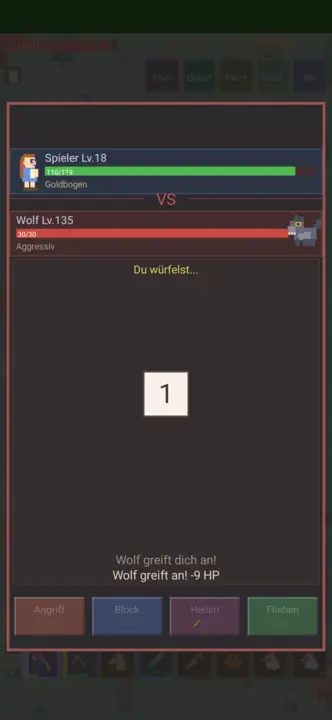
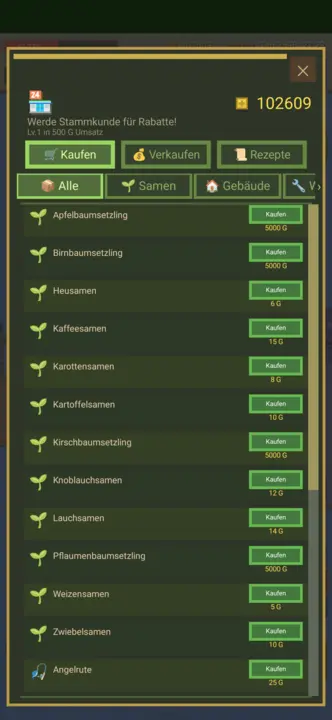
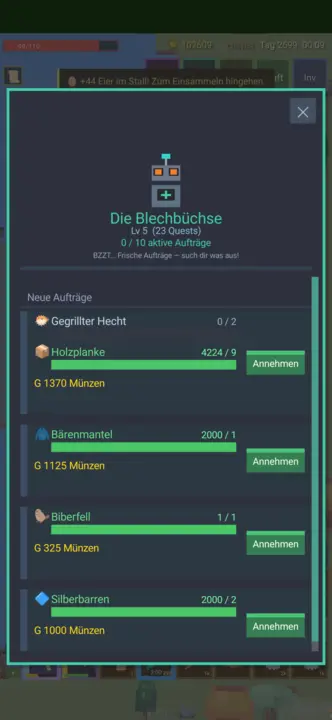
Trò chơi nông trại pixel art: bạn bắt đầu với hai bàn tay trắng, đốn cây, đập đá và chế tạo công cụ, vũ khí và công trình từ những gì thu thập được. Canh tác trên đồng, nuôi gà và bò, đuổi sói và gấu, bán hàng cho thương nhân, nhận nhiệm vụ và thư giãn ở ba máy arcade – qua cả bốn mùa.
Pixel-ArtThu thập & chế tạoXây dựng & canh tácChiến đấu & buôn bánNhiệm vụ & trò chơi nhỏLưu trên đám mây (tùy chọn)Ứng dụng chỉ có tiếng Đức
Budbrain’s Nonogram’s
React Native · Android 7+
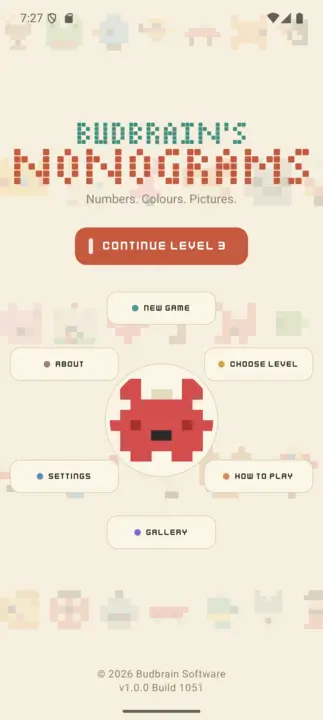
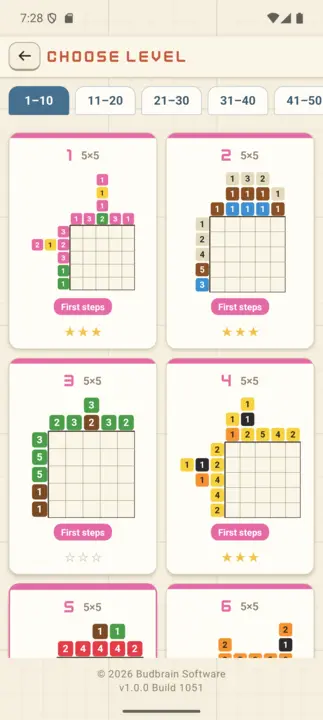
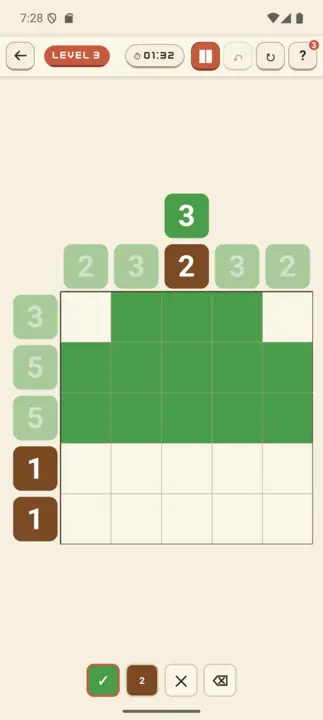
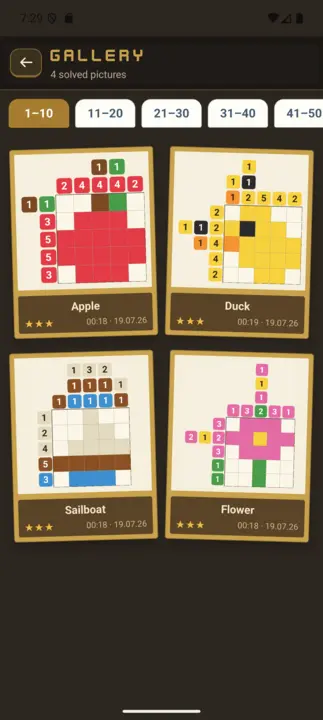
Budbrain's Nonogram's là trò nonogram được làm tỉ mỉ với 100 màn hình ảnh — từ những họa tiết nhỏ 5×5 cho người mới đến các bức ảnh lớn 20×20 cho cao thủ. Tô nên bức tranh ẩn bằng những con số màu dọc theo các cạnh. Các khối cùng màu cần có khoảng trống giữa chúng, còn các khối khác màu có thể chạm nhau.
100 màn chơi trong 10 cấp độPicross nhiều màuChấm điểm 3 saoThư viện22 ngôn ngữHoàn toàn ngoại tuyến
Budbrain’s Poker Slots
React Native · Android 7+
Budbrain Poker Slots là máy xèng video poker theo phong cách các máy arcade cổ điển. Chỉ chơi bằng xu vui ảo: không dùng tiền thật, không có giao dịch mua, không trả thưởng. Lưu ý: Đây là cờ bạc mô phỏng. Trò chơi này không cung cấp cờ bạc bằng tiền thật hay cơ hội giành tiền hoặc giải thưởng thật. Việc luyện tập hoặc thành công ở trò chơi này không có nghĩa là sẽ thành công trong cờ bạc bằng tiền thật trong tương lai.
Video PokerGiữ bài & rút bàiBậc thang đặt cượcChỉ dùng xu vuiCờ bạc mô phỏng22 ngôn ngữHoàn toàn ngoại tuyến
Budbrain’s Media Editor
React Native · Android 7+
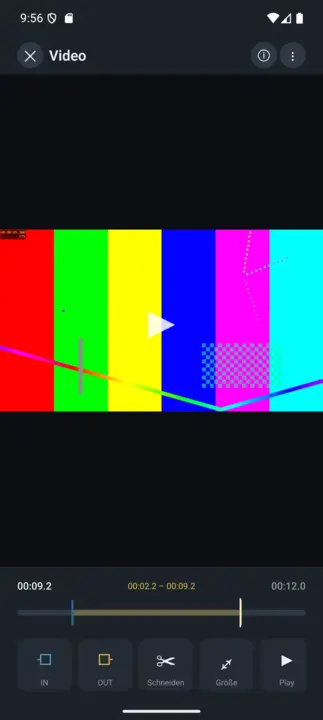
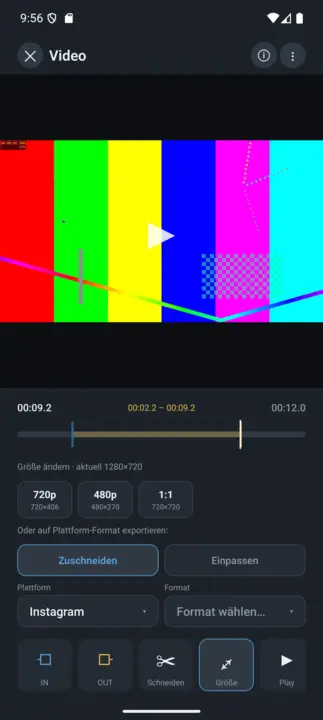
Budbrain Media Editor giúp cắt video và chỉnh sửa ảnh của bạn — ngay trên thiết bị của bạn. Mỗi lần chỉnh sửa đều tạo ra một tệp mới. Những gì có trong thư viện của bạn sẽ không bao giờ bị sửa đổi hay ghi đè.
Cắt videoChỉnh sửa ảnhBản gốc được giữ nguyên4K · 1080p · 720pEXIF22 ngôn ngữHoàn toàn ngoại tuyến
Budbrain’s Mahjong
React Native · Android 7+
Mahjong Solitaire được làm tỉ mỉ với các quân bài tự vẽ: 100 màn chơi chia thành 10 cấp độ, từ khởi đầu nhẹ nhàng với 36 quân đến bộ đầy đủ 144 quân. Chạm vào hai quân giống nhau còn tự do để dọn sạch toàn bộ bố cục. Cách chia bài đảm bảo có lời giải, chức năng xáo trộn, 10 giao diện bàn chơi kiểu Trung Hoa, chấm điểm 3 sao và thư viện ảnh. 22 ngôn ngữ. Hoàn toàn ngoại tuyến.
Mahjong Solitaire100 LevelsQuân bài tự vẽĐảm bảo có lời giảiChấm điểm 3 sao22 ngôn ngữHoàn toàn ngoại tuyến
Budbrain's Solitaire
React Native · Android 7+
Bài Klondike solitaire cổ điển trong phong cách giấy da xanh ấm áp – như một phòng chơi bài xưa bên chiếc bàn phủ nỉ. Có chế độ rút 1 lá và rút 3 lá, điều khiển chạm-chạm (đích được tô vàng), nút gợi ý, hoàn tác, tự động hoàn thành và lớp hướng dẫn cho người mới. 22 ngôn ngữ, hỗ trợ VoiceOver đầy đủ. Hoàn toàn ngoại tuyến.
KlondikeRút 1 & Rút 3 láĐiều khiển chạm-chạmHint & UndoTự động hoàn thành22 ngôn ngữHoàn toàn ngoại tuyến
Astonischika
React Native · Android 7+
RPG nhóm theo lượt, được vẽ pixel thủ công: lập đội 3 người từ 6 lớp anh hùng (Chiến binh, Pháp sư, Giáo sĩ, Đạo chích, Ma cà rồng, Druid) và leo lên bản đồ nút phân nhánh – đánh quái vật, nghỉ bên đống lửa, mở rương lấy chiến lợi phẩm và gặp thương nhân cho đến khi đối đầu trùm. Anh hùng lên cấp, phân bổ điểm thuộc tính và trang bị đồ nhặt được thuộc sáu bậc hiếm. Thành phố là trung tâm cố định với thương nhân và quán rượu; nếu một lượt chơi thất bại, các anh hùng của bạn vẫn được giữ lại (roguelite). 22 ngôn ngữ. Hoàn toàn ngoại tuyến.
Party-RPGPixel-ArtTheo lượt3 trong 6 anh hùngChiến lợi phẩm & trang bịTrung tâm thành phố22 ngôn ngữHoàn toàn ngoại tuyến
Quantimixar
React Native · Android 7+
Trò xếp gộp số với phong cách không gian sâu thẳm: vuốt những viên bi thủy tinh phát sáng lại với nhau để hợp nhất các giá trị giống nhau. Chiến dịch 100 màn từ 64 đến 8192 trên bàn 4×4, 5×5 và 6×6, có các ô đặc biệt (×2, ÷2, hố, bom), chấm điểm 3 sao và thư viện thành tích. 22 ngôn ngữ. Hoàn toàn ngoại tuyến.
Merge-Puzzle100 Levels4×4 – 6×6đến 8192Ô đặc biệt & bomChấm điểm 3 sao22 ngôn ngữHoàn toàn ngoại tuyến
BlobPop
React Native · Android 7+
Game bắn bong bóng kiểu arcade: ngắm, bắn, nổ. Ghép ba bong bóng cùng màu để làm nổ cả cụm và tạo hiệu ứng nổ dây chuyền. 100 màn chơi trong 5 thế giới đầy màu sắc với chấm điểm 3 sao, cùng chế độ arcade vô tận. 22 ngôn ngữ. Hoàn toàn ngoại tuyến.
Bubble Shooter100 Levels5 thế giới đầy màu sắcChế độ arcade vô tậnChấm điểm 3 sao22 ngôn ngữHoàn toàn ngoại tuyến
Budbrain's Chess
React Native · Android 7+
100 màn cờ vua đấu với AI trong giao diện giấy da ấm áp – từ ELO 150 cho người mới bắt đầu đến ELO 1900 cho người chơi câu lạc bộ. Có gợi ý, hoàn tác, thư viện thành tích và 22 ngôn ngữ. Hoàn toàn ngoại tuyến.
100 LevelsELO 150 – 1900Hint & UndoThư viện thành tíchGiao diện giấy da22 ngôn ngữHoàn toàn ngoại tuyến
Budbrain News
React Native · Android 7+
Ứng dụng đồng hành chính thức của budbrain.de – nơi lưu giữ âm nhạc và các dự án của Josef Sejrek từ năm 2001. 86 bản nhạc gốc được tích hợp sẵn để nghe ngoại tuyến hoàn toàn, trình phát nhạc có máy hiện sóng thời gian thực, bảng tin trực tiếp, video YouTube và thư viện ảnh Flickr. Giao diện có 22 ngôn ngữ.
86 TracksTrình phát ngoại tuyếnMáy hiện sóngLive-NewsYouTubeThư viện ảnh Flickr22 ngôn ngữShuffle
Dino Warrior
Kotlin · Android 7+
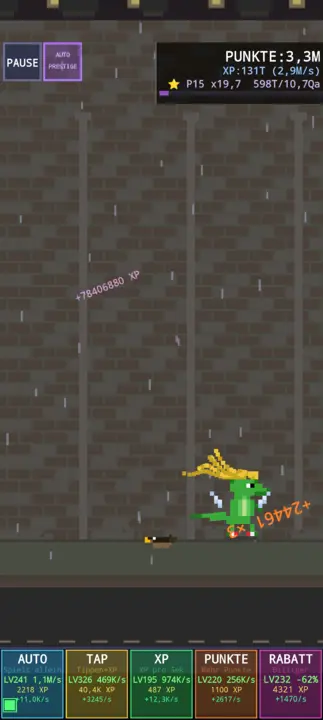
Game chạy vô tận phong cách pixel art. Điều khiển chú khủng long nhảy qua chướng ngại vật, nhặt vật phẩm, mua nâng cấp trong cửa hàng. 5 vùng sinh thái, combo trang bị, nhạc chiptune. Ý tưởng: Vera Sejrek.
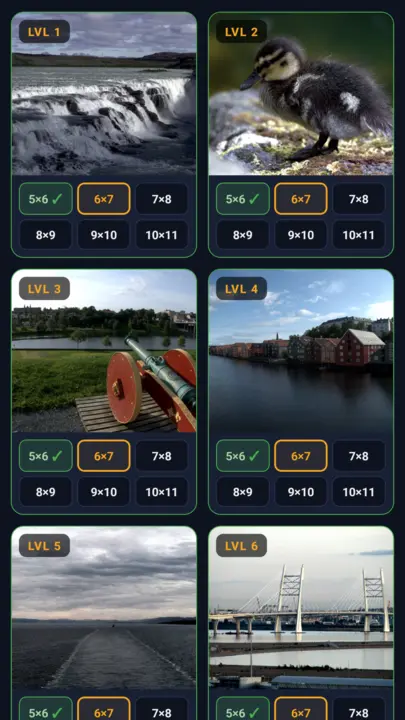
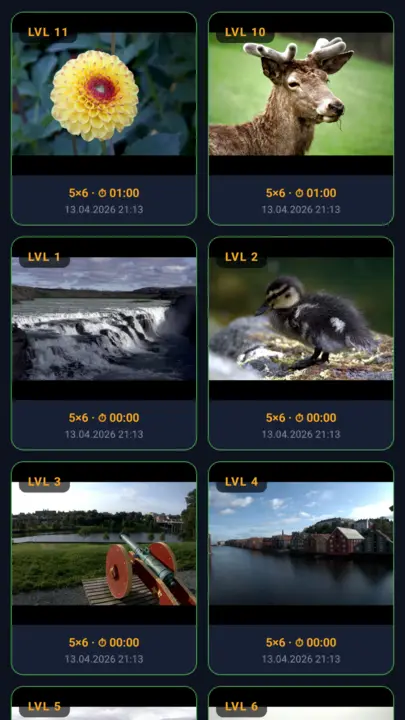
Trò ghép hình cổ điển với 40 bức ảnh được chọn lọc và cả ảnh từ thư viện của bạn. 6 mức độ khó từ Dễ (5×6) đến Đại kiện tướng (10×11), mảnh ghép đường cong Bézier như thật, 22 ngôn ngữ, thư viện thành tích. Ngoại tuyến.
Jigsaw Puzzle40 FotosẢnh của riêng bạn6 mức độ khó22 ngôn ngữThư viện thành tíchHoàn toàn ngoại tuyến
DuoDom
Kotlin · Android 7+
Trò xếp đá pixel art: trượt các viên đá sang ô trống bên cạnh trên lưới 6×6 – các cặp giống nhau sẽ biến mất. Xóa hết mọi cặp là thắng. Kiểm tra khả năng giải khi tạo màn, cúp thưởng, điểm cao, 20 ngôn ngữ, âm thanh tổng hợp.
Pixel Art6×6 GridKiểm tra khả năng giảiCúp thưởngHighscores20 ngôn ngữ60 FPSHoàn toàn ngoại tuyến
jsKassenrechner
React Native · Android 7+
Máy tính mua sắm nhanh cho Android: bỏ hàng vào giỏ và xem tổng tiền cập nhật ngay tại cửa hàng. Có bàn phím số kiểu máy tính tiền, dữ liệu mặt hàng kèm lịch sử giá, tự động hoàn thành, thuế VAT linh hoạt, lịch sử mua hàng và sao lưu được mã hóa. Hoàn toàn ngoại tuyến.
Tổng tiền tức thờiKassen-NumpadLịch sử giáTính thuế VATSao lưu được mã hóa22 ngôn ngữNhiều loại tiền tệHoàn toàn ngoại tuyến
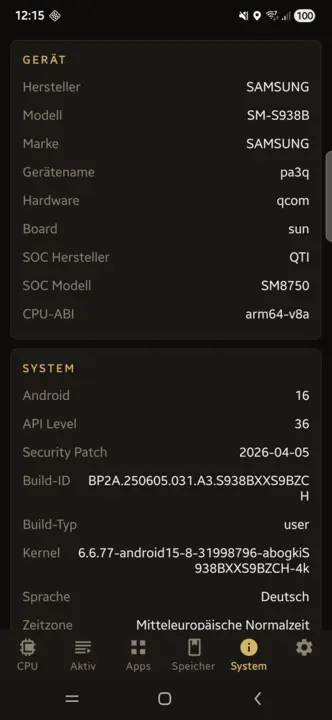
jsCPUInfo
Kotlin · Android 7.1+
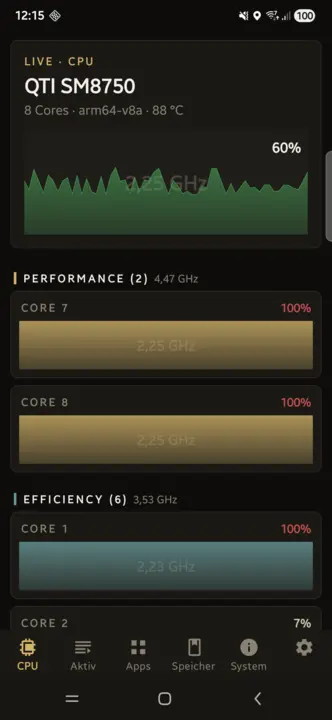
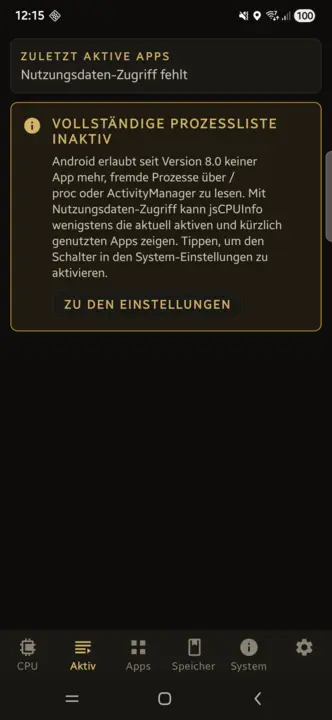
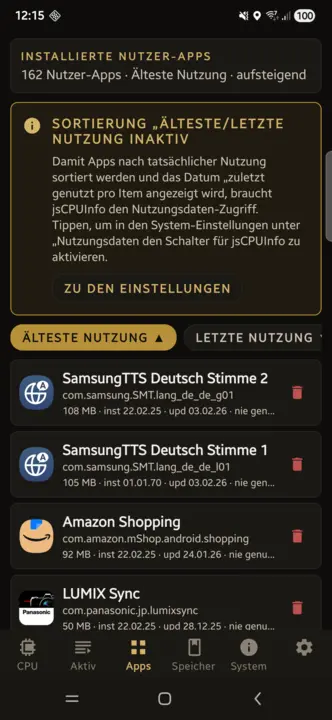
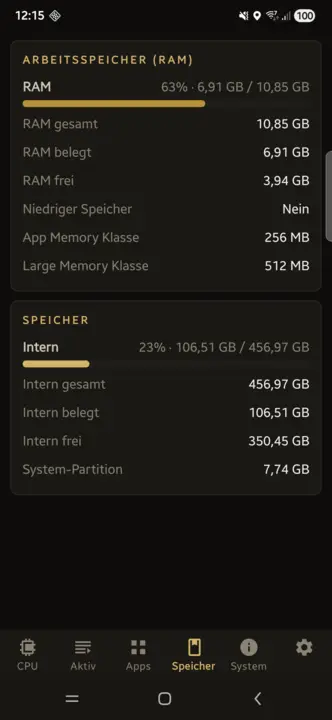
CPU trực tiếp theo từng nhân với mức sử dụng, tần số và nhiệt độ. Ứng dụng đang chạy và các gói đã cài đặt, gỡ cài đặt chỉ với một lần chạm, số chu kỳ sạc pin và tình trạng pin, RAM, bộ nhớ, màn hình, chuẩn Wi-Fi, camera và mọi cảm biến – ngoại tuyến.
CPU trực tiếp theo từng nhânỨng dụng đang chạyGỡ cài đặt bằng một lần chạmChu kỳ sạc pinCảm biến22 ngôn ngữHoàn toàn ngoại tuyến
Làm thế nào để kiểm tra mã băm SHA256 của tệp đã tải xuống?
Mã băm SHA256 là dấu vân tay kỹ thuật số. Hãy so sánh mã băm của tệp đã tải xuống với mã băm hiển thị trên trang này. Nếu hai mã khớp nhau, tệp chưa bị thay đổi.
Linux
Mở terminal và nhập lệnh sau (đổi tên tệp cho phù hợp):
sha256sum ~/Downloads/filename.zip
macOS
Mở Terminal (Applications → Utilities → Terminal) và nhập:
Dieses Angebot ist ein privates, nicht-kommerzielles Projekt. Budbrain Software ist kein eingetragenes Unternehmen, sondern ein privates Softwareprojekt von Josef Sejrek. Es erfolgt keine gewerbliche Tatigkeit. Samtliche hier angebotene Software wird kostenlos und ohne Gewinnerzielungsabsicht bereitgestellt.
Umsatzsteuer
Es wird keine Umsatzsteuer-Identifikationsnummer gemass § 27a Umsatzsteuergesetz angegeben, da es sich um ein rein privates, nicht-kommerzielles Angebot handelt.
Verantwortlich fur den Inhalt gemass § 18 Abs. 2 MStV
Josef Sejrek
Koblenzer Strasse 95
56073 Koblenz
Streitschlichtung
Die Europaische Kommission stellt eine Plattform zur Online-Streitbeilegung (OS) bereit: ec.europa.eu/consumers/odr.
Wir sind nicht bereit oder verpflichtet, an Streitbeilegungsverfahren vor einer Verbraucherschlichtungsstelle teilzunehmen, da es sich um ein nicht-kommerzielles Angebot handelt.
This is a private, non-commercial project. Budbrain Software is not a registered company but a private software project by Josef Sejrek. No commercial activity takes place. All software offered here is provided free of charge and without intent to generate profit.
VAT
No VAT identification number is provided as this is a purely private, non-commercial offering.
Responsible for content according to § 18 para. 2 MStV
Josef Sejrek Koblenzer Strasse 95 56073 Koblenz
Dispute Resolution
The European Commission provides a platform for online dispute resolution (ODR): ec.europa.eu/consumers/odr.
We are neither willing nor obliged to participate in dispute resolution proceedings before a consumer arbitration board, as this is a non-commercial offering.
Die Inhalte dieser Seite wurden mit grosster Sorgfalt erstellt. Fur die Richtigkeit, Vollstandigkeit und Aktualitat der Inhalte kann jedoch keine Gewahr ubernommen werden. Als privater Anbieter bin ich gemass § 7 Abs. 1 DDG fur eigene Inhalte auf diesen Seiten nach den allgemeinen Gesetzen verantwortlich. Eine Verpflichtung zur Uberwachung ubermittelter oder gespeicherter fremder Informationen besteht jedoch nicht (§§ 8–10 DDG).
2. Haftung fur Links
Diese Seite enthalt Links zu externen Webseiten Dritter, auf deren Inhalte ich keinen Einfluss habe. Fur die Inhalte der verlinkten Seiten ist stets der jeweilige Anbieter oder Betreiber verantwortlich. Die verlinkten Seiten wurden zum Zeitpunkt der Verlinkung auf mogliche Rechtsverstossse uberpruft. Rechtswidrige Inhalte waren zum Zeitpunkt der Verlinkung nicht erkennbar. Eine permanente inhaltliche Kontrolle der verlinkten Seiten ist jedoch ohne konkrete Anhaltspunkte einer Rechtsverletzung nicht zumutbar. Bei Bekanntwerden von Rechtsverletzungen werden derartige Links umgehend entfernt.
3. Software-Haftungsausschluss
Die auf dieser Seite angebotene Software wird „as is“ (so wie sie ist) und ohne jegliche Gewahrleistung bereitgestellt — weder ausdruecklich noch stillschweigend, einschliesslich, aber nicht beschrankt auf die Gewahrleistung der Marktgangigkeit, der Eignung fur einen bestimmten Zweck und der Nichtverletzung von Rechten Dritter.
Die Nutzung der Software erfolgt vollstandig auf eigene Gefahr. Der Autor ubernimmt keinerlei Haftung fur:
Direkte, indirekte, zufallige, besondere oder Folgeschaden jeglicher Art
Datenverlust oder Beschadigung von Dateien, Betriebssystemen oder Hardware
Ausfallzeiten, entgangenen Gewinn oder Betriebsunterbrechungen
Sicherheitslucken oder Schaeden durch Dritte, die sich aus der Nutzung der Software ergeben
Inkompatibilitaten mit bestimmten Systemkonfigurationen oder Software-Versionen
Dies gilt auch dann, wenn auf die Moglichkeit solcher Schaden hingewiesen wurde.
4. Lizenz
Die angebotene Software wird als Freeware kostenlos zur Nutzung bereitgestellt. Der Quellcode wird nicht veroeffentlicht. Alle Rechte am Quellcode verbleiben beim Autor. Eine Dekompilierung, Reverse Engineering oder sonstige Rueckgewinnung des Quellcodes ist nicht gestattet.
5. Keine Gewahrleistung fur Verfugbarkeit
Es besteht kein Anspruch auf Verfugbarkeit dieser Webseite oder der angebotenen Downloads. Der Betrieb kann jederzeit ohne Vorankundigung eingestellt, verandert oder eingeschrankt werden.
6. Urheberrecht
Die durch den Seitenbetreiber erstellten Inhalte und Werke auf diesen Seiten unterliegen dem deutschen Urheberrecht. Die Vervielfaltigung, Bearbeitung, Verbreitung und jede Art der Verwertung ausserhalb der Grenzen des Urheberrechts bedurfen der schriftlichen Zustimmung des Autors. Downloads und Kopien dieser Seite sind nur fur den privaten, nicht kommerziellen Gebrauch gestattet, soweit die Software-Lizenz nichts anderes erlaubt.
The contents of this website have been created with the utmost care. However, no guarantee can be given for the accuracy, completeness and timeliness of the content.
2. Liability for Links
This site contains links to third-party websites over whose content we have no influence. The respective provider is always responsible for the content of the linked pages. The linked pages were checked for possible legal violations at the time of linking. Illegal content was not recognizable at the time of linking.
3. Software Disclaimer
The software offered on this site is provided "as is" and without any warranty — neither express nor implied, including but not limited to warranties of merchantability, fitness for a particular purpose, and non-infringement.
Use of the software is entirely at your own risk. The author assumes no liability for:
Direct, indirect, incidental, special or consequential damages of any kind
Data loss or damage to files, operating systems or hardware
Downtime, lost profits or business interruptions
Security vulnerabilities or damage by third parties resulting from use of the software
Incompatibilities with specific system configurations or software versions
4. License
The software is provided as freeware for free use. The source code is not published. All rights to the source code remain with the author. Decompilation, reverse engineering or any other recovery of the source code is not permitted.
5. No Guarantee of Availability
There is no entitlement to the availability of this website or the offered downloads. Operation may be discontinued, changed or restricted at any time without notice.
6. Copyright
The content and works created by the site operator are subject to German copyright law. Reproduction, editing, distribution and any kind of use beyond the limits of copyright law require the written consent of the author.
Josef Sejrek
Koblenzer Strasse 95
56073 Koblenz
E-Mail:
2. Allgemeines zur Datenverarbeitung
Diese Webseite wird als rein statische HTML-Seite betrieben. Es wird keinerlei serverseitige Datenverarbeitung durch den Seitenbetreiber durchgefuhrt. Insbesondere:
Es wird ausschliesslich ein technisch-funktionales Sprach-Cookie (bb_lang) gesetzt - nur durch Ihre aktive Sprachwahl ausgelost (siehe unten)
Es werden keine Tracking- oder Analysedienste eingesetzt (kein Google Analytics, kein Matomo, keine Pixel)
Es werden keine personenbezogenen Daten erhoben, gespeichert oder verarbeitet
Es gibt keine Kontaktformulare, Newsletter-Anmeldungen oder Benutzerkonten
Es werden keine externen Schriftarten, CDNs oder Social-Media-Plugins eingebunden
Sprach-Cookie (bb_lang): Wenn Sie uber den Sprachumschalter eine Sprache wahlen, wird ein einzelnes Cookie namens bb_lang gesetzt, das ausschliesslich Ihr Sprachkurzel (z.B. en) enthalt und fur die gesamte Domain budbrain.de gilt (Hauptseite sowie /budbrain-software/ und /testing/). Kein Tracking, keine Profilbildung, keine Weitergabe an Dritte. Das Cookie ist rein technisch-funktional, wird nur durch Ihre aktive Sprachwahl ausgelost und ist als unbedingt erforderlich nach § 25 Abs. 2 TDDDG einwilligungsfrei (Art. 6 Abs. 1 lit. f DSGVO). Es lauft nach einem Jahr ab und kann jederzeit im Browser geloscht werden.
3. Hosting / Server-Logfiles
Der Webserver-Hoster kann im Rahmen des technischen Betriebs automatisch Server-Logfiles erfassen (z.B. IP-Adresse, Browsertyp, Zugriffszeitpunkt). Diese Daten werden ausschliesslich vom Hoster verarbeitet und sind fur den Seitenbetreiber nicht einsehbar oder auswertbar. Rechtsgrundlage hierfur ist Art. 6 Abs. 1 lit. f DSGVO (berechtigtes Interesse an einem stabilen und sicheren Betrieb).
4. Downloads
Beim Herunterladen von Dateien (ZIP, DEB, RPM, APK) werden keine personenbezogenen Daten durch den Seitenbetreiber verarbeitet. Es kann jedoch sein, dass der Hoster den Download-Vorgang in Server-Logfiles protokolliert (siehe Punkt 3).
5. Externe Links
Diese Seite enthalt Links zu externen Diensten (z.B. Snap Store / snapcraft.io). Beim Anklicken dieser Links verlassen Sie diese Webseite. Fur die Datenverarbeitung auf den verlinkten Seiten gelten deren jeweilige Datenschutzerklarungen.
6. Datenverarbeitung durch die Apps
Die auf dieser Seite angebotenen Apps verarbeiten Daten ausschliesslich lokal auf dem Gerat des Nutzers. Im Einzelnen:
jsShowHardwareInfos (Linux): Liest die Hardware- und Systemdaten des Rechners (Prozessor, Speicher, Grafik, Laufwerke, Netzwerk, Sensoren, angeschlossene Geräte, laufende Prozesse) ausschliesslich lokal aus. Keine Netzwerkkommunikation. Ein Bericht wird nur dann als Textdatei auf dem Gerät gespeichert, wenn der Nutzer ihn ausdrücklich speichert; ansonsten werden nur Einstellungen auf dem Gerät abgelegt. Stürzt die App ab, wird ein Absturzbericht lokal geschrieben; das E-Mail-Programm mit diesem Bericht wird nur geöffnet, wenn der Nutzer im Dialog zustimmt – automatisch versendet wird nichts.
jsDevCleaner (macOS): Liest ausschliesslich Datei-Metadaten (Name, Groesse, Aenderungs- und Zugriffsdatum) im einmalig freigegebenen Benutzerordner – Dateiinhalte werden nicht gelesen. Die Freigabe erfolgt ueber den Standard-Dialog von macOS und wird als sicherheitsbezogenes Lesezeichen gespeichert; ein vollstaendiger Festplattenzugriff wird nicht verlangt. Die App stellt keine Internetverbindung her. Entfernte Objekte wandern ausschliesslich in den Papierkorb und behalten ihren Ursprungsort, sodass sie sich zurueckstellen lassen. Gespeichert werden nur die Freigabe und die Einstellungen auf dem Geraet.
jsDevCleaner (Linux): Ermittelt die Grössen von Entwickler-Caches und Projektordnern ausschliesslich lokal, keine Netzwerkkommunikation. Geloescht wird nur, was der Nutzer ausgewaehlt und in einem Dialog bestaetigt hat; die Loeschung erfolgt endgueltig, nicht in den Papierkorb. Gespeichert werden nur Einstellungen auf dem Gerat.
jsSysInfo (Linux/macOS): Liest Systemdaten (CPU, GPU, RAM, Netzwerk) ausschliesslich lokal aus. Keine Netzwerkkommunikation.
jsTuxChecker (Linux): Ruft die offentlich zugangliche Webseite kernel.org ab, um Kernel-Versionen zu prufen. Es werden keine personenbezogenen Daten an kernel.org ubermittelt.
jsReminder (macOS): Speichert Notizen und Termine ausschliesslich lokal auf dem Gerat.
jsShowHardwareInfos (Windows): Liest die Hardware- und Systemdaten des PCs (Prozessor, Arbeitsspeicher, Grafik, Datenträger, Anschlüsse, Netzwerk, Sensoren, laufende Prozesse) ausschliesslich lokal aus und zeigt sie nur an. Die App stellt von sich aus keine Internetverbindung her. Gespeichert werden nur Einstellungen sowie Fenstergrösse, Fensterposition und Spaltenbreite auf dem Gerat. Einzelne Angaben gibt Windows nur an Programme mit Administratorrechten heraus; dafuer startet sich die App erst neu, wenn der Nutzer die Nachfrage der Benutzerkontensteuerung bestatigt. Ein Bericht wird nur dann als Textdatei gespeichert oder in die Zwischenablage kopiert, wenn der Nutzer es auslöst. Stürzt die App ab, wird ein Absturzbericht lokal geschrieben; versendet wird er nur, wenn der Nutzer den E-Mail-Versand selbst auslöst.
jsCPUMonitor (Windows): Liest CPU-Auslastung, Taktfrequenz, Arbeitsspeicher und - sofern das Gerat sie bereitstellt - die CPU-Temperatur ausschliesslich lokal aus. Gespeichert werden nur Einstellungen und Fensterposition auf dem Gerat. Die App stellt von sich aus keine Internetverbindung her.
Where Did My Storage Go? (Windows): Analysiert Datei-Grossen ausschliesslich lokal, keine Netzwerkkommunikation. Dateiinhalte werden nicht gelesen. Loschen erfolgt nur in den Papierkorb. Gespeichert werden nur Einstellungen und Fensterposition auf dem Gerat.
Where Did My Storage Go? (macOS): Analysiert Datei-Grossen ausschliesslich lokal, keine Netzwerkkommunikation. Loschen erfolgt nur in den Papierkorb.
Where Did My Storage Go? (Linux): Analysiert Datei-Grossen ausschliesslich lokal, keine Netzwerkkommunikation. Loschen erfolgt nur in den Papierkorb. Gespeichert werden nur Einstellungen auf dem Gerat.
jsFileManager (Windows): Zeigt die Ordner an, die der Nutzer öffnet, und führt ausschliesslich die Vorgänge aus, die er auslöst (kopieren, verschieben, umbenennen, packen, entpacken, löschen). Gelesen werden Datei- und Ordnernamen, Grössen, Datumsangaben und Attribute; Dateiinhalte nur beim Kopieren, Verschieben und Packen sowie in der Byte-Ansicht – und nur für die vom Nutzer gewählten Dateien. Keine Netzwerkkommunikation, keine Telemetrie. Lokal gespeichert werden nur Einstellungen, Fenstergrösse und -position, Lesezeichen, zuletzt besuchte Ordner und ein Protokoll der Vorgänge dieser Sitzung; Dateiinhalte werden nicht gespeichert. Gelöschtes wandert standardmässig in den Papierkorb.
jsFileManager (Linux): Wie die Windows-Fassung – zeigt die vom Nutzer geöffneten Ordner an und führt nur die von ihm ausgelösten Vorgänge aus. Keine Netzwerkkommunikation. Lokal gespeichert werden nur Einstellungen, Lesezeichen, zuletzt besuchte Ordner und ein Protokoll der Vorgänge dieser Sitzung. Gelöschtes wandert standardmässig in den Papierkorb.
jsBudbrainPlayer (Linux): Spielt Audiodateien aus dem Ordner ab, den der Nutzer angibt, und liest dort nur Namen, Grösse und Zeitstempel der passenden Dateien – ausschliesslich lesend. Die App stellt von sich aus keine Internetverbindung her; ist der Ordner eine Netzwerkfreigabe, besteht die Verbindung nur zu diesem vom Nutzer angegebenen Gerät. Lokal gespeichert werden die Einstellungen (verschlüsselt), ein technisches Protokoll der laufenden Sitzung und bei einem Absturz ein Absturzbericht im Laufzeitordner der Sitzung; versendet wird nichts. Autostart-Eintrag und Verknüpfung auf dem Schreibtisch entstehen nur, wenn der Nutzer „Beim Anmelden starten“ einschaltet.
jsBudbrainEqualizer (Linux): Leitet den Ton, den der Rechner abspielt, über ein virtuelles Ausgabegerät im Tonserver des Desktops (PipeWire oder PulseAudio), verändert ihn nach den Reglern und gibt ihn an das gewählte Gerät weiter. Der Ton wird ausschliesslich im Arbeitsspeicher und nur für Sekundenbruchteile verarbeitet – weder aufgezeichnet noch gespeichert, ausgewertet oder versendet; ein Mikrofon benutzt die App nicht. Von sich aus stellt sie keine Internetverbindung her. Im Konfigurationsordner des Benutzerkontos liegen die verschlüsselten Einstellungen, ein bei jedem Start neu angelegtes Protokoll zur Fehlersuche und eine Sperrdatei gegen den doppelten Start. Nach einem Absturz fragt die App beim nächsten Start, ob der Bericht per E-Mail gesendet werden soll; von selbst wird nichts versendet. Eine Autostart-Datei entsteht nur, wenn der Nutzer „Beim Anmelden starten“ einschaltet.
jsBudbrainCompressor (Linux): Leitet den Ton, den der Rechner abspielt, über ein virtuelles Ausgabegerät im Tonserver des Desktops (PipeWire oder PulseAudio), bearbeitet ihn mit der simulierten Röhre und dem Kompressor nach den Reglern und gibt ihn an das gewählte Gerät weiter – laufen gleichzeitig jsBudbrainEqualizer oder jsBudbrainsFxStudio, geben diese ihren Ton an das virtuelle Gerät des Kompressors weiter. Der Ton wird ausschliesslich im Arbeitsspeicher und nur für Sekundenbruchteile verarbeitet – weder aufgezeichnet noch gespeichert, ausgewertet oder versendet; ein Mikrofon benutzt die App nicht. Von sich aus stellt sie keine Internetverbindung her. Im Konfigurationsordner des Benutzerkontos liegen die verschlüsselten Einstellungen samt einer verschlüsselten Sicherung der vorigen Fassung, ein bei jedem Start neu angelegtes Protokoll zur Fehlersuche und eine Sperrdatei gegen den doppelten Start. Nach einem Absturz fragt die App beim nächsten Start, ob der Bericht per E-Mail gesendet werden soll; von selbst wird nichts versendet. Eine Autostart-Datei entsteht nur, wenn der Nutzer „Beim Anmelden starten“ einschaltet.
jsBudbrainLimiter (Linux): Leitet den Ton, den der Rechner abspielt, über ein virtuelles Ausgabegerät im Tonserver des Desktops (PipeWire oder PulseAudio), begrenzt und hebt ihn nach den Reglern an und gibt ihn an das gewählte Gerät weiter – laufen gleichzeitig jsBudbrainCompressor, jsBudbrainEqualizer oder jsBudbrainsFxStudio, geben diese ihren Ton an das virtuelle Gerät des Limiters weiter. Der Ton wird ausschliesslich im Arbeitsspeicher und nur für Sekundenbruchteile verarbeitet – weder aufgezeichnet noch gespeichert, ausgewertet oder versendet; ein Mikrofon benutzt die App nicht. Von sich aus stellt sie keine Internetverbindung her. Im Konfigurationsordner des Benutzerkontos liegen die verschlüsselten Einstellungen samt einer verschlüsselten Sicherung der vorigen Fassung, ein bei jedem Start neu angelegtes Protokoll zur Fehlersuche und eine Sperrdatei gegen den doppelten Start. Nach einem Absturz fragt die App beim nächsten Start, ob der Bericht per E-Mail gesendet werden soll; von selbst wird nichts versendet. Eine Autostart-Datei entsteht nur, wenn der Nutzer „Beim Anmelden starten“ einschaltet.
jsBudbrainSoundEditor (Linux): Öffnet und speichert nur die Audiodateien, die der Nutzer auswählt, und bearbeitet sie im Arbeitsspeicher; abgespielt wird über den Tonserver des Desktops (PipeWire oder PulseAudio). Mikrofon oder ein anderer Eingang werden nur benutzt, wenn der Nutzer eine Aufnahme startet oder die Anzeige des Eingangspegels einschaltet (ab Werk aus). Weder Dateien noch Ton werden ausgewertet oder versendet; von sich aus stellt die App keine Internetverbindung her. Im Konfigurationsordner liegen die verschlüsselten Einstellungen (darunter die Pfade der zuletzt geöffneten Dateien und der beim Beenden offenen Tabs) samt verschlüsselter Sicherung und ein bei jedem Start neu angelegtes Protokoll; im Zwischenspeicher-Ordner vorübergehend ausgelagerte Rückgängig-Schritte und die laufende Aufnahme. Nach einem Absturz fragt die App beim nächsten Start, ob der Bericht per E-Mail gesendet werden soll; von selbst wird nichts versendet.
jsBudbrainLaufwerksTest (Windows): Misst die Geschwindigkeit eines Laufwerks mit einer Testdatei aus Zufallsdaten, die die App in den vom Nutzer gewählten Ordner schreibt, zurückliest und wieder löscht – auch beim Abbruch, beim Beenden und nach einem Absturz; eigene Dateien des Nutzers liest und verändert sie nicht. Für die Laufwerksliste fragt sie Windows, welche Laufwerke es gibt, wie viel Platz frei ist und, soweit gemeldet, Modell und Art des Laufwerks; diese Angaben werden nur angezeigt. Die App läuft mit den normalen Benutzerrechten und trägt selbst nichts in die Registrierung oder die Systemordner von Windows ein. Von sich aus stellt sie keine Internetverbindung her; Messergebnisse bleiben auf dem Gerät. Im Ordner des Benutzerkontos liegen die verschlüsselten Einstellungen (darunter der zuletzt gewählte Ordner und der Verlauf der Messungen) samt verschlüsselter Sicherung und ein bei jedem Start neu angelegtes Protokoll. Als Textdatei gespeichert wird der Verlauf nur, wenn der Nutzer es auslöst, an dem Ort, den er wählt. Nach einem Absturz fragt die App beim nächsten Start, ob der Bericht per E-Mail gesendet werden soll; von selbst wird nichts versendet.
jsBudbrainLaufwerksTest (Linux): Misst die Geschwindigkeit eines Laufwerks mit einer Testdatei aus Zufallsdaten, die die App in den vom Nutzer gewählten Ordner schreibt, zurückliest und wieder löscht – auch beim Abbruch, beim Beenden und nach einem Absturz; eigene Dateien des Nutzers liest und verändert sie nicht. Für die Laufwerksliste liest sie aus dem System, welche Laufwerke eingehängt sind, wie viel Platz frei ist und, soweit gemeldet, Modell und Art des Geräts; diese Angaben werden nur angezeigt. Von sich aus stellt die App keine Internetverbindung her; Messergebnisse bleiben auf dem Gerät. Im Konfigurationsordner liegen die verschlüsselten Einstellungen (darunter der zuletzt gewählte Ordner und der Verlauf der Messungen) samt verschlüsselter Sicherung und ein bei jedem Start neu angelegtes Protokoll. Als Textdatei gespeichert wird der Verlauf nur, wenn der Nutzer es auslöst, an dem Ort, den er wählt. Nach einem Absturz fragt die App beim nächsten Start, ob der Bericht per E-Mail gesendet werden soll; von selbst wird nichts versendet.
jsBudbrainFindDblsOrRenameIt (Windows): Durchsucht nur die Ordner, die der Nutzer auswählt. Gelesen werden Namen, Größe und Zeitstempel der Dateien und, um Doppelte zu erkennen, ihr Inhalt, aus dem Prüfsummen berechnet werden; diese Angaben werden nur angezeigt und nur im Arbeitsspeicher gehalten. In den Papierkorb gelegt, verschoben, gelöscht, umbenannt oder durch eine Verknüpfung ersetzt wird nur, was der Nutzer markiert und in der Rückfrage bestätigt hat. Dateien, die nur in der Cloud liegen, werden beim Vergleich nach Inhalt nicht gelesen und nicht heruntergeladen. Von sich aus stellt die App keine Internetverbindung her. Lokal gespeichert werden die verschlüsselten Einstellungen (darunter die gewählten Ordner, Regeln, gespeicherten Suchen und Aufträge), ein verschlüsselter Verlauf der letzten 30 Vorgänge zum Rückgängigmachen, je eine verschlüsselte Sicherung und ein bei jedem Start neu angelegtes Protokoll; einzelne Treffer werden nicht gespeichert. Nach einem Absturz fragt die App beim nächsten Start, ob der Bericht per E-Mail gesendet werden soll; von selbst wird nichts versendet.
jsBudbrainFindDblsOrRenameIt (Linux): Durchsucht nur die Ordner, die der Nutzer auswählt. Gelesen werden Namen, Größe und Zeitstempel der Dateien und, um Doppelte zu erkennen, ihr Inhalt, aus dem Prüfsummen berechnet werden; diese Angaben werden nur angezeigt und nur im Arbeitsspeicher gehalten. In den Papierkorb des Systems gelegt, verschoben, gelöscht, umbenannt oder durch eine Verknüpfung ersetzt wird nur, was der Nutzer markiert und in der Rückfrage bestätigt hat. Von sich aus stellt die App keine Internetverbindung her. Lokal gespeichert werden die verschlüsselten Einstellungen (darunter die gewählten Ordner, Regeln, gespeicherten Suchen und Aufträge), ein verschlüsselter Verlauf der letzten 30 Vorgänge zum Rückgängigmachen, je eine verschlüsselte Sicherung und ein bei jedem Start neu angelegtes Protokoll; einzelne Treffer werden nicht gespeichert. Nach einem Absturz fragt die App beim nächsten Start, ob der Bericht per E-Mail gesendet werden soll; von selbst wird nichts versendet.
jsNetMonitor (Linux): Zeigt an, was der Rechner im Netzwerk tut (Geräte, Datenmengen, Verbindungen, die Programme dahinter und die Gegenstellen), liest diese Angaben ausschliesslich aus dem eigenen System und zeigt sie nur auf dem Bildschirm an; gelesen werden nur Zähler und Verbindungsangaben, nie der Inhalt des Datenverkehrs, und am Netzwerk wird nichts verändert. Von sich aus stellt die App keine Verbindung zu Servern von Budbrain oder Dritten her. Um statt einer Adresse einen Rechnernamen zu zeigen, fragt sie über das Betriebssystem den Namensserver des Systems nach den Namen der Gegenstellen bestehender Verbindungen – abschaltbar unter „Hostnamen auflösen“. Das Land einer Adresse ermittelt sie aus einer mitgelieferten Datenbank, ohne Abfrage im Internet. Im Konfigurationsordner des Benutzerkontos liegen die verschlüsselten Einstellungen, die verschlüsselte Datenmenge je Gerät und Tag, der verschlüsselte Verlauf des gesamten Datenverkehrs bis zu einem Jahr (ohne Geräte- oder Verbindungsangaben), ein Protokoll zur Fehlersuche ohne Adressen oder Gegenstellen und eine Sperrdatei gegen den doppelten Start; eine Liste der Verbindungen wird nicht gespeichert. Nach einem Absturz fragt die App beim nächsten Start, ob der Bericht per E-Mail gesendet werden soll; von selbst wird nichts versendet.
jsBudbrainsFxStudio (Linux): Leitet den Ton, den der Rechner abspielt, über ein virtuelles Ausgabegerät im Tonserver des Desktops (PipeWire oder PulseAudio), mischt die eingestellten Effekte hinein und gibt ihn an das gewählte Gerät weiter – läuft gleichzeitig jsBudbrainEqualizer, an dessen virtuelles Gerät. Der Ton wird ausschliesslich im Arbeitsspeicher und nur für Sekundenbruchteile verarbeitet – weder aufgezeichnet noch gespeichert, ausgewertet oder versendet; ein Mikrofon benutzt die App nicht. Von sich aus stellt sie keine Internetverbindung her. Im Konfigurationsordner des Benutzerkontos liegen die verschlüsselten Einstellungen samt einer verschlüsselten Sicherung der vorigen Fassung, ein bei jedem Start neu angelegtes Protokoll zur Fehlersuche und eine Sperrdatei gegen den doppelten Start. Nach einem Absturz fragt die App beim nächsten Start, ob der Bericht per E-Mail gesendet werden soll; von selbst wird nichts versendet. Eine Autostart-Datei entsteht nur, wenn der Nutzer „Beim Anmelden starten“ einschaltet.
jsBudbrainEqualizer (Windows): Verändert den Ton, den Windows an Lautsprecher oder Kopfhörer gibt, als Klangeffekt im Audiodienst von Windows. Eingerichtet wird dieser Effekt nur, wenn der Nutzer darauf klickt und in der Abfrage von Windows zustimmt; „Aus Windows entfernen“ in den Einstellungen macht es rückgängig. Der Ton wird ausschliesslich im Arbeitsspeicher und nur für Sekundenbruchteile verarbeitet – weder aufgezeichnet noch gespeichert, ausgewertet oder versendet; ein Mikrofon benutzt die App nicht. Von sich aus stellt sie keine Internetverbindung her. Im eigenen Ordner des Windows-Benutzerkontos (%APPDATA%\jsBudbrainEqualizer) liegen die verschlüsselten Einstellungen und technische Protokolle zur Fehlersuche; solange der Effekt eingerichtet ist, schreibt er zusätzlich ein kleines Protokoll unter %ProgramData%\jsBudbrainEqualizer. Nach einem Absturz fragt die App beim nächsten Start, ob der Bericht per E-Mail gesendet werden soll; von selbst wird nichts versendet. Ein Starteintrag entsteht nur, wenn der Nutzer „Beim Anmelden starten“ einschaltet.
jsBudbrainsFxStudio (Windows): Verändert den Ton, den Windows an Lautsprecher oder Kopfhörer gibt, als Klangeffekt im Audiodienst von Windows und mischt die eingestellten Effekte hinein nach den Reglern – ist zugleich jsBudbrainEqualizer eingerichtet, bearbeiten die Effekte den Ton vor ihm. Eingerichtet wird dieser Effekt nur, wenn der Nutzer darauf klickt und in der Abfrage von Windows zustimmt; „Aus Windows entfernen“ in den Einstellungen macht es rückgängig. Der Ton wird ausschliesslich im Arbeitsspeicher und nur für Sekundenbruchteile verarbeitet – weder aufgezeichnet noch gespeichert, ausgewertet oder versendet; ein Mikrofon benutzt die App nicht. Von sich aus stellt sie keine Internetverbindung her. Im eigenen Ordner des Windows-Benutzerkontos (%APPDATA%\jsBudbrainsFxStudio) liegen die verschlüsselten Einstellungen samt einer verschlüsselten Sicherung der vorigen Fassung und technische Protokolle zur Fehlersuche; solange der Effekt eingerichtet ist, schreibt er zusätzlich ein kleines Protokoll unter %ProgramData%\jsBudbrainsFxStudio. Nach einem Absturz fragt die App beim nächsten Start, ob der Bericht per E-Mail gesendet werden soll; von selbst wird nichts versendet. Ein Starteintrag entsteht nur, wenn der Nutzer „Beim Anmelden starten“ einschaltet.
jsBudbrainCompressor (Windows): Verändert den Ton, den Windows an Lautsprecher oder Kopfhörer gibt, als Klangeffekt im Audiodienst von Windows und bearbeitet ihn mit der simulierten Röhre und dem Kompressor nach den Reglern – sind zugleich jsBudbrainEqualizer oder jsBudbrainsFxStudio eingerichtet, bearbeitet er den Ton vor ihnen. Eingerichtet wird dieser Effekt nur, wenn der Nutzer darauf klickt und in der Abfrage von Windows zustimmt; „Aus Windows entfernen“ in den Einstellungen macht es rückgängig. Der Ton wird ausschliesslich im Arbeitsspeicher und nur für Sekundenbruchteile verarbeitet – weder aufgezeichnet noch gespeichert, ausgewertet oder versendet; ein Mikrofon benutzt die App nicht. Von sich aus stellt sie keine Internetverbindung her. Im eigenen Ordner des Windows-Benutzerkontos (%APPDATA%\jsBudbrainCompressor) liegen die verschlüsselten Einstellungen samt einer verschlüsselten Sicherung der vorigen Fassung und technische Protokolle zur Fehlersuche; solange der Effekt eingerichtet ist, schreibt er zusätzlich ein kleines Protokoll unter %ProgramData%\jsBudbrainCompressor. Nach einem Absturz fragt die App beim nächsten Start, ob der Bericht per E-Mail gesendet werden soll; von selbst wird nichts versendet. Ein Starteintrag entsteht nur, wenn der Nutzer „Beim Anmelden starten“ einschaltet.
jsBudbrainLimiter (Windows): Verändert den Ton, den Windows an Lautsprecher oder Kopfhörer gibt, als Klangeffekt im Audiodienst von Windows und begrenzt ihn mit dem Limiter nach den Reglern – sind zugleich jsBudbrainCompressor, jsBudbrainEqualizer oder jsBudbrainsFxStudio eingerichtet, bearbeitet er den Ton vor ihnen. Eingerichtet wird dieser Effekt nur, wenn der Nutzer darauf klickt und in der Abfrage von Windows zustimmt; „Aus Windows entfernen“ in den Einstellungen macht es rückgängig. Der Ton wird ausschliesslich im Arbeitsspeicher und nur für Sekundenbruchteile verarbeitet – weder aufgezeichnet noch gespeichert, ausgewertet oder versendet; ein Mikrofon benutzt die App nicht. Von sich aus stellt sie keine Internetverbindung her. Im eigenen Ordner des Windows-Benutzerkontos (%APPDATA%\jsBudbrainLimiter) liegen die verschlüsselten Einstellungen samt einer verschlüsselten Sicherung der vorigen Fassung und technische Protokolle zur Fehlersuche; solange der Effekt eingerichtet ist, schreibt er zusätzlich ein kleines Protokoll unter %ProgramData%\jsBudbrainLimiter. Nach einem Absturz fragt die App beim nächsten Start, ob der Bericht per E-Mail gesendet werden soll; von selbst wird nichts versendet. Ein Starteintrag entsteht nur, wenn der Nutzer „Beim Anmelden starten“ einschaltet.
jsBudbrainEqualizer (macOS): Nimmt den Ton der anderen Programme über die dafür vorgesehene Schnittstelle von macOS (Core Audio) entgegen, bearbeitet ihn den Klang mit den zehn Reglern nach den Reglern und gibt ihn an das gewählte Gerät weiter – laufen gleichzeitig jsBudbrainsFxStudio, jsBudbrainCompressor oder jsBudbrainLimiter, nimmt sie den Ton von FxStudio entgegen bzw. gibt ihn an die App hinter ihr weiter, statt ihn doppelt erklingen zu lassen. macOS fragt beim ersten Start, ob die App auf den Systemton zugreifen darf; die Freigabe lässt sich in den Systemeinstellungen unter „Datenschutz & Sicherheit“ jederzeit zurücknehmen. Den Bildschirm liest die App nicht. Der Ton wird ausschliesslich im Arbeitsspeicher und nur für Sekundenbruchteile verarbeitet – weder aufgezeichnet noch gespeichert, ausgewertet oder versendet; ein Mikrofon benutzt die App nicht. Von sich aus stellt sie keine Internetverbindung her. Sie läuft in der Sandbox von macOS und schreibt nur in ihren eigenen Container (~/Library/Containers/com.budbrain.jsbudbrainequalizer): die verschlüsselten Einstellungen, ein bei jedem Start neu angelegtes Protokoll zur Fehlersuche, eine Sperrdatei gegen den doppelten Start und einen Zwischenspeicher der Systemschriften. Nach einem Absturz fragt die App beim nächsten Start, ob der Bericht per E-Mail gesendet werden soll; von selbst wird nichts versendet. Ein Anmeldeobjekt entsteht nur, wenn der Nutzer „Beim Anmelden starten“ einschaltet.
jsBudbrainsFxStudio (macOS): Nimmt den Ton der anderen Programme über die dafür vorgesehene Schnittstelle von macOS (Core Audio) entgegen, bearbeitet ihn mit den eingestellten Effekten nach den Reglern und gibt ihn an das gewählte Gerät weiter – laufen gleichzeitig jsBudbrainEqualizer, jsBudbrainCompressor oder jsBudbrainLimiter, gibt sie ihren Ton an die App hinter ihr weiter, statt ihn doppelt erklingen zu lassen. macOS fragt beim ersten Start, ob die App auf den Systemton zugreifen darf; die Freigabe lässt sich in den Systemeinstellungen unter „Datenschutz & Sicherheit“ jederzeit zurücknehmen. Den Bildschirm liest die App nicht. Der Ton wird ausschliesslich im Arbeitsspeicher und nur für Sekundenbruchteile verarbeitet – weder aufgezeichnet noch gespeichert, ausgewertet oder versendet; ein Mikrofon benutzt die App nicht. Von sich aus stellt sie keine Internetverbindung her. Sie läuft in der Sandbox von macOS und schreibt nur in ihren eigenen Container (~/Library/Containers/com.budbrain.jsbudbrainsfxstudio): die verschlüsselten Einstellungen samt einer verschlüsselten Sicherung des vorigen Stands, ein bei jedem Start neu angelegtes Protokoll zur Fehlersuche, eine Sperrdatei gegen den doppelten Start und einen Zwischenspeicher der Systemschriften. Nach einem Absturz fragt die App beim nächsten Start, ob der Bericht per E-Mail gesendet werden soll; von selbst wird nichts versendet. Ein Anmeldeobjekt entsteht nur, wenn der Nutzer „Beim Anmelden starten“ einschaltet.
jsBudbrainCompressor (macOS): Nimmt den Ton der anderen Programme über die dafür vorgesehene Schnittstelle von macOS (Core Audio) entgegen, bearbeitet ihn mit der simulierten Röhre und dem Kompressor nach den Reglern und gibt ihn an das gewählte Gerät weiter – laufen gleichzeitig jsBudbrainsFxStudio, jsBudbrainEqualizer oder jsBudbrainLimiter, nimmt sie den Ton von der App vor ihr entgegen bzw. gibt ihn an jsBudbrainLimiter weiter, statt ihn doppelt erklingen zu lassen. macOS fragt beim ersten Start, ob die App auf den Systemton zugreifen darf; die Freigabe lässt sich in den Systemeinstellungen unter „Datenschutz & Sicherheit“ jederzeit zurücknehmen. Den Bildschirm liest die App nicht. Der Ton wird ausschliesslich im Arbeitsspeicher und nur für Sekundenbruchteile verarbeitet – weder aufgezeichnet noch gespeichert, ausgewertet oder versendet; ein Mikrofon benutzt die App nicht. Von sich aus stellt sie keine Internetverbindung her. Sie läuft in der Sandbox von macOS und schreibt nur in ihren eigenen Container (~/Library/Containers/com.budbrain.jsbudbraincompressor): die verschlüsselten Einstellungen samt einer verschlüsselten Sicherung des vorigen Stands, ein bei jedem Start neu angelegtes Protokoll zur Fehlersuche, eine Sperrdatei gegen den doppelten Start und einen Zwischenspeicher der Systemschriften. Nach einem Absturz fragt die App beim nächsten Start, ob der Bericht per E-Mail gesendet werden soll; von selbst wird nichts versendet. Ein Anmeldeobjekt entsteht nur, wenn der Nutzer „Beim Anmelden starten“ einschaltet.
jsBudbrainLimiter (macOS): Nimmt den Ton der anderen Programme über die dafür vorgesehene Schnittstelle von macOS (Core Audio) entgegen, bearbeitet ihn mit dem Limiter nach den Reglern und gibt ihn an das gewählte Gerät weiter – laufen gleichzeitig jsBudbrainsFxStudio, jsBudbrainEqualizer oder jsBudbrainCompressor, nimmt sie den Ton von der App vor ihr entgegen, statt ihn doppelt erklingen zu lassen. macOS fragt beim ersten Start, ob die App auf den Systemton zugreifen darf; die Freigabe lässt sich in den Systemeinstellungen unter „Datenschutz & Sicherheit“ jederzeit zurücknehmen. Den Bildschirm liest die App nicht. Der Ton wird ausschliesslich im Arbeitsspeicher und nur für Sekundenbruchteile verarbeitet – weder aufgezeichnet noch gespeichert, ausgewertet oder versendet; ein Mikrofon benutzt die App nicht. Von sich aus stellt sie keine Internetverbindung her. Sie läuft in der Sandbox von macOS und schreibt nur in ihren eigenen Container (~/Library/Containers/com.budbrain.jsbudbrainlimiter): die verschlüsselten Einstellungen samt einer verschlüsselten Sicherung des vorigen Stands, ein bei jedem Start neu angelegtes Protokoll zur Fehlersuche, eine Sperrdatei gegen den doppelten Start und einen Zwischenspeicher der Systemschriften. Nach einem Absturz fragt die App beim nächsten Start, ob der Bericht per E-Mail gesendet werden soll; von selbst wird nichts versendet. Ein Anmeldeobjekt entsteht nur, wenn der Nutzer „Beim Anmelden starten“ einschaltet.
Dino Warrior (Android): Speichert Spielstand und Highscore ausschliesslich lokal auf dem Gerat (SharedPreferences). Keine Netzwerkkommunikation.
PicPuzzler (Android): Speichert Spielfortschritt, Erfolge und Einstellungen ausschliesslich lokal auf dem Gerat. Optional koennen eigene Bilder aus der Geraetegalerie als Puzzle verwendet werden - diese werden ausschliesslich lokal verarbeitet. Keine Netzwerkkommunikation.
Budbrain’s Sudoku (Windows, Linux, iOS, Android): Ein Spiel ohne Konto und ohne Anmeldung. Es liest und schreibt ausschliesslich seinen eigenen Ordner; auf sonstige Dateien greift es nicht zu. Keine Netzwerkkommunikation, keine Telemetrie, keine Bestenliste – auch das tägliche Rätsel wird im Spiel selbst aus dem Datum berechnet und nicht abgerufen. Lokal gespeichert werden nur Einstellungen, Fenstergrösse und -position, der Spielstand, der Fortschritt und zu jedem gelösten Rätsel ein Bild des Bretts für die Erfolgs-Wand. Diese Daten enthalten nichts über die Person, die spielt.
Budbrain's Poker Slots (iOS, Android): Reines Unterhaltungsspiel mit virtuellen Fun-Coins - keine Echtgeld-Einsatze, keine In-App-Kaufe, keine Auszahlungen. Alle Spieldaten (Coin-Stand, Bestenliste, Sammlung, Einstellungen) werden ausschliesslich lokal auf dem Gerat gespeichert und verlassen es nicht. Die App benotigt keine Internetverbindung und stellt auch keine her. Angefordert wird nur die Berechtigung Vibration. Beim Deinstallieren werden alle lokal gespeicherten Daten geloscht.
Budbrain's Media Editor (iOS, Android): Verarbeitet Videos und Bilder ausschliesslich lokal auf dem Gerat. Die Auswahl erfolgt uber die System-Medienauswahl des Betriebssystems, die App erhalt dadurch nur Zugriff auf die konkret ausgewahlte Datei. Originaldateien werden nie verandert oder uberschrieben - jede Bearbeitung erzeugt eine neue Datei. Gespeichert werden nur Einstellungen auf dem Gerat. In exportierte Dateien schreibt die App eine Signatur in die Metadaten (Programmname, Version und Bearbeitungsdatum). Die im Store veroffentlichte Version stellt keine Netzwerkverbindung her.
Budbrain’s Nonogram’s (Android): Ein Spiel ohne Konto und ohne Anmeldung. Alle Spieldaten (das laufende Rätsel, der Fortschritt und die Sterne je Level, die Bilder der gelösten Rätsel für die Galerie sowie die Einstellungen) werden ausschliesslich lokal auf dem Gerät in einer Datenbank im App-Verzeichnis gespeichert und verlassen es nicht. Die App benötigt keine Internetverbindung und stellt auch keine her; sie besitzt nicht einmal die Internet-Berechtigung. Angefordert wird nur die Berechtigung Vibration für das optionale haptische Feedback. Beim Deinstallieren werden alle lokal gespeicherten Daten gelöscht.
FarmIsFun (Android): Spielfortschritt, Inventar, Farm-Zustand, Aufträge, Crafting-Warteschlangen und Einstellungen werden ausschliesslich lokal auf dem Gerät gespeichert. Optional lässt sich in den Spieleinstellungen eine Cloud-Speicherung über Google Drive einschalten; der Spielstand liegt dann im app-eigenen Bereich des Google-Kontos des Nutzers, auf den nur diese App zugreift, und übertragen werden ausschliesslich Spieldaten – keine Namen, E-Mail-Adressen oder Standortdaten. Die Internet-Berechtigung wird nur für diese Cloud-Speicherung benötigt; ist sie ausgeschaltet, stellt die App keine Netzwerkverbindung her. Keine Analyse- oder Tracking-Werkzeuge, kein eigener Server.
FarmIsFun (Windows): Speichert Spielstände, deren rollende Sicherungen und die Einstellungen (Sprache, Lautstärke, Fenstergrösse) ausschliesslich lokal im eigenen Ordner des Windows-Benutzerkontos unter %APPDATA%\jsFarmIsFun. Auf sonstige Dateien des Geräts greift das Spiel nicht zu. Es stellt keine Internetverbindung her – es enthält dafür keine Funktion – und schreibt auch keinen Absturzbericht. Ein Bildschirmfoto entsteht nur, wenn der Nutzer es mit F12 selbst auslöst.
Budbrain’s Klickeridu (iOS): Spielfortschritt (Münzen, Welle, Upgrades, Skills, Seelen), das Monster-Album und die Einstellungen werden ausschliesslich lokal im App-Verzeichnis gespeichert. Kein Konto, keine Anmeldung, kein Nutzerprofil. Die App stellt von sich aus keine Netzwerkverbindung her: keine Cloud, keine Online-Gegner, keine Schriften von fremden Servern – alle Schriften sind in die App eingebettet.
Budbrain’s Mahjong (iOS, Android, Linux): Speichert das laufende Spiel, die gelösten Level samt der dabei erzeugten Bilder für die Erfolgs-Galerie sowie die Einstellungen ausschliesslich lokal auf dem Gerät. Keine Netzwerkkommunikation, keine besonderen Berechtigungen.
Budbrain’s Solitaire (iOS, Android): Reines Offline-Kartenspiel. Laufende Partie, Tutorial-Stand und Einstellungen werden ausschliesslich lokal auf dem Gerät gespeichert. Keine Netzwerkkommunikation, keine besonderen Berechtigungen.
Budbrain’s Chess (iOS, Android): Gespielt wird offline gegen eine Schach-Engine auf dem Gerät. Laufende Partie, Level-Fortschritt, Bewertung, die Bilder gewonnener Partien und die Einstellungen bleiben ausschliesslich lokal. Kein Konto, keine Anmeldung, keine Online-Gegner, keine Netzwerkkommunikation.
Budbrain’s Marbles (iOS, Android, Linux): Speichert Spielzustand, gelöste Level und Einstellungen ausschliesslich lokal auf dem Gerät. Keine Netzwerkkommunikation, keine besonderen Berechtigungen.
Budbrain’s Puzzle (iOS): Speichert den Puzzle-Zustand, die gelösten Puzzles und die Einstellungen ausschliesslich lokal auf dem Gerät. Keine Netzwerkkommunikation, keine besonderen Berechtigungen.
Budbrain’s Puzzle (Linux): Legt genau zwei Dateien im eigenen Datenverzeichnis an ($XDG_DATA_HOME/jsPicPuzzler, in der Snap-Fassung im Datenverzeichnis des Snaps): die Einstellungen und den Spielstand samt der Liste der gelösten Puzzles. Beide sind verschlüsselt abgelegt – nicht wegen personenbezogener Daten, die enthalten sie nicht, sondern damit ein Spielstand nicht nebenbei verändert wird. Auf sonstige Dateien greift das Spiel nicht zu. Es stellt von sich aus keine Internetverbindung her; die Verweise im Bildschirm „About“ öffnen auf Klick den Browser oder das Mailprogramm. Stürzt das Spiel ab, entsteht lokal ein Bericht mit Version, Absturzart und zuletzt gezeigtem Bildschirm – er wird nicht verschickt.
Budbrain’s Puzzle (Windows): Legt genau zwei Dateien im eigenen Ordner des Windows-Benutzerkontos an (%APPDATA%\jsPicPuzzler): die Einstellungen und den Spielstand samt der Liste der gelösten Puzzles. Beide sind verschlüsselt abgelegt – nicht wegen personenbezogener Daten, die enthalten sie nicht, sondern damit ein Spielstand nicht nebenbei verändert wird. Auf sonstige Dateien greift das Spiel nicht zu. Es stellt von sich aus keine Internetverbindung her; die Verweise im Bildschirm „About“ öffnen auf Klick den Browser oder das Mailprogramm. Stürzt das Spiel ab, entsteht im selben Ordner ein Bericht mit Version, Absturzart und zuletzt gezeigtem Bildschirm – er wird nicht verschickt.
Astonischika (iOS, Android): Speichert die Helden-Truppe, den Fortschritt, den laufenden Durchgang und die Einstellungen ausschliesslich lokal auf dem Gerät. Keine Netzwerkkommunikation, keine besonderen Berechtigungen.
Astonischika (Windows): Legt drei Dateien im eigenen Ordner des Windows-Benutzerkontos an (%APPDATA%\Astonischika, auch in der Fassung aus dem Microsoft Store): die Einstellungen, den dauerhaften Fortschritt mit Helden, Gold und Lager sowie den laufenden Zug. Alle drei sind verschlüsselt und versiegelt abgelegt – nicht wegen personenbezogener Daten, die enthalten sie nicht, sondern damit ein Spielstand nicht nebenbei verändert wird. Dazu kommen eine bei jedem Start neu angelegte Protokolldatei zur Fehlersuche und, nach einem Absturz, ein Absturzbericht – beide werden nicht verschickt. Auf sonstige Dateien greift das Spiel nicht zu. Es stellt von sich aus keine Internetverbindung her; die Verweise im Bildschirm „Über“ und in der Lizenzübersicht öffnen auf Klick den Browser oder das Mailprogramm.
Astonischika (Linux): Legt drei verschlüsselte und versiegelte Dateien im eigenen Datenordner an (~/.local/share/Astonischika, in Snap und Flatpak im Datenordner der jeweiligen Sandbox): die Einstellungen, den dauerhaften Fortschritt und den laufenden Zug. Nach einem Absturz entsteht ein Absturzbericht, der nicht verschickt wird. Keine eigene Internetverbindung; die Verweise im Bildschirm „Über“ öffnen auf Klick den Browser oder das Mailprogramm.
jsBudbrainPlayer (Windows): Liest ausschliesslich den Ordner, den der Nutzer selbst angibt (auf Wunsch samt Unterordnern), und darin nur die Dateien, die auf das eingestellte Muster passen, dazu deren Namen, Grösse und Zeitstempel – nur lesend; im Ordner wird nichts verändert, verschoben oder gelöscht. Liegt der Ordner auf einer Netzwerkfreigabe, besteht die Verbindung ausschliesslich zu diesem vom Nutzer angegebenen Gerät. Von sich aus stellt die App keine Internetverbindung her. Im eigenen Ordner des Windows-Benutzerkontos (%APPDATA%\jsBudbrainPlayer) liegen die verschlüsselten Einstellungen und ein bei jedem Start neu angelegtes Protokoll zur Fehlersuche, das die Namen und Pfade der abgespielten Dateien enthält; beide verlassen das Gerät nicht. Ein Absturzbericht wird nicht erzeugt. Nur wenn der Nutzer „Mit Windows starten“ einschaltet, legt die App einen Autostart-Eintrag unter HKEY_CURRENT_USER, eine geplante Aufgabe bei Anmeldung und eine Verknüpfung auf dem Desktop an; sie enthalten nur den Programmpfad und den gewählten Ordner und werden beim Ausschalten wieder entfernt.
Quantimixar (iOS, Android): Speichert das laufende Spiel, die gemeisterten Level samt ihrer Bilder und die Einstellungen ausschliesslich lokal auf dem Gerät. Keine Netzwerkkommunikation, keine besonderen Berechtigungen.
BlobPop (iOS, Android): Speichert Spielfortschritt, Sterne und Bestwerte je Level sowie die Einstellungen ausschliesslich lokal auf dem Gerät. Keine Netzwerkkommunikation, keine besonderen Berechtigungen.
BlobPop (Linux): Legt genau zwei Dateien im eigenen Datenverzeichnis an ($XDG_DATA_HOME/jsBlobPop, in der Snap-Fassung im Datenverzeichnis des Snaps): die Einstellungen und den Spielstand samt bester Runde je Level und der Arcade-Bestenliste. Beide sind verschlüsselt abgelegt – nicht wegen personenbezogener Daten, die enthalten sie nicht, sondern damit ein Spielstand nicht nebenbei verändert wird. Auf sonstige Dateien greift das Spiel nicht zu. Es stellt von sich aus keine Internetverbindung her; die Verweise im Bildschirm „About“ und in der Lizenzübersicht öffnen auf Klick den Browser oder das Mailprogramm. Stürzt das Spiel ab, entsteht lokal ein Absturzbericht – er wird nicht verschickt.
BlobPop (Windows): Legt genau zwei Dateien im eigenen Ordner des Windows-Benutzerkontos an (%APPDATA%\jsBlobPop, aus dem Microsoft Store bezogen im dorthin umgeleiteten Anwendungsverzeichnis): die Einstellungen und den Spielstand samt bester Runde je Level und der Arcade-Bestenliste. Beide sind verschlüsselt abgelegt – nicht wegen personenbezogener Daten, die enthalten sie nicht, sondern damit ein Spielstand nicht nebenbei verändert wird. Auf sonstige Dateien greift das Spiel nicht zu. Es stellt von sich aus keine Internetverbindung her; die Verweise im Bildschirm „About“ und in der Lizenzübersicht öffnen auf Klick den Browser oder das Mailprogramm. Stürzt das Spiel ab, entsteht im selben Ordner ein Absturzbericht – er wird nicht verschickt.
Budbrain Cave Rescue (Linux): Ein Spiel ohne eigene Internetverbindung. Im Datenverzeichnis des Benutzerkontos liegen der verschlüsselte Spielstand, die verschlüsselten Einstellungen und eine Sperrdatei gegen den doppelten Start. Nach einem Absturz entsteht eine Textdatei mit Version und Fehlerstelle auf dem eigenen Rechner; von selbst wird nichts versendet. Verweise auf der Info-Seite öffnen Browser oder Mailprogramm nur auf Klick.
Budbrain Cave Rescue (Windows): Ein Spiel ohne eigene Internetverbindung. Im eigenen Ordner des Windows-Benutzerkontos unter %APPDATA%\jsBudbrainCaveRescue liegen der verschlüsselte Spielstand, die verschlüsselten Einstellungen, eine Sperrdatei gegen den doppelten Start und ein technisches Protokoll des letzten Starts ohne persönliche Daten. Nach einem Absturz entsteht dort eine Textdatei mit Version und Art des Absturzes; sie wird nicht verschickt. Verweise auf der Info-Seite öffnen Browser oder Mailprogramm nur auf Klick. Beim Bezug über den Microsoft Store verarbeitet Microsoft eigene Daten in eigener Verantwortung.
DuoDom (iOS, Android): Speichert Bestwerte, Trophäen, Sprache und Lautstärke ausschliesslich lokal auf dem Gerät. Die App funktioniert vollständig offline und fordert auch keine Internet-Berechtigung an.
jsKassenrechner (iOS, Android): Artikelnamen und Preise, die Einkaufshistorie sowie die Sprach-, Währungs- und Mehrwertsteuer-Einstellungen werden ausschliesslich lokal auf dem Gerät gespeichert und verlassen es nicht. Keine Netzwerkkommunikation, keine besonderen Geräteberechtigungen.
jsCPUInfo (Android): Liest die angezeigten Prozessor- und Hardware-Werte zur Laufzeit aus dem Betriebssystem und zeigt sie nur an – sie werden weder zwischengespeichert noch übertragen. Lokal gespeichert wird ausschliesslich die gewählte Anzeigesprache. Keine Netzwerkkommunikation.
Budbrain News (iOS, Android): Diese App holt ihre Inhalte aus dem Netz. Sie fragt dazu www.budbrain.de ab; die Bilder in den News-Artikeln kommen direkt von den Servern der jeweiligen Herausgeber, Videos werden als YouTube-Einbettung geladen und Fotos aus den öffentlichen Flickr-Alben von Flickr. Beim Anzeigen wird dabei die IP-Adresse an diese Server übertragen – wie bei jedem Aufruf einer Website. Ein Konto gibt es nicht; auf dem Gerät bleiben nur der Inhalts-Zwischenspeicher, heruntergeladene Musikstücke und die Einstellungen, die beim Deinstallieren verschwinden.
jsCPUMonitor (Linux): Liest CPU-Auslastung, Taktfrequenz und Arbeitsspeicher ausschliesslich lokal aus und zeigt sie an. Gespeichert werden nur Einstellungen sowie Fenstergrösse und -position im eigenen Konfigurationsordner. Keine Netzwerkkommunikation.
jsCPUInspector (Linux): Liest die Angaben zu Prozessor, Hauptplatine, Arbeitsspeicher, Datenträgern sowie PCI- und USB-Geräten ausschliesslich lokal aus und zeigt sie nur an. Gespeichert werden nur Einstellungen wie Sprache und Erscheinungsbild. Keine Netzwerkkommunikation, keine Telemetrie.
jsLinuxCleanup (Linux): Durchsucht das System nach aufräumbaren Bereichen (Paket-Zwischenspeicher, Protokolle, Papierkorb, Reste entfernter Programme) und löscht ausschliesslich das, was der Nutzer auswählt und bestätigt. Lokal gespeichert werden nur Einstellungen, Fenstergrösse und -position sowie ein Protokoll der eigenen Vorgänge. Auf Wunsch legt die App einen Zeitplan in der persönlichen Aufgabenliste (crontab) des Nutzers an – nicht systemweit. Von sich aus stellt sie keine Internetverbindung her; sucht der Nutzer über die Schaltfläche nach Aktualisierungen, fragt die Paketverwaltung des Systems die Server der jeweiligen Distribution ab.
Keine der Apps sendet automatisch Daten an Server des Entwicklers oder an Dritte.
Jede App hat zusätzlich ihre eigene, ausführliche Datenschutzerklärung.
Alle zusammen stehen unter www.budbrain.de/apps/ —
die Liste wird vom Server erzeugt, neue kommen dort automatisch dazu.
7. Ihre Rechte
Da durch diese Webseite und die angebotenen Apps keine personenbezogenen Daten durch den Betreiber erhoben oder verarbeitet werden, bestehen in der Regel keine Betroffenenrechte gegenuber dem Seitenbetreiber. Sollten Sie dennoch Fragen zum Datenschutz haben, wenden Sie sich bitte per E-Mail an:
8. Anderungen
Diese Datenschutzerklarung kann gelegentlich aktualisiert werden. Die aktuelle Version ist stets auf dieser Seite abrufbar.
Josef Sejrek Koblenzer Strasse 95 56073 Koblenz Email:
2. General Information
This website is operated as a purely static HTML page. No server-side data processing is performed by the site operator. Specifically:
Only a single technically functional language cookie (bb_lang) is set - triggered solely by your active language choice (see below)
No tracking or analytics services are used
No personal data is collected, stored or processed
There are no contact forms, newsletter subscriptions or user accounts
No external fonts, CDNs or social media plugins are embedded
Language cookie (bb_lang): When you choose a language via the language switcher, a single cookie named bb_lang is set that contains only your language code (e.g. en) and applies to the entire budbrain.de domain (main site as well as /budbrain-software/ and /testing/). No tracking, no profiling, no sharing with third parties. It is purely technically functional, set solely by your active language choice, and exempt from consent as strictly necessary under § 25(2) TDDDG (Art. 6(1)(f) GDPR). It expires after one year and can be deleted in your browser at any time.
3. Hosting / Server Log Files
The web host may automatically collect server log files (e.g. IP address, browser type, access time). This data is processed exclusively by the host and is not accessible to the site operator. Legal basis: Art. 6(1)(f) GDPR.
4. Downloads
When downloading files (ZIP, DEB, RPM), no personal data is processed by the site operator. The host may log the download in server log files (see section 3).
5. External Links
This site contains links to external services (e.g. Snap Store / snapcraft.io). When clicking these links, you leave this website. The respective privacy policies of the linked sites apply.
6. Data Processing by the Apps
The apps offered on this site process data exclusively locally on the user's device:
jsShowHardwareInfos (Linux): Reads the hardware and system data of the computer (processor, memory, graphics, drives, network, sensors, connected devices, running processes) exclusively locally. No network communication. A report is only stored as a text file on the device when the user explicitly saves it; otherwise only settings are stored on the device. If the app crashes, a crash report is written locally; the mail program with that report is only opened if the user agrees in the dialog – nothing is sent automatically.
jsDevCleaner (macOS): Reads only file metadata (name, size, modification and access dates) inside the folder you granted access to once — file contents are never read. Access is granted through the standard macOS dialog and stored as a security-scoped bookmark; full disk access is not requested. The app establishes no internet connection. Removed items go to the Trash only and keep their original location so they can be put back. Only the access grant and the settings are stored on the device.
jsDevCleaner (Linux): Determines the sizes of developer caches and project folders exclusively locally, no network communication. Only what the user selected and confirmed in a dialog is deleted; deletion is permanent and does not use the Trash. Only settings are stored on the device.
jsSysInfo (Linux/macOS): Reads system data (CPU, GPU, RAM, network) locally only. No network communication.
jsTuxChecker (Linux): Fetches the publicly accessible website kernel.org to check kernel versions. No personal data is sent.
jsReminder (macOS): Stores notes and appointments exclusively locally on the device.
jsMenueGroups, jsAudioVol, jsLastOpened, jsCPUMonitor (macOS): Process data exclusively locally. No network communication.
jsShowHardwareInfos (Windows): Reads the hardware and system data of the PC (processor, memory, graphics, drives, ports, network, sensors, running processes) exclusively locally and only displays it. The app does not establish an internet connection on its own. Only settings plus window size, window position and column width are stored on the device. Windows discloses a few values only to programs with administrator rights; for those the app restarts itself only after the user confirms the User Account Control prompt. A report is saved as a text file or copied to the clipboard only when the user triggers it. If the app crashes, a crash report is written locally; it is only sent if the user triggers the e-mail themselves.
jsCPUMonitor (Windows): Reads CPU load, clock speed, memory and — where the device provides it — the CPU temperature exclusively locally. Only settings and the window position are stored on the device. The app does not establish an internet connection on its own.
Where Did My Storage Go? (Windows): Analyzes file sizes exclusively locally, no network communication. File contents are not read. Deletion only moves items to the Recycle Bin. Only settings and the window position are stored on the device.
Where Did My Storage Go? (macOS): Analyzes file sizes exclusively locally, no network communication. Deletion only moves items to the Trash.
Where Did My Storage Go? (Linux): Analyzes file sizes exclusively locally, no network communication. Deletion only moves items to the Trash. Only settings are stored on the device.
jsFileManager (Windows): Displays the folders the user opens and carries out only the operations the user triggers (copy, move, rename, pack, unpack, delete). It reads file and folder names, sizes, dates and attributes; file contents only while copying, moving and packing and in the byte view — and only for the files the user selected. No network communication, no telemetry. Stored locally are only the settings, window size and position, bookmarks, recently visited folders and a log of this session’s operations; file contents are not stored. Deleted items go to the Recycle Bin by default.
jsFileManager (Linux): Same as the Windows edition — displays the folders the user opens and carries out only the operations the user triggers. No network communication. Stored locally are only the settings, bookmarks, recently visited folders and a log of this session’s operations. Deleted items go to the trash by default.
jsBudbrainPlayer (Linux): Plays audio files from the folder the user specifies and reads only the names, sizes and timestamps of the matching files there – read-only. The app does not connect to the internet on its own; if the folder is a network share, the connection goes only to that device, chosen by the user. Stored locally are the settings (encrypted), a technical log of the running session and, after a crash, a crash report in the session’s runtime folder; nothing is sent. An autostart entry and a desktop shortcut are created only when the user turns on “Start at login”.
jsBudbrainEqualizer (Linux): Routes the sound the computer plays through a virtual output device in the desktop’s sound server (PipeWire or PulseAudio), changes it according to the sliders and passes it on to the selected device. The sound is processed exclusively in memory and only for fractions of a second — it is not recorded, stored, analysed or sent; the app does not use a microphone. It does not connect to the internet on its own. The user’s configuration folder holds the encrypted settings, a troubleshooting log that is recreated at every start and a lock file that prevents a second instance. After a crash the app asks at the next start whether the report should be sent by e-mail; nothing is sent on its own. An autostart file is created only if the user turns on “Start at login”.
jsBudbrainCompressor (Linux): Routes the sound the computer plays through a virtual output device in the desktop’s sound server (PipeWire or PulseAudio), processes it with the simulated tube and the compressor according to the controls and passes it on to the selected device — if jsBudbrainEqualizer or jsBudbrainsFxStudio is running at the same time, they pass their sound on to the compressor’s virtual device. The sound is processed exclusively in memory and only for fractions of a second — it is not recorded, stored, analysed or sent; the app does not use a microphone. It does not connect to the internet on its own. The user’s configuration folder holds the encrypted settings together with an encrypted backup of the previous version, a troubleshooting log that is recreated at every start and a lock file that prevents a second instance. After a crash the app asks at the next start whether the report should be sent by e-mail; nothing is sent on its own. An autostart file is created only if the user turns on “Start at login”.
jsBudbrainLimiter (Linux): Routes the sound the computer plays through a virtual output device in the desktop’s sound server (PipeWire or PulseAudio), limits and raises it according to the controls and passes it on to the selected device — if jsBudbrainCompressor, jsBudbrainEqualizer or jsBudbrainsFxStudio is running at the same time, they pass their sound on to the limiter’s virtual device. The sound is processed exclusively in memory and only for fractions of a second — it is not recorded, stored, analysed or sent; the app does not use a microphone. It does not connect to the internet on its own. The user’s configuration folder holds the encrypted settings together with an encrypted backup of the previous version, a troubleshooting log that is recreated at every start and a lock file that prevents a second instance. After a crash the app asks at the next start whether the report should be sent by e-mail; nothing is sent on its own. An autostart file is created only if the user turns on “Start at login”.
jsBudbrainSoundEditor (Linux): Opens and saves only the audio files the user selects and edits them in memory; playback goes through the desktop’s sound server (PipeWire or PulseAudio). The microphone or another input is used only when the user starts a recording or turns on the input level display (off by default). Neither files nor sound are analysed or sent; the app does not connect to the internet on its own. The configuration folder holds the encrypted settings (including the paths of recently opened files and of the tabs open at exit) together with an encrypted backup, and a log that is recreated at every start; the cache folder temporarily holds undo steps moved out of memory and the recording in progress. After a crash the app asks at the next start whether the report should be sent by e-mail; nothing is sent on its own.
jsBudbrainLaufwerksTest (Windows): Measures the speed of a drive with a test file of random data that the app writes to the folder the user chooses, reads back and deletes again – also on cancel, on exit and after a crash; it neither reads nor changes the user’s own files. For the drive list it asks Windows which drives exist, how much space is free and, where reported, the model and type of the drive; this information is only displayed. The app runs with normal user rights and itself writes nothing to the Windows registry or system folders. It does not connect to the internet on its own; measurement results stay on the device. A folder in the user account holds the encrypted settings (including the last chosen folder and the history of measurements) together with an encrypted backup, and a log that is recreated at every start. The history is saved as a text file only when the user triggers it, at the location the user chooses. After a crash the app asks at the next start whether the report should be sent by e-mail; nothing is sent on its own.
jsBudbrainLaufwerksTest (Linux): Measures the speed of a drive with a test file of random data that the app writes to the folder the user chooses, reads back and deletes again – also on cancel, on exit and after a crash; it neither reads nor changes the user’s own files. For the drive list it reads from the system which drives are mounted, how much space is free and, where reported, the model and type of the device; this information is only displayed. The app does not connect to the internet on its own; measurement results stay on the device. The configuration folder holds the encrypted settings (including the last chosen folder and the history of measurements) together with an encrypted backup, and a log that is recreated at every start. The history is saved as a text file only when the user triggers it, at the location the user chooses. After a crash the app asks at the next start whether the report should be sent by e-mail; nothing is sent on its own.
jsBudbrainFindDblsOrRenameIt (Windows): Searches only the folders the user selects. It reads the names, sizes and timestamps of the files and, to detect duplicates, their contents, from which it computes checksums; this information is only displayed and only held in memory. Files are moved to the Recycle Bin, moved, deleted, renamed or replaced by a link only when the user has marked them and confirmed the action when asked. Files that exist only in the cloud are not read when comparing contents and are not downloaded. The app does not connect to the internet on its own. Stored locally are the encrypted settings (including the selected folders, rules, saved searches and jobs), an encrypted history of the last 30 operations for undo, an encrypted backup of each, and a log that is created anew at every start; individual results are not stored. After a crash the app asks at the next start whether the report should be sent by e-mail; nothing is sent on its own.
jsBudbrainFindDblsOrRenameIt (Linux): Searches only the folders the user selects. It reads the names, sizes and timestamps of the files and, to detect duplicates, their contents, from which it computes checksums; this information is only displayed and only held in memory. Files are moved to the system trash, moved, deleted, renamed or replaced by a link only when the user has marked them and confirmed the action when asked. The app does not connect to the internet on its own. Stored locally are the encrypted settings (including the selected folders, rules, saved searches and jobs), an encrypted history of the last 30 operations for undo, an encrypted backup of each, and a log that is created anew at every start; individual results are not stored. After a crash the app asks at the next start whether the report should be sent by e-mail; nothing is sent on its own.
jsNetMonitor (Linux): Shows what the computer is doing on the network (devices, amounts of data, connections, the programs behind them and the remote hosts), reads this information exclusively from the user’s own system and shows it only on the screen; only counters and connection details are read, never the content of the traffic, and nothing on the network is changed. The app does not connect to servers of Budbrain or of third parties on its own. To show a computer name instead of an address, it asks, through the operating system, the system’s name server for the names of the remote hosts of existing connections — this can be switched off with “Look up host names”. The country of an address is determined from a database supplied with the app, without any query on the internet. The user’s configuration folder holds the encrypted settings, the encrypted amount of data per device and day, the encrypted history of the total traffic for up to one year (without device or connection details), a troubleshooting log without addresses or remote hosts and a lock file that prevents a second instance; no list of connections is stored. After a crash the app asks at the next start whether the report should be sent by e-mail; nothing is sent on its own.
jsBudbrainsFxStudio (Linux): Routes the sound the computer plays through a virtual output device in the desktop’s sound server (PipeWire or PulseAudio), mixes in the selected effects and passes it on to the selected device — or, if jsBudbrainEqualizer is running at the same time, to its virtual device. The sound is processed exclusively in memory and only for fractions of a second — it is not recorded, stored, analysed or sent; the app does not use a microphone. It does not connect to the internet on its own. The user’s configuration folder holds the encrypted settings together with an encrypted backup of the previous version, a troubleshooting log that is recreated at every start and a lock file that prevents a second instance. After a crash the app asks at the next start whether the report should be sent by e-mail; nothing is sent on its own. An autostart file is created only if the user turns on “Start at login”.
jsBudbrainEqualizer (Windows): Changes the sound Windows sends to speakers or headphones as a sound effect in the Windows audio service. This effect is set up only if the user clicks on it and agrees in the Windows prompt; “Remove from Windows” in the settings undoes it. The sound is processed exclusively in memory and only for fractions of a second — it is not recorded, stored, analysed or sent; the app does not use a microphone. It does not connect to the internet on its own. The app’s own folder in the Windows user account (%APPDATA%\jsBudbrainEqualizer) holds the encrypted settings and technical troubleshooting logs; while the effect is set up, it also writes a small log under %ProgramData%\jsBudbrainEqualizer. After a crash the app asks at the next start whether the report should be sent by e-mail; nothing is sent on its own. A startup entry is created only if the user turns on “Start at login”.
jsBudbrainsFxStudio (Windows): Changes the sound Windows sends to speakers or headphones as a sound effect in the Windows audio service and mixes in the selected effects according to the controls — if jsBudbrainEqualizer is set up as well, the effects process the sound before it. This effect is set up only if the user clicks on it and agrees in the Windows prompt; “Remove from Windows” in the settings undoes it. The sound is processed exclusively in memory and only for fractions of a second — it is not recorded, stored, analysed or sent; the app does not use a microphone. It does not connect to the internet on its own. The app’s own folder in the Windows user account (%APPDATA%\jsBudbrainsFxStudio) holds the encrypted settings together with an encrypted backup of the previous version and technical troubleshooting logs; while the effect is set up, it also writes a small log under %ProgramData%\jsBudbrainsFxStudio. After a crash the app asks at the next start whether the report should be sent by e-mail; nothing is sent on its own. A startup entry is created only if the user turns on “Start at login”.
jsBudbrainCompressor (Windows): Changes the sound Windows sends to speakers or headphones as a sound effect in the Windows audio service and processes it with the simulated tube and the compressor according to the controls — if jsBudbrainEqualizer or jsBudbrainsFxStudio are set up as well, it processes the sound before them. This effect is set up only if the user clicks on it and agrees in the Windows prompt; “Remove from Windows” in the settings undoes it. The sound is processed exclusively in memory and only for fractions of a second — it is not recorded, stored, analysed or sent; the app does not use a microphone. It does not connect to the internet on its own. The app’s own folder in the Windows user account (%APPDATA%\jsBudbrainCompressor) holds the encrypted settings together with an encrypted backup of the previous version and technical troubleshooting logs; while the effect is set up, it also writes a small log under %ProgramData%\jsBudbrainCompressor. After a crash the app asks at the next start whether the report should be sent by e-mail; nothing is sent on its own. A startup entry is created only if the user turns on “Start at login”.
jsBudbrainLimiter (Windows): Changes the sound Windows sends to speakers or headphones as a sound effect in the Windows audio service and limits it with the limiter according to the controls — if jsBudbrainCompressor, jsBudbrainEqualizer or jsBudbrainsFxStudio are set up as well, it processes the sound before them. This effect is set up only if the user clicks on it and agrees in the Windows prompt; “Remove from Windows” in the settings undoes it. The sound is processed exclusively in memory and only for fractions of a second — it is not recorded, stored, analysed or sent; the app does not use a microphone. It does not connect to the internet on its own. The app’s own folder in the Windows user account (%APPDATA%\jsBudbrainLimiter) holds the encrypted settings together with an encrypted backup of the previous version and technical troubleshooting logs; while the effect is set up, it also writes a small log under %ProgramData%\jsBudbrainLimiter. After a crash the app asks at the next start whether the report should be sent by e-mail; nothing is sent on its own. A startup entry is created only if the user turns on “Start at login”.
jsBudbrainEqualizer (macOS): Takes the sound of the other programs through the interface macOS provides for this (Core Audio), processes it the sound with the ten sliders according to the controls and passes it on to the selected device — if jsBudbrainsFxStudio, jsBudbrainCompressor or jsBudbrainLimiter are running at the same time, it takes the sound from FxStudio or passes it on to the app after it instead of playing it twice. At the first start macOS asks whether the app may access the system audio; this permission can be withdrawn at any time in System Settings under “Privacy & Security”. The app does not read the screen. The sound is processed exclusively in memory and only for fractions of a second — it is not recorded, stored, analysed or sent; the app does not use a microphone. It does not connect to the internet on its own. It runs in the macOS sandbox and writes only to its own container (~/Library/Containers/com.budbrain.jsbudbrainequalizer): the encrypted settings, a troubleshooting log that is recreated at every start, a lock file that prevents a second instance and a cache of the system fonts. After a crash the app asks at the next start whether the report should be sent by e-mail; nothing is sent on its own. A login item is created only if the user turns on “Start at login”.
jsBudbrainsFxStudio (macOS): Takes the sound of the other programs through the interface macOS provides for this (Core Audio), processes it with the selected effects according to the controls and passes it on to the selected device — if jsBudbrainEqualizer, jsBudbrainCompressor or jsBudbrainLimiter are running at the same time, it passes its sound on to the app after it instead of playing it twice. At the first start macOS asks whether the app may access the system audio; this permission can be withdrawn at any time in System Settings under “Privacy & Security”. The app does not read the screen. The sound is processed exclusively in memory and only for fractions of a second — it is not recorded, stored, analysed or sent; the app does not use a microphone. It does not connect to the internet on its own. It runs in the macOS sandbox and writes only to its own container (~/Library/Containers/com.budbrain.jsbudbrainsfxstudio): the encrypted settings together with an encrypted backup of the previous state, a troubleshooting log that is recreated at every start, a lock file that prevents a second instance and a cache of the system fonts. After a crash the app asks at the next start whether the report should be sent by e-mail; nothing is sent on its own. A login item is created only if the user turns on “Start at login”.
jsBudbrainCompressor (macOS): Takes the sound of the other programs through the interface macOS provides for this (Core Audio), processes it with the simulated tube and the compressor according to the controls and passes it on to the selected device — if jsBudbrainsFxStudio, jsBudbrainEqualizer or jsBudbrainLimiter are running at the same time, it takes the sound from the app before it or passes it on to jsBudbrainLimiter instead of playing it twice. At the first start macOS asks whether the app may access the system audio; this permission can be withdrawn at any time in System Settings under “Privacy & Security”. The app does not read the screen. The sound is processed exclusively in memory and only for fractions of a second — it is not recorded, stored, analysed or sent; the app does not use a microphone. It does not connect to the internet on its own. It runs in the macOS sandbox and writes only to its own container (~/Library/Containers/com.budbrain.jsbudbraincompressor): the encrypted settings together with an encrypted backup of the previous state, a troubleshooting log that is recreated at every start, a lock file that prevents a second instance and a cache of the system fonts. After a crash the app asks at the next start whether the report should be sent by e-mail; nothing is sent on its own. A login item is created only if the user turns on “Start at login”.
jsBudbrainLimiter (macOS): Takes the sound of the other programs through the interface macOS provides for this (Core Audio), processes it with the limiter according to the controls and passes it on to the selected device — if jsBudbrainsFxStudio, jsBudbrainEqualizer or jsBudbrainCompressor are running at the same time, it takes the sound from the app before it instead of playing it twice. At the first start macOS asks whether the app may access the system audio; this permission can be withdrawn at any time in System Settings under “Privacy & Security”. The app does not read the screen. The sound is processed exclusively in memory and only for fractions of a second — it is not recorded, stored, analysed or sent; the app does not use a microphone. It does not connect to the internet on its own. It runs in the macOS sandbox and writes only to its own container (~/Library/Containers/com.budbrain.jsbudbrainlimiter): the encrypted settings together with an encrypted backup of the previous state, a troubleshooting log that is recreated at every start, a lock file that prevents a second instance and a cache of the system fonts. After a crash the app asks at the next start whether the report should be sent by e-mail; nothing is sent on its own. A login item is created only if the user turns on “Start at login”.
Dino Warrior (Android): Stores game progress and high scores exclusively locally on the device (SharedPreferences). No network communication.
PicPuzzler (Android): Stores game progress, achievements and settings exclusively locally on the device. Optionally, photos from the device gallery can be used as puzzles — these are processed exclusively locally. No network communication.
Budbrain’s Sudoku (Windows, Linux, iOS, Android): A game with no account and no sign-in. It reads and writes only its own folder and never touches other files. No network communication, no telemetry, no leaderboard — even the daily puzzle is derived from the date inside the game rather than fetched. Stored locally are only the settings, window size and position, the saved game, the progress and, for every solved puzzle, a picture of the board for the wall of achievements. None of this says anything about the person playing.
Budbrain's Poker Slots (iOS, Android): A pure entertainment game played with virtual fun coins — no real-money stakes, no in-app purchases, no payouts. All game data (coin balance, leaderboard, collection, settings) is stored exclusively locally on the device and never leaves it. The app needs no internet connection and establishes none. The only permission requested is vibration. Uninstalling the app deletes all locally stored data.
Budbrain's Media Editor (iOS, Android): Processes videos and images exclusively locally on the device. Files are selected through the operating system's media picker, so the app only gains access to the file you specifically choose. Original files are never modified or overwritten — every edit writes a new file. Only settings are stored on the device. Into exported files the app writes a signature in the metadata (program name, version and editing date). The version published in the store establishes no network connection.
Budbrain’s Nonogram’s (Android): A game without an account and without sign-in. All game data (the current puzzle, progress and stars per level, the pictures of solved puzzles for the gallery and the settings) is stored exclusively locally on the device in a database inside the app directory and never leaves it. The app needs no internet connection and establishes none; it does not even hold the internet permission. The only permission requested is vibration, for the optional haptic feedback. Uninstalling the app deletes all locally stored data.
FarmIsFun (Android): Game progress, inventory, farm state, quests, crafting queues and settings are stored exclusively locally on the device. An optional cloud save via Google Drive can be switched on in the game settings; the saved game is then kept in the app-private area of the user’s own Google account, which only this app can access, and only game data is transferred – no names, e-mail addresses or location data. The internet permission is needed only for this cloud save; while it is switched off the app establishes no network connection. No analytics or tracking tools, no server of its own.
FarmIsFun (Windows): Stores saved games, their rolling backups and the settings (language, volume, window size) exclusively in its own folder inside the Windows user account, under %APPDATA%\jsFarmIsFun. It does not touch any other files on the device. It establishes no internet connection – it contains no function for one – and writes no crash report either. A screenshot is created only when the user presses F12.
Budbrain’s Klickeridu (iOS): Game progress (coins, wave, upgrades, skills, souls), the monster album and the settings are stored exclusively locally in the app directory. No account, no sign-in, no user profile. The app establishes no network connection of its own: no cloud, no online opponents, no fonts from third-party servers – every font is embedded in the app.
Budbrain’s Mahjong (iOS, Android, Linux): Stores the current game, the solved levels together with the pictures generated for the achievements gallery, and the settings exclusively locally on the device. No network communication, no special permissions.
Budbrain’s Solitaire (iOS, Android): A purely offline card game. The current game, tutorial state and settings are stored exclusively locally on the device. No network communication, no special permissions.
Budbrain’s Chess (iOS, Android): Played offline against a chess engine on the device. The current game, level progress, rating, the pictures of won games and the settings stay exclusively local. No account, no sign-in, no online opponents, no network communication.
Budbrain’s Marbles (iOS, Android, Linux): Stores game state, solved levels and settings exclusively locally on the device. No network communication, no special permissions.
Budbrain’s Puzzle (iOS): Stores the puzzle state, the solved puzzles and the settings exclusively locally on the device. No network communication, no special permissions.
Budbrain’s Puzzle (Linux): Creates exactly two files in its own data directory ($XDG_DATA_HOME/jsPicPuzzler, in the Snap edition inside the snap's data directory): the settings, and the saved game together with the list of solved puzzles. Both are stored encrypted – not because of personal data, which they do not contain, but so that a saved game cannot be altered on the side. The game does not access any other files. It does not establish an internet connection by itself; the links on the “About” screen open the browser or mail program when clicked. If the game crashes, a report with version, type of crash and the last screen shown is written locally – it is not sent anywhere.
Budbrain’s Puzzle (Windows): Creates exactly two files in its own folder inside the Windows user account (%APPDATA%\jsPicPuzzler): the settings, and the saved game together with the list of solved puzzles. Both are stored encrypted – not because of personal data, which they do not contain, but so that a saved game cannot be altered on the side. The game does not access any other files. It does not establish an internet connection by itself; the links on the “About” screen open the browser or mail program when clicked. If the game crashes, a report with version, type of crash and the last screen shown is written into the same folder – it is not sent anywhere.
Astonischika (iOS, Android): Stores the hero party, progress, the current run and the settings exclusively locally on the device. No network communication, no special permissions.
Astonischika (Windows): Creates three files in its own folder inside the Windows user account (%APPDATA%\Astonischika, including the version from the Microsoft Store): the settings, the permanent progress with heroes, gold and stash, and the current run. All three are stored encrypted and sealed – not because of personal data, which they do not contain, but so that a saved game cannot be altered on the side. In addition, a short log file for troubleshooting is written on every start and, after a crash, a crash report – neither is sent anywhere. The game does not access any other files. It does not establish an internet connection by itself; the links on the “About” screen and in the licence overview open the browser or mail program when clicked.
Astonischika (Linux): Creates three encrypted and sealed files in its own data folder (~/.local/share/Astonischika, in Snap and Flatpak in the data folder of the respective sandbox): the settings, the permanent progress and the current run. After a crash, a crash report is written, which is not sent anywhere. No internet connection of its own; the links on the “About” screen open the browser or mail program when clicked.
jsBudbrainPlayer (Windows): Reads exclusively the folder the user specifies (including its subfolders if desired), and within it only the files that match the configured pattern, together with their names, sizes and timestamps – read-only; nothing in that folder is changed, moved or deleted. If the folder is on a network share, the connection is made exclusively to that device specified by the user. The app does not establish an internet connection by itself. Its own folder inside the Windows user account (%APPDATA%\jsBudbrainPlayer) holds the encrypted settings and a troubleshooting log that is recreated on every start and contains the names and paths of the files played; neither leaves the device. No crash report is created. Only if the user switches on starting with Windows does the app create an autostart entry under HKEY_CURRENT_USER, a scheduled task at logon and a shortcut on the desktop; they contain only the program path and the chosen folder and are removed again when the option is switched off.
Quantimixar (iOS, Android): Stores the current game, the mastered levels together with their pictures, and the settings exclusively locally on the device. No network communication, no special permissions.
BlobPop (iOS, Android): Stores progress, stars and best results per level as well as the settings exclusively locally on the device. No network communication, no special permissions.
BlobPop (Linux): Creates exactly two files in its own data directory ($XDG_DATA_HOME/jsBlobPop, in the Snap edition inside the snap's data directory): the settings, and the saved game together with the best round per level and the arcade high score table. Both are stored encrypted – not because of personal data, which they do not contain, but so that a saved game cannot be altered on the side. The game does not access any other files. It does not establish an internet connection by itself; the links on the “About” screen and in the licence overview open the browser or mail program when clicked. If the game crashes, a crash report is written locally – it is not sent anywhere.
BlobPop (Windows): Creates exactly two files in its own folder inside the Windows user account (%APPDATA%\jsBlobPop, when obtained from the Microsoft Store inside the redirected application directory): the settings, and the saved game together with the best round per level and the arcade high score table. Both are stored encrypted – not because of personal data, which they do not contain, but so that a saved game cannot be altered on the side. The game does not access any other files. It does not establish an internet connection by itself; the links on the “About” screen and in the licence overview open the browser or mail program when clicked. If the game crashes, a crash report is written into the same folder – it is not sent anywhere.
Budbrain Cave Rescue (Linux): A game that makes no internet connection of its own. The user account’s data folder holds the encrypted saves, the encrypted settings and a lock file that prevents a second instance. After a crash, a text file with the version and the point of failure is written on the user’s own computer; nothing is sent on its own. Links on the About page open the browser or mail program only when clicked.
Budbrain Cave Rescue (Windows): A game that makes no internet connection of its own. Its own folder inside the Windows user account, under %APPDATA%\jsBudbrainCaveRescue, holds the encrypted saves, the encrypted settings, a lock file that prevents a second instance and a technical log of the last start without personal data. After a crash, a text file with the version and the type of crash is written there; it is not sent anywhere. Links on the About page open the browser or mail program only when clicked. When the game is obtained from the Microsoft Store, Microsoft processes its own data under its own responsibility.
DuoDom (iOS, Android): Stores best results, trophies, language and volume exclusively locally on the device. The app works fully offline and does not even request the internet permission.
jsKassenrechner (iOS, Android): Item names and prices, the purchase history and the language, currency and VAT settings are stored exclusively locally on the device and never leave it. No network communication, no special device permissions.
jsCPUInfo (Android): Reads the processor and hardware values it displays from the operating system at runtime and only shows them — they are neither cached nor transmitted. The only thing stored locally is the chosen display language. No network communication.
Budbrain News (iOS, Android): This app fetches its content from the internet. It queries www.budbrain.de; the images inside news articles come directly from the respective publishers' servers, videos are loaded as YouTube embeds and photos from the public Flickr albums via Flickr. Viewing them transmits your IP address to those servers — as with any website visit. There is no account; the device only keeps the content cache, downloaded music tracks and the settings, all of which are removed on uninstall.
jsCPUMonitor (Linux): Reads CPU load, clock frequency and memory exclusively locally and only displays them. Only settings plus window size and position are stored in the app's own configuration folder. No network communication.
jsCPUInspector (Linux): Reads the details of processor, mainboard, memory, drives and PCI and USB devices exclusively locally and only displays them. Only settings such as language and appearance are stored. No network communication, no telemetry.
jsLinuxCleanup (Linux): Scans the system for reclaimable areas (package caches, logs, trash, leftovers of removed programs) and deletes exclusively what the user selects and confirms. Stored locally are only settings, window size and position, and a log of its own operations. On request the app adds a schedule to the user's personal task list (crontab) — not system-wide. It establishes no internet connection by itself; when the user checks for updates via the button, the system's package management queries the servers of the respective distribution.
None of the apps automatically sends data to the developer's servers or to third parties.
Every app additionally has its own detailed privacy policy. All of them are
collected at www.budbrain.de/apps/ — the list is
generated by the server, so new ones appear there automatically.
7. Your Rights
Since no personal data is collected or processed by the operator, there are generally no data subject rights. If you have questions, please contact:
8. Changes
This privacy policy may be updated occasionally. The current version is always available on this page.